

Philips wants £599 to teach you how to brush your teeth
The new Sonicare DiamondClean 9900 Prestige puts brushing guidance on the handle. Clever? Absolutely. Worth flagship money? That is where things get interesting.
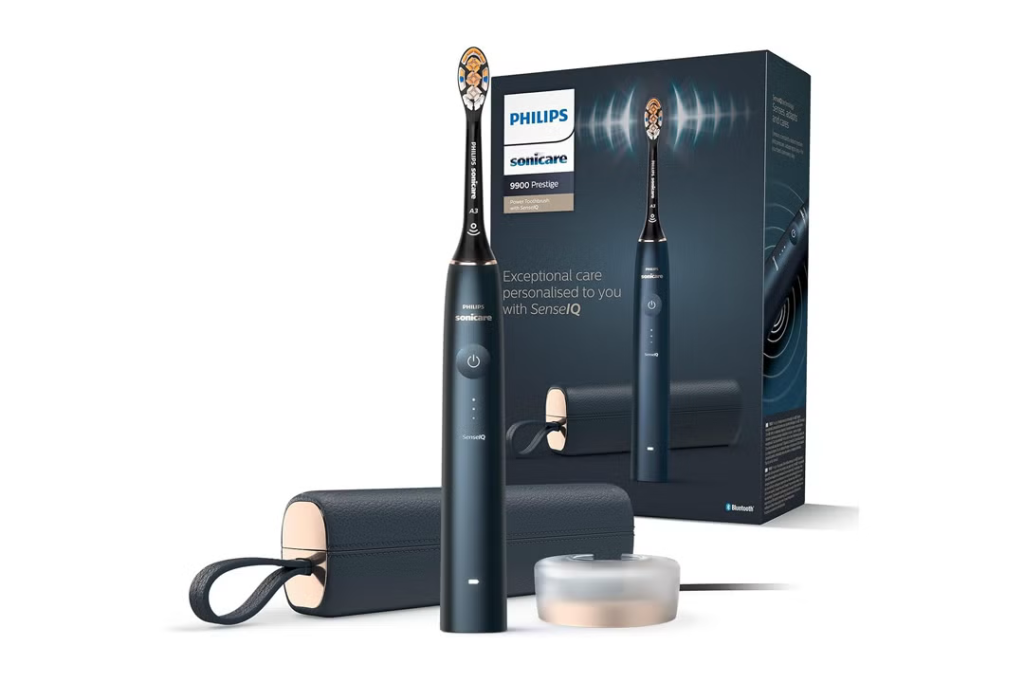
Six hundred pounds is a bold opening bid for something you will eventually leave beside a tube of toothpaste. Yet that is almost exactly where Philips has pitched its latest electric toothbrush. The Sonicare Next-Generation DiamondClean 9900 Prestige has a reported UK launch price of £599, with black, white and blue versions headed to selected retailers and dental practices.
For that money, you would expect more than a vigorous buzz and an attractive charging stand. Philips knows it. The central pitch is a toothbrush that helps you understand what you are doing while you are doing it, then shows where your routine needs attention. Your bathroom mirror has acquired a rather expensive coaching assistant.
That is an intriguing proposition because brushing is an unusually awkward task for technology to improve. It is repetitive, familiar and usually performed when we would rather be doing something else. Any gadget asking for extra attention has an immediate problem. Its cleverness must save effort, or at least make that effort feel worthwhile.
A smarter handle
Philips’ answer is to put more of the useful information directly on the object already in your hand. The company describes on-device artificial intelligence, powered by its third-generation model, that supports spatially aware brushing guidance. Forget the fashionable terminology for a moment. The interesting question is whether this can help you spot a habit you would otherwise miss.
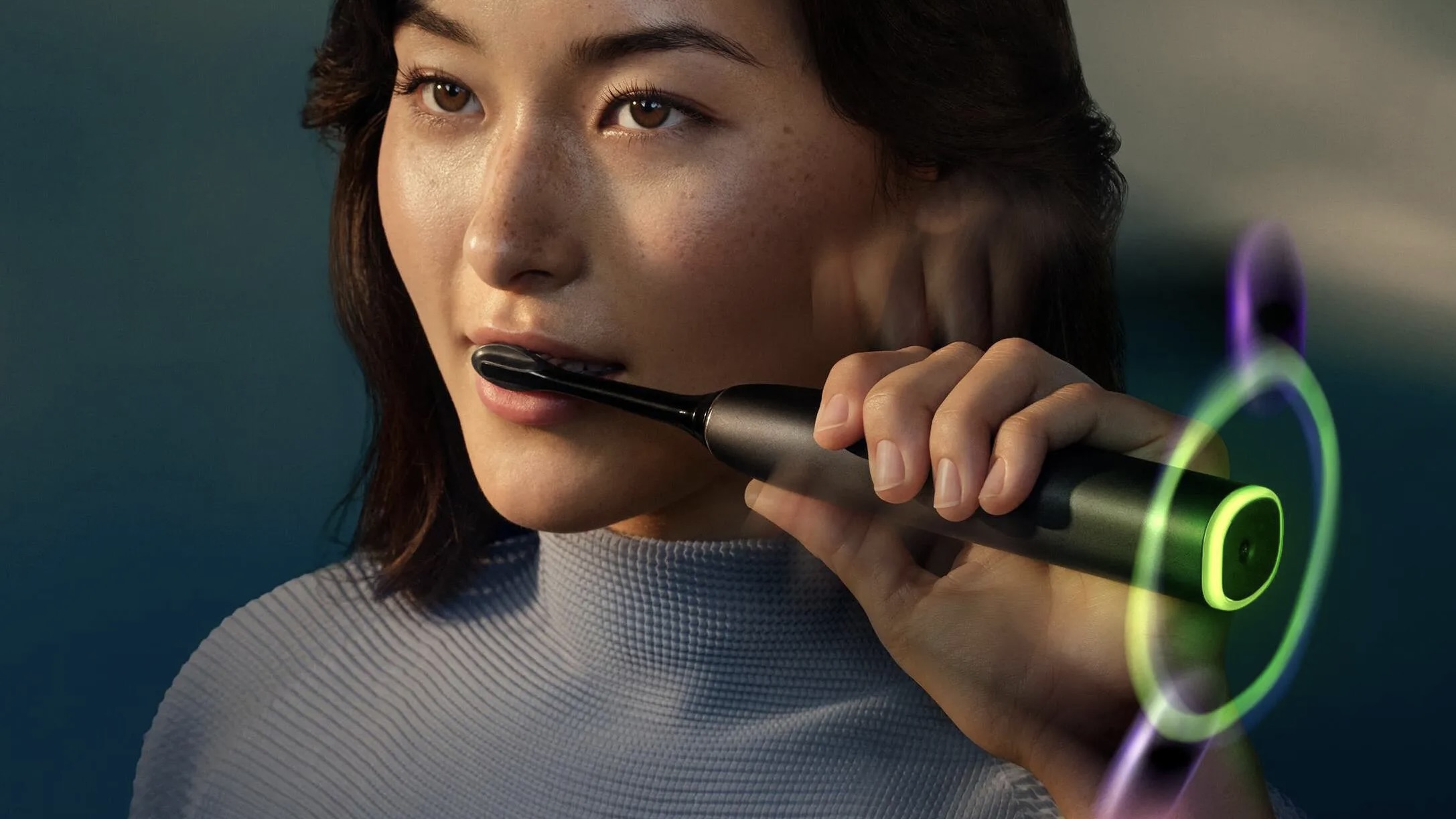
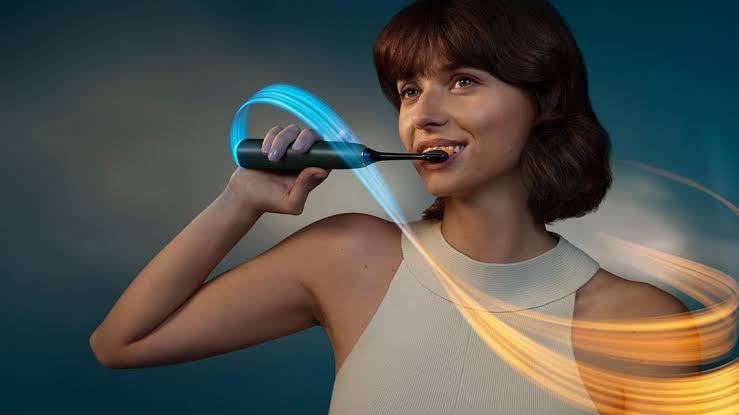
The handle’s light ring is the most immediate part of that proposition. Philips says its coverage guidance glows yellow when an area needs more attention and blue when it is time to move on. Its pressure feedback can also use light and vibration to signal whether you are pressing too hard, too softly or appropriately.
This is the kind of interface that could work well in a bathroom. You should not need to study a miniature dashboard while negotiating toothpaste foam. A quick visual cue has a clear purpose: carry on here, move along, ease off. Whether those signals remain obvious in everyday use will matter more than how impressive they look in launch photography.
A map for missed spots
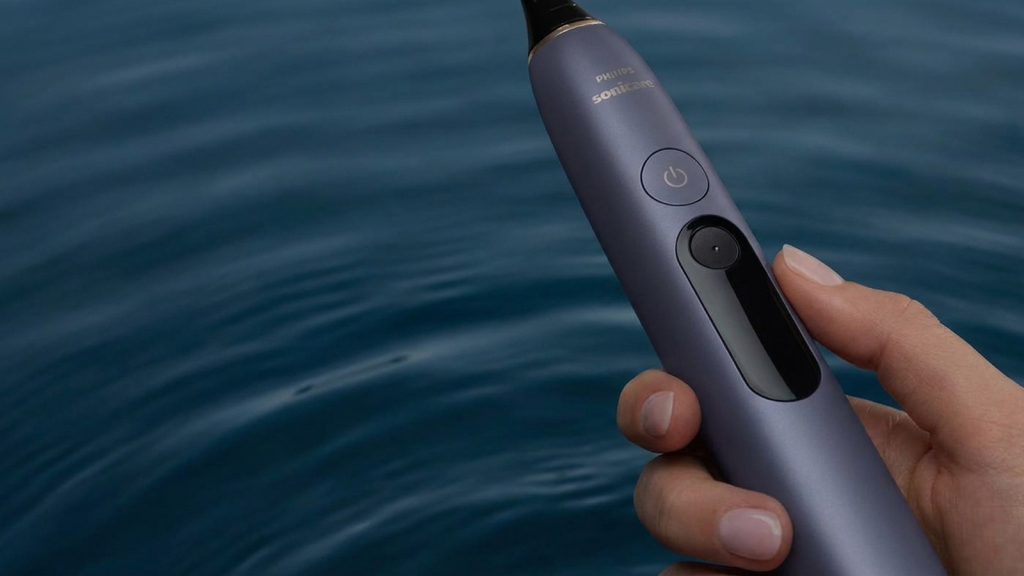
The second attraction is the Mouth Map, a display that divides brushing coverage into 12 segments. Philips’ Mouth Map guide explains that the outside and inside sections represent the corresponding tooth surfaces, with left and right markers and a tongue symbol helping users orient themselves. A more detailed map is available through the Sonicare app.
There is a useful distinction here. The map provides feedback when brushing finishes or pauses; it is not simply a decorative graphic that glows throughout the routine. Philips says blue segments indicate areas adequately brushed according to its tracking, while yellow ones need more time. The coverage view becomes available after at least 30 seconds of brushing.
You can then switch the brush back on and revisit the flagged areas. Philips says the map updates after that extra attention, provided the brush has not gone to sleep and started treating the activity as a new session. It is a neat attempt to close the gap between receiving information and actually acting on it.
Imagine discovering that you repeatedly skim over the same inside section while giving the front teeth plenty of attention. A timer alone cannot explain that pattern. A useful coverage display potentially can. That is the strongest argument for this product: spending money on feedback that changes your behaviour, with the benefit depending on whether you follow it.
There is an equally obvious limitation. A coloured segment represents the toothbrush’s assessment of your brushing, rather than a direct inspection proving every surface is spotless. Buyers should resist treating a completed graphic as a clinical verdict. The value lies in the guidance, and that guidance will need to earn trust through accuracy and consistency.
Eight modes and a lighter touch
Pressure control adds another practical layer. Philips says SenseIQ automatically adjusts brushing intensity if you push too hard. There are also eight brushing modes and three intensity levels, with a choice of what feedback the light ring communicates. That offers considerable scope for personalisation, although a long settings menu is only useful if the controls are understandable.
For Tech Spy, this is where the product becomes especially interesting. There are two possible experiences hiding inside the same specification sheet. One is a toothbrush that quietly helps you improve. The other is a tiny appliance demanding configuration before you have properly woken up. Philips needs the first experience to dominate after the novelty wears off.
Eight modes will certainly look substantial on a retail listing. The more revealing test is how quickly a new owner can find a comfortable setting and get on with brushing. Can you understand the feedback without consulting instructions repeatedly? Can you adjust things with wet hands? Does the handle remain comfortable through a full session? Those are review questions, not conclusions we can draw from a launch.
The claims behind the clean
The cleaning mechanism deserves attention too. Philips describes Sonicare Fluid Action as moving fluid between teeth and along the gumline to support the bristles’ work. It also claims the new drivetrain delivers a quieter experience than specified earlier DiamondClean and Prestige models. A quieter motor would be welcome, but the extent of that improvement needs a direct comparison.
Philips makes an eye-catching plaque-removal claim: up to 20 times more than a manual toothbrush when used with its A3 brush head. The comparison matters. This is a manufacturer claim against manual brushing, not evidence that the 9900 cleans 20 times better than another electric toothbrush. It also does not establish how much extra benefit the premium buys over a cheaper Sonicare.
That missing comparison is central to the £599 question. A flagship can be impressive without being the most sensible purchase. To justify a substantial premium, it needs to deliver something its intended owner will repeatedly use. A beautifully presented feature that gets ignored after a fortnight contributes very little to the daily experience, however sophisticated the engineering behind it.
Luxury comes at a price
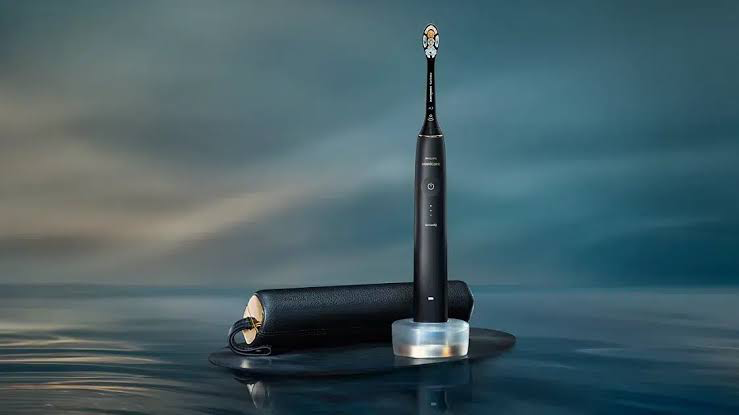
The accessories help explain the luxury positioning. Philips includes a charging glass and a travel case that also charges the brush. Its UK product overview also describes a replacement reminder that considers brushing frequency and pressure. These are useful conveniences, but they address different needs. The case serves travellers; the glass serves the bathroom; the reminder helps manage an ongoing consumable.
Ownership costs deserve a place beside the launch price. Replacement heads are part of the purchase over time, and anyone considering this model should check the cost of their preferred compatible option. Battery endurance, charging speed, warranty terms and repair arrangements also deserve scrutiny. At this level, buyers should expect clear answers about the years ahead, not just an impressive unboxing.
The everyday test
Here is another issue worth investigating before purchase: what happens when you stop engaging with the smart features? Perhaps the guidance becomes second nature. Perhaps you lose interest. Either outcome changes the value calculation. The ideal premium toothbrush should still feel straightforward and satisfying when you simply pick it up, switch it on and want to finish your routine.
Accessibility should be part of that assessment. Colour cues need to be distinguishable, screen information needs to be legible, and vibrations should communicate something recognisable. A premium interface earns its place by helping different people understand the same task with confidence, particularly when their attention is elsewhere.
A meaningful review should therefore stretch beyond the first few sessions. Coverage tracking needs testing across repeated routines, including deliberately neglected areas. Feedback needs checking for clarity and consistency. The display needs assessing in ordinary bathroom lighting. And the coach needs living with long enough to discover whether its prompts become helpful habits or background noise that the owner learns to ignore.
The Verdict
We have not tested this new model, so a recommendation would be premature. What we can assess is the logic behind it. Moving useful feedback onto the handle makes sense. Showing a specific area that needs attention is more actionable than presenting an unexplained score. Automatically responding to excessive pressure also gives the electronics a clear job beyond making the product look advanced.
For an existing electric-toothbrush owner who already follows a consistent routine, the upgrade case remains unproven. For someone who wants more guidance and will respond to it, the proposition is easier to understand. Even then, the relevant comparison is with the features they can obtain for less money, rather than with the excitement of owning the newest flagship.
The DiamondClean 9900 Prestige gives Philips a compelling idea to sell: better visibility into an everyday task we rarely examine. The technology could make that task easier to get right. Now it needs to demonstrate that the guidance is dependable, the experience stays simple and the benefit survives beyond the honeymoon period. At £599, a toothbrush must do more than light up the bathroom. It must give its owner a reason to keep paying attention.