


LEGO Pokémon SMART Play review: bring your Pokémon to life long after the building is finished
My children usually lose interest in their LEGO sets two days after building them. With Pokémon SMART Play, they spend hours playing; making this a genuinely appealing two-in-one activity.
There is a familiar pattern with LEGO in our house. My children are excited to open the box, keen to get building and delighted with the finished result. Then, about two days later, their attention moves elsewhere. The model might still look lovely, but the enthusiasm that surrounded its construction rarely lasts.
For us, getting them to keep playing with something they have already built can be harder than persuading them to build it in the first place.
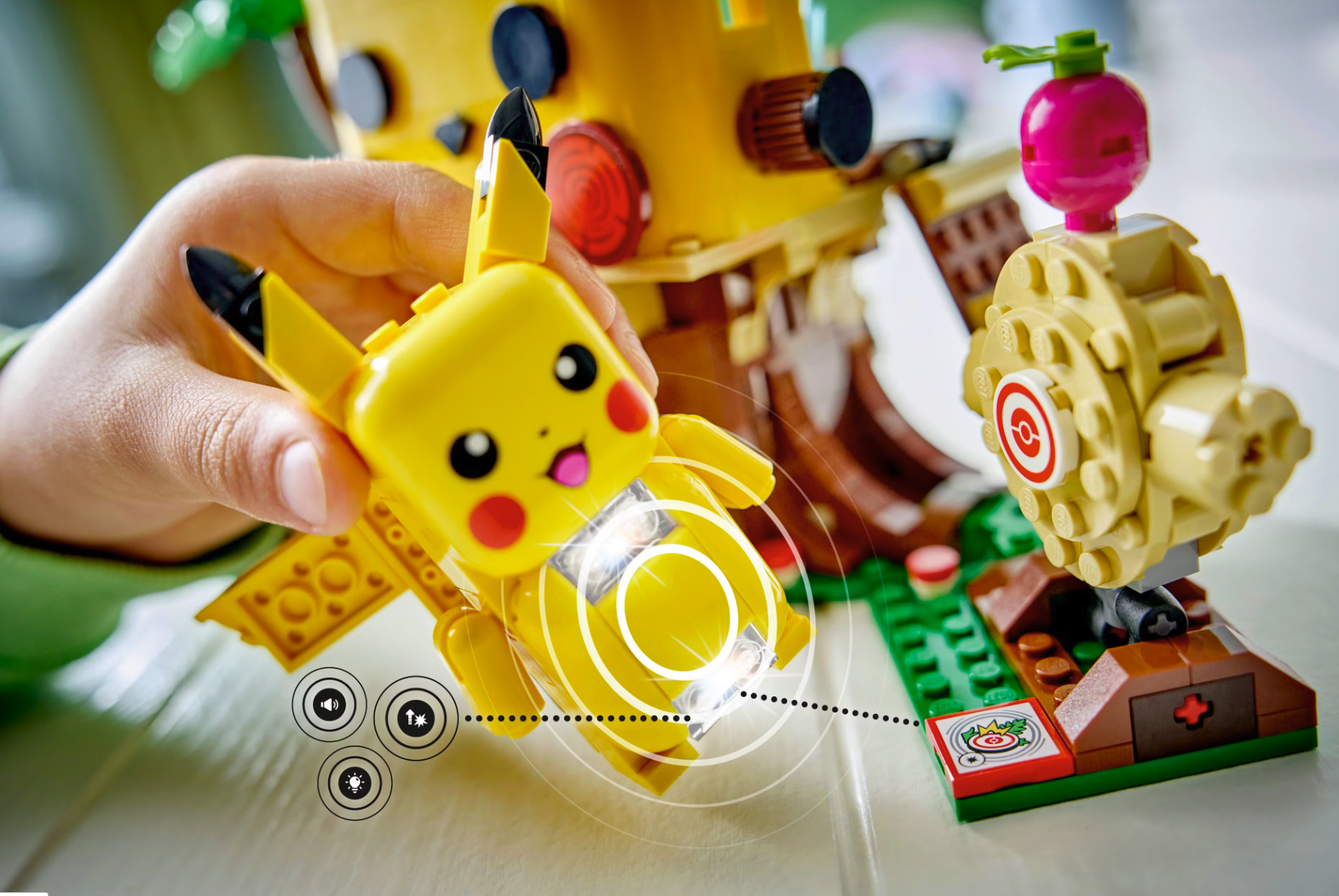
LEGO Pokémon SMART Play has changed that. My kids spend hours playing with it, interacting with the characters and finding reasons to return. The appeal goes beyond the satisfaction of clicking the final brick into place. Once the building is finished, there is another experience waiting: a Pokémon that responds to play.
Two activities in one: build it, then bring it to life
Think of it as two activities in one box. First comes the building, with all the concentration, anticipation and satisfaction that makes LEGO enjoyable. Then comes the playing, with sounds and reactions helping turn a collection of bricks into a character.
Neither part feels incidental to the idea. For children who love making models but quickly lose interest afterwards, that second stage could be the most persuasive thing about the whole range.
The Pokémon theme is a natural fit. These are characters children can imagine looking after, training and taking into battle. Giving them responsive sounds adds something to those familiar ideas, because their actions receive a little acknowledgement.
A creature reacts, and suddenly there is a reason to try something else. It is easy to understand how that can grow into a much longer play session than simply admiring a completed model.
How does LEGO SMART Play work?
The technology centres on LEGO’s SMART Brick, which works with SMART Tags to produce responses as children move and play.
The useful thing to know is that the interaction happens through the physical toy. Children pick up their Pokémon and move them around, with lights and sounds supporting the action. The cleverness is tucked into the model, leaving the character itself as the focus of attention.
For me, that is where the idea earns its place. LEGO already gives children plenty of scope to imagine their own adventures, and it certainly does not need electronics to be enjoyable.
But my children’s usual habit is to treat the finished build as the end of the activity. Here, the responsive element helps carry their interest into the next stage. It gives them a nudge to pick it up and do something with it.
Pikachu offers more than battles
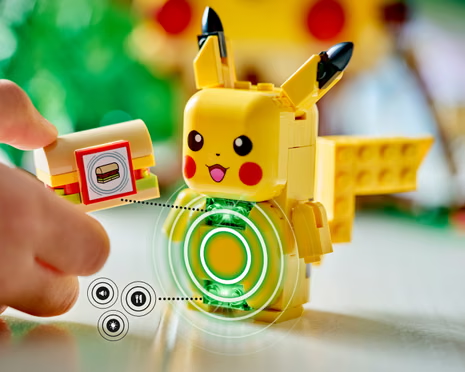
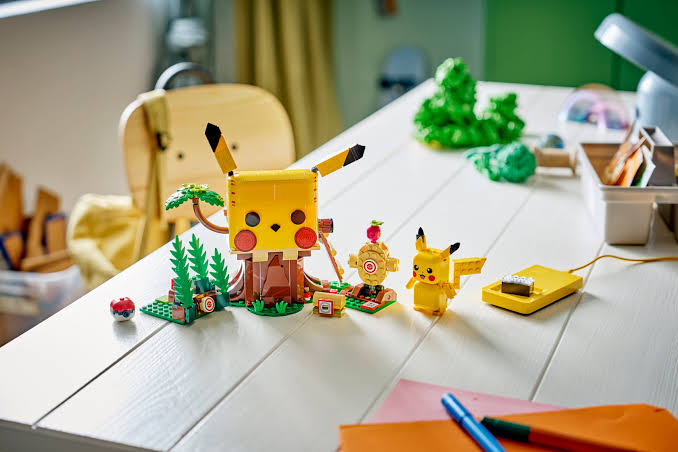
Pikachu illustrates the gentler side of that approach. The Training House with Pikachu set brings everyday care into the Pokémon fantasy, with interactions built around activities such as feeding, sleeping and playing.
Those details give children something to do beyond staging another contest. A Pokémon can be a companion as well as a competitor, which makes the play possibilities feel broader than a toy built entirely around winning a battle.
There is something particularly appealing about the smallness of those interactions. Feeding Pikachu a brick-built sandwich is a simple idea, but it gives the character a place in an everyday story. Children can decide when it is hungry, when it needs a rest and what happens afterwards.
The sound supplies a response; the child supplies the situation. That balance leaves room for imagination while making the figure feel more involved in the game.
It also means the appeal does not have to depend on constant spectacle. Big effects might attract attention initially, but a collection of smaller responses can encourage children to keep experimenting. What happens if the Pokémon moves differently? What should it do next?
The attraction is partly in discovering those reactions and partly in fitting them into an adventure. That is a useful combination for a toy intended to remain interesting after its first outing.
Charizard brings the action
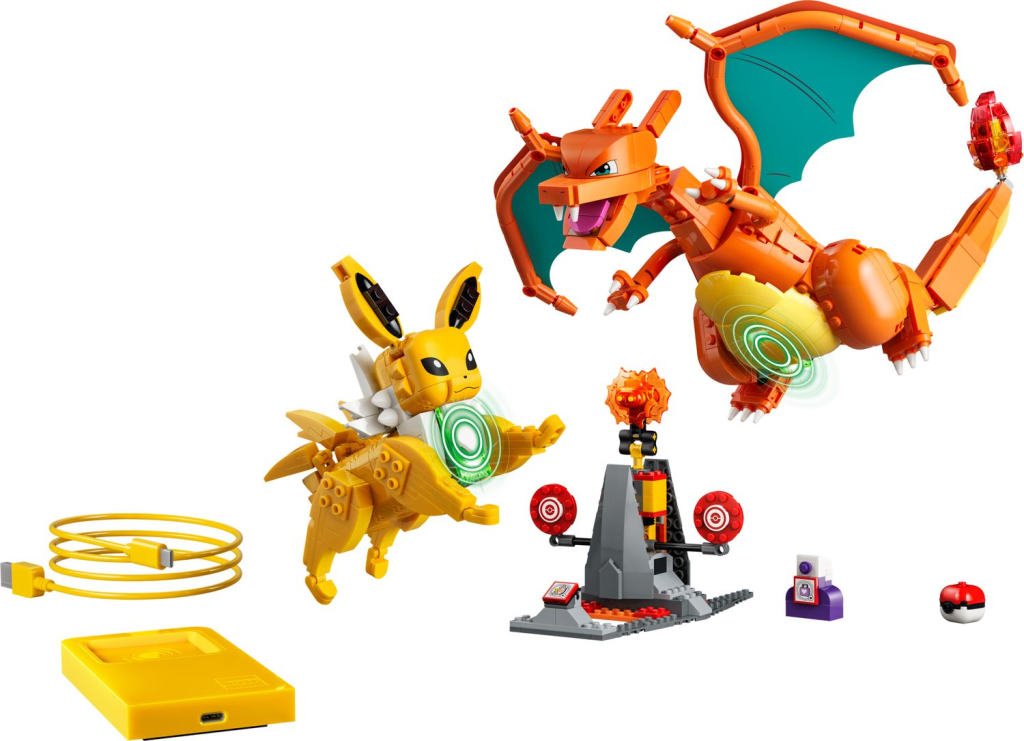
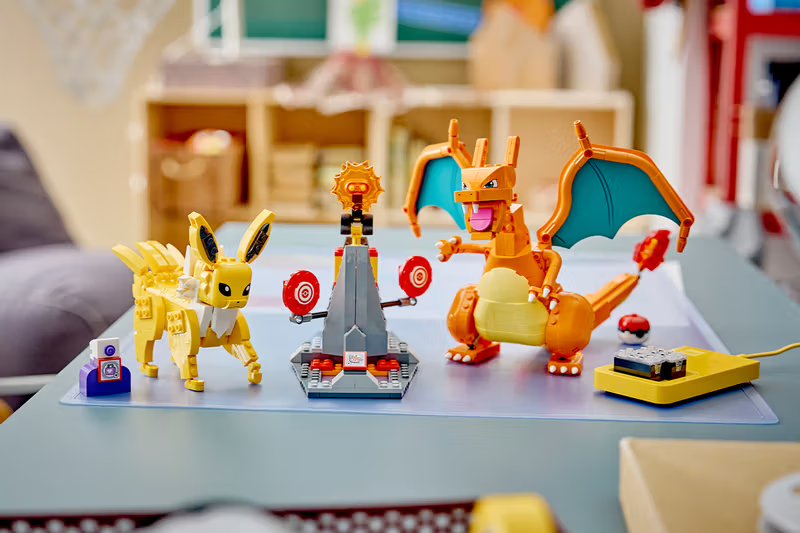
Charizard brings a different sort of energy. The larger character lends itself to sweeping flights and dramatic encounters, and the supplied hands-on review describes wing sounds during flying, along with a dizzy reaction when movement becomes too fast.
It is a playful use of the character’s identity. Moving the model becomes part of the entertainment, giving children a reason to put their finished creation straight into action.
Training and battling add another layer. There are activities built around preparing Pokémon for encounters, followed by the encounters themselves. As a play idea, that creates a sequence children can return to: practise, battle, recover and try again.
It supplies some structure without requiring them to invent every element from scratch. For children who enjoy having a goal, that could be a significant part of the attraction.
The Charizard vs. Jolteon Ultimate Battle set includes two SMART Bricks, a charger and two buildable Pokémon, making it a self-contained starting point for responsive battles. LEGO lists it at £109.99, with 751 pieces and an age recommendation of eight and over.
That makes it a substantial purchase, but the inclusion of both powered characters matters when assessing what children can actually do with the contents of the box.
A reason to keep playing together
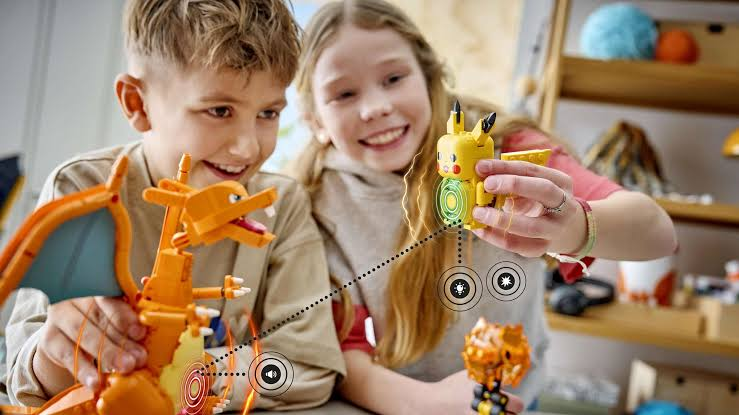
Shared play is another appealing aspect of the concept. A pair of characters gives children a starting point for an encounter together, whether they want a competitive battle or a story involving both Pokémon.
There is room for a parent to join in, too. The model has already been made, but the activity can continue through movement, reactions and whatever situation the players decide to create around them.
Still, the biggest endorsement I can give is the simplest: my children keep playing. They spend hours interacting with these sets, whereas their usual LEGO interest often fades around two days after completion.
That does not mean every child will respond in the same way. Some already spend weeks inventing stories around ordinary LEGO. But for our household, the extra interaction addresses the point where enthusiasm tends to drop away.
It changes how I think about value, too. A building set can be worth buying purely for the enjoyment of putting it together, and there is nothing wrong with keeping a finished model on display.
When buying for children, though, I also want to consider how often something will be used. A set that provides a satisfying build and then becomes a regularly played-with toy has a stronger case for its place in the house.
Screen-free fun, with an app for support
The screen-free aspect strengthens that case. The play takes place with objects children can hold, move and arrange. Their attention is on the Pokémon and the physical space around it.
For parents looking for an activity that can compete for children’s interest away from a screen, that is attractive. It offers some of the immediate feedback children enjoy in interactive entertainment through something they have built with their own hands.
There is a distinction worth making here: screen-free play does not mean the system has no accompanying app. LEGO provides SMART Assist for functions including getting started, troubleshooting, sound controls and updates.
The appeal is that the ongoing play happens through the models. That is the part children are meant to engage with, rather than watching the action unfold on a separate display.
Battery life is the biggest compromise
Battery life is the clearest practical compromise. LEGO specifies approximately 45 minutes of play per SMART Brick charge. For a toy whose strength is encouraging children to keep interacting, that is a limitation worth considering.
Hours of interest should not be confused with hours of uninterrupted powered play. Charging needs to fit into the experience, and a break may arrive before a child feels ready to put their Pokémon down.
The physical LEGO remains available to play with during that pause, of course, but the responses are an important part of what makes this range distinctive.
I would therefore weigh battery life alongside the play features when deciding whether it suits a particular child. Someone who happily switches between activities may barely mind. A child absorbed in an extended Pokémon adventure could find the interruption more frustrating.
Check what is included before buying
Buyers should also pay attention to the distinction between All-in-One and SMART Play Compatible sets.
The All-in-One options include the SMART Brick needed for the electronic interaction; compatible sets use a brick from an All-in-One set. That affects the true starting cost.
It is worth checking the contents carefully, particularly when choosing a present, so the recipient has what they need for the responsive features you expect.
Beyond those practical points, the decision comes down to what your child enjoys. Someone primarily interested in intricate display models may place less value on movement and sound. A child who loves Pokémon role-play has a clearer reason to appreciate the system.
It is especially compelling for children like mine, who enjoy following a build through to completion but benefit from an extra invitation to keep playing afterwards.
Verdict: the final brick is just the beginning
I would resist judging SMART Play purely on how impressive the electronics sound on paper. The useful question is whether they make children want to do more with the toy.
A relatively simple reaction can be enough if it arrives at the right moment and suits the character. The success of this idea lies in what children build around those responses: stories, care routines, practice sessions and repeat encounters.
For our family, LEGO Pokémon SMART Play succeeds because finishing the instructions no longer feels like finishing the fun. My children have something they made themselves and something they want to keep interacting with.
The price and charging requirements deserve consideration, but the lasting interest is the real selling point. If your household also has LEGO models that lose their audience after two days, this offers a persuasive alternative: build your Pokémon, then bring it to life through play.