

The LG Gram Pro 16 (2026) Review: The Featherweight Creator Laptop That Keeps Getting Smarter
The LG Gram Pro 16 arrives with a promise that feels refreshingly simple in a world obsessed with raw power: you should not have to choose between portability, a great screen, and real-world productivity. This 2026 refresh tightens that marriage, nudging the Gram from a niche ultra-light into a genuinely persuasive option for creators and pros on the move.
Design and first impressions
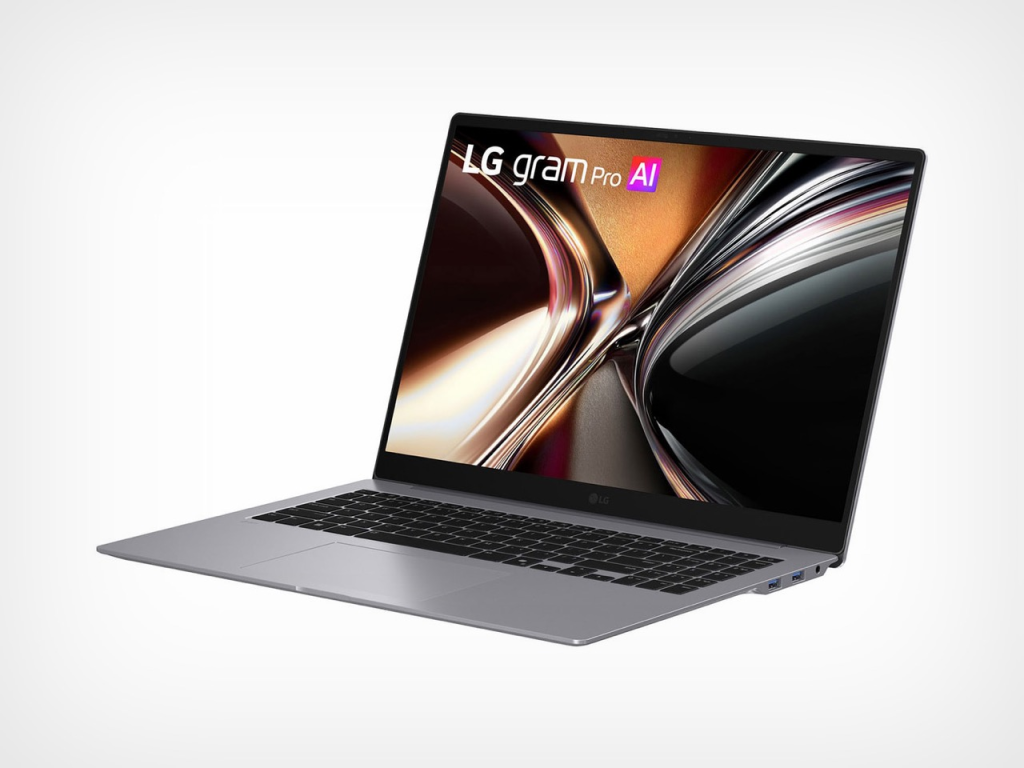
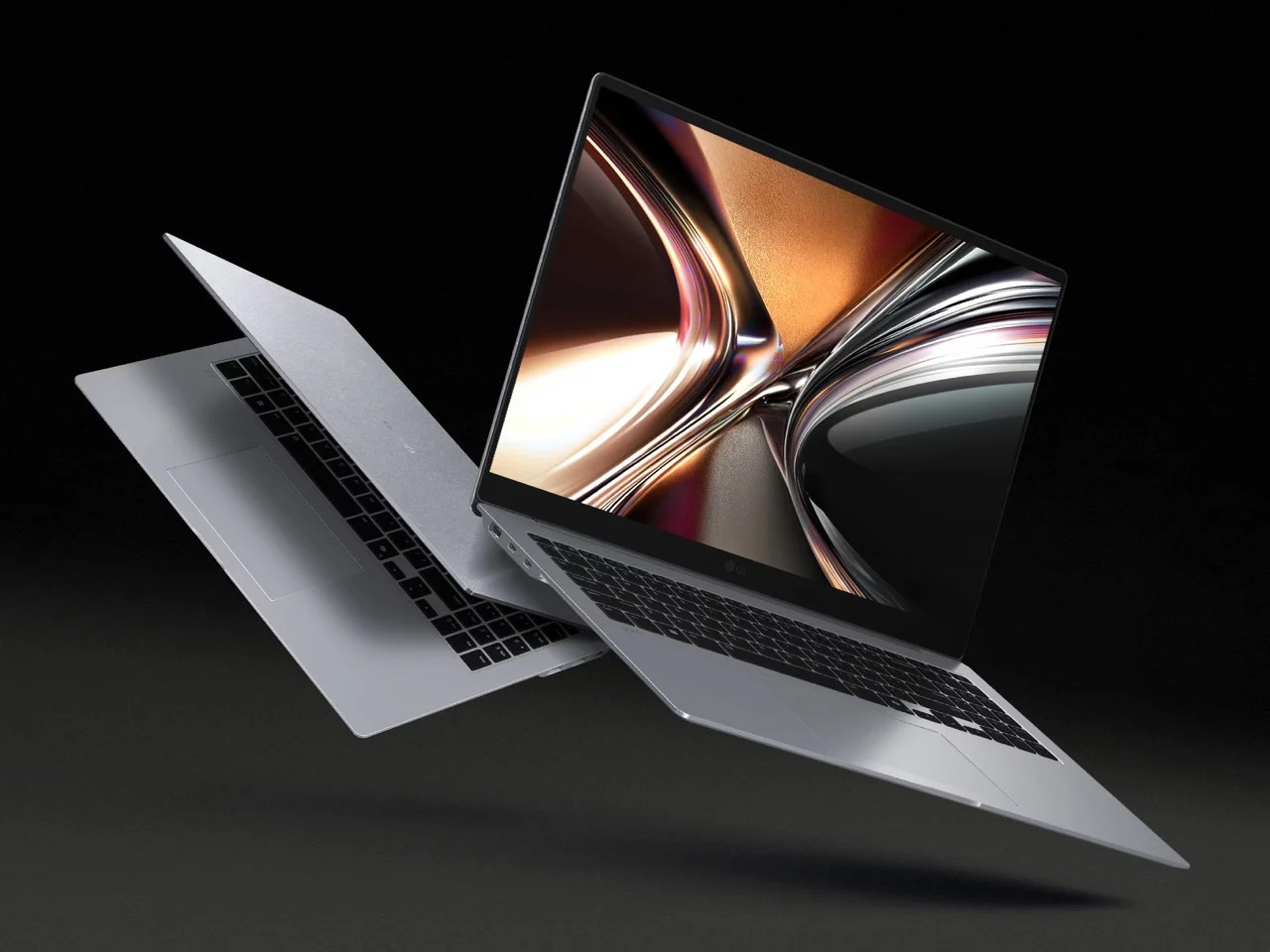
From the moment you lift the Gram Pro 16 out of its box, the central selling point is obvious: it feels almost impossibly light for a 16-inch machine. LG has long favored a magnesium alloy chassis that yields a reassuringly rigid and pleasantly cool exterior without all the weight of aluminum. The 2026 model keeps that DNA but refines the details. Edges are slightly more tapered, the hinge feels firmer, and the lid closes with a confidence that belies the lightweight frame.
The lid’s matte finish resists fingerprints in a way that still looks premium rather than industrial. The overall aesthetic errs on the minimalist side, with no flashy logos or aggressive cutaways. For a laptop that’s meant to travel, this is a welcome choice. It looks at home in a café, a meeting, or an editor’s living room without shouting for attention.
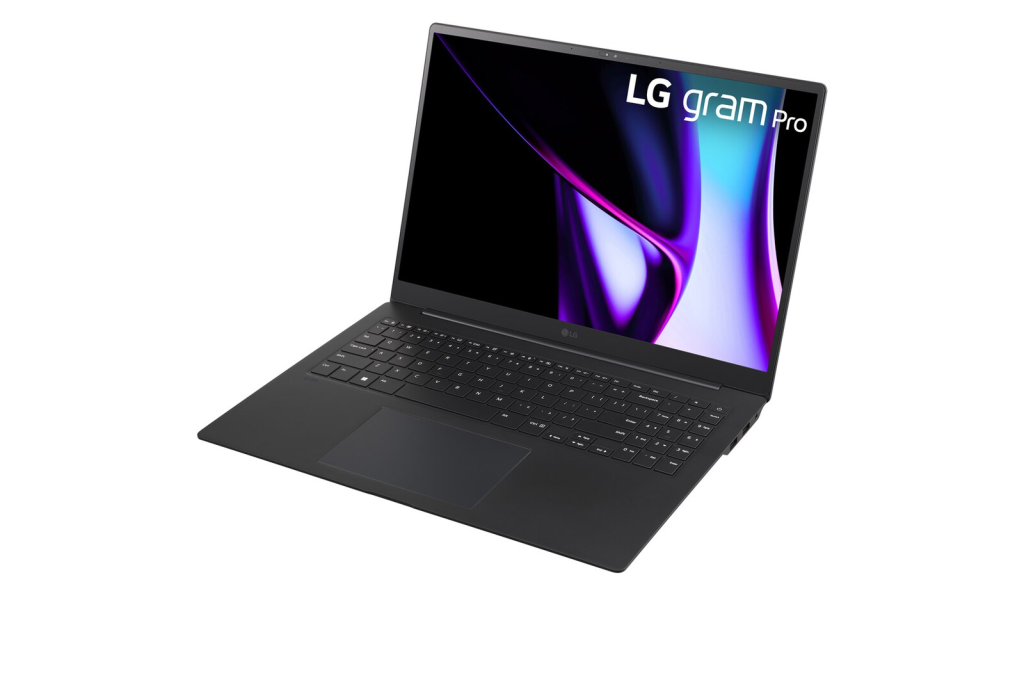
Open the lid and you get a roomy display and a keyboard that balances travel with tactility. The keycaps have a soft matte texture and a satisfyingly firm actuation. LG gives the hinge enough resistance that the screen stays put when you’re sketching or typing, but it still folds back comfortably for a presentation. The touchpad is large and precise, though not class-leading. What matters most is that the Gram Pro 16 feels like a high-end tool rather than a showpiece.
Key tech features explained in plain English
At its heart the Gram Pro 16 is about practical upgrades. The headline feature is the display. LG outfits the 16-inch panel with a high-resolution, color-accurate panel that supports wide color gamuts and deep blacks. Whether you’re editing photos, grading video, or streaming, the display reads as serious and thoughtfully tuned. Brightness is ample for indoor work and comfortable in well-lit rooms, though direct sunlight is still a challenge for any laptop screen.
Internally, LG pairs efficient mobile processors with configurations that scale for creators. You can opt for a configuration that prioritizes battery life or one that leans into sustained performance. Storage and memory are generous enough for heavy project files, with fast NVMe SSDs and upgradeable RAM on many SKUs, a detail that will please power users who like to future-proof their machines.
Port selection is pragmatic. The Gram Pro 16 includes a mix of Thunderbolt or USB4 ports, full-size HDMI, and a headphone jack, plus an SD card reader. That last inclusion is particularly welcome for photographers and videographers who still move media with cards. Connectivity covers Wi-Fi 6E and Bluetooth 5.x for modern wireless workflows.
Battery life is where the Gram family has traditionally excelled and this model continues the streak. LG’s combination of efficient silicon and a relatively large battery yields a day of typical mixed use without sweating. Fast charging is also part of the package so a short top-up between flights takes you a long way.
Performance in real-world use
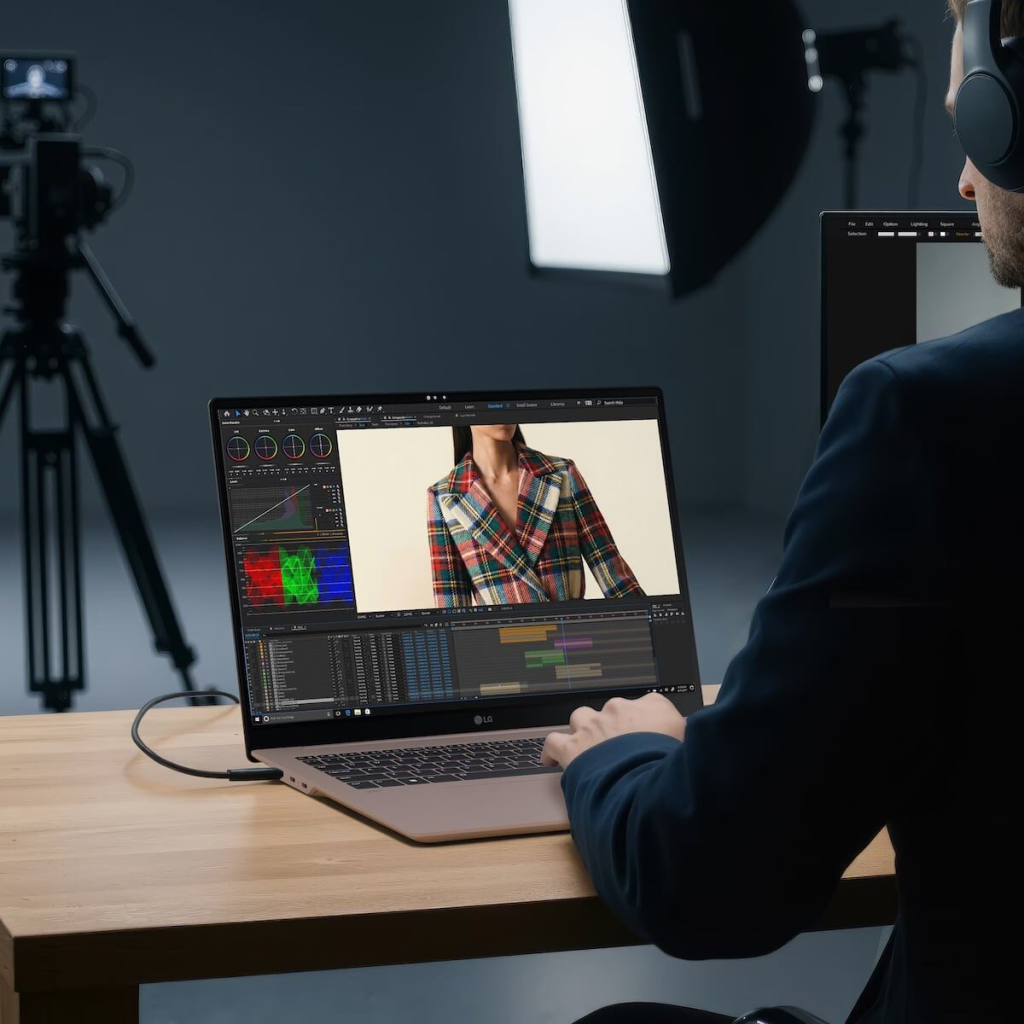
In day-to-day workflows the Gram Pro 16 behaves like a well-drilled assistant. Everyday tasks open instantly and the system avoids hiccups even when you’ve got a dozen browser tabs, a few Slack channels, and a video timeline running. For photo editing and light-to-medium video editing it delivers smooth scrubbing and fast exports, though for very heavy 4K timelines with multiple effects a more brute-force workstation GPU will be faster.
Thermals are handled with a graceful sense of balance. LG hasn’t chased the loud, high-RPM fan approach that some gaming machines use. Instead the Gram nudges performance upwards when needed while keeping fan noise in check. Under long, sustained loads you will see thermal throttling compared to thicker, heavier machines that are designed to dissipate more heat. But for most creator tasks outside of pro-level rendering jobs, performance is more than adequate.
Gaming is not the Gram’s raison d’être, but integrated or entry-level discrete GPUs will let you enjoy indie titles and older AAA games at reasonable settings. If you need a machine that doubles as a portable gaming rig, consider a competitor that is explicitly built around sustained graphics throughput.
What stands out and what surprises
What stands out first is the display. It’s not often a laptop screen at this size and weight feels so clearly aimed at creative work. Colors pop without being oversaturated and the extra vertical space of a 16:10 aspect ratio gives you more room for timelines and documents. The view feels deliberately cultivated to appeal to designers and editors who spend long stretches staring at pixels.
The second pleasant surprise is the combination of weight and battery life. Few 16-inch laptops offer this dance of long endurance and featherweight portability. It changes how you use a laptop. You stop rationing charge or seeking power outlets. You carry it on planes and walk across campus without the shoulder ache that comes with some of the more muscular alternatives.
It is also notable how thoughtful LG is about ports and expandability. The presence of an SD card slot and multiple high-speed ports makes the Gram usable in professional setups without an avalanche of dongles. That might sound small, but it quietly improves the daily workflow for a lot of people.
Any compromises or room for improvement
No laptop is perfect and the Gram Pro 16 makes trade-offs. Chief among them is that it does not chase the maximum possible performance. If your work is dominated by heavy 3D rendering, simulation, or prolonged video exports, you will get faster results from thicker, fan-heavier workstations. LG’s focus is efficiency and mobility, not raw thermal headroom.
Speakers are competent but not exceptional. They get loud enough for a presentation or a quick edit check but lack the depth and stereo separation of some premium multimedia laptops. The webcam is serviceable and benefits from the machine’s low weight in mobile meetings, but it doesn’t outclass purpose-built external cameras.
Some users may miss a bit more flair in the keyboard travel or a more luxurious haptic finish on the touchpad. These are subjective points. LG has prioritized a balanced typing feel and a large responsive trackpad over ostentatious mechanical feedback, which will sit perfectly with many professionals and less well with those who want a very tactile typing experience.
Best use cases and target user
The Gram Pro 16 is designed for anyone who wants a 16-inch canvas without the tether of a bulky laptop. It is an obvious pick for traveling professionals who produce content on the go, creative freelancers who split work between client meetings and home studios, and students in design or media programs who need a big screen but must carry their machine across campus.
It also suits hybrid workers who wish to avoid a desk-bound setup but still require a capable machine for photo editing, light video work, programming, and multitasking. If your desk is often a café table, a plane tray, or your lap, the Gram is meant to disappear until you need its full attention.
How it compares to others in its category
Compare the v to the MacBook Pro line and the contrasts are instructive. Apple’s MacBook Pros still win on raw single-core performance and a tightly integrated software ecosystem. The Gram fights in a different arena: it offers similar portability with more openness to ports and file-system flexibility. If you are tied into macOS-specific apps or need maximum rendering throughput with the M-series chips, Apple remains compelling. If you want Windows, an SD slot, and lighter chassis, LG has a strong argument.
Against Windows alternatives such as the Dell XPS 16 and some of the thinner Razer or ASUS ProArt models, the Gram distinguishes itself through weight and battery life rather than sheer benchmark dominance. The XPS offers a slightly more premium finish and sometimes slimmer bezels. The Gram’s advantage is its practical balance: respectable performance, significantly less weight, and a superior battery profile in many real-world scenarios.
For creators who prioritize the color-accurate OLED or Mini LED panels, some competitors can match or slightly exceed peak brightness and contrast. Still, the Gram’s display is consistently excellent and calibrated for real work rather than showy spec-sheet claims.
Why it’s worth your attention now
We are in a moment where mobility matters as much as muscle. Hybrid work habits, longer commutes, and the rise of distributed creative teams make lightweight, capable laptops more relevant. The LG Gram Pro 16 arrives at a time when many professionals are considering whether to trade desktop performance for a better daily experience. The Gram suggests you can have a large, color-accurate screen and all-day battery without paying the weight penalty that used to be unavoidable.
Moreover, the inclusion of pro-friendly features such as an SD card reader and multiple high-speed ports makes it an antidote to the trend of extreme thinness at the expense of practicality. It represents a mature design philosophy: small compromises in exchange for a machine that simply makes your life easier week to week.
Conclusion
The LG Gram Pro 16 is not the laptop for someone who needs the absolute highest rendering speeds or the most dramatic speaker system. It is, however, one of the best choices for people who want a 16-inch workspace they can actually carry every day. It blends a genuinely useful display, thoughtful expandability, and battery life into a package that nudges you toward better habits. You will carry it more often, use it more freely, and worry less about outlets.
If you are a creator, hybrid professional, or an advanced student who values mobility as much as capability, the Gram Pro 16 should be on your shortlist. It’s a laptop that asks you to reconsider what a 16-inch machine can be: not a burden, but a companion. That shift is subtle yet significant, and for many of us it will be all the excuse we need to make it our daily driver.