


FeatherSnap Scout review: a charming bird feeder camera that asks too much of you
Smart feeder, dumb workflow. The FeatherSnap Scout has real appeal for wildlife-obsessed tech fans, but the manual processes and subscription wall take the shine off a genuinely likeable bit of kit
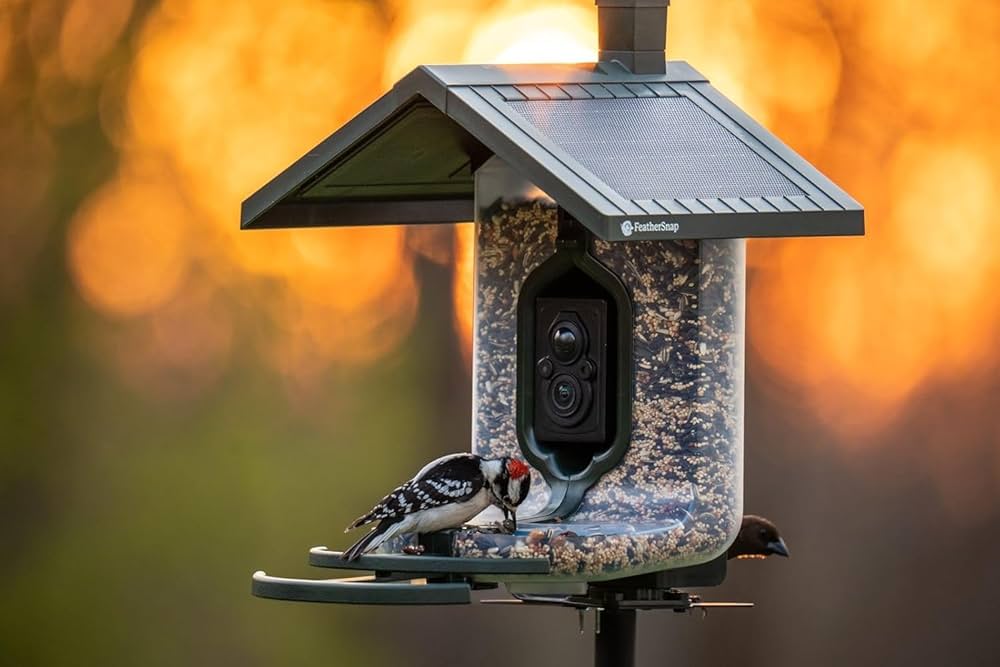
If you’re the kind of person who has a nature playlist on Spotify and a pair of binoculars by the kitchen window, the FeatherSnap Scout is aimed squarely at you. It’s a solar-powered smart bird feeder camera with AI species identification, a dual-seed hopper, and a gamified app that promises to turn your garden into a personal wildlife documentary. The pitch is solid. The execution is mostly good. But there are enough friction points baked into the experience that “smart” starts to feel like a generous label.
I set it up in my garden and ran it for several weeks across various weather conditions, from crisp autumnal mornings to genuinely grim UK drizzle. Here’s the honest verdict.
Quick specs
| Price | $179.99 / £179.25 |
| Resolution | 4MP / 1080p video |
| Field of view | 165 degrees |
| Feed capacity | 8.4 cups / 2 litres |
| Connectivity | 2.4GHz Wi-Fi |
| Charging | USB-C + integrated solar panel |
| Dimensions | 33 x 30 x 37 cm |
| Weight (unfilled) | 1.5 kg |
| Storage | 5GB internal |
| App subscription | $59.99 / £49.99 per year (or $6.99 / £5.99 per month) |
Pros
- Integrated solar panel keeps the battery going for months without intervention
- Dual seed hopper lets you attract different bird species simultaneously
- App gamification is genuinely fun for beginners and families
Cons
- Key features including AI bird ID and video access require a paid subscription
- Video downloads are a clunky, manual process even after subscribing
- Still image quality at 0.9MP is noticeably weaker than rivals
Price and availability
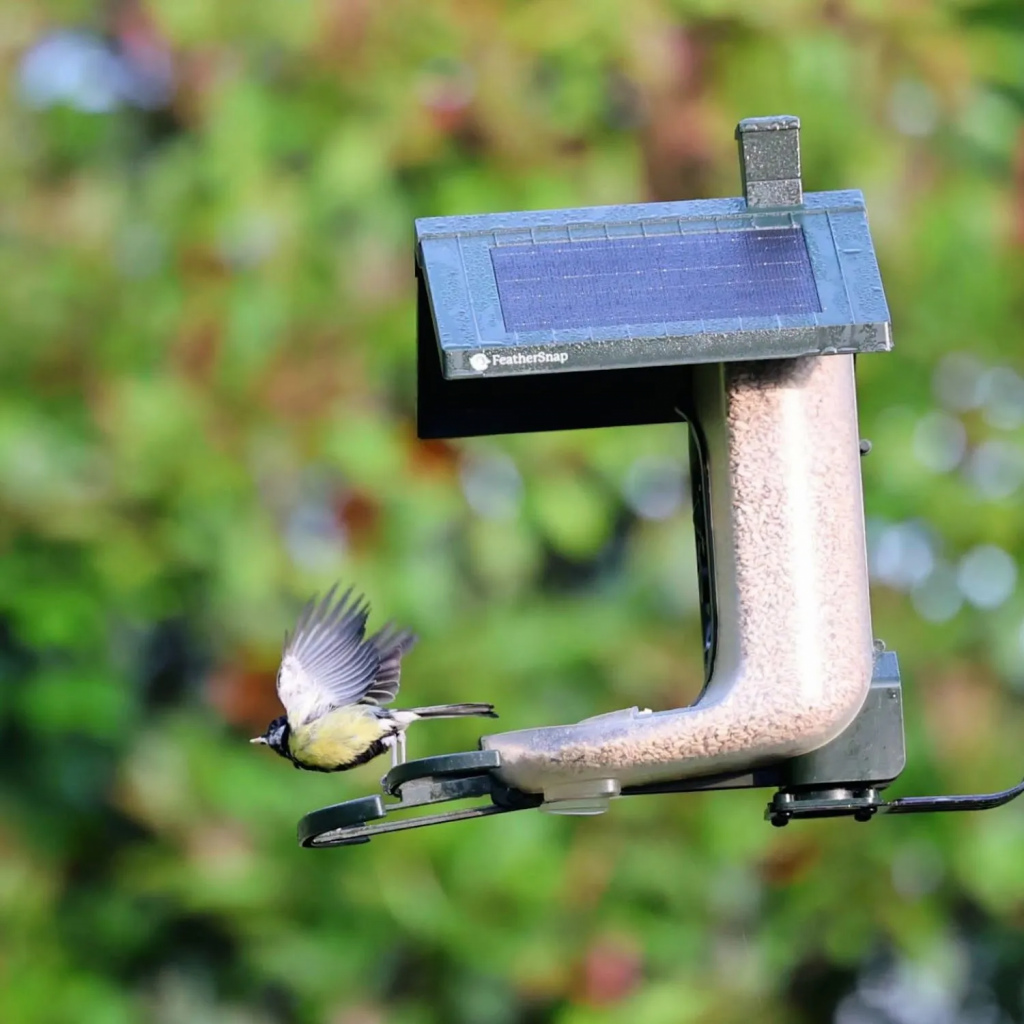
The FeatherSnap Scout sits at around $180/£160, available from the FeatherSnap website directly, Amazon, and a handful of gardening and wildlife retailers in the US and UK. It comes in one colourway only: a dark, understated green that works well in traditional British gardens. There are no configuration variants; what you see is what you get.
That upfront cost is reasonable, especially for a feeder that ships with integrated solar charging already built in rather than sold as a bundle add-on. Where FeatherSnap starts to feel expensive is the subscription. To unlock AI bird identification, access to the video archive, and the full Bird Book sightings log, you’ll need to pay $59.99/£49.99 per year, or $6.99/£5.99 monthly. There’s no lifetime plan option.
For context, Bird Buddy charges $5.99/£4.99 a month and offers cloud features that feel considerably more polished. PeckPerk’s VIP tier comes in at $3.99/£3. FeatherSnap’s subscription isn’t the most expensive on the market, but it is the least optional: without it, the camera produces photos you have to view by hand, and videos you simply cannot access. That’s a meaningful constraint that the upfront price doesn’t reflect.
Design and build
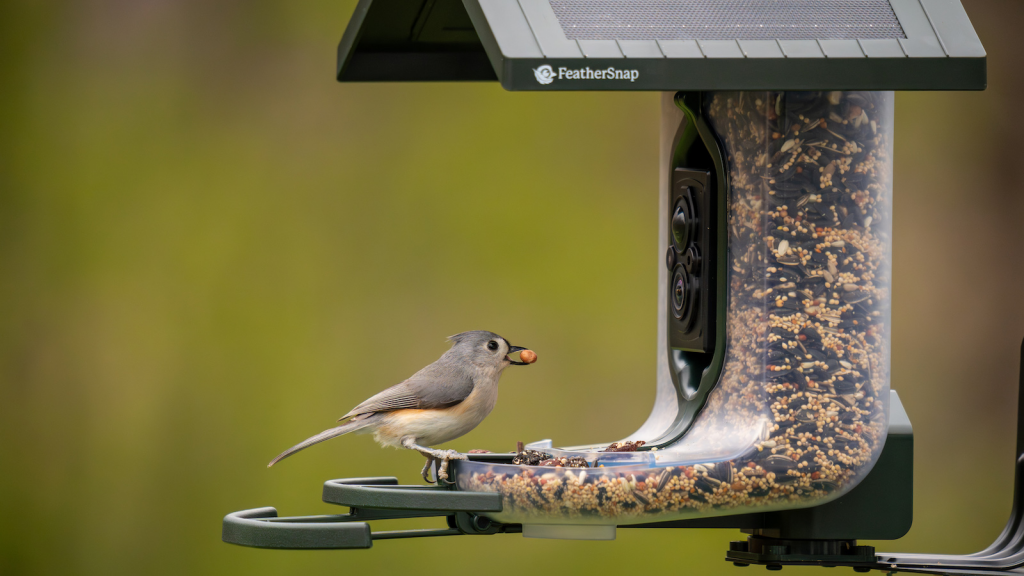
The Scout is a large piece of kit. It’s nearly twice the width of the Bird Buddy, which can look a little imposing in a compact urban garden but pays off in capacity and sturdiness. The feeder stayed firmly planted on top of my shed across some properly horrible autumn weather, and the all-weather build genuinely earns its keep. Operating temperature range is listed as -20°F to 130°F, so wherever you are in the world, it should cope.
Setup is quick. The app walks you through pairing via QR code printed on the back of the camera, and the whole process takes under five minutes assuming your Wi-Fi router is nearby. The camera module snaps into a slot at the front of the feeder housing, connecting automatically to the solar panels integrated into the roof. That integration is one of the Scout’s best design decisions: no external cables means nothing to get snagged, damaged, or nibbled by the local squirrel population. (Spoiler: I have a very determined squirrel.)
The dual seed hopper is a thoughtful feature that I’d genuinely like to see more feeders adopt. Two compartments mean you can offer different food types simultaneously, which is excellent if you want to attract a wider range of species. I ran peanuts in one side and a general songbird seed mix in the other. Both were promptly cleaned out, though mostly by the aforementioned squirrel.
The dark green colourway blends into garden foliage better than most feeders I’ve tested. I’m convinced the birds settled in more quickly than usual, though I admit that’s entirely anecdotal.
On the downside, the hopper’s vertical, narrow design makes it genuinely difficult to clean. The RSPB recommends cleaning at least weekly, and the FeatherSnap makes that a real task. You need a long, flexible brush to get into the tall seed compartments properly, and they don’t come apart as easily as feeders with a more modular construction. Also worth flagging: the seed doesn’t always flow naturally down into the tray. I found myself shaking it most mornings to keep supply consistent, which defeats some of the hands-off appeal.
The camera itself is not repositionable once in place. You can’t tilt it up or down, so you’ll need to think carefully about mounting position to get the best angle on your feeding tray.
Performance
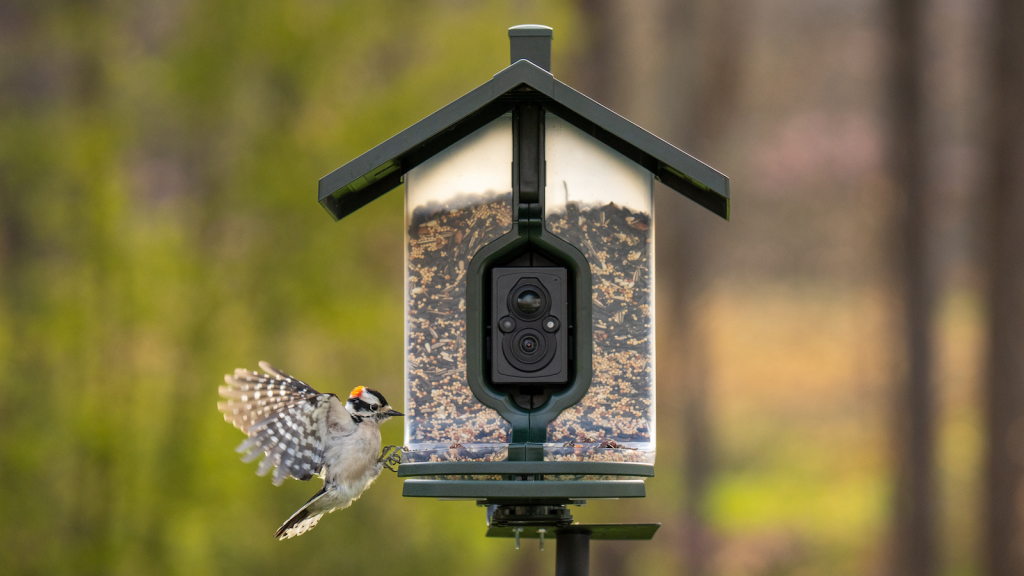
The image quality is the area where the FeatherSnap Scout falls shortest of its ambitions. Still images are captured at 0.9MP (despite the 4MP camera resolution listed in the specs), which is noticeably soft. Detail in individual feathers is lost, and on smaller songbirds like blue tits and goldfinches, you’re really working to make out identifying markings. Bird Buddy’s camera captures at 5MP and the difference is immediately apparent. If you want to ID birds yourself, or capture anything worth sharing on social media, the Scout’s stills will frustrate you.
Video is a different story. The 1080p footage at 30fps is genuinely watchable, captures quick movements without ghosting, and the built-in microphone picks up birdsong clearly enough to aid identification by ear, even in wind. The 165-degree field of view is wide enough to capture birds approaching and landing, rather than just sitting directly on the feeder.
The problem is that clips are all 15 seconds long with no option to adjust duration, and they only become accessible at all once you’ve subscribed. Even then, downloads have to be requested manually and collect in a separate tab. You can’t start a recording from the live view screen. These aren’t minor UX quirks: they’re workflow friction that turns a pleasurable experience into a slightly tedious one.
Motion sensitivity can’t be adjusted, which means the Scout logs every person, pet, leaf, and bin lorry that passes within range. I accumulated hundreds of non-bird triggers across a single week. There’s no exclusion zone setting, a feature that Netvue’s Birdfy AI handles well, so you’re left sifting through a lot of noise to find your actual sightings. On the positive side, the Scout didn’t miss many genuine bird visits. Some rival cams are overly selective in what they trigger on.
App and AI bird identification
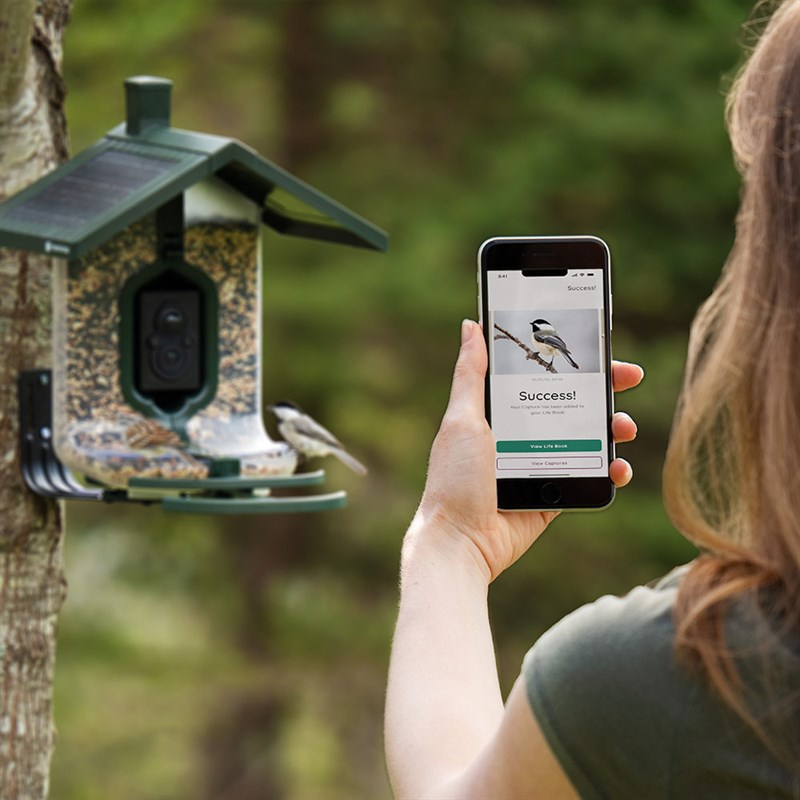
The FeatherSnap app is free to download for iOS and Android, colourful, and reasonably straightforward to navigate. The bad news is that the most interesting parts of it are locked until you subscribe.
Once you have access, the AI bird ID works by having you scroll through your recent visit log and select each bird manually for identification. The AI will then offer a few candidate species rather than committing to a single answer, which is either helpfully cautious or frustratingly non-committal depending on your perspective. In testing, it got most species to the right genus reliably, but occasionally confused visually similar birds: it mixed up Great Tit and Eurasian Blue Tit more than once, which isn’t a great look for an AI trained by an in-house ornithologist. It’s also worth knowing that the identification accuracy skews toward North American species, which matters if you’re running this in a UK or European garden.
The app resets to the top of the photo log after you tag a sighting, meaning you have to scroll back down to find your place every time. It’s a small thing, but across a session involving dozens of clips, it becomes irritating quickly.
What the app does well is gamification. There are quests, badges, and a Bird Book sightings log that gradually builds into a record of every species you’ve identified. For families, kids, and people new to birdwatching, this layer of progression is genuinely engaging. I found myself getting absorbed in it during an evening in front of the TV, tagging species and building up my collection. It won’t satisfy experienced birders looking for real-time notifications and precise species data, but as a soft introduction to wildlife observation, it works.
There’s no way to remove the FeatherSnap watermark from clips, even on a paid subscription. That’s a miss.
Verdict
The FeatherSnap Scout is a sturdy, well-built feeder with a genuinely clever solar integration and enough capacity to keep serious garden birds well fed. The dual seed hopper is a feature I want to see become standard across the category, and the app’s gamification layer makes it a good entry point for families and beginners. For the right kind of user, the slow, manual process of logging sightings is even part of the appeal: there’s something satisfying about building your Bird Book by hand rather than having an algorithm do it for you.
But the friction is real, and it accumulates. Key features that should come as standard, including video access and bird ID, are paywalled. The AI identification requires manual input at every step. Still image quality lags well behind rivals. There’s no exclusion zone, no clip duration control, no watermark removal for subscribers. These aren’t edge case complaints; they’re core to the experience the product is supposed to deliver.
If you’re a casual garden birdwatcher who wants a robust, attractive feeder with long battery life and a fun app, the Scout delivers more than it doesn’t. If you’re a more serious birder who wants efficient, automated species logging and crisp images worth keeping, you’ll find the workflow here too laborious and the image quality too soft.
Buy it. But go in clear-eyed about the subscription and the manual processes, and position it for ease of morning light rather than against the rising sun.
Also consider
Netvue Birdfy AI ($149/£129): The more established smart feeder option with better AI performance, exclusion zones, and a more polished app workflow. If automated species ID and notification speed matter to you, this is the more competent choice. The FeatherSnap beats it on seed capacity and solar integration.
Bird Buddy ($199/£169): Significantly better still image quality at 5MP, and the Bird Buddy app experience is more refined, with a larger species library and smoother identification. A better option if you want to capture footage worth sharing. More expensive, and the solar panel is a separate add-on.
PeckPerk ($149/£129): Cheaper subscription at $3.99/£3 per month, but the AI recognition is unreliable and the build quality doesn’t match the FeatherSnap. Worth considering only if budget is the primary concern.