

Apple Isn’t Done With iOS 27 Yet: Three Major Features Could Still Arrive This Fall
From customizable cameras to smarter Siri integrations, Apple may have saved some of its most interesting iOS 27 features for later
If there was one clear takeaway from WWDC 2026, it was that Apple is all-in on artificial intelligence.
The company spent much of its keynote showcasing Siri AI, Apple Intelligence upgrades, smarter productivity tools, AI-powered image editing, and a broader vision for making its devices more helpful, more contextual, and significantly more intelligent. By the end of the presentation, it felt as though Apple had finally revealed the AI strategy that users, developers, and investors had been waiting to see.
But according to a new report, Apple may not have shown us everything.
Bloomberg’s Mark Gurman, one of the most reliable sources when it comes to Apple leaks and product roadmaps, claims that at least three notable iOS 27 features remain under wraps and could still arrive later this year. While some are already appearing in early developer builds and others have surfaced through previous reports, none were formally highlighted during Apple’s WWDC keynote.
That raises an interesting question.
Why would Apple leave potentially exciting features off the biggest software stage of the year?
The answer may reveal just how ambitious Apple’s roadmap for iOS 27 really is.
According to Gurman, the hidden features include a new Apple Watch face, a significantly more customizable Camera app, and perhaps most intriguingly, expanded support for third-party AI chatbots directly within Siri.
Taken individually, these updates may not seem as headline-grabbing as Siri AI itself. Taken together, however, they reveal a broader strategy that could make Apple’s ecosystem more flexible, more personal, and surprisingly more open than many people expected.
Apple could be preparing a new Apple Watch experience
The least flashy rumoured addition may end up being one of the most popular.
According to Gurman, Apple is preparing a new watch face that could arrive alongside the next generation of Apple Watch hardware expected later this year.
At first glance, a watch face announcement might sound minor compared to AI assistants and intelligent operating systems. Long-time Apple Watch users know better.
Watch faces are the personality layer of the Apple Watch. They determine not only how the smartwatch looks but also how users interact with information throughout the day. A great watch face can completely transform the experience of using a smartwatch, which explains why Apple Watch enthusiasts tend to get unusually excited whenever new options appear.
The rumoured watch face reportedly draws inspiration from Modular Ultra, the highly information-dense interface currently exclusive to the Apple Watch Ultra.
If you have ever used an Apple Watch Ultra, you’ll know why this matters.
The Modular Ultra face is widely regarded as one of the most useful designs Apple has ever created. It packs an enormous amount of information onto a single screen, giving users immediate access to weather, activity metrics, battery levels, calendar appointments, compass information, and a range of customizable complications.
The catch is that it’s currently reserved for Apple’s most expensive smartwatch.
According to previous rumours, Apple is working on a version that brings some of that functionality to the broader Apple Watch lineup while simplifying the design for smaller displays.
If true, this would allow millions of Apple Watch owners to enjoy one of Apple’s best interface designs without upgrading to the Ultra range.
And honestly, it would make perfect sense.
Apple has increasingly focused on personalization over the last few years, giving users greater control over widgets, lock screens, home screens, and app layouts. Expanding customization on the Apple Watch feels like a natural extension of that philosophy.
The Camera app could finally become truly customizable
If there is one iPhone app that millions of people use every single day, it is the Camera app.
And yet, despite its importance, Apple has traditionally taken a fairly rigid approach to its design.
The company has always prioritised simplicity, often deciding which controls appear, where they are located, and how users interact with them. While that approach works well for casual users, photographers and power users have long argued that the Camera app could offer more flexibility.
That flexibility may finally be coming.
According to Gurman, Apple is still developing a redesigned Camera app that could allow users to customize which controls appear on screen and where those controls are positioned.
In practical terms, this could be a much bigger deal than it sounds.
Different people use their iPhone cameras in completely different ways. Some care about portrait photography. Others constantly switch between video modes. Content creators may prioritise frame rates, exposure controls, and recording options, while everyday users may simply want quick access to zoom controls and photo modes.
A customizable interface would allow users to prioritize the features they actually use rather than navigating through controls designed to satisfy everyone.
For years, third-party camera applications have offered this kind of flexibility while Apple’s own Camera app remained comparatively fixed. Bringing customization directly into the native experience would make the iPhone’s already excellent camera system even more powerful.
The timing also makes sense.
Apple is widely expected to unveil the iPhone 18 Pro later this year, and major camera improvements have become one of the most important selling points for premium smartphones. A redesigned camera interface would complement any new hardware upgrades while giving users more reasons to explore advanced photography features.
For creators, mobile filmmakers, social media professionals, and photography enthusiasts, this could easily become one of the most meaningful iOS 27 additions.
Siri may become far more open than anyone expected
The most fascinating rumour concerns Siri.
At WWDC 2026, Apple spent a huge amount of time discussing Siri AI and the future of Apple Intelligence. The company showcased a dramatically smarter assistant capable of understanding context, analysing onscreen information, holding more natural conversations, and helping users across multiple devices.
For many observers, Siri AI represented Apple’s answer to ChatGPT, Gemini, Claude, and the growing wave of conversational AI assistants.
But according to Gurman, Apple may be planning something even more interesting.
Rather than forcing users to rely exclusively on Apple’s AI systems, the company is reportedly working on expanded support for third-party chatbot integration directly within Siri.
That may sound like a small technical detail, but it could fundamentally reshape how people interact with AI on Apple devices.
Currently, Apple’s developer beta allows users to switch between Siri and ChatGPT in certain scenarios. The reported long-term vision appears much broader.
Imagine asking Siri a question and choosing whether you want Apple’s AI model, ChatGPT, Google’s Gemini, Anthropic’s Claude, or potentially other future AI systems to handle the request.
Instead of locking users into a single ecosystem, Apple could effectively turn Siri into an AI gateway.
That approach would be surprisingly un-Apple-like in some respects.
Historically, Apple has preferred controlling the entire experience from hardware to software. Allowing multiple AI models to coexist inside Siri would represent a more open philosophy, one that prioritises user choice rather than strict platform control.
It would also acknowledge a reality that many technology companies are beginning to accept.
No single AI model is best at everything.
Some models excel at research. Others perform better at coding. Some are stronger at creative writing, while others shine in reasoning or technical problem solving. Giving users access to multiple AI systems through a single interface could make Siri dramatically more useful without requiring Apple to win every AI battle itself.
Why didn’t Apple announce these features at WWDC?
Perhaps the most interesting part of Gurman’s report is not the features themselves but their absence from the keynote.
WWDC is traditionally Apple’s biggest software showcase of the year. If these features are coming, why keep them hidden?
There are several possible explanations.
The first is timing.
Apple may simply not feel confident enough about the features to publicly commit to them yet. The company learned some painful lessons over the past year after announcing AI features that ultimately required delays and additional development time.
By waiting until features are closer to completion, Apple reduces the risk of overpromising.
Another possibility is strategic marketing.
Apple’s fall product launches often need compelling software stories to accompany new hardware. A customizable Camera app pairs nicely with a new iPhone. A new watch face pairs naturally with new Apple Watches. Expanded AI integrations could help keep Apple Intelligence in the headlines long after WWDC has ended.
In other words, Apple may be spacing out announcements rather than revealing everything at once.
And frankly, that would be a very Apple move.
iOS 27 may be bigger than we thought
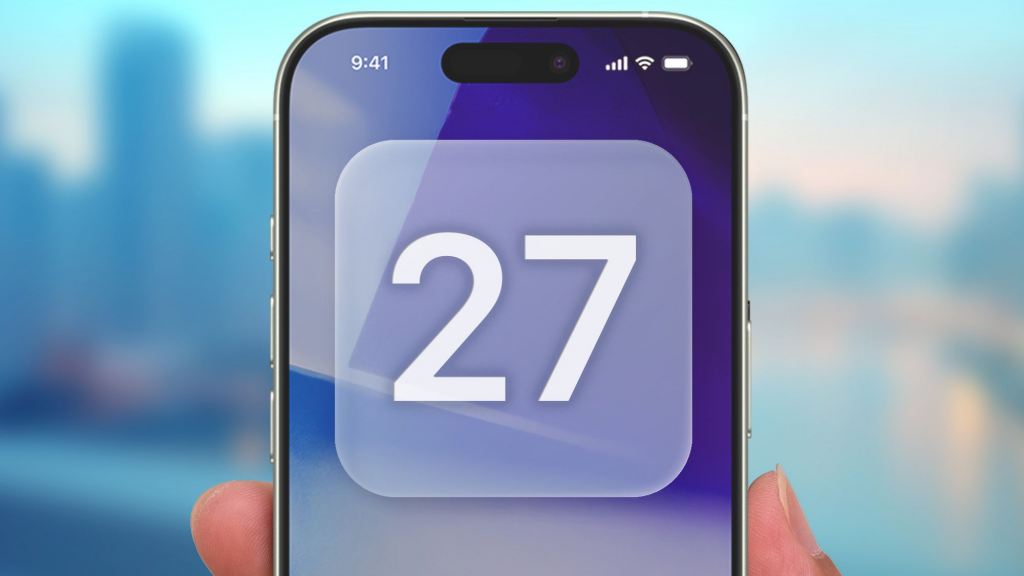
The most important takeaway from Gurman’s report is that iOS 27 appears far from finished.
What Apple revealed during WWDC already represented one of the company’s most AI-focused software updates ever. Siri AI, visual intelligence, smarter productivity tools, AI-powered creativity features, and deeper contextual awareness collectively signal a major shift in how Apple thinks about software.
If these additional features arrive later this year, they will further reinforce a broader trend emerging across Apple’s ecosystem.
The company is no longer simply making devices that respond to user input. It is building devices that anticipate needs, adapt to individual preferences, and increasingly serve as intelligent companions rather than passive tools.
For Apple fans, the exciting part is that WWDC may have only shown the opening chapter.
And if Gurman’s reporting proves accurate, some of iOS 27’s most interesting features are still waiting in the wings.