



Apple WWDC 2026 Was a Wake-Up Call for the Entire Tech Industry
Siri AI, smarter iPhones, AI-powered Safari and a radically more intelligent Apple ecosystem show that Apple is finally ready to compete seriously in the AI era
For the past two years, the technology industry has been consumed by artificial intelligence. Google has been weaving Gemini throughout its ecosystem, Microsoft has transformed Copilot into the centrepiece of Windows, and OpenAI has become one of the most influential companies in Silicon Valley. Every major technology brand has been racing to convince consumers that AI will fundamentally reshape how we work, communicate, create, search for information, and interact with our devices on a daily basis.
During much of that period, Apple appeared unusually restrained.
While competitors rushed to launch chatbots, AI assistants, and experimental features at breakneck speed, Apple largely remained on the sidelines, refining its strategy and taking the methodical approach that has defined many of its most successful product launches. That silence inevitably led to questions about whether the company had fallen behind in what is rapidly becoming the most important technological shift since the smartphone revolution.
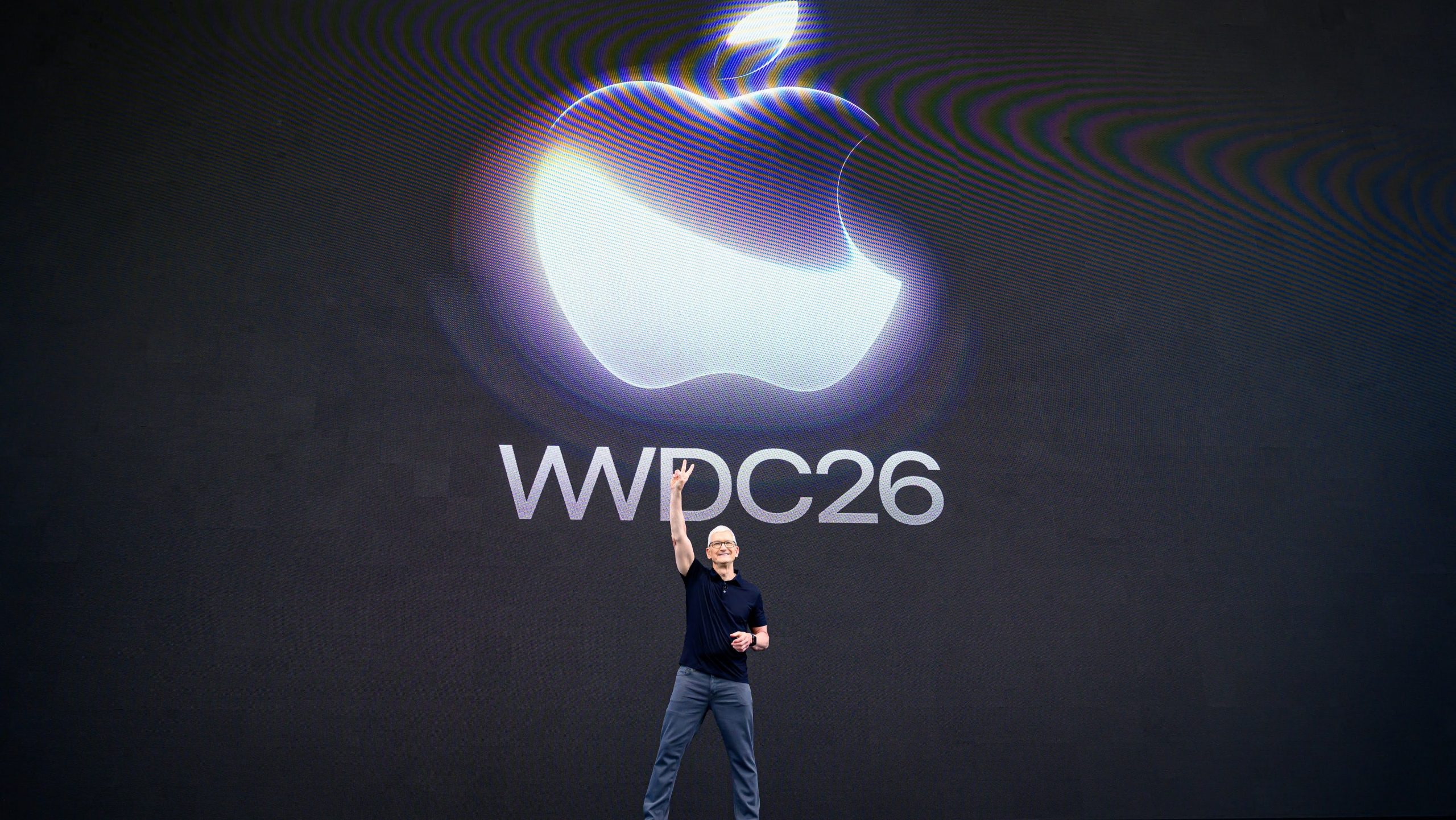
WWDC 2026 provided Apple’s answer, and it was far more comprehensive than many observers expected.
Rather than unveiling a handful of AI-powered tools and calling it a day, Apple used its Worldwide Developers Conference to showcase a vision in which artificial intelligence becomes deeply embedded across every major platform, application, and user experience. The company introduced Siri AI, a dramatically upgraded version of its voice assistant that finally feels capable of competing with modern AI systems, while simultaneously announcing significant intelligence upgrades for iOS 27, macOS Golden Gate, Safari, Messages, Mail, Home, and parental controls.
Taken together, these announcements represent far more than a routine software refresh. They reveal a company that is no longer cautiously observing the AI race from a distance but actively positioning itself as one of the industry’s most serious competitors.
Most importantly, Apple is attempting something that many rivals continue to struggle with: making AI feel genuinely useful rather than simply impressive.
Siri AI finally delivers on a promise Apple made years ago
If there was one announcement that defined WWDC 2026, it was the complete reinvention of Siri.
For years, Siri has occupied an increasingly awkward position within Apple’s ecosystem. Despite being one of the first mainstream voice assistants, it gradually lost ground as competitors developed systems capable of maintaining conversations, understanding context, and delivering richer, more intelligent responses. While Siri remained useful for basic tasks such as setting alarms, creating reminders, or controlling smart home devices, it rarely felt like the intelligent digital assistant Apple originally envisioned.
The new Siri AI aims to change that perception entirely.
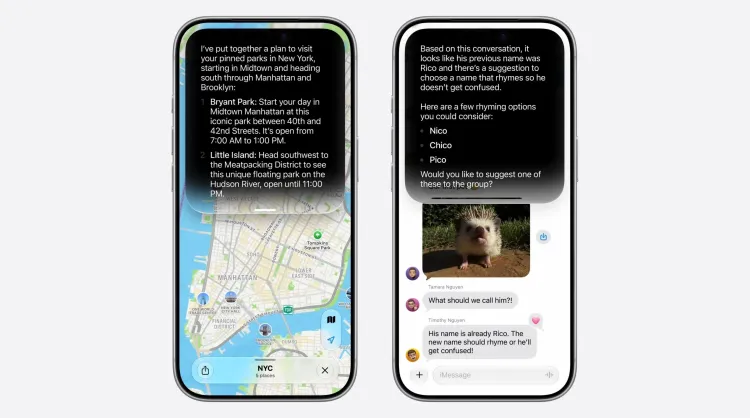
Powered by the latest version of Apple Intelligence, Siri AI introduces a much more sophisticated conversational experience that allows users to engage naturally rather than treating the assistant like a glorified command line. Instead of responding to isolated requests, the system can maintain context across conversations, understand follow-up questions, and provide detailed responses that feel substantially more human.
The most significant advancement, however, is Apple’s introduction of onscreen awareness.
This capability allows Siri AI to understand what is currently displayed on a user’s device and use that information as context when responding to questions or carrying out actions. Rather than forcing users to explain what they are viewing, the assistant can analyse information directly from the screen and provide relevant assistance instantly.
The practical implications are enormous. A user reviewing a travel itinerary could ask Siri about flight details without manually opening separate applications. Someone reading a lengthy report could request a summary without copying text into another service. An email containing event information could be transformed into a calendar appointment through a simple conversational request.
What makes this particularly compelling is that the technology fades into the background. Users do not need to think about AI as a separate tool because it becomes integrated directly into the tasks they are already performing.
Apple is also introducing a standalone Siri AI application that stores conversation history and allows users to revisit previous interactions. This seemingly small addition addresses one of the major frustrations associated with traditional voice assistants, which often treat every interaction as a completely new conversation.
By creating continuity between conversations, Siri AI begins to feel less like a feature and more like a persistent digital companion.
iOS 27 transforms the iPhone into an AI-first device
While Siri AI may be the headline feature, its impact becomes most visible through iOS 27, where Apple has integrated intelligence throughout the operating system.
One of the most notable changes is how users access Siri AI. Rather than requiring specific commands or dedicated interfaces, the assistant becomes available through a simple swipe from the Dynamic Island, creating a more fluid interaction model that feels natural within the broader iPhone experience.
The Camera app receives one of the most intriguing upgrades through a feature Apple calls Siri Mode.
This functionality allows the camera to analyse objects, landmarks, products, and items appearing within the viewfinder and provide contextual information about them in real time. Users can point their camera at a building and ask questions about its history, identify products they encounter while shopping, or gain additional information about objects without needing to switch between multiple applications.
The feature effectively turns the iPhone’s camera into a visual intelligence tool, bringing together image recognition and conversational AI in a way that feels practical rather than experimental.
Apple has also responded to criticism surrounding its Liquid Glass design language by introducing a new opacity slider that gives users greater control over the visual appearance of the interface. The original implementation generated mixed reactions, with some users praising its futuristic aesthetic while others found certain elements distracting or overly transparent.
Providing customization options allows Apple to retain the visual identity of Liquid Glass while accommodating different user preferences, which is likely to be welcomed by those who appreciate choice rather than rigid design decisions.
macOS Golden Gate makes Spotlight smarter than ever
Mac users are receiving some of the most practical AI enhancements announced during the keynote.
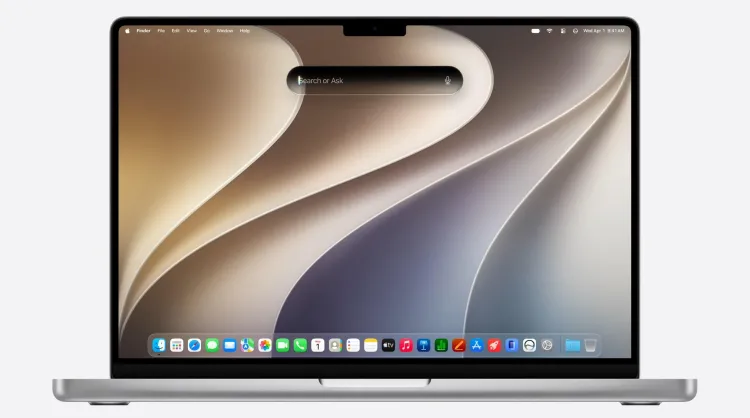
For years, Spotlight has quietly been one of the most powerful features within macOS, allowing users to locate files, launch applications, perform calculations, and access information quickly. With macOS 27 Golden Gate, Apple is transforming Spotlight into a central hub for AI interactions.
Users can now ask Siri questions directly through the Spotlight search bar, turning what was once a file search utility into a much more versatile productivity tool. Documents can be selected and queried, information can be summarized, and complex searches can be performed using natural language.
This evolution reflects a broader trend throughout Apple’s software strategy. Rather than creating entirely separate AI applications, the company is integrating intelligence into tools that people already use every day.
The update also introduces a series of visual refinements that long-time Mac users are likely to appreciate. Window corner radiuses become slightly tighter, colorful sidebar icons make a return, and users gain additional control over Liquid Glass transparency levels.
While these changes may seem relatively minor compared with the AI announcements, they reinforce Apple’s ongoing commitment to balancing innovation with usability.
Safari becomes one of Apple’s most surprisingly intelligent apps
Among the many announcements at WWDC 2026, Safari emerged as one of the biggest surprises.
Web browsers are increasingly becoming battlegrounds for artificial intelligence, and Apple clearly intends to make Safari a more active participant in that competition.
Perhaps the most immediately useful addition is AI-powered tab management. Modern browsing habits often result in dozens of open tabs competing for attention, creating clutter that can quickly become overwhelming. Safari can now automatically organize open webpages into groups based on topic, making it easier to navigate large collections of content without manually sorting everything.
The new Notify Me feature may prove even more valuable.
Users can instruct Safari to monitor webpages and alert them when specific changes occur. Someone tracking a sold-out product can receive a notification when it becomes available again. Travelers can monitor hotel rates or airline tickets. Event enthusiasts can keep an eye on ticket availability without repeatedly refreshing pages.
It is the kind of feature that quietly eliminates friction from everyday digital life, which is often where Apple’s software innovations shine brightest.
Safari is also gaining the ability to update compromised passwords automatically and generate browser extensions through natural language descriptions. Rather than requiring users to learn development tools or install third-party software, Apple is lowering the barrier to customization in ways that could dramatically expand what ordinary users can accomplish.
Intelligence spreads across Apple’s entire ecosystem
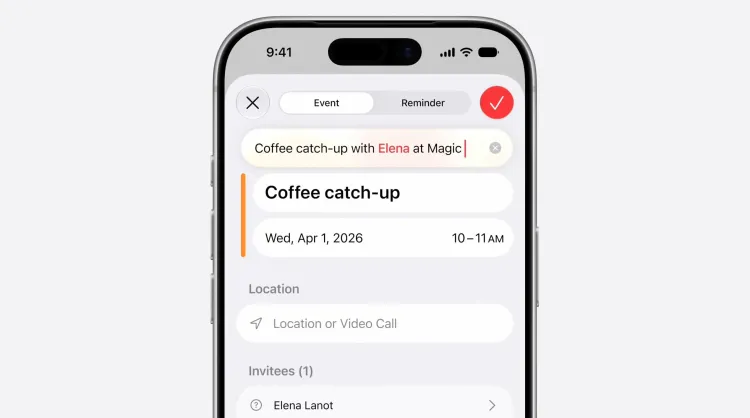
Beyond Siri and Safari, Apple Intelligence is finding its way into virtually every major application.
Messages can now suggest relevant photos based on conversation context, helping users share memories and content more naturally. The Phone app can surface useful information such as reservation details, confirmation numbers, or travel information at the start of calls. Mail gains smarter recommendations and improved scheduling capabilities that allow users to create calendar events using conversational language.
Apple’s Shortcuts platform also becomes significantly more accessible by allowing automations to be created through natural language rather than requiring users to build workflows manually.
Meanwhile, Image Playground continues evolving into a more sophisticated creative tool, enabling users to alter photo compositions, remove distractions, and make advanced edits through AI-assisted controls.
Collectively, these upgrades reveal Apple’s broader AI philosophy. Rather than treating artificial intelligence as a standalone product category, the company is embedding intelligence into existing workflows and applications where it can provide the most practical value.
The Home app and parental controls receive major upgrades too
Even Apple’s Home ecosystem benefits from the company’s AI push.
The Home app can now generate summaries of security camera footage, helping users understand key events without manually reviewing hours of recordings. It can also combine footage from multiple cameras to provide a more complete picture of activity around the home.
Natural language search makes finding specific moments dramatically easier. Instead of scrolling endlessly through recordings, users can simply describe what they are looking for and allow the system to locate relevant footage.
Apple is also introducing support for 4K playback on compatible cameras, improving overall image quality for homeowners invested in smart security systems.
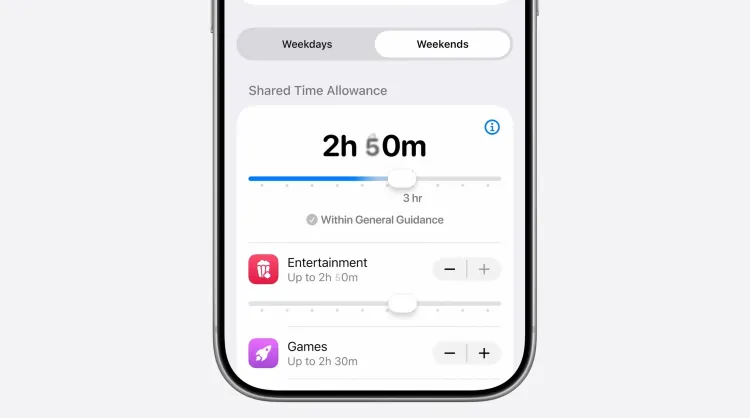
Meanwhile, parents may find some of the most meaningful updates in Apple’s redesigned parental controls.
The company has significantly expanded content management capabilities, allowing parents to determine which applications and content their children can access while requiring approval before visiting new websites. Screen Time has also been redesigned to make managing digital habits simpler and more intuitive.
In an age where concerns about children’s online activity continue to grow, these updates may ultimately prove just as important as the company’s AI advancements.
Apple’s AI strategy finally makes sense
What made WWDC 2026 so significant was not any individual feature but the clarity of Apple’s overall direction.
For the first time, the company presented a cohesive vision in which artificial intelligence operates quietly beneath the surface of everyday experiences. Siri becomes genuinely conversational, applications become more proactive, devices become more contextually aware, and software adapts more intelligently to user needs.
Unlike many competitors that lead with technology and expect users to figure out how to incorporate it into their lives, Apple is approaching AI through the lens of experience. The company appears less interested in demonstrating what artificial intelligence can do and more focused on showing how it can make technology feel simpler, faster, and more intuitive.
That distinction could prove critical.
Because while the AI race has largely been defined by increasingly powerful models and ever-more impressive demonstrations, the next phase will likely be determined by which companies make those capabilities genuinely useful for everyday people.
Based on what Apple revealed at WWDC 2026, it finally looks ready to compete in that race.