

TCL NXTPAPER 70 Pro review: the phone that finally admitted screens are ruining us
A physical slider, a matte display that kills glare dead, and seven days of battery in reading mode. Your optician is going to be very confused.
Somewhere between the third consecutive hour of doomscrolling and the moment you realise your eyes feel like they have been filled with fine gravel, most of us have the same thought: there has to be a better way to do this. We just never expect the answer to cost £260 and come with a physical switch on the side.
The TCL NXTPAPER 70 Pro is not trying to be the most powerful phone in the room. It is not interested in your benchmark scores or your camera sample shootouts or whatever processor Apple is calling revolutionary this year. It is interested in one thing: what if your phone stopped actively destroying your eyesight, and what if it did that without asking you to give up the smartphone experience entirely or pay flagship money for the privilege.
That is a narrower pitch than most phone launches. It is also, for a surprisingly large number of people, exactly the right one.
Quick specs
| Price | Around £260 |
| Display | 6.9-inch FHD+ LCD, 120Hz, NXTPAPER 4.0 |
| Chipset | MediaTek Dimensity 7300 |
| RAM | 8GB (plus up to 16GB virtual) |
| Storage | 256GB / 512GB, microSD up to 2TB |
| Battery | 5,200mAh, 33W wired |
| Main camera | 50MP with OIS |
| OS | Android with TCL UI |
| Water resistance | IP68 |
Price and availability
The TCL NXTPAPER 70 Pro lands at around £260, which is the kind of price that makes you read the spec sheet twice to check you have not missed anything. You have not missed anything. This is a legitimate mid-range phone with a 120Hz display, 512GB of storage, IP68 water resistance, OIS on the main camera, and a hardware innovation that no other phone at any price currently offers.
For context: comparable storage on an iPhone requires a serious conversation with your bank account. The NXTPAPER 70 Pro ships with half a terabyte as standard on the higher configuration and adds a microSD slot that extends to 2TB on top of that. The storage situation alone would justify the price before you factor in everything else.
There is one configuration to choose from in terms of the core hardware design. The NXTPAPER Key is not an optional extra or a premium model feature. It is on every unit. At £260 that feels almost reckless on TCL’s part. It is not. It is confidence.
Design: the phone that looks like it has a secret
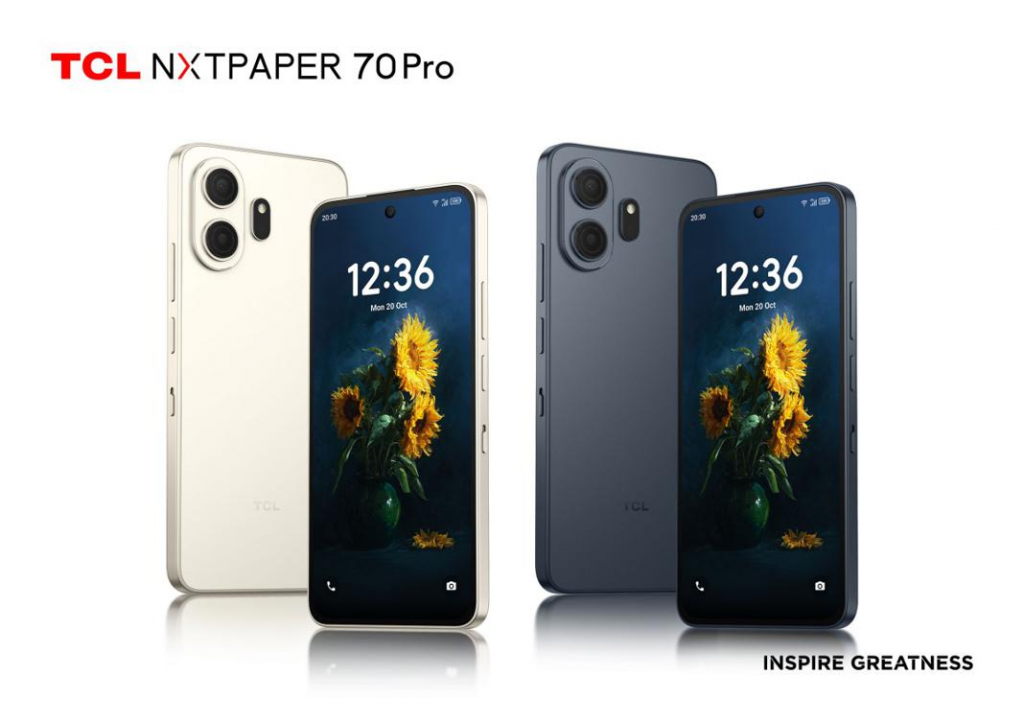
The NXTPAPER 70 Pro does not look like other phones, and that is not a subtle observation. The matte display surface means it does not catch light the way glass-fronted phones do, which makes it look slightly wrong in the best possible way. People notice it. Not because it is flashy, but because it is not, and that absence of shine in a world of mirrored glass slabs registers as something unusual.
The 6.9-inch body is large. There is no soft way to say that. If you are used to a compact phone, the 70 Pro will require a period of adjustment and probably a coat with decent pockets. Within a week it becomes normal. Within two weeks you will find yourself slightly annoyed by smaller screens. This is not a bug.
Build quality sits comfortably above what the price suggests. It does not feel like a budget phone in the hand, which matters because budget phones that feel like budget phones get treated accordingly. The IP68 water resistance certification is a legitimate claim rather than splash protection dressed up in official-sounding language, which at this price is not something you should take for granted. Reading in the bath, using it in British rain, dropping it in the kitchen sink: covered.
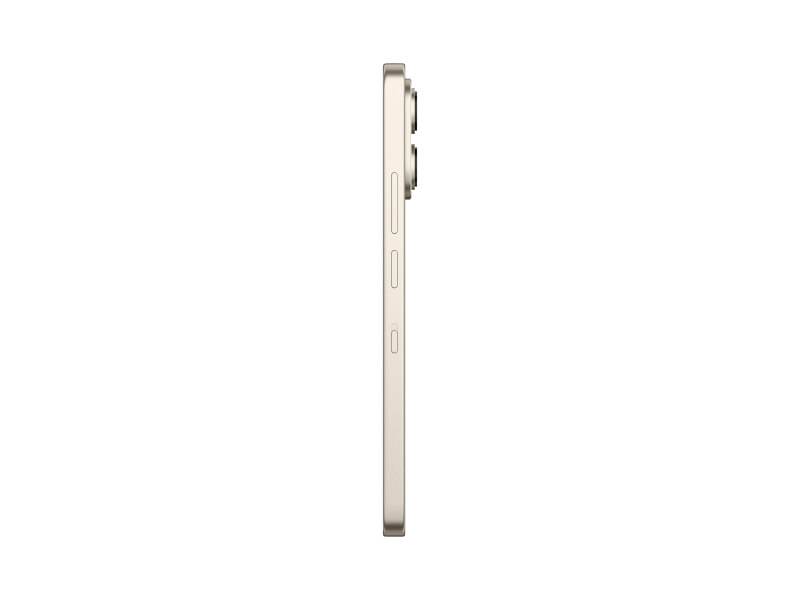
The NXTPAPER Key sits on the right side of the phone, positioned below the volume buttons. It is a physical slider with three distinct positions and proper tactile feedback between them. It feels like it belongs on a piece of audiophile equipment rather than a mid-range phone, which is either a design choice or a happy accident, and either way the result is the same: it is satisfying to use in a way that software buttons simply are not. Every time you flick it you feel like you are doing something intentional with your device, which is a sensation that most smartphone interactions have entirely eliminated.
The display: where the NXTPAPER 70 Pro earns every penny
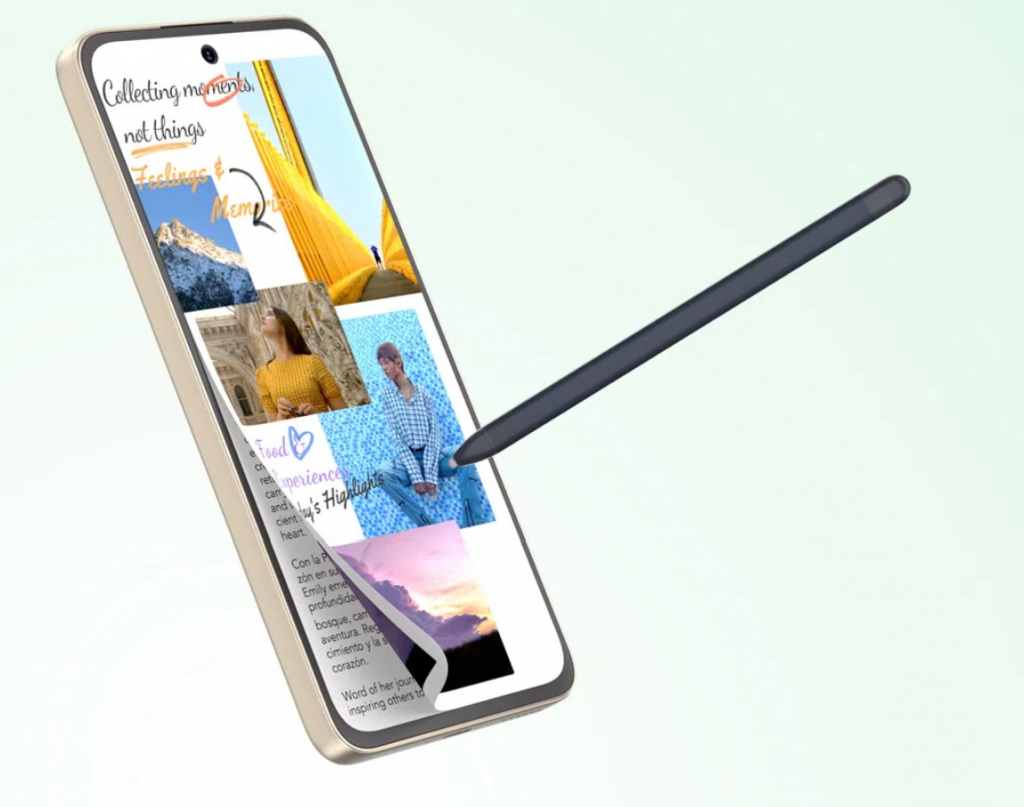
The screen on the NXTPAPER 70 Pro requires a slightly longer explanation than most phone displays because it is doing several things simultaneously that most displays do not do at all, and understanding what they are makes it easier to appreciate why the experience feels so different.
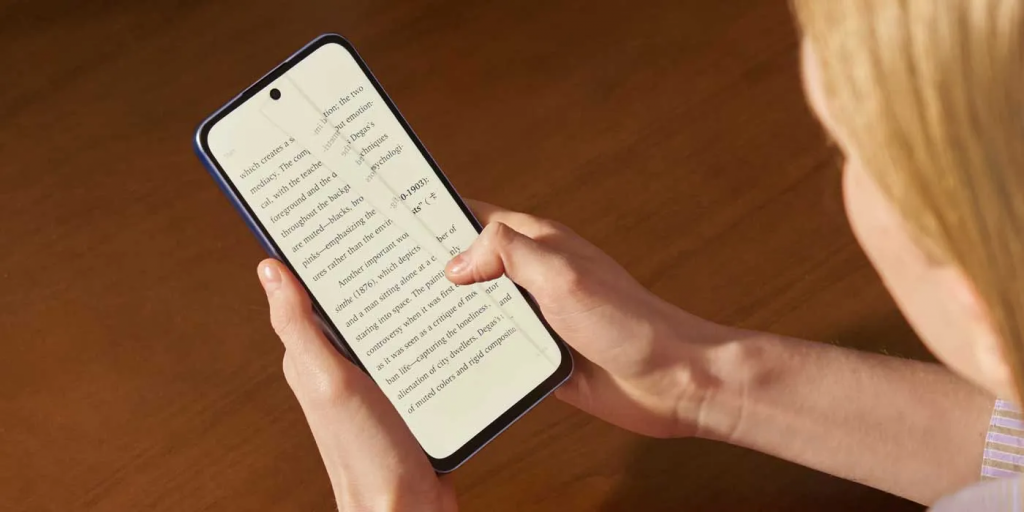
Start with the basics. This is a 6.9-inch FHD+ LCD panel running at 120Hz. It is not an OLED, and that is a deliberate choice rather than a cost-cutting measure. TCL’s NXTPAPER 4.0 technology works by applying nano-matrix lithography to the screen surface, essentially etching it at a microscopic level to diffuse incoming light rather than reflect it. Most phone screens are mirrors with content on them. This one absorbs light. The practical difference in direct sunlight is not subtle: it is the difference between squinting at a welding torch and reading a magazine.
Sitting outside in actual British sunshine, which happens rarely enough that it feels worth testing thoroughly when it does arrive, the NXTPAPER 70 Pro is simply readable where glass-fronted phones are not. Glare is not reduced. It is effectively eliminated. The surface does not pick up fingerprints in the usual way either, which removes the constant maintenance loop that most phones require to look presentable.
Circularly Polarised Light technology mimics the way natural light interacts with a physical printed page, softening the light reaching your eyes rather than firing it directly at your retinas the way standard displays do. Combined with hardware-level blue light reduction that brings the blue light output down to 3.41%, this is a phone whose display has been engineered with the actual experience of looking at it for hours as the primary design constraint rather than an afterthought managed by a software filter.
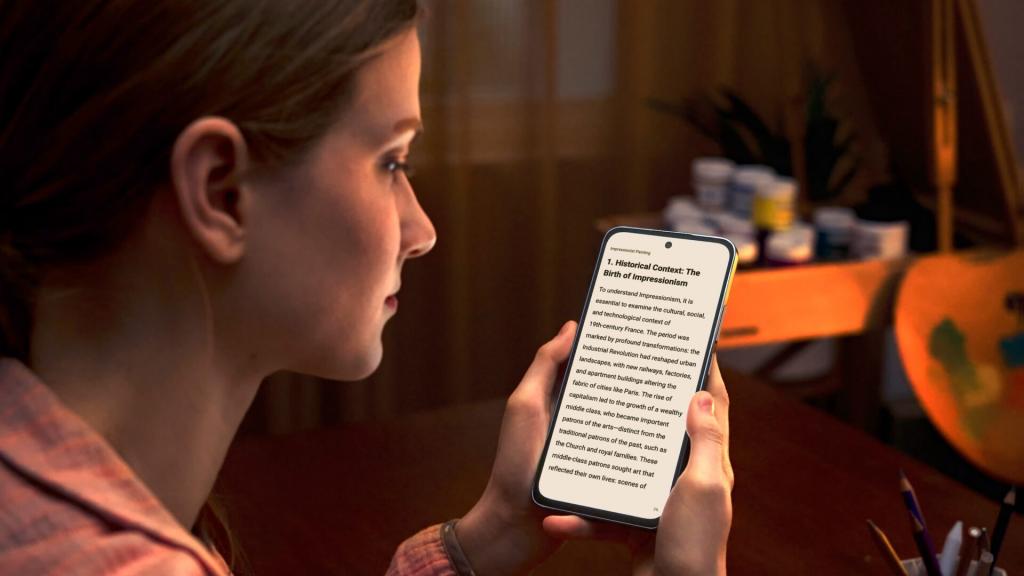
After two hours of reading on the NXTPAPER 70 Pro, eyes feel normal. Not fine. Not manageable. Normal. For anyone who has spent significant time reading on phones or tablets and accepted the resulting eye fatigue as simply the cost of modern life, that is a genuinely strange and welcome experience.
The 120Hz refresh rate keeps everything smooth, and the matte surface gives colours a quality that reads as organic rather than oversaturated. It is less immediately striking than an OLED but more comfortable over long periods, which is the correct trade-off for a phone built around extended use.
The NXTPAPER Key: the best physical button on any phone right now
The slider. Let us talk about the slider.
The NXTPAPER Key has three positions, and each one changes not just how the display looks but how the entire phone behaves. This is the feature that separates the NXTPAPER 70 Pro from every other phone on the market at any price, and it is the reason this review exists as a genuinely enthusiastic document rather than a competent-but-unremarkable mid-range assessment.
Standard Mode, with the slider down, is a normal phone. Full colour, 120Hz, everything you would expect from a capable mid-range device. The matte display makes colours look considered rather than aggressive, but you are in full smartphone mode and the battery behaves accordingly: a day and a half of typical use, finishing around 30% with moderate GPS activity.
Flick the slider up one position and the phone enters Colour Paper Mode. Saturation softens, the screen takes on the quality of a well-printed magazine, and everything becomes noticeably calmer to look at. This is the mode for reading longform content, browsing at length, or using the phone in the evening when you want to wind down rather than wire yourself up. Battery life extends noticeably here because the display is no longer working hard to produce vivid colour output. It runs at a sustainable pace rather than a sprint.
Push the slider to its top position and the phone goes monochrome. Full black and white, mimicking the appearance of an E-ink display while maintaining the 120Hz responsiveness that E-ink cannot match. Max Ink Mode goes further: it clears background notifications, simplifies the interface to core reading and productivity functions, and removes the visual clutter that makes smartphone use compulsive rather than intentional. The effect on behaviour is immediate and slightly startling. Doomscrolling through social media in monochrome is an experience that loses its appeal almost instantly. Content that exists entirely to capture attention through saturated colour and motion becomes much less compelling when rendered in greyscale. The phone becomes a tool again rather than an entertainment device optimised to keep you on it.
Battery life in Max Ink Mode is the specification that sounds like a misprint: seven days of immersive reading, or 26 days of standby. In real use, going from Monday morning to Friday afternoon on a single charge while using the phone for work emails, reading, and notes is achievable. For anyone who has accepted daily charging as an immutable feature of modern smartphone ownership, this is a significant recalibration.
The physical nature of the switch matters more than it might seem. A software setting buried in a menu requires a decision and some navigation. A slider requires a flick. The frictionlessness of the transition is what makes it actually get used across the day rather than being a feature you configure once and then stop thinking about.
Performance: honest about what it is
The MediaTek Dimensity 7300 is not a flagship chip and does not pretend to be. In every scenario that makes up the majority of real smartphone use, it is completely fine: smooth, responsive, handles multitasking without complaint. Running Slack, Chrome, Spotify, and a reading app simultaneously produces no stuttering or reloading. The interface feels fast because it is fast for what it is being asked to do.
The 8GB of physical RAM can be supplemented with up to 16GB of virtual RAM borrowed from the storage, bringing the headline figure to 24GB. This does not turn the NXTPAPER 70 Pro into a gaming powerhouse, and framing it that way would be misleading. Demanding 3D titles show frame drops at higher settings, and if mobile gaming is a priority this is not the right phone. For everything else, including casual games, the performance is perfectly solid.
The 512GB storage is a genuine highlight that deserves more attention than it typically gets. Half a terabyte on a £260 phone, plus a microSD slot that extends capacity to 2TB if needed. Storage anxiety is simply not a concept that applies to the NXTPAPER 70 Pro, which in an era of cloud storage paywalls and manufacturer-imposed storage tiers feels like a principled stand.
AI features: useful rather than decorative
TCL has built AI features into the NXTPAPER 70 Pro that are worth calling out because they are integrated into the device’s reading and productivity identity rather than bolted on for the spec sheet.
Smart Voice Memo transcribes and summarises audio, which in practice means meeting notes, interviews, and voice memos converted to searchable text without manual effort. Real-time subtitle translation covers audio playing on the device in any language, which is useful for anyone who watches international content or works across language barriers. The face-to-face translation mode works for live conversations.
The text comprehension tool lets you select and drag any on-screen text to instantly translate, explain, or rewrite it, which is genuinely fast and works without copying text to a separate app. AI writing assist generates complete messages from brief prompts, which covers the use case of needing to send a considered email quickly when the full thought is not quite there yet.
Max Ink Mode unlocks a dedicated reading AI suite: an outline tool that summarises long articles, a Q&A function for deeper engagement with content, and an AI Podcast feature that converts text into a two-host audio discussion. The podcast conversion is the kind of feature that sounds like a gimmick until you use it on a long article during a commute and realise it is actually solving a real problem.
The T-Pen stylus, available separately, adds handwriting recognition that converts notes to editable text with minimal latency. The matte screen surface gives stylus input a paper-like drag that makes note-taking feel more deliberate and satisfying than writing on a glass surface, which is a small detail that meaningfully improves the experience of using it regularly.
Camera and battery: solid where it matters
The 50MP main sensor with Optical Image Stabilisation produces natural, accurate colours rather than the oversaturated output that some manufacturers use to make photos look impressive in a thumbnail. In daylight the results are sharp and honest. Night mode performs adequately for social sharing and documentary purposes, without challenging the dedicated camera phones that cost twice as much. This is a camera for people who want to take good photos easily, not for people who want to have arguments about dynamic range.
The 5,200mAh battery in Standard Mode delivers a day and a half of typical use comfortably. In Colour Paper Mode that extends meaningfully. In Max Ink Mode the battery behaviour is, as mentioned, essentially unprecedented for a smartphone. The 33W charging takes around 75 minutes for a full charge, which is slower than the fastest options available at this price point. Given how infrequently the phone needs charging in reading-focused use, this is a less significant limitation than the specification makes it sound. It matters most for people who use the phone heavily in Standard Mode and need a quick top-up. For everyone else, the charging speed is largely academic.
Verdict
The TCL NXTPAPER 70 Pro is the most interesting phone at its price point and one of the most interesting phones available right now regardless of price. Not because it has the best camera or the fastest chip or the most vibrant display. Because it is the only phone that has looked at how people actually use smartphones and asked whether the experience could be fundamentally kinder to the person holding it.
The answer, as it turns out, is yes. A matte display that eliminates glare. Blue light reduction at the hardware level that actually works. A physical slider that shifts the phone’s entire identity between full smartphone and dedicated reading device without requiring any discipline or menu navigation. Seven days of battery in the mode most suited to extended use.
At £260, the NXTPAPER 70 Pro is not asking you to make a significant financial commitment to find out whether this approach to smartphone design suits your life. It is asking for a modest one. The optician appointment you will probably not need to make this year will cost more.
Buy it if you read on your phone, work on your phone, or have simply reached the point where your eyes are done with the current arrangement. Do not buy it if competitive mobile gaming is a priority or if you need the fastest charging available. For everyone else, this is the phone that makes the most sense in 2026, and the fact that it costs £260 is either a mistake or an act of generosity. Either way, take it.