


Motorola’s £1,300 Signature 27 just kicked the door in, and Samsung should be nervous
For years, Motorola has been the friend who turns up to the party in a nice jumper, brings decent snacks and leaves before anyone gets loud. Reliable. Likeable. Never the one people are talking about on the way home. The Signature 27 is Motorola kicking the door in wearing a velvet suit.
It has Qualcomm’s newest and fastest chip, a screen Motorola swears is the brightest ever put in a phone, a 200MP zoom camera, Bang & Olufsen speakers and a battery big enough to make Samsung quietly shuffle its feet. It also costs £1,300, which is the point where we put our tea down and said “sorry, how much?” out loud. Let’s dig in.
What is the Motorola Signature 27?
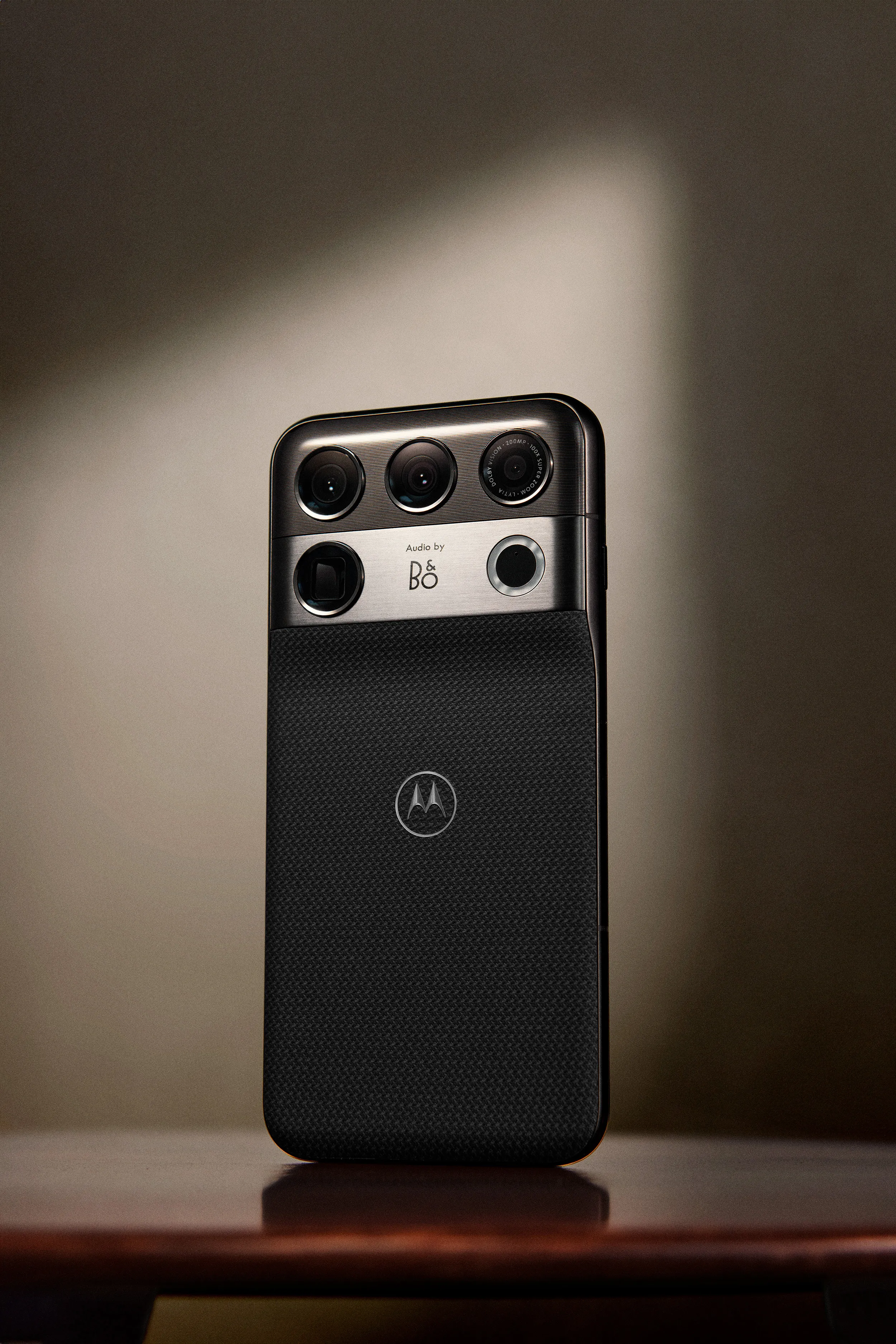
It’s the second phone in Motorola’s premium Signature line. The first, which arrived in January, was gorgeous to hold and lovely to look at, but under the bonnet sat the Snapdragon 8 Gen 5, a chip one rung below what Samsung and Google were using. A classic car with a family-hatchback engine, basically.
Motorola has clearly read the comments. It unveiled the Signature 27 at Qualcomm’s Snapdragon Summit in Hawaii back in September as one of the very first phones with the shiny new Snapdragon 8 Elite Extreme Gen 6. Then it teased us like a reality TV trailer for six weeks before spilling everything on 5 November.
And yes, the “27” is deliberate. Motorola now names phones after the following year, car-maker style, so a late-2026 phone gets a 2027 badge. We’re weirdly into it.
If you want to nose through the full spec sheet yourself, it’s all on Motorola’s official Signature 27 page.
The design: dressed for a night out
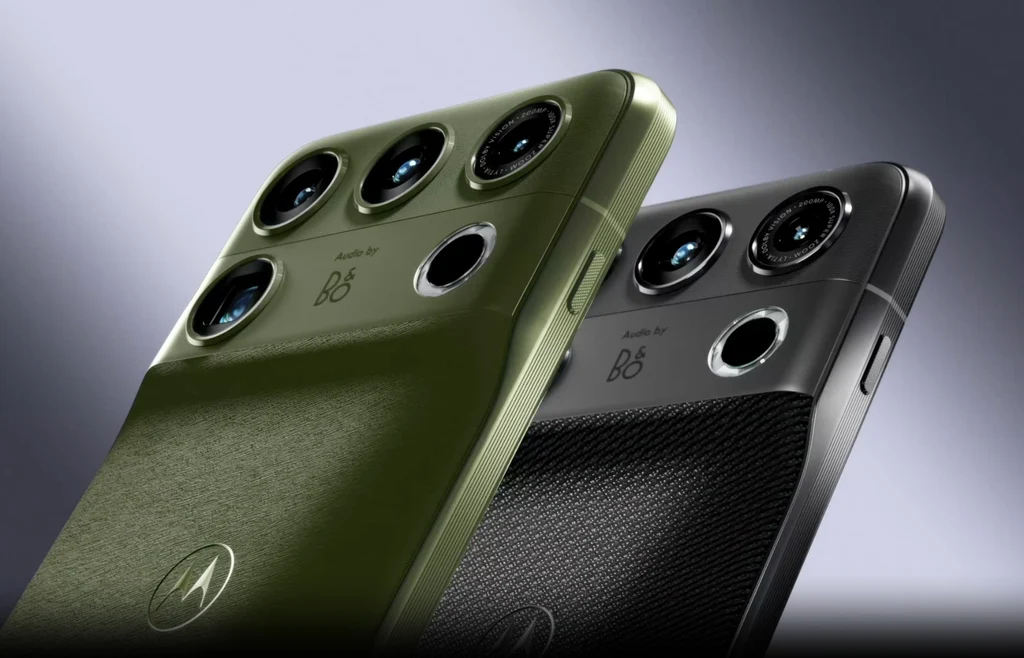
If there’s one thing Motorola does better than almost anyone, it’s making phones you actually want to touch. Most flagships feel like an expensive bar of soap. This one feels tailored.
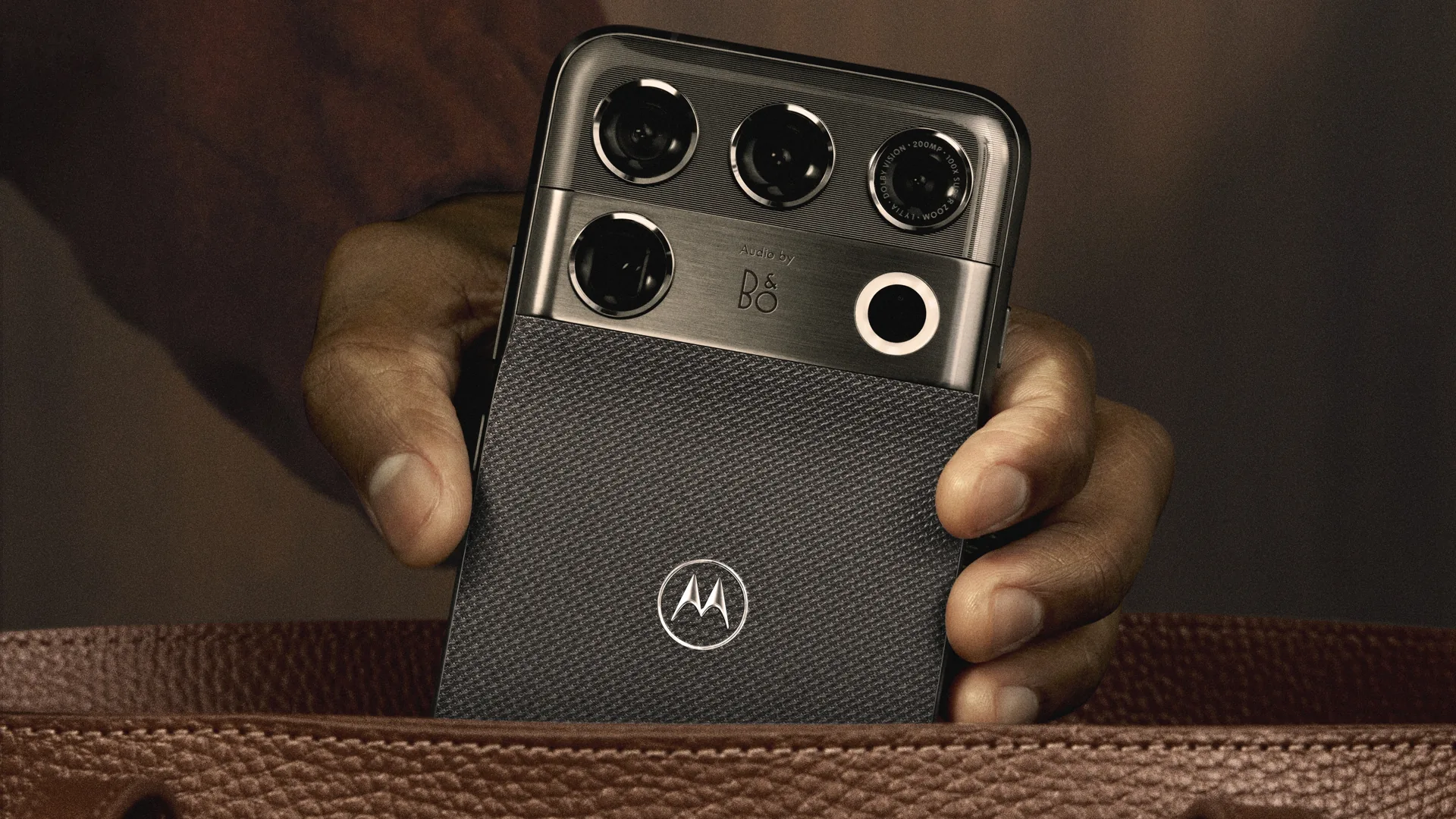
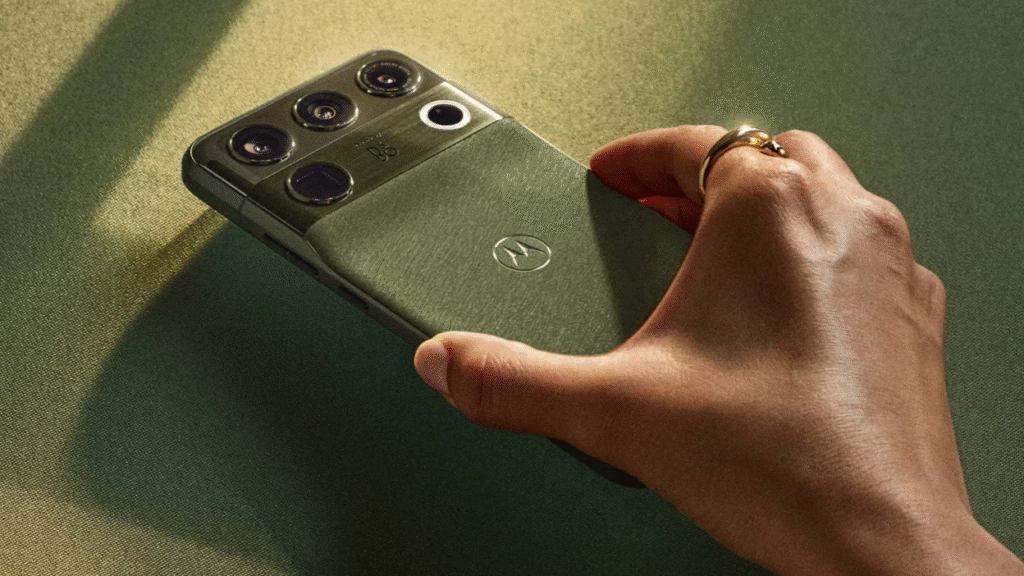
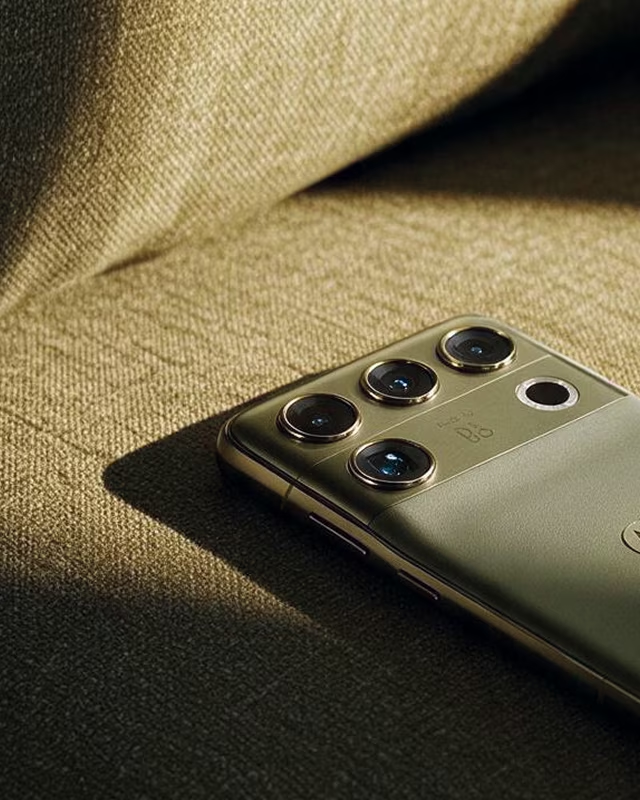
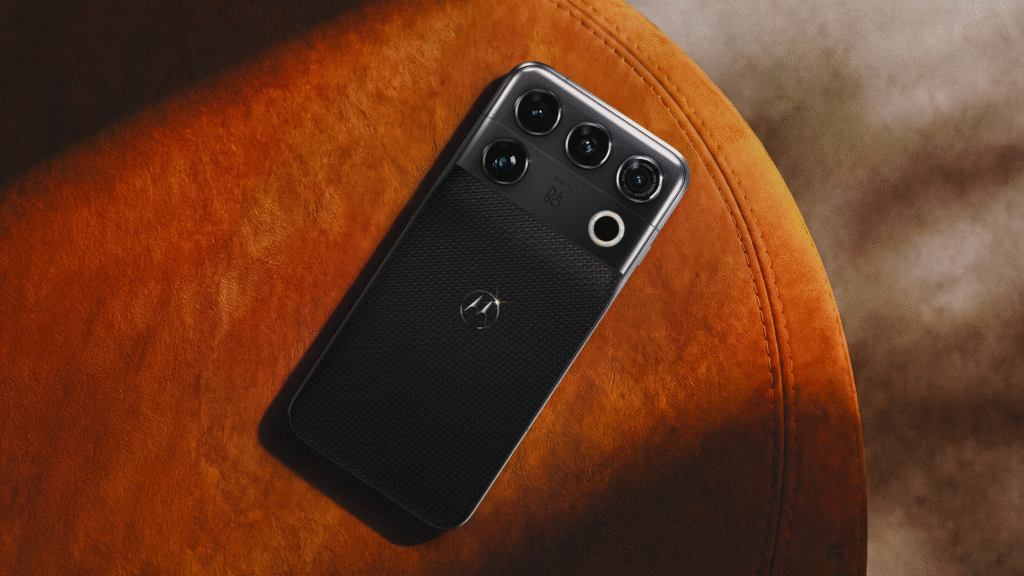
There are two Pantone finishes. Coal Smoke is an inky near-black with a rugged woven texture inspired by car interiors, the kind of grippy trim you’d find on a sports seat. Capulet Olive is a softer green with a brushed, textile feel that wouldn’t look out of place on a designer handbag. Neither one begs to be hidden in a case.
Under the outfit, it’s surprisingly hard as nails. There’s an aerospace-grade aluminium frame, Corning Gorilla Glass Ceramic 3 on the outside, IP68 and IP69 ratings, and it has passed MIL-STD-810H military durability testing. In plain English, it’s dust-tight and shrugs off both bath dunks and high-pressure hot water. We don’t recommend jet-washing it, but it’s nice to know you could.
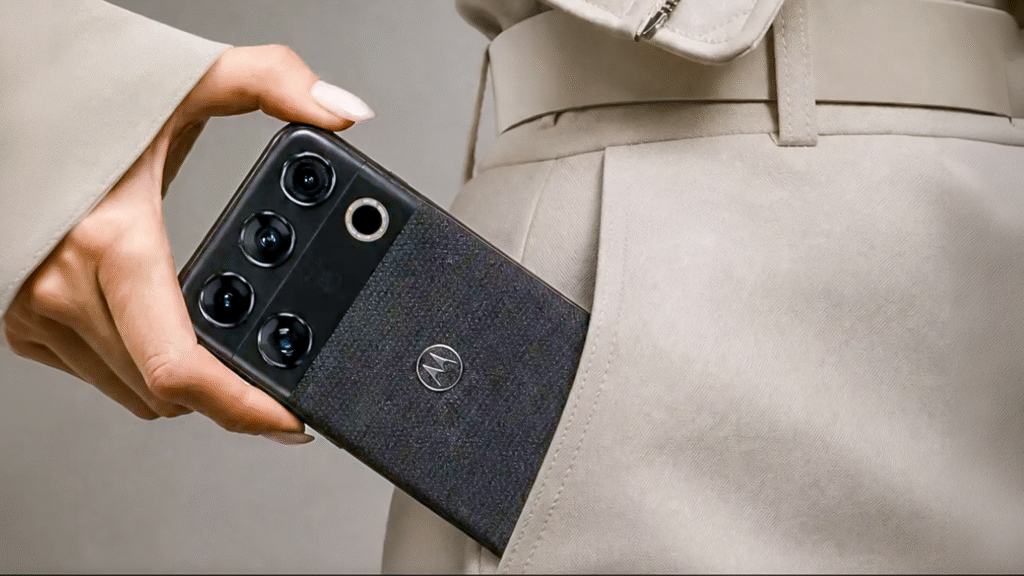
It’s no featherweight at roughly 227g, about the same as Google’s biggest Pixel and a smidge heavier than the Galaxy S26 Ultra. But at just under 8mm thick, it’s impressively slim for something hiding a 7,000mAh battery and a periscope camera. That camera bump, mind you, walks into the room before you do.
The display: bring sunglasses
Here’s the number Motorola really wants you to remember: 12,000 nits. The 6.8-inch Extreme AMOLED Duo screen peaks at that figure, which Motorola says makes it the brightest smartphone display in the world. That’s nearly double the 6,200 nits of the original Signature, which was hardly a dim bulb to begin with.
Before you start worrying about your retinas, a quick reality check. Peak brightness is measured on a tiny patch of the screen, usually a small sparkle of HDR highlight. What it should mean is HDR that really pops, and a screen you can actually read on a sunny beach, rather than tilting your phone around like you’re trying to signal a passing ship.
The clever bit is the “Duo”. It’s tandem OLED, which stacks two light-emitting layers on top of each other, so each one works less hard to reach the same brightness. Motorola claims up to 34% better energy efficiency than before.
It’s a 120Hz LTPO panel with Dolby Vision and HDR10+. That’s actually down from the original Signature’s 165Hz, and somewhere a competitive gamer is drafting an angry post. Honestly? We’d make that trade every day of the week.
The cameras: four eyes, one very good trick
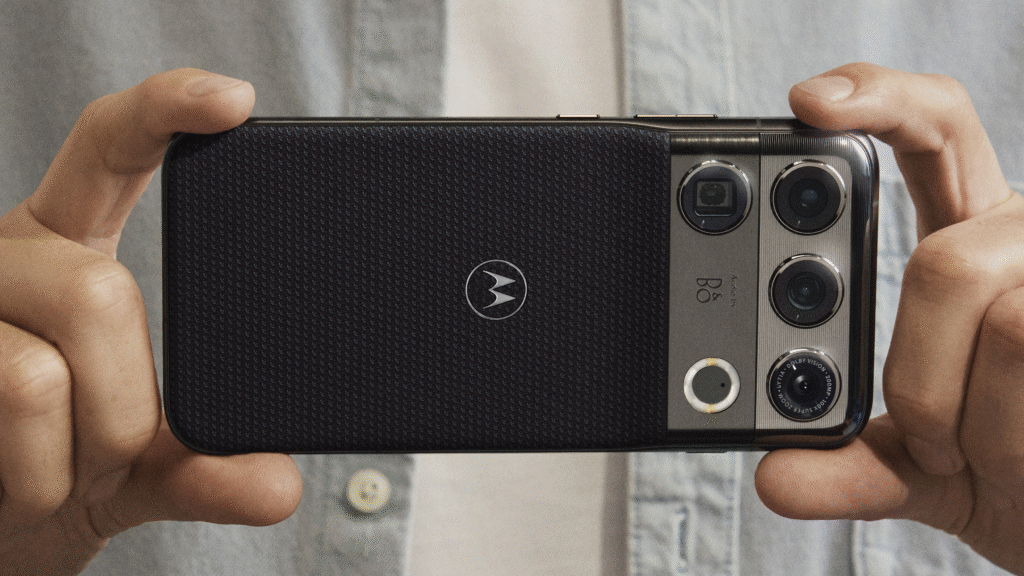
Motorola calls this its best camera system yet, and for once the marketing line isn’t doing all the heavy lifting. Flip it over and you’ll find:
- A 50MP main camera with Sony’s LYTIA 910 sensor, LOFIC tech for better dynamic range, and optical image stabilisation
- A 200MP periscope telephoto with up to 100x Super Zoom
- A 50MP ultrawide
- A dedicated action sensor for things that refuse to sit still
That last one is the star of the show. Motorola says it’s the first dedicated EVS (event-based vision) sensor in a smartphone. Instead of taking full pictures, it watches for changes in light pixel by pixel, which makes it brilliant at tracking movement. Paired with a feature called Action Shot, the idea is to freeze fast subjects without the usual ghostly smear.
If you’ve ever tried to photograph a toddler, a spaniel or a toddler chasing a spaniel, you’ll know why we got excited about this. Most of us have camera rolls full of blurry blobs captioned “this was really cute, honestly”.
The 200MP periscope is the other headline act. With that many pixels, the phone can crop in and still hang on to plenty of detail, so mid-range zoom shots should look far crisper than on the original Signature’s 3x telephoto. The 100x figure leans heavily on digital and AI wizardry, so file it under “fun at gigs” rather than “reason to buy”. There’s also a 50MP selfie camera and 8K 30fps video.
Power, cooling and an AI that runs errands
The Snapdragon 8 Elite Extreme Gen 6 is Qualcomm’s top-dog chip for this generation, built on a 2nm process, and it’s the one we expect to find in the fastest Android phones of the next year. The name sounds like an energy drink, and the performance should feel like one.
Of course, all that power is useless if your phone turns into a hand warmer twenty minutes into a gaming session. Motorola’s redesigned ArcticMesh cooling uses a vapour chamber that’s 40% bigger than before, plus a diamond-infused thermal gel. Yes, diamonds. On the inside. We can only assume Motorola’s engineers have been watching a lot of heist films.
Then there’s the AI. The Signature 27 is built around Google’s Gemini Intelligence and its new party piece, agentic AI. Translation: you don’t just ask your phone questions, you ask it to actually do things. Motorola’s examples include booking an Uber or bagging a table through OpenTable with a single request.
Motorola has thrown in two tools of its own. Rambler is a dictation feature that works out what you meant even when you um, ah and trip over your own sentences. Create My Widget builds a home-screen widget from a plain description. Rambler is the one we want most, because voice typing still treats normal human speech like a riddle.
It runs Android 17 out of the box, with seven years of OS upgrades and security updates promised, matching Samsung and Google. At this price, that’s essential. A £1,300 phone still getting updates in the 2030s is an investment. One that’s abandoned after three years is an expensive paperweight.
Battery and charging: the quiet hero
This might be the biggest upgrade of the lot. The original Signature made do with a 5,200mAh battery. The Signature 27 jumps to a whopping 7,000mAh silicon-carbon cell. Meanwhile Samsung has been clinging to 5,000mAh on its Ultra models for so long it’s practically a family heirloom.
Motorola claims up to 66 hours of mixed use and up to 47 hours of video playback. Manufacturer figures are measured in lab conditions by people who don’t doomscroll at 2am, so pinch of salt and all that. Still, a huge cell, an efficient 2nm chip and a tandem OLED screen should add up to a comfortable two-day phone for most people.
When you do plug in, it’s quick: up to 90W wired, up to 50W wireless and 5W reverse charging for rescuing a dying pair of earbuds. Motorola’s wired speeds still leave Samsung, Apple and Google standing at the bus stop.
Bang & Olufsen sound: a phone speaker worth talking about
Phone speakers are usually the bit of a launch event where everyone checks their emails. Not this time. The Signature 27 is the first phone with audio tuned by Bang & Olufsen, thanks to a multi-year partnership between the two (the original Signature had Bose on speed dial instead).
The bottom speaker is a coaxial design, with one driver handling bass and another acting as a tweeter, while a second speaker up top completes the stereo pair. There are sound modes for music, films, gaming and podcasts. If you watch YouTube in bed, you’ll hear the difference every night.
Price and availability in the UK
Deep breath. The Motorola Signature 27 is listed at £1,300 on Motorola’s UK store, for a model with 12GB of RAM and 512GB of storage. In the US it’s $1,599. The original Signature launched here at £899.99 earlier this year, so that’s about £400 more in under twelve months. That’s quite the glow-up tax.
UK pre-orders are due to open on Motorola’s website on 16 November, with the phone expected on general sale in early December. The UK store is only showing Coal Smoke for now, so we’re keeping an eye out for Capulet Olive. At the time of writing, it isn’t on Amazon UK.
Who is it for?
This is for the person who wants the best Android phone money can buy, but rolls their eyes a little every time they see another Galaxy. If you want a flagship that feels special in the hand, lasts properly and sounds great, the Signature 27 has your name written on it, in a very tasteful serif font.
It’s also a strong shout for parents, pet owners and anyone who photographs things that move, assuming that action sensor lives up to the hype.
Who should skip it? Anyone on a budget, obviously, and anyone perfectly happy with a phone from the last year or two. If you want something kinder to your bank balance, our guide to the phones worth your upgrade money this autumn is a great place to start.
Why it matters
The top of the UK phone market is basically a two-horse race between Apple and Samsung, with Google trotting along behind for the Android purists. Everyone else is fighting over the crumbs. Sony keeps gamely trying, but even solid phones like the Sony Xperia 1 VIII struggle to get a look in.
That’s why the Signature 27 is so interesting. It’s not a copy-and-paste flagship. On paper it has a newer chip than the Galaxy S26 Ultra, a much bigger battery, a far brighter screen and speakers tuned by one of the most famous names in audio. Google’s latest didn’t exactly set the world alight either, as we found in our Google Pixel 11 Pro XL review. Motorola has spotted a gap, and it’s sprinting for it.
The catch is trust. At £1,300, Motorola is asking people to spend top-tier money with a brand many still associate with sensible mid-rangers and nostalgic Razr flip phones. But if any Motorola can pull it off, it’s this one.
The TechSpy take
We expected a pretty phone with one big shouty number on the box. What Motorola has actually delivered is a properly rounded flagship that can square up to Samsung, plus two genuinely fresh ideas in the action sensor and the tandem OLED screen.
The 12,000 nits will hog the headlines, but it’s the sensible stuff that has us grinning: a 7,000mAh battery, seven years of updates, 90W charging and a chip that finally keeps up with the cool kids. That’s what makes a phone a joy in year three, not just in week one.
Our one big wince is the price. £1,300 puts it shoulder to shoulder with the very best from Samsung and Apple, and Motorola hasn’t quite earned that swagger yet. Still, this is the most exciting Motorola in years, and we’re itching to get one in for a full review. Samsung, you might want to look over your shoulder.
Read more: The 48 best gadgets of 2026