


Sony Xperia 1 VIII review: a flagship redesign that still can’t escape its own quirks
Sony finally gave its flagship a new face. We just wish it had fixed the things that actually annoy us.
The verdict
The Xperia 1 VIII is the biggest visual shake-up the Xperia line has had in years, and the textured “ORE” finish genuinely sets it apart from the sea of glass slabs at this price. The telephoto camera is also a real step forward now that Sony has swapped its old continuous zoom for a much larger sensor. But four years of OS updates, patchy day-to-day performance, and a battery that doesn’t live up to Sony’s “two day” claim make this hard to recommend at £1,399, especially with the Xiaomi 17 Ultra sitting right below it on price and outperforming it on longevity promises. This is still very much a phone built for people who already love Sony’s quirks. Everyone else has better options.
Pros and cons
Pros:
- Distinctive textured design that actually improves grip
- Headphone jack and microSD slot, increasingly rare at this price
- Telephoto camera takes a genuine leap forward with its larger sensor
- Stereo front-facing speakers still sound better than most phone speakers
Cons:
- Only four years of OS updates against five from Xiaomi’s 17 Ultra
- Real-world battery life falls well short of the advertised two days
- Performance stutters when switching apps or using the camera for extended periods
- AI Camera Assistant pop-up gets in the way more than it helps
Quick specs
| Price | £1,399 / €1,499 (256GB), rising to £1,849 / €1,999 (1TB Native Gold) |
| Display | 6.5-inch FHD+ OLED, 120Hz, HDR |
| Processor | Snapdragon 8 Elite Gen 5 |
| RAM / Storage | 12GB/256GB or 16GB/1TB |
| Battery | 5,000mAh, 30W wired charging |
| Cameras | 48MP main, 48MP ultrawide, 48MP telephoto (70mm equivalent), 12MP selfie |
| Weight | 200g |
| OS | Android 16, four years of OS updates, six years of security support |
Price and availability
The Xperia 1 VIII launched in the UK and Europe on 19 June, with no US release planned, continuing the pattern Sony has followed since it pulled its flagships from North American shelves. The standard 256GB model costs £1,399 in the UK and €1,499 in the eurozone. Stepping up to 16GB of RAM and 1TB of storage pushes that to £1,849 / €1,999, and that configuration is only available in the new Native Gold finish. Early pre-orders came bundled with a free pair of Sony’s WH-1000XM6 headphones, which retail at around £400 on their own, so anyone who got in early effectively paid nothing extra for a genuinely excellent pair of cans.
For context, that puts the Xperia 1 VIII a full £100 above the Xiaomi 17 Ultra, which starts at £1,299 for 16GB/512GB and runs the same Snapdragon 8 Elite Gen 5 chip with five years of OS updates rather than four.
Design and build

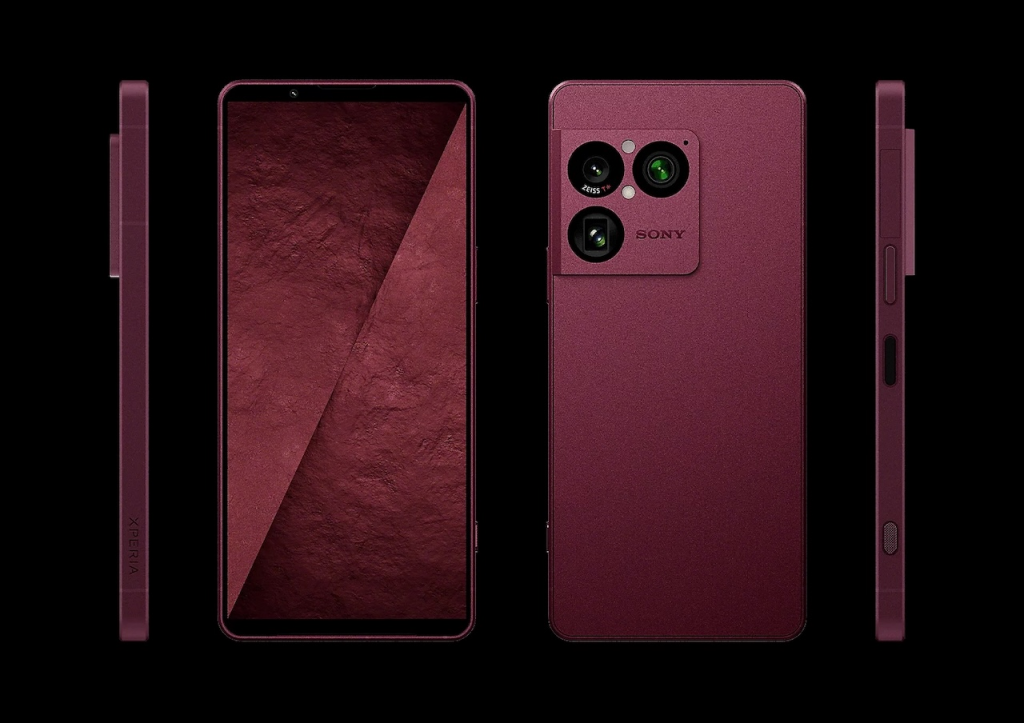
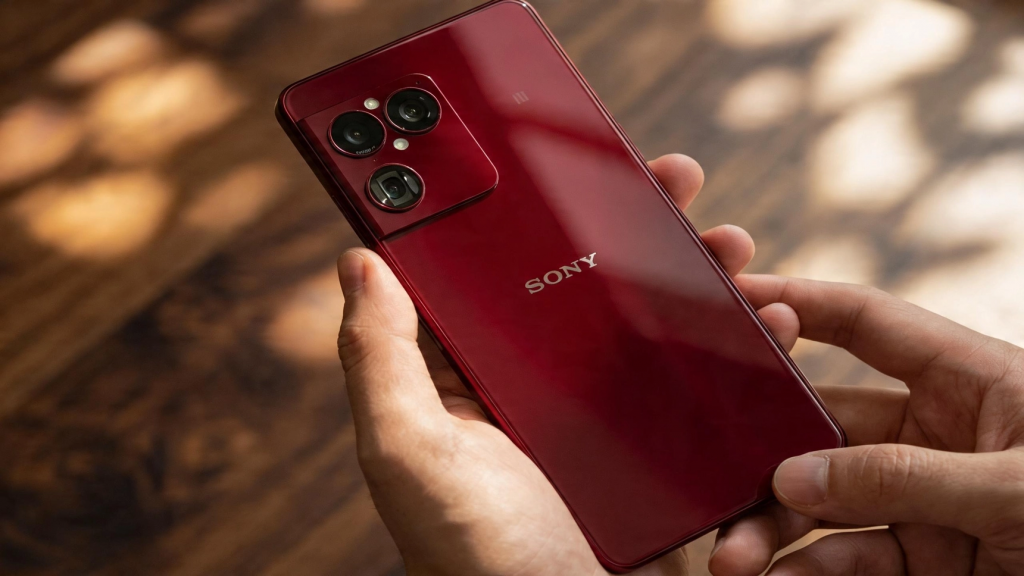
This is the part of the phone we keep coming back to. Sony has dropped the vertical camera strip it’s used since the very first Xperia 1 and replaced it with a square island on the upper left of the back panel, the edges of which drop away sharply on three sides while sloping gently into the frame on the fourth. It’s a small detail, but it’s the kind of thing that makes the phone feel considered rather than assembled from a parts bin.
The bigger change is the finish. Sony calls it “ORE,” and it’s meant to evoke raw, unpolished stone. In practice it feels closer to a very fine nail file, with a texture that shifts subtly between the back panel and the frame so the whole thing doesn’t read as one flat surface. We like it. It grips in a way smooth glass backs never manage, and it makes the phone feel worth its price tag in the hand. We can’t say that about the last couple of Xperia generations.
Sony hasn’t abandoned its enthusiast checklist either. The 3.5mm headphone jack survives, as does the microSD card slot, both vanishingly rare on a flagship in 2026. The two-stage camera shutter button is back too, adding a satisfying bit of tactility to taking photos. Less successful is the recessed power button doubling as a fingerprint sensor. It failed to register our print on roughly one in three attempts during testing, well behind the under-display sensors most rivals now use. We also noticed an odd, roughly textured rectangular patch above the volume button that doesn’t appear to do anything. We’ve asked Sony what it’s for and will update this review if we hear back.
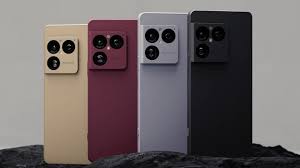
The phone comes in Graphite Black, Iolite Silver, and Garnet Red for the standard configuration, plus the exclusive Native Gold for the 1TB model.
Display
Sony gave up on its old 21:9, 4K Xperia displays a while back, and the 1 VIII sticks with the more conventional setup it’s used for the last few generations: a 6.5-inch, FHD+ OLED panel running at 120Hz. At this price, the resolution feels a little behind the curve, but we have no real complaints about the panel itself. Brightness is strong, colours are accurate without tipping into oversaturation, and the 120Hz refresh rate keeps everything feeling smooth.
What we appreciate most is that Sony has kept the screen completely uninterrupted. No notch, no punch-hole camera, no Dynamic Island knockoff. The cost of that is a noticeably thick bezel above and below the display, which houses the selfie camera and the stereo speaker setup. It’s a trade-off some buyers will love and others will find dated, but it’s consistent with what Sony has always offered here.
Performance and battery
The Xperia 1 VIII runs Qualcomm’s Snapdragon 8 Elite Gen 5, the same chip powering most of this year’s flagship Android phones, including the Xiaomi 17 Ultra. On paper that should mean smooth, snappy performance. In practice, we ran into repeated stuttering, particularly when switching between apps or using the camera for any length of time. The phone also runs hot. During a press event where we used it to record audio with live AI transcription running, it grew uncomfortably warm after about half an hour, and by the end of an hour-long call it was genuinely hot to the touch.
Battery life is the bigger disappointment. Sony advertises two days from the 5,000mAh cell, but we couldn’t get close to that with light-to-moderate use, regularly dipping into single digits by bedtime. Budget for a daily charge rather than Sony’s marketing claim, and budget for a slow one too: the 30W maximum charging speed lags well behind most competitors, with only Google’s Pixel 10 Pro charging at a comparably leisurely pace.
Cameras
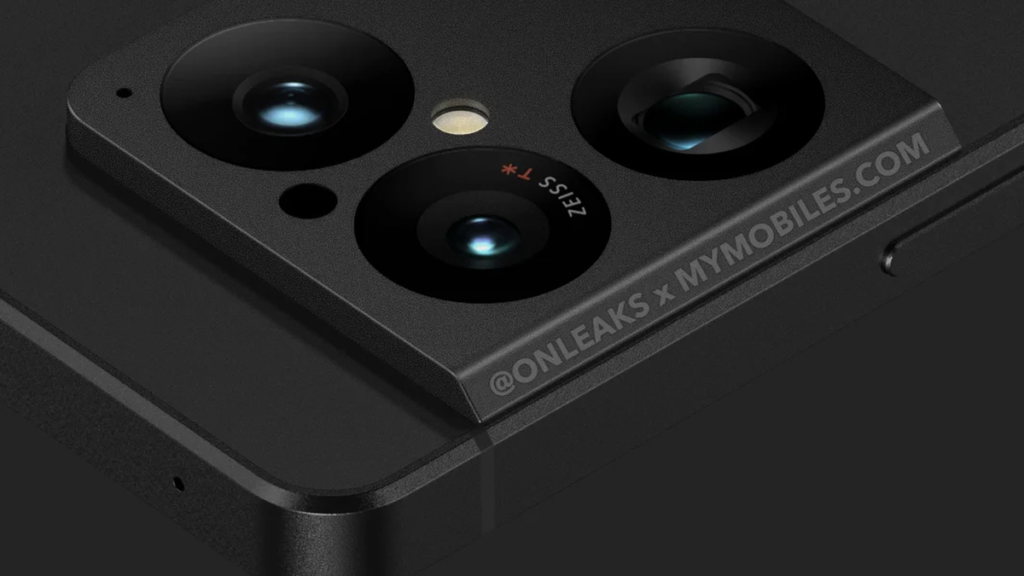
This is where the Xperia 1 VIII makes its strongest case. Sony has finally abandoned the continuous-zoom telephoto lens that defined the last four generations of Xperia flagships, replacing it with a fixed 70mm-equivalent lens built around a much larger sensor, 48 megapixels at 1/1.56-inch. That’s the same sensor size as the ultrawide and close to the 1/1.35-inch sensor behind the main camera. The trade-off is versatility: there’s no smooth zoom range anymore, just native 70mm and a 2x in-sensor crop to roughly 140mm. Given that Xiaomi has gone the other way and added continuous zoom to the 17 Ultra this year, the timing feels almost deliberately unlucky for Sony.
What you lose in flexibility, you gain in quality. The telephoto and ultrawide are both strong performers, helped by their oversized sensors. Daytime shots have the contrast-forward, slightly muted colour processing Sony favours, and low-light images come out sharp and well-exposed, though bright streetlights can still trip things up. This is the best camera Sony has put on an Xperia phone, full stop.
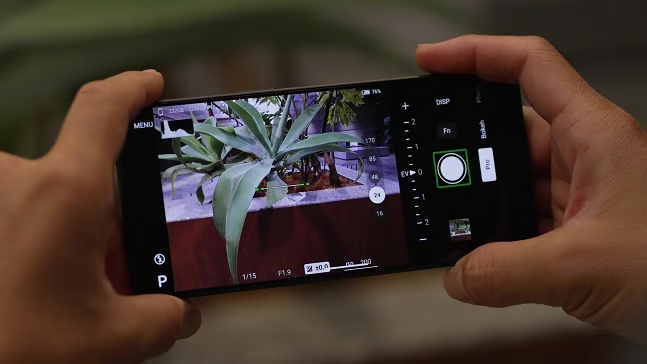
The one blemish is the new AI Camera Assistant. Point the rear camera at almost anything and a pop-up appears offering four AI-suggested edits before you’ve even taken the shot. Nearly all of them are just aggressive filters, oversaturating or desaturating to little benefit, and every suggestion we tried looked worse than the default settings. It also seems to slow the camera app down. Turn it off the moment you unbox the phone. We did, eventually, and the camera got noticeably more pleasant to use.
Software
The Xperia 1 VIII runs a close-to-stock version of Android 16, which Sony has always handled well. The frustration is in the details: the phone insists on reorganising the home screen into folders you didn’t ask for, lumping Facebook into an Instagram folder and piling Google apps on top of Google Maps without permission. It’s a small thing, but it’s the kind of small thing that adds up.
The bigger issue is longevity. Sony is only promising four years of OS updates, with six years of security patches. That’s a full year behind the five-year OS commitment Xiaomi makes on the 17 Ultra, and well behind what Samsung and Google now offer on their own flagships.
Should you buy the Sony Xperia 1 VIII?
If you’re already an Xperia loyalist, drawn in by the headphone jack, the microSD slot, and Sony’s particular take on photography, the 1 VIII delivers everything you came for, wrapped in the best-looking design the line has had in years. The telephoto camera alone is a meaningful upgrade.
For anyone shopping with a more open mind, it’s a tougher sell. £1,399 buys you a phone with patchy performance, underwhelming battery life, and a shorter software support window than its closest rival. The Xiaomi 17 Ultra costs £100 less, runs the same chip, and promises an extra year of OS updates. Unless the design and camera specifically pull you in, we’d point most buyers elsewhere.
Rating: 6/10
Design: 8/10 | Display: 7/10 | Cameras: 8/10 | Performance: 5/10 | Battery: 4/10 | Software support: 5/10
Also consider
Xiaomi 17 Ultra (from £1,299): Same Snapdragon 8 Elite Gen 5 chip, a genuine continuous optical zoom telephoto, and a full extra year of OS updates, all for less money. The better all-rounder unless Sony’s design language has you sold.
Vivo X300 Ultra: Strong photography credentials and flagship specs at a similarly competitive price to the Xiaomi. Worth a look if camera versatility matters more to you than Sony’s particular aesthetic.
Samsung Galaxy S26 Ultra: For buyers who want the safest, most widely supported flagship Android experience, with longer software support guarantees than either Sony or Xiaomi currently offer.