

HORL 3 Cruise review: the knife sharpener built for the cook who’s always on dinner duty
We put HORL’s entry-level rolling sharpener through weeks of everyday kitchen use to see if it earns a permanent spot on the counter
Verdict
If you’re the one who ends up cooking most nights, whether that’s by choice or default, a blunt knife is one of those small daily frustrations that quietly makes everything harder. Onions take longer, herbs bruise instead of slicing clean, and you end up leaning on the blade instead of letting it do the work. The HORL 3 Cruise fixes that without asking much of you. Roll the blade across the diamond disc a few times, flip to the honing disc, and you’re back to prepping onions in under two minutes. It’s not the sharpener for someone chasing mirror edges on a £400 Japanese gyuto, and the fixed discs mean you can’t fine-tune grit the way you could on the older HORL 2. But for the home cook who wants sharp knives without learning a new skill or setting aside an evening for it, this is one of the easiest kitchen upgrades we’ve tested this year.
We came into this review having lived with the wooden HORL 2 for a long stretch, so our expectations were set by a system that already felt close to solved. What we wanted to know was whether stripping it back to a cheaper, plastic, fixed-disc version would lose the thing that made HORL worth recommending in the first place, or whether it would simply make that same experience more accessible. After several weeks of daily use in a real kitchen, cutting everything from Sunday roasts to weeknight stir-fries, our answer leans firmly towards the latter.
Pros and cons
Pros
- Two-minute sharpening routine with no stones, water or lubricant required
- 15-degree and 20-degree magnetic angle guides cover most Western and Japanese knives
- Upgraded magnets hold larger chef’s knives steady with no rocking
- Recycled ocean-bound plastic body, lighter and more portable than the wooden HORL 2
Cons
- Fixed diamond and honing discs mean no grit progression for enthusiasts
- Recycled plastic body feels more utilitarian than the original wooden design
- Not suited to reprofiling damaged edges or very hard Japanese steels above 60 HRC
Quick specs
| Price | £119 (UK) |
| Material | Recycled #tide ocean-bound plastic |
| Grinding angles | 15 degrees (Japanese-style), 20 degrees (Western) |
| Discs | Fixed diamond grinding disc, stainless steel honing disc |
| Steel removal | Up to 80% more than HORL 2, per HORL |
| Grip | HORL Grip Pad, up to 70% stronger magnetic hold than HORL 2 |
| Best suited to | Western knives and Japanese knives under 60 HRC |
| Origin | Assembled in the Black Forest, Germany |
Price and availability
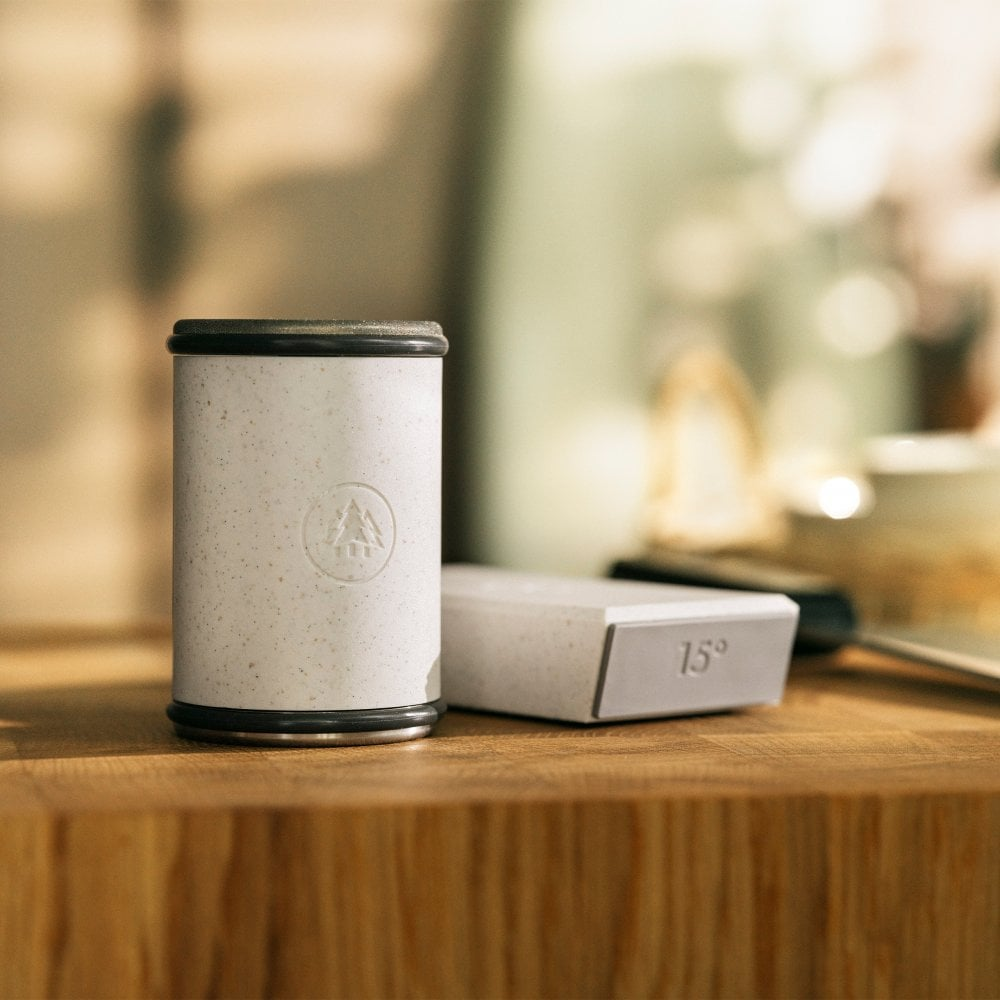
The HORL 3 Cruise sits at the entry point of HORL’s current line-up, priced at £119. That puts it well below the £169 wooden HORL 3 and a long way under the £399 HORL 3 Pro, which adds a gearing system and four extra grinding angles for professional use.
For context, that’s a genuine step down in price from the wooden HORL 3, which keeps the interchangeable disc system the Cruise drops. If you’re comparing purely on cost, the Cruise is the one aimed squarely at people who want the HORL experience without paying for materials or flexibility they won’t use.
Design and build
We’ve spent a fair amount of time with the original HORL 2, so the shift in material here is immediately obvious. Where the HORL 2 leaned into a warm, premium wooden body that looked as much at home on a display shelf as a countertop, the Cruise swaps that for recycled ocean-bound plastic in a sandy, flecked finish. It’s a deliberate trade. HORL worked with Swiss recycling partner #tide to source the material from ocean and coastal plastic waste, and the result feels closer to a good quality cutting board than a piece of furniture.
That’s not necessarily a knock. For a tool that’s going to live on a kitchen counter and get picked up daily, the lighter weight and slightly more utilitarian feel actually suit the job description of “the sharpener the home chef reaches for without thinking.” It’s easier to store in a drawer than the wooden version, and we didn’t notice any flex or creak during regular use over several weeks.
The angle support block is where HORL has made a genuinely useful upgrade. Earlier models could let larger knives rock slightly on the magnetic guide, which is exactly the kind of small annoyance that puts people off using a sharpener regularly. HORL says the Cruise’s magnets offer up to 70% more grip than the HORL 2, and in practice that translated to a noticeably firmer hold, even with a wide chef’s knife that wobbled slightly on our older unit. Smaller paring knives, which are traditionally the fiddliest to secure on any rolling sharpener, sat just as securely.
The footprint is compact enough to leave permanently on a counter without it looking like clutter, and at under a kilogram it’s genuinely easy to lift one-handed and move between the counter and a cupboard. That portability matters more than it sounds. In our experience, sharpeners that live in a drawer tend to get used far less often than ones sitting in plain sight, simply because pulling one out mid-prep feels like too much friction. The Cruise is light and unfussy enough that we found ourselves reaching for it on a whim rather than saving it for a dedicated sharpening session.
There’s also a practical upside to the recycled plastic beyond sustainability messaging. It doesn’t need the same care a wooden body does, no oiling, no worrying about water marks or humidity swelling the grain over time. For a tool that’s going to sit near a sink and get splashed regularly, that’s a sensible trade-off even if it costs some visual charm. HORL has clearly built the Cruise as a kitchen tool first and a design object second, which feels like the right call for its intended audience.
Performance
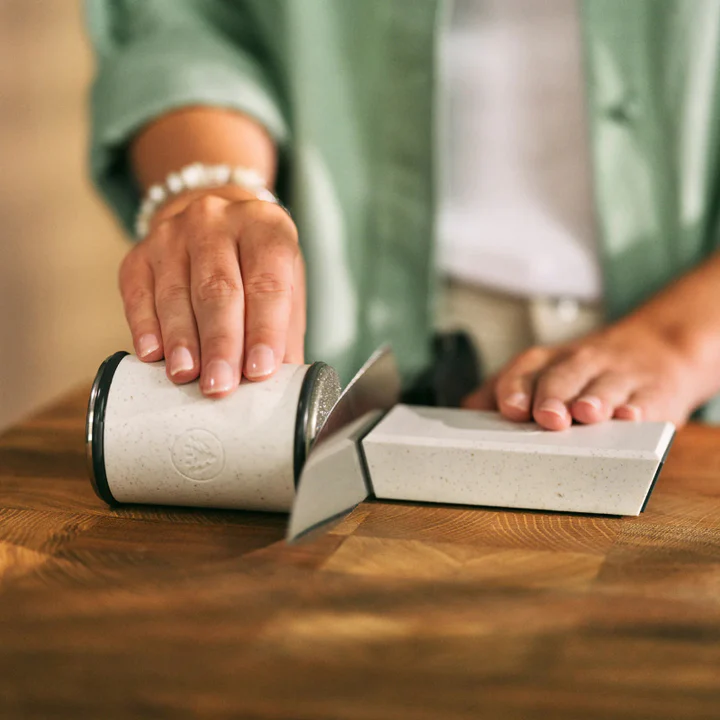
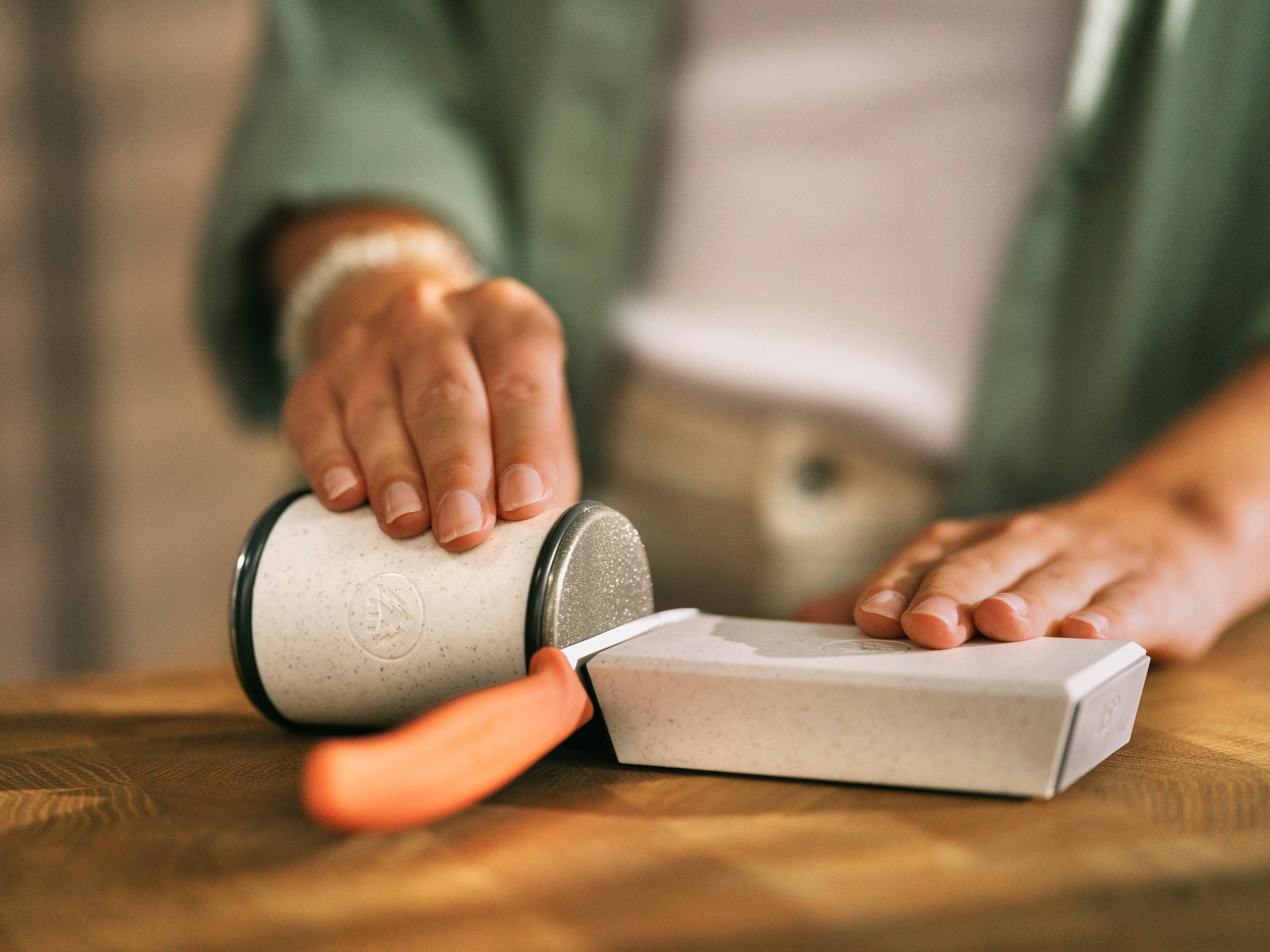
This is where the Cruise earns its keep for anyone cooking regularly at home. The process is as simple as HORL’s system has always promised: clip the knife to the magnetic guide blade-up, choose 20 degrees for a Western chef’s knife or 15 degrees for a finer Japanese-style blade, then roll the diamond disc along the edge a handful of times per side. Flip to the honing disc, repeat, and you’re done. There’s no water bath, no oil, no guesswork about angle consistency, which is usually the single biggest thing that trips people up with traditional whetstones.
HORL says the new diamond disc achieves up to 80% more steel removal than the version on the HORL 2, thanks to a denser pattern of block diamonds. We didn’t find the actual sharpening noticeably faster in side-by-side use, but edges came back reliably sharp within a similar time frame, and the more uniform grinding pattern was easy to see and feel along the blade afterwards. For a home cook maintaining a handful of knives a couple of times a month, that’s more than enough performance headroom.
Where the Cruise differs meaningfully from the HORL 2 is in what it doesn’t offer. The interchangeable disc system on the older model let you swap in finer grits or a leather strop for a more polished edge. The Cruise fixes you to one diamond disc and one honing disc, permanently. For the vast majority of home kitchens, that’s not a real limitation, since most people sharpening their own knives are maintaining an edge rather than chasing a professional-grade finish. But it does mean serious knife enthusiasts, or anyone with a collection of high-hardness Japanese steel above roughly 60 HRC, like some Kai Shun or Miyabi ranges, should look at the wooden HORL 3 or HORL 3 Pro instead, both of which are rated for that harder steel and offer more angle and grit flexibility.
What struck us most after several weeks of testing wasn’t the technical spec sheet, though. It’s how the routine itself changes your relationship with your knives. Sharpening stops being a chore you put off for months and becomes something closer to a thirty-second habit before dinner prep, similar to rinsing a chopping board. That shift matters more for actual cutting performance day to day than any single spec, because a knife maintained little and often stays sharper overall than one aggressively resharpened twice a year.
We tested the Cruise across a mixed knife drawer: a workhorse Western chef’s knife, a serrated bread knife (which HORL doesn’t recommend sharpening this way, and we’d echo that), a mid-range Japanese santoku, and a couple of paring knives. The 20-degree setting handled the chef’s knife and santoku without issue, restoring a clean push-cut edge that sliced through a ripe tomato with barely any downward pressure. The 15-degree angle on a finer carbon steel paring knife brought back a noticeably keener point, though we’d stop short of calling it razor sharp in the way a dedicated whetstone session with fine grit could achieve. For everyday kitchen tasks, that distinction rarely matters. For someone who wants to shave paper-thin cucumber slices for a garnish, it occasionally will.
Durability and long-term maintenance
HORL claims the fixed discs on the Cruise are durable enough to last a lifetime under normal home use, and while we can’t verify that over years rather than weeks, the logic holds up. Diamond abrasives do wear down eventually, but the rate depends heavily on technique. Light, even pressure rolled across the blade a handful of times per side, as HORL instructs, should extend disc life considerably compared with heavy-handed grinding or repeated attempts to reprofile a damaged edge. If you’re using the Cruise as intended, to maintain an already-decent edge rather than rescue a badly chipped one, wear shouldn’t be a practical concern for the average home kitchen.
The stainless steel honing disc needs essentially no maintenance beyond an occasional wipe to clear grinding dust, helped along by the integrated grooves designed to shed debris in a few strokes. We didn’t need to clean the unit more than once every couple of weeks despite regular use, and nothing about the mechanism felt like it would need servicing or replacement parts any time soon. That’s a meaningful point in the Cruise’s favour against loose whetstones, which need flattening over time, or pull-through sharpeners, whose carbide blades wear unevenly and are notoriously hard on knife edges.
Who it’s actually for
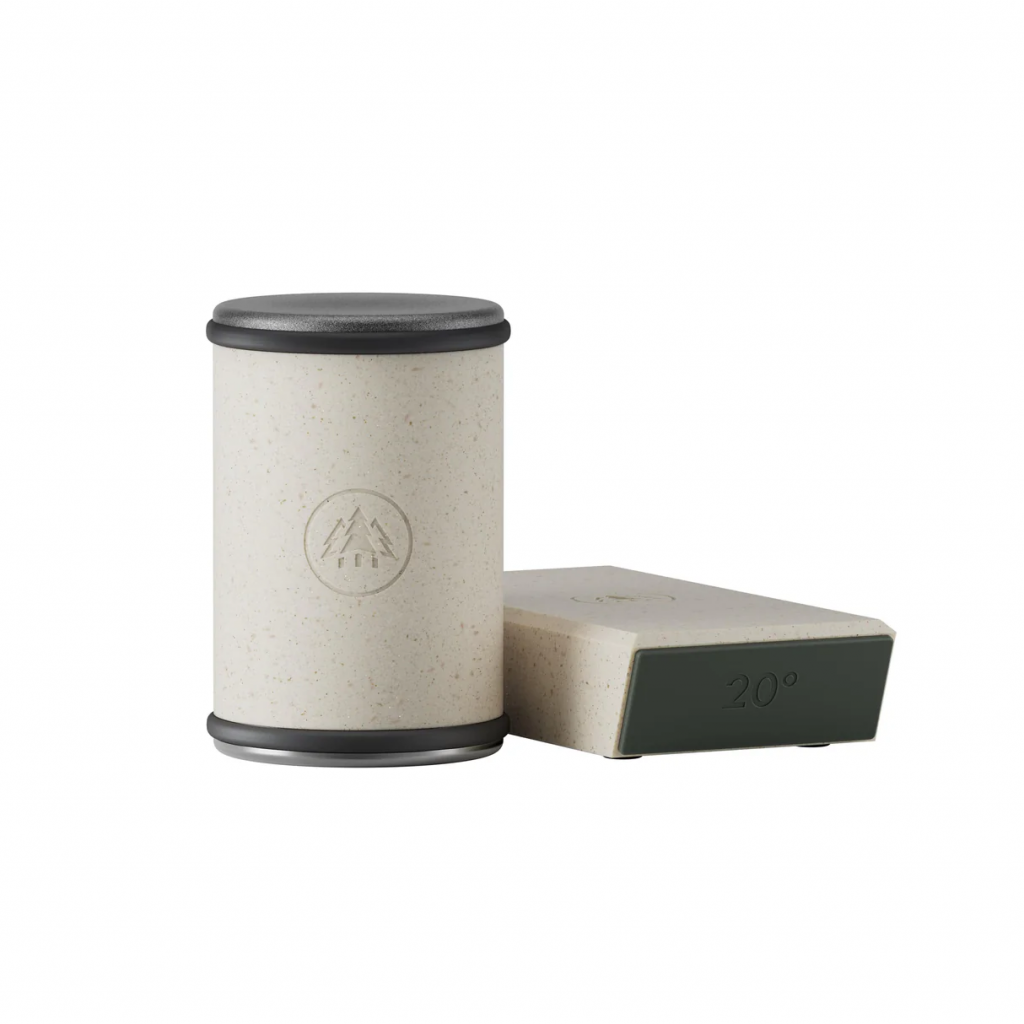
It’s worth being precise about the gap between the Cruise and its pricier siblings, because it’s easy to assume “entry-level” means “compromised.” In our experience it’s closer to “focused.” The Cruise is built around a very specific use case: someone with a handful of everyday knives, mostly Western-style with maybe one or two mid-range Japanese blades, who wants a fast and repeatable way to keep them working well. If that’s you, the fixed-disc simplicity isn’t a limitation, it’s the entire point. You’re not meant to be thinking about grit selection while you’re halfway through prepping dinner.
Where it starts to make less sense is for anyone with a genuinely serious knife collection, particularly high-hardness Japanese steels that need finer, more deliberate sharpening care, or anyone who enjoys the process of sharpening as a hobby in itself rather than a means to an end. Those buyers are better served further up HORL’s range, where the interchangeable discs and extra angles give room to actually tune the result rather than accept a single, reliable outcome.
Also consider
HORL 3 (wooden): If you want the interchangeable disc system and a wider range of Japanese-compatible steels, the standard wooden HORL 3 costs around £169 and keeps the flexibility the Cruise drops.
HORL 3 Pro: For anyone maintaining a large or high-end knife collection, or a working kitchen that needs speed, the £399 Pro adds planetary gearing for three-times-faster sharpening and six grinding angles instead of two.
Traditional whetstone sets: Considerably cheaper and more flexible on paper, but they demand real technique to get consistent results. If you don’t already know how to hold an angle by hand, a HORL will get you to a usable edge faster and more reliably.
Should you buy it?
The HORL 3 Cruise isn’t trying to be the ultimate sharpening system, and it doesn’t need to be. It’s built for exactly one kind of buyer: the person who cooks most nights, wants their knives properly sharp without ceremony, and doesn’t want to think about grit levels or lubricant or technique. On that brief, it delivers convincingly. The move to recycled plastic costs it some of the HORL 2’s premium feel, and dedicated knife enthusiasts will miss the interchangeable discs, but for the home chef who just wants a fast, foolproof way to keep their edges working, this is an easy one to recommend.
Buy it if you cook regularly, own mostly Western or moderate-hardness Japanese knives, and want a genuinely low-effort sharpening routine. Skip it if you’re maintaining high-hardness specialty blades or want the flexibility to fine-tune your edge over time, in which case the step up to the wooden HORL 3 is worth the extra cost.


