



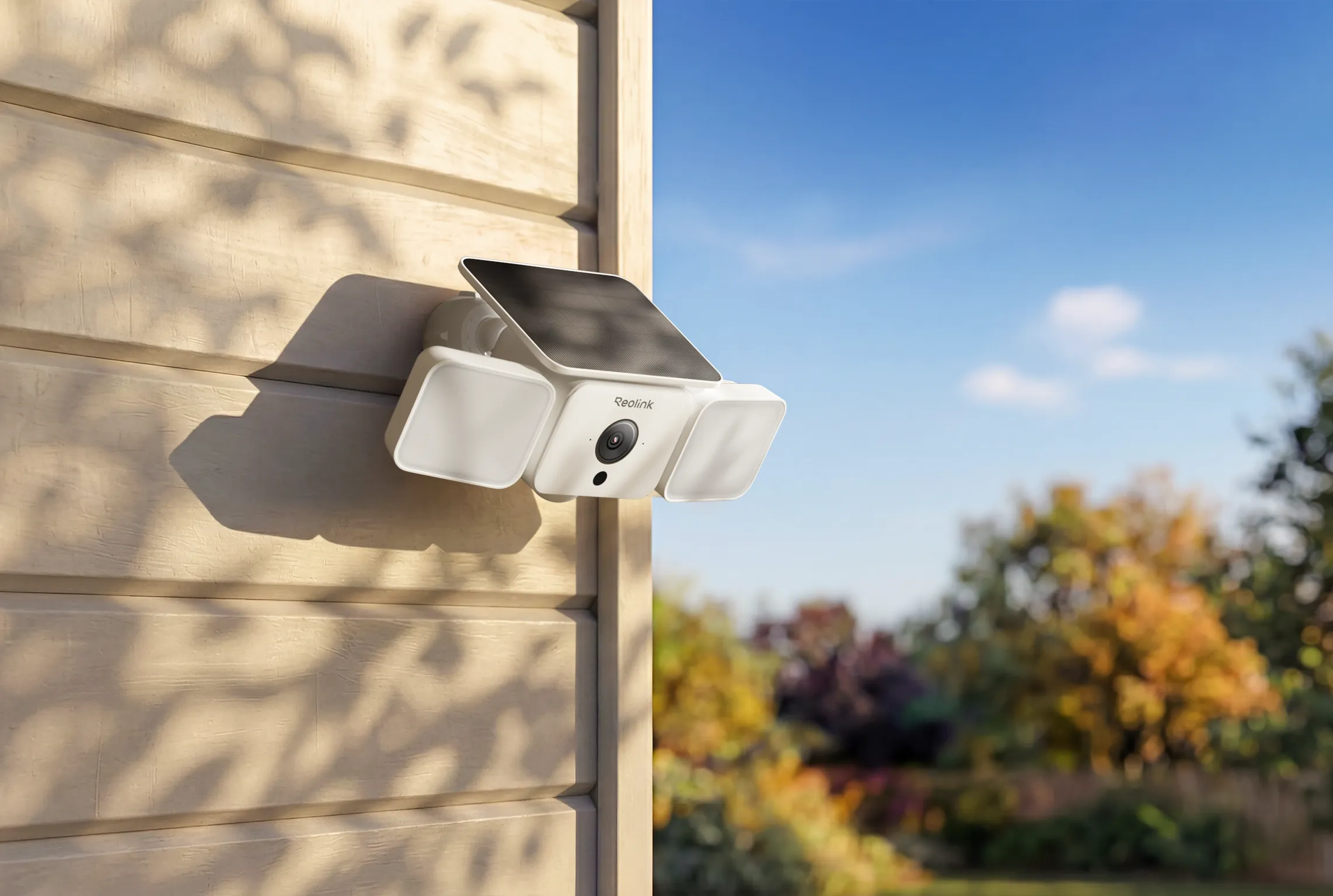
Reolink Solar Floodlight Cam review: powerful spotlights, permanent power, one big compromise
The Reolink Solar Floodlight Cam nails the one thing that annoys us most about outdoor cameras: charging. Between the fixed solar panel and the 7,800mAh battery, we never had to touch this thing after the initial setup, even through overcast weeks. Add in two genuinely bright 1,000-lumen spotlights, a proper 110dB siren and subscription-free local storage, and it’s an easy recommend for anyone who wants solid deterrence without the faff. The trade-off is image quality. At 2K, footage is soft next to 4K rivals, and the fixed solar panel means you’re stuck with wherever the sun happens to hit. If daylight detail matters more to you than never climbing a ladder again, look elsewhere.
Pros and cons
Pros
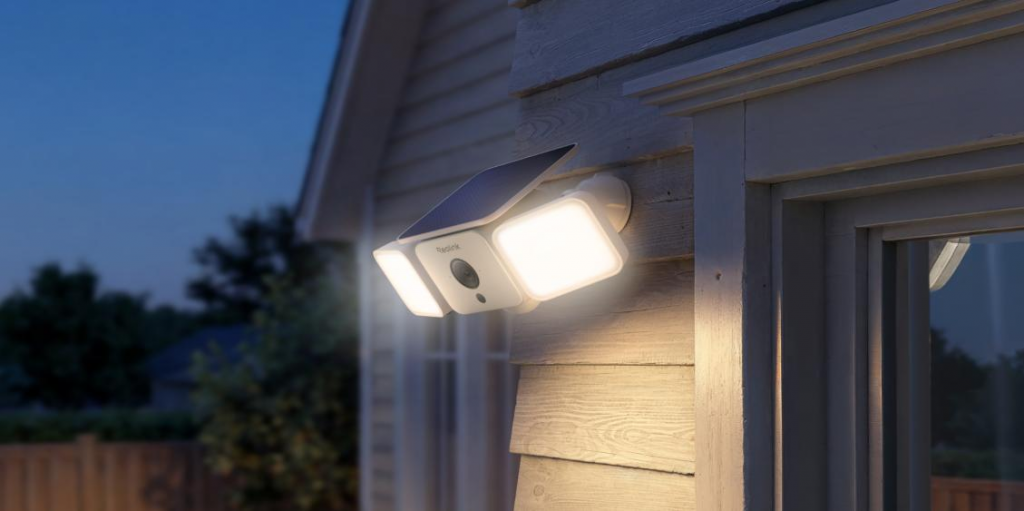
- Twin 1,000-lumen spotlights genuinely deter, not just illuminate
- Fixed solar panel plus 7,800mAh battery means no recharging cycle
- Local MicroSD storage up to 512GB with no subscription required
- Excellent low-light and night vision, even for wildlife-sized subjects
Cons
- 2K (1440p) resolution lags behind 4K competitors like Reolink’s own Altas PT Ultra
- Solar panel is fixed in place, so mounting position matters more than it should
- 150-degree field of view is narrower than some pan-and-tilt rivals
Quick specs
| Price | £84.98 (Amazon), £99.99 (Reolink) |
| Resolution | 2K (1440p), 4MP |
| Field of view | 150 degrees |
| Lighting | Two spotlights, up to 1,000 lumens |
| Power | Fixed solar panel plus 7,800mAh battery |
| Siren | 110dB, customisable audio |
| Storage | MicroSD up to 512GB, or Reolink Cloud from £2.71/month |
| Connectivity | Wi-Fi 6, 2.4GHz and 5GHz |
| Weatherproofing | IP66 |
| Compatibility | Reolink app, Amazon Alexa |
Price and availability
The Solar Floodlight Cam launched in March 2026 and is now sold across the UK, US and Australia. Pricing sits between £84.98 and £99.99 in the UK depending on retailer, with Amazon typically offering the sharper deal alongside Reolink’s own store. In the US it lands at roughly $99 to $109.99, and Australian buyers can expect around $169. We’d treat the lower end as the realistic street price, since Reolink’s own site tends to sit closer to RRP.
Unlike Reolink’s pricier Altas PT Ultra, this camera doesn’t require a subscription for full functionality. If you do want cloud backup, the Single Device Plan starts at £2.71 a month for 16GB and 30 days of history, which is considerably cheaper than what we’ve seen from rivals like Ring.
Design and build
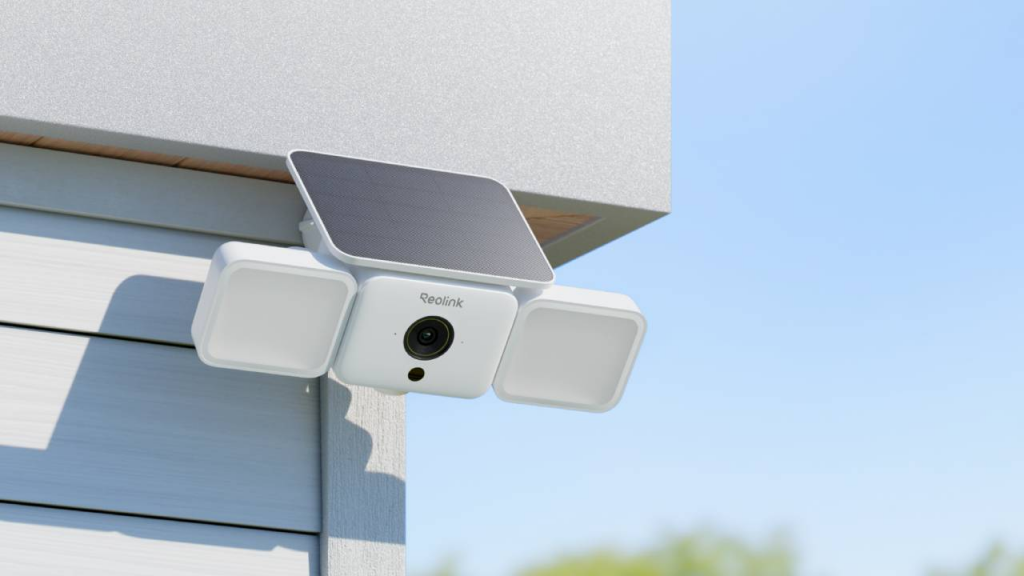
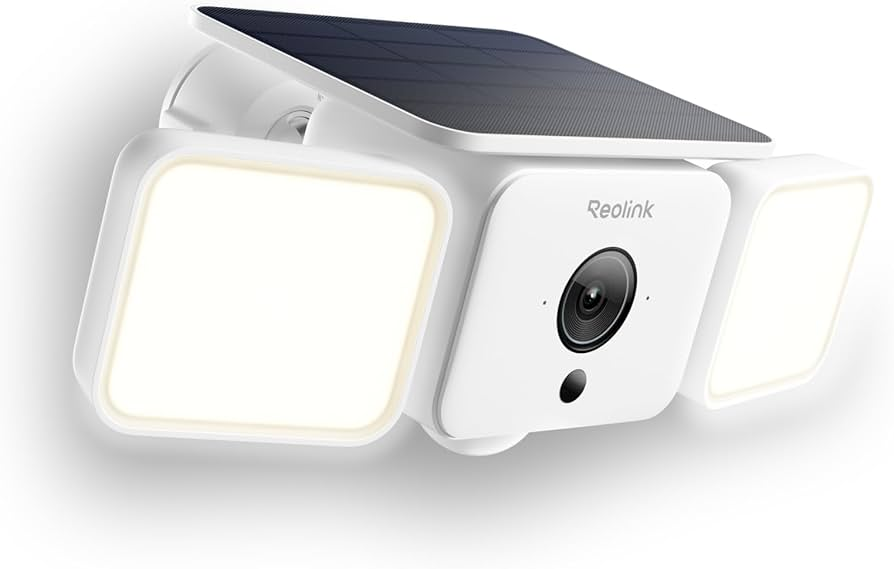
Most outdoor cameras are one or two components. This one is four. There’s the central cube housing the lens and PIR sensor, two flexible LED spotlights that flank it like oversized ears, and a solar panel fixed on top. It’s an unusual silhouette, and we were initially sceptical it would feel as sturdy as the more conventional tubular designs Reolink and its rivals typically ship. In practice, the white unit feels well put together, and the IP66 rating means weather hasn’t been an issue during testing.
The mounting hardware includes a bracket, screws, wall plugs and a dedicated wrench for tightening everything down, which is a nice touch given how many cameras leave you hunting for the right tool. A metal ball joint at the back gives plenty of flexibility for angling the camera once it’s up. The one design compromise is the solar panel itself: it doesn’t move, tilt or track the sun like the panel on the Baseus Security S2, so you need to think carefully about installation spot rather than just picking the most convenient wall.
Underneath sit two weatherproof ports, one for the USB-C charging cable and one for power plus the MicroSD slot, alongside the PIR sensor and a reasonably large speaker for two-way audio.
Performance
Image quality is where the Solar Floodlight Cam shows its price point. At 2K, footage is serviceable rather than sharp, and daytime detail noticeably trails the 4K output from Reolink’s own Altas PT Ultra. Where it earns its keep is after dark. Night after night during testing, it picked up wildlife activity in the garden, foxes and even a hedgehog, well before we’d have spotted anything on a lesser camera. Colour night vision holds up better than we expected for the price.
Motion sensitivity needed tuning. At the default setting of 80, a washing line full of sheets was enough to trigger constant alerts, and we settled on around 50 for a sensible balance. The Reolink app handles all of this cleanly: footage is timestamped along a scrollable timeline and automatically tagged by type, whether that’s a person, an animal or general motion, which makes hunting for a specific clip far quicker than digging through raw footage.
There’s also a genuinely useful time-lapse mode, with intervals from ten seconds to six hours and presets including one built for tracking construction progress. It’s not something we expected from a security camera, but it’s a welcome extra rather than a gimmick.
Software and AI features
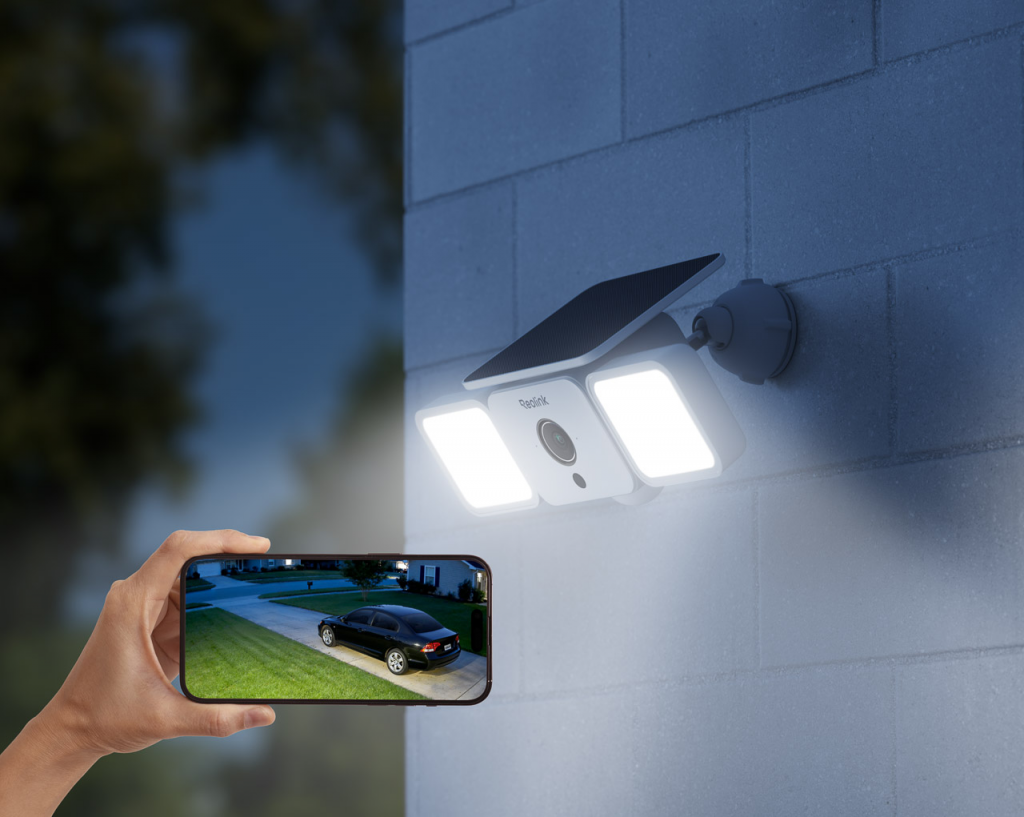
The Reolink app avoids the clutter we’ve run into with some competitor apps. You can set detection by category (people, animals, vehicles or other), schedule recording windows, mask off areas you don’t want captured, and adjust both brightness and colour temperature on the spotlights depending on whether you want a cold or warm deterrent glow.
Alexa integration works well for anyone who wants live feeds on an Echo Show, and the floodlights can be controlled by voice. Reolink Cloud subscribers also get AI-powered video search, letting you type something like “man in a red top” and pull up matching clips instead of scrubbing manually.
Also consider
Ring Spotlight Cam Pro: Available in battery, solar and mains versions, with slicker integration if you’re already in the Ring ecosystem. Functionality is strong but the ongoing subscription costs stack up fast.
IMOU outdoor solar camera: Similar concept, similarly competitive pricing, and a comparable integrated solar panel. Image quality doesn’t match the Reolink, but it makes up for it with the low asking price.
Reolink Altas PT Ultra: If 4K detail and full pan-and-tilt coverage matter more to you than saving on charging, Reolink’s own flagship is the better pick, at a noticeably higher price.
Should you buy it?
If your main gripe with outdoor security cameras is the recurring chore of recharging them, this is one of the more convincing solar solutions we’ve tested, and the twin spotlights add real deterrent value beyond just recording an intruder. Buy it if you want reliable, subscription-free protection and can live with 2K footage. Skip it if sharp daytime detail or a fully adjustable solar panel are non-negotiable for you.
Rating: 4/5
Design: 4/5 | Performance: 4/5 | Value: 4.5/5