Philips Baristina review: an espresso machine that will impress even the pickiest coffee lovers
It looks like a pod machine, costs less than most bean-to-cup rivals, and still pulls a shot good enough to make my barista nervous. I did not see that coming.
The verdict
The Philips Baristina solves a problem I didn’t realise had a solution: how do you get the taste of fresh beans without turning your kitchen into a barista training course? Philips’ answer is to borrow the portafilter from a manual espresso maker, then quietly remove every reason it was ever annoying to own one. Insert the empty handle, pick espresso or lungo, and the machine grinds, doses, tamps, and brews while you stand there doing absolutely nothing useful. No scales, no calibration, no fishing stray grounds out of a hopper like you’re panning for gold. At £299.99, it’s also the cheapest bean-to-cup machine I’ve tested that doesn’t taste like it.
It isn’t flawless, because nothing this cheap and this easy gets to be perfect too. There’s no way to adjust the grind size, so if your beans come out tasting sharp or flat, your only fix is buying different beans rather than fiddling with a dial that doesn’t exist. And there’s no built-in milk frother, so cappuccino fans will need to budget for the separate accessory or sulk off elsewhere. But for anyone upgrading from pods who wants real espresso without enrolling in barista school, this is about as close to a Goldilocks machine as I’ve found.
Pros and cons
Pros:
- Beginner-friendly to the point of being borderline insulting to your intelligence, in the best way
- Portafilter design makes cleanup dramatically easier than a typical bean-to-cup machine, no archaeology required
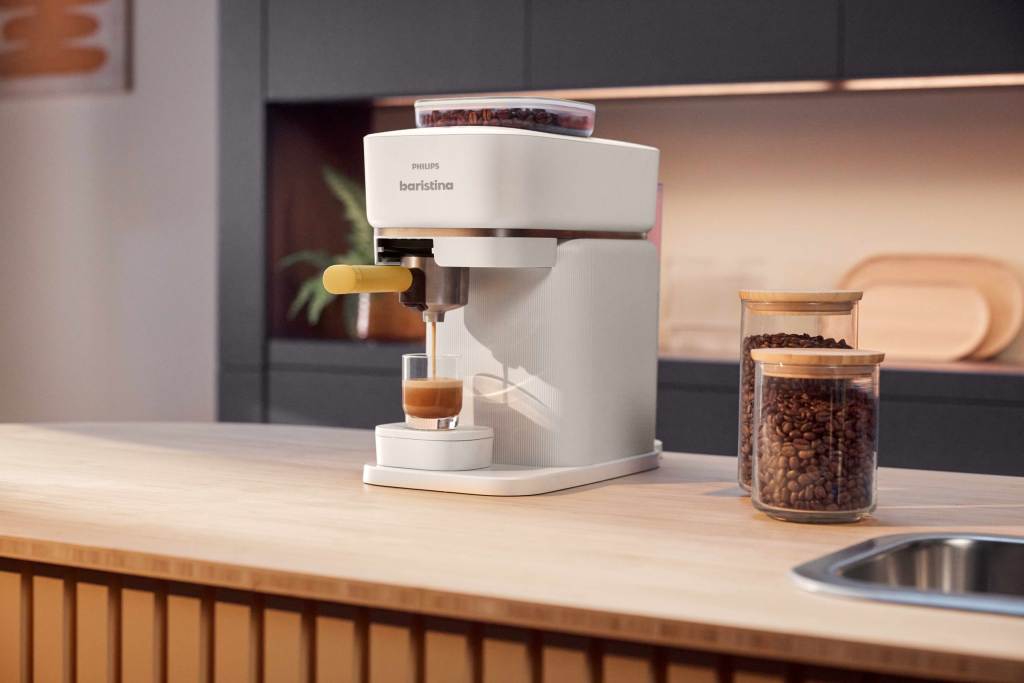
- Sleek, compact design with a matte finish that laughs in the face of fingerprints
- One of the most affordable bean-to-cup machines on the market at £299.99
Cons:
- Grind size is fixed, so if your shot tastes off, the machine shrugs and tells you to buy new beans
- No built-in steam wand or frother, so cappuccino drinkers are paying extra for the privilege
Quick specs
| Price | £299.99 (machine only); £379.99 bundled with the standalone milk frother |
| Type | Bean-to-cup, portafilter-style |
| Dimensions | 18 x 34.5 x 38cm (W x H x D) |
| Weight | 5kg |
| Water tank | 1.2 litres |
| Bean hopper | 170g |
| Pressure | 16 bar |
| Milk frother | Not built in; sold separately |
| Drink options | Espresso, lungo, intensity boost |
Price and availability
The Baristina launched in the UK at £299.99, and that’s where the price has stuck at most major retailers, including Argos, Amazon, and John Lewis. It’s also sold across Europe and, more recently, Australia, where it lists at around AU$599. There’s no built-in milk frother, but Philips sells a matching standalone version for £79.99, or you can buy the machine and frother together for £379.99.
For context, you can pick up a well-regarded manual machine like the De’Longhi Dedica Duo for roughly the same money, but that one expects you to know what you’re doing. If you specifically want bean-to-cup convenience with the grinding and dosing done for you, I haven’t found anything that touches the Baristina’s price. Most automatic bean-to-cup machines, even the entry-level ones, start closer to £450, which makes this one look almost suspiciously cheap.
Design
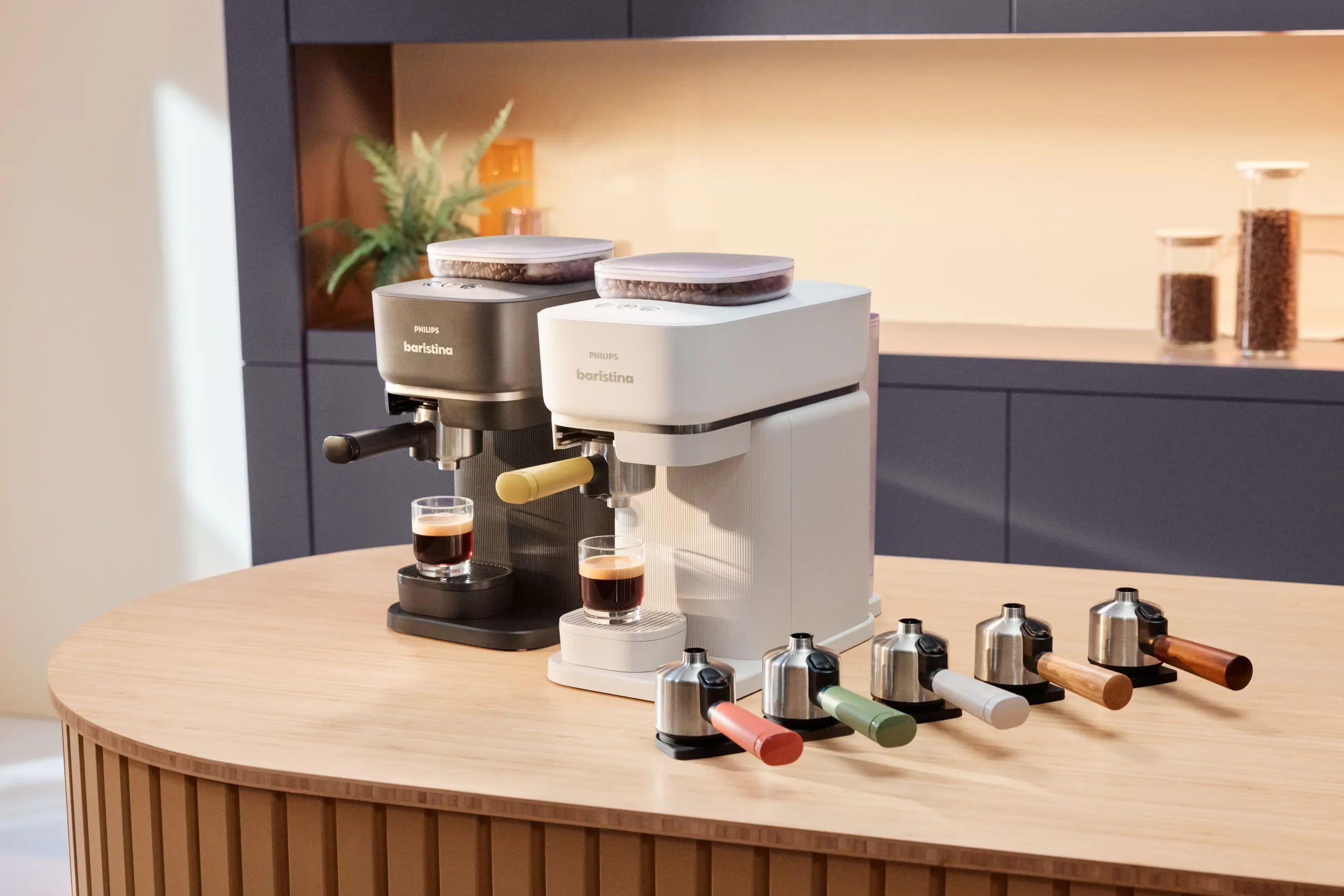
The Baristina is a small, tidy-looking machine that doesn’t try to dominate your counter. At 18cm wide, 34.5cm tall, and 38cm deep, it takes up noticeably less worktop space than most automatic bean-to-cup machines, which often run wider to accommodate internal grinding and brewing chambers. It comes in black or white as standard, each paired with a matching portafilter handle, though some retailers also stock contrasting handles in red, green, and yellow, plus a couple of wood-effect finishes if you want to coordinate it with your kitchen. The exact colour options available will depend on where you buy, so it’s worth checking individual retailers if a specific shade matters to you.
The case itself is plastic, and Philips says more than half of it is made from recycled material, but the matte finish keeps it from looking or feeling cheap, and it doesn’t pick up fingerprints the way some glossier machines at this price do. It’s a small thing, but after weeks of daily use, I appreciated not having to wipe the casing down every time someone in the house touched it with their grubby morning hands.
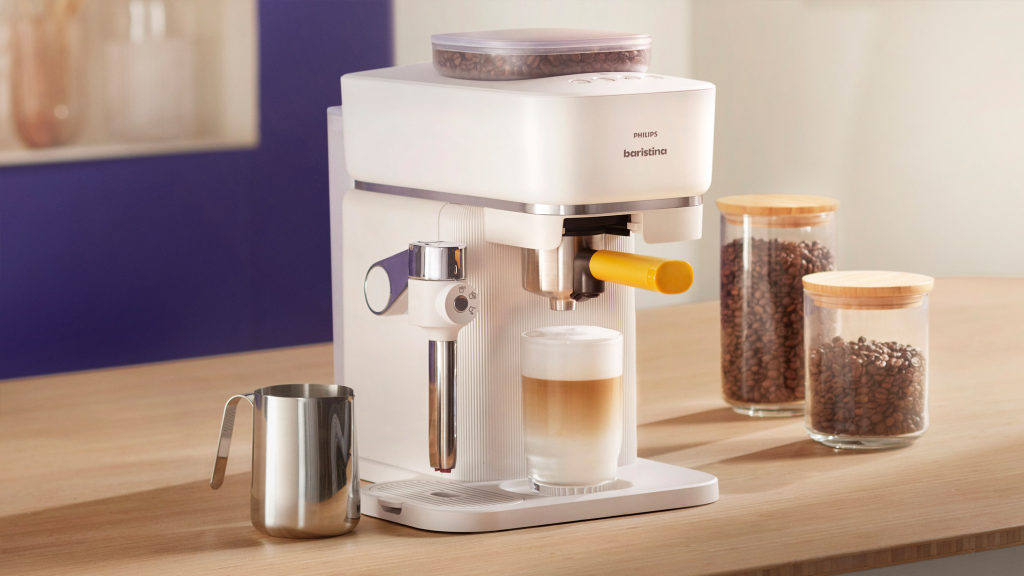
The defining feature is what Philips calls its “swipe” system, which is doing a lot of marketing heavy lifting for what’s basically “push handle in, slide handle right.” But fine, it works. Push the empty portafilter handle into the machine, slide it right under the grinder, and that’s the entire input required from you. The whole brewing process, from grind to cup, takes under a minute, which is faster than most people can locate their travel mug. The bean hopper holds 170g, which is on the small side compared with some rivals, but that’s by design: coffee tastes best ground little and often rather than sitting in a hopper for days, so I’d actually count this as a feature rather than a limitation. Just keep your beans stored somewhere dark, cool, and airtight, and top up the hopper as you go rather than filling it to the brim like you’re stockpiling for winter.
Controls are refreshingly minimal: three buttons handle espresso, lungo, and an intensity boost that increases the coffee dose for a stronger cup. There’s no touchscreen, no app, and no menu to navigate, which suits the machine’s whole pitch of removing friction rather than adding it.
The water tank slots into the back and lacks a handle, which is my only real gripe with the physical design. Its ridged surface helps with grip when you’re filling it, and the lid seals tightly enough that I never had a spill, but a handle would have made refills slightly less fiddly, especially with the tank holding a reasonably substantial 1.2 litres. There’s no water filter included either, so anyone in a hard water area should factor in a filter jug or a separate filtration pitcher to keep descaling to a minimum and protect the machine’s internals over time.
The drip tray is removable and well made, though it’s sized for an espresso cup rather than anything taller, so if you like turning your shot into a long black or an Americano in the same vessel, you’ll want to remove the tray first to make room for a bigger cup or glass.
Performance: how it actually brews
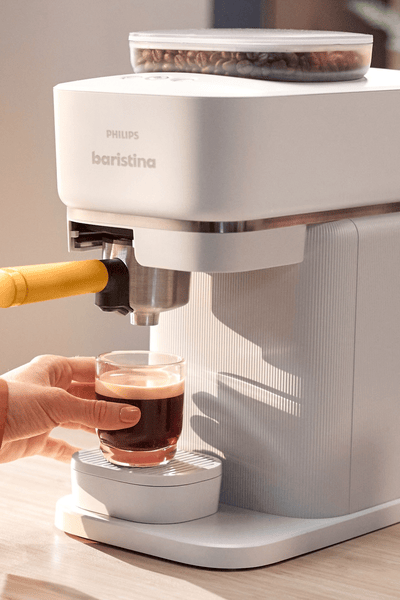
This is where the Baristina earns its reputation. Slide the portafilter into place, choose espresso or lungo (lungo simply doubles the water while keeping the coffee dose the same), and hit the intensity button if you want a stronger cup. The machine grinds the right amount of coffee straight into the filter basket, tamps it evenly, slides the handle across to the brew group, and extracts the shot into your cup below, using a 16-bar pump that’s well within the typical range for proper espresso extraction.
I genuinely didn’t have to think about any of the steps a manual machine usually demands. There’s no scale to weigh your dose against, no separate tamper to apply even pressure with, and no timer to hover over while you second-guess whether you’ve pulled the shot for too long, like some kind of espresso-flavoured anxiety spiral. I’ve used plenty of machines that promise to take the guesswork out of espresso and then still expect you to fiddle with settings before the coffee tastes right. The Baristina is the first one I’ve tested where that promise actually held up, from the very first cup, no apology tour required.
In testing, this produced consistently well-extracted coffee using my usual freshly roasted beans, and the pressurised basket built up a satisfying, thick layer of crema every time, even with beans I hadn’t previously calibrated anything for. The used puck that drops out afterwards is dry and solid, which is a reliable sign that extraction is working as intended rather than running too fast or too slow. I tried several different bean varieties over the course of testing, from a fairly light, fruity single origin to a darker, more traditional Italian-style blend, and both came out tasting like proper espresso rather than the muddy, over-extracted shots I’ve had from cheaper automatic machines in the past.
The catch, and it’s a real one, is that you can’t touch the grind size. Volume is adjustable, intensity is adjustable, but the actual grind setting is fixed. If your particular beans come out tasting sour or bitter, the usual fix on a manual machine, dialling the grind finer or coarser, simply isn’t available here. Your only recourse is trying different beans until you land on something the machine’s default settings suit. For most casual drinkers swapping over from pods, this won’t matter much, since the default grind is well judged and works with a wide range of beans straight out of the bag. For anyone who already has strong opinions about extraction time and has spent years tweaking a manual setup to get exactly the shot they want, it will.
Cleaning
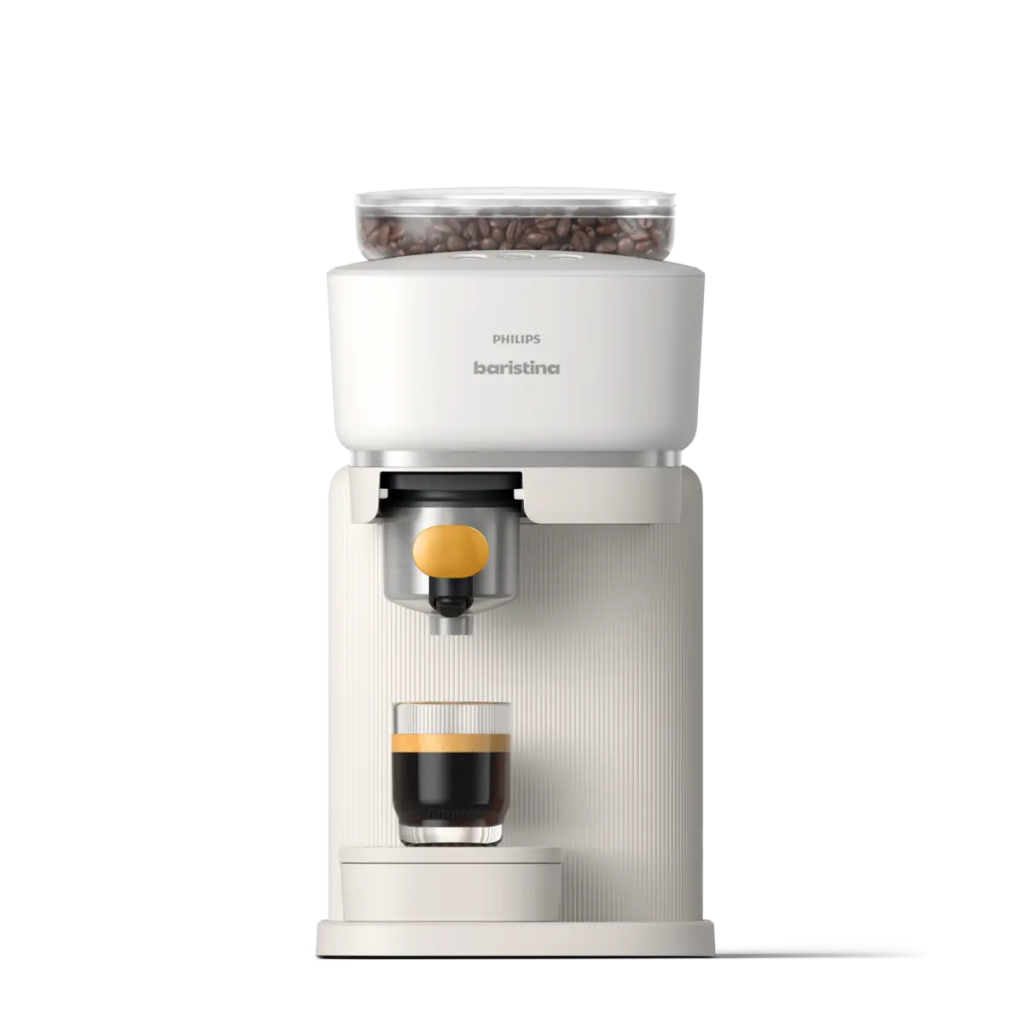
If there’s a second reason to recommend the Baristina beyond ease of brewing, it’s how little effort it takes to keep clean. Conventional bean-to-cup machines tend to be a chore: you pull out a drip tray full of spent grounds, slide off a side panel to access the brew group, rinse it separately, wipe down the inside of the casing where stray grounds inevitably end up like crumbs in a sofa, and then leave the whole thing propped open to dry out so nothing goes mouldy in there. I’ve spent more time than I’d like cleaning some of the bean-to-cup machines I’ve reviewed in the past, to the point where it puts some buyers off the entire category.
None of that applies here. Because the Baristina uses a portafilter rather than an internal brewing chamber, cleanup is just popping out the spent puck, rinsing the basket under the tap, and you’re done. There’s no side panel to remove, no internal grounds bin to empty, and no risk of stray coffee dust building up inside the casing over weeks of use, because there’s nowhere for it to escape to in the first place. The portafilter basket itself isn’t removable from the handle, which limits how thoroughly you can clean it compared with a true manual machine where the basket comes apart, but in day-to-day use this hasn’t been an issue. A quick rinse after each shot has kept it looking and performing like new, no scrubbing brigade required.
It’s the first time I’ve finished testing a bean-to-cup machine and not felt relieved to be putting it back in the box. If the cleaning ritual of a typical automatic machine has ever put you off buying one, consider this your excuse, officially revoked.
Milk drinks
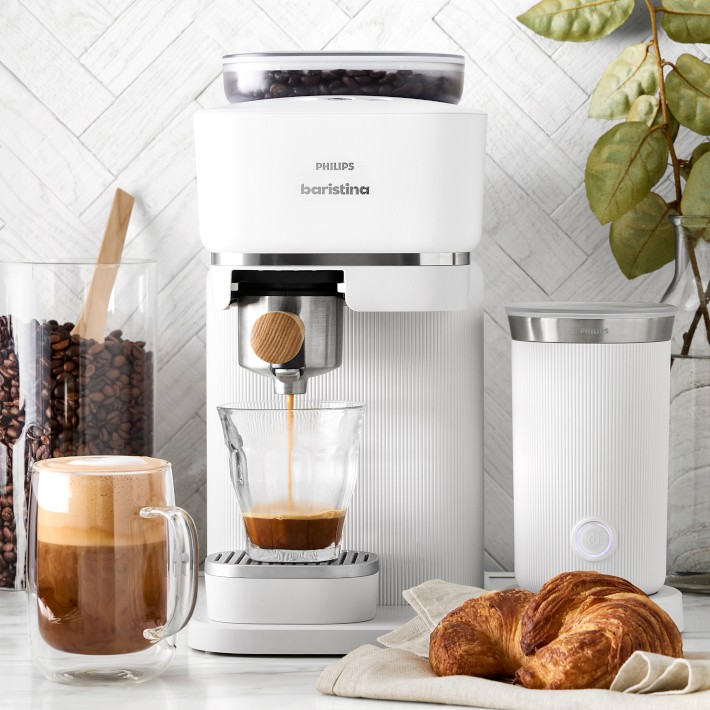
If lattes and cappuccinos are part of your routine, you’ll need to think about this one a bit more. The Baristina has no steam wand and no built-in frothing system of any kind, which puts it at a disadvantage against rivals like the De’Longhi Magnifica Evo Next, which include frothing as standard, even if they cost more and ask more of you in terms of maintenance.
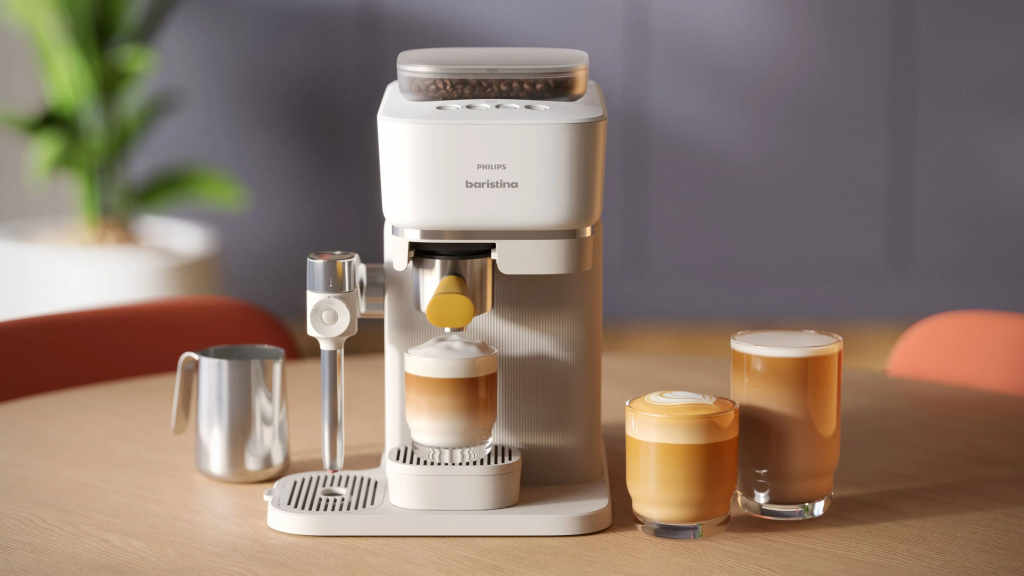
Philips’ answer is a separate frother, available on its own for £79.99 or bundled with the machine for £379.99. It’s a sensible workaround if you mostly drink black coffee but occasionally fancy something milkier, though it’s an extra £80 to swallow if cappuccinos are a daily habit rather than an occasional treat. Worth noting too that the bundle uses the BAR303 designation rather than the standard BAR300, so check which version you’re buying if the frother actually matters to you. The standalone frother handles both hot and cold milk, including plant-based alternatives, and works through its own button rather than integrating with the Baristina’s controls, so you’re essentially running two separate appliances side by side and pretending they’re one machine.
For drinkers who mostly live on espresso and the occasional lungo, none of this will matter. For anyone whose daily order leans more towards flat whites or cappuccinos, it’s the clearest sign that the Baristina was built for black coffee first, with milk drinks bolted on as an afterthought rather than designed in from the start.
Should you buy the Philips Baristina?
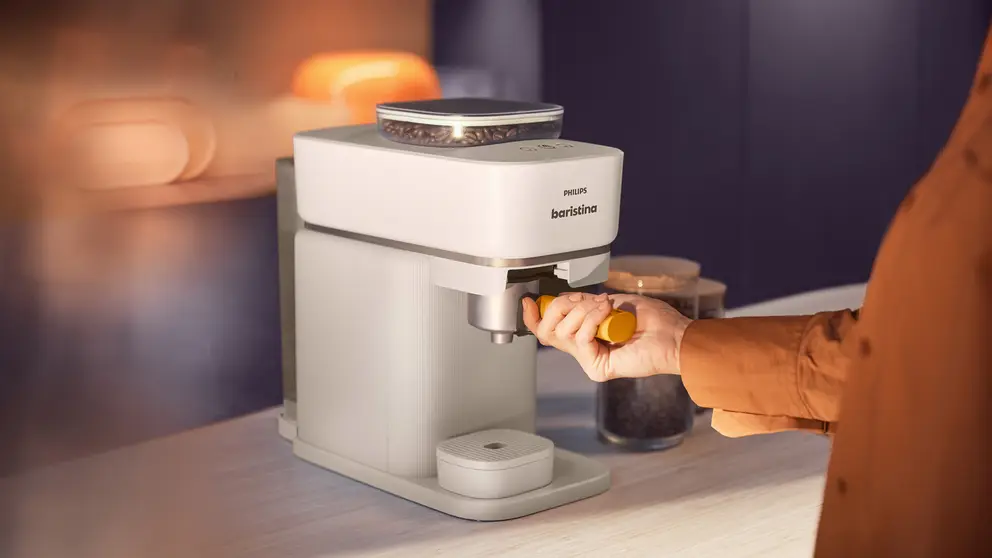
If you’re currently using a pod machine and have started side-eyeing your bean-loving friends, this is close to the easiest on-ramp I’ve come across. You get genuinely good espresso, a far simpler cleaning routine than a typical bean-to-cup machine demands, and a design that looks considerably more expensive than its price tag suggests. The lack of grind adjustment is a real limitation, but it’s one most newcomers to fresh beans won’t notice, and it’s a fair trade for a machine that takes the guesswork out of brewing almost entirely.
If you’re already someone who fusses over extraction time, dose, and grind size, you’ll find the fixed settings maddening, and you’re better served by a manual machine and grinder combination where you get to micromanage every variable to your heart’s content. And if milky drinks are non-negotiable, budget for the frother bundle from the start rather than the standalone machine, or look at a rival with frothing built in and save yourself the bolt-on faff.
For most people upgrading from pods and wanting proper espresso without the learning curve, though, the Baristina is hard to beat at this price. It’s rare that a product manages to be this approachable without feeling like it’s cut corners to get there, and after weeks of daily use, mine has comfortably earned its spot on my counter, fingerprints and all.
Rating: 9/10
Design: 9/10 | Ease of use: 10/10 | Coffee quality: 8/10 | Cleaning: 10/10 | Value: 10/10
Also consider
De’Longhi Dedica Duo (around £279.99): A well-regarded manual machine at a similar price, ideal if you don’t mind doing your own dosing and want full control over grind and tamp.
Sage Bambino Plus: Sits at a similar price point to the Baristina but includes a built-in milk frother, making it the better pick if lattes and cappuccinos are a daily habit.
Philips Series 5500 LatteGo: A step up in price and capability, with a wider drinks menu and a built-in frother, for anyone who wants more than the Baristina’s simple espresso-and-lungo setup.