




12 best budgeting apps of 2026 that people are actually still using
Everyone downloads a budgeting app in January. Here are the twelve worth still having on your phone in December.
Roughly 95 million people in the US now open a personal finance app every month, and the market has never been more crowded or more genuinely useful. AI has crept into every category, banks sync faster than they used to, and the apps that survive are the ones people don’t quietly delete after week three. We pulled ratings and review counts straight from the App Store and Google Play, cross-checked them against Forbes, NerdWallet and Kiplinger’s own testing, and kept only the apps that are both well-reviewed and genuinely popular, not just well-marketed. Here they are, grouped by the kind of budgeter you actually are.
For zero-based budgeters who want full control
YNAB
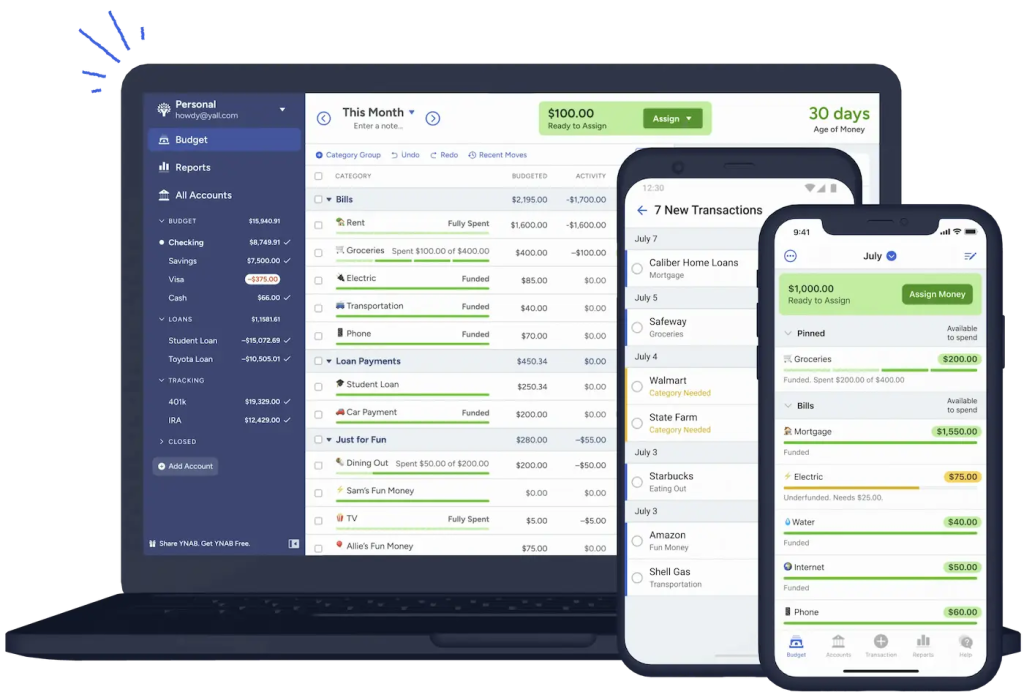
Give every dollar a job the moment it lands and YNAB will not let you forget you did it. It’s the strictest of the zero-based apps here, built on the philosophy that budgeting isn’t about restriction, it’s about deciding in advance, and its users back that up: a 4.8-star average across 59,000 App Store reviews is not a number you fake. The app claims first-year savers put away $6,000 on average, which lines up with how often “changed my relationship with money” shows up in its reviews. Free for a month, then $14.99 monthly or $109 annually.
iOS: App Store · Android: Google Play
EveryDollar
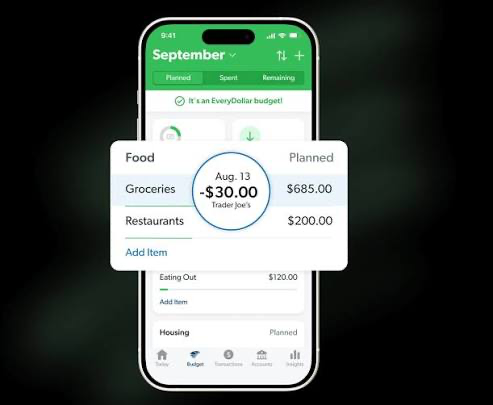
Built by Dave Ramsey’s team specifically for people working his debt snowball, EveryDollar strips zero-based budgeting down to its simplest form: plan the month, categorize as you go, watch the debt-free date move closer. It’s currently sitting at 4.7 stars across a genuinely enormous 82,500 App Store reviews, with Forbes naming it best for zero-based budgeting outright in 2026. The free version means manually entering transactions, which is tedious but also exactly the point for Ramsey purists; Premium adds bank sync, a “margin finder” and live coaching for $79.99 a year.
iOS: App Store · Android: Google Play
Goodbudget
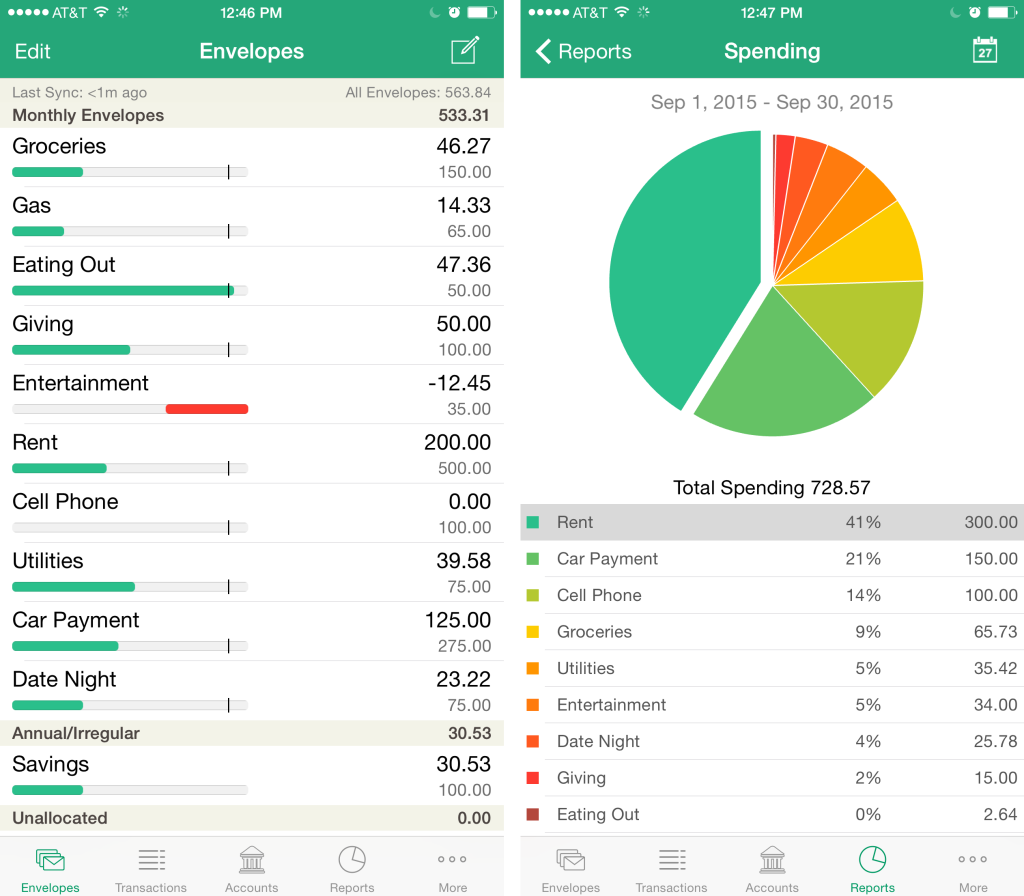
This is the digital version of your grandmother’s envelope system, and it’s stuck around since 2009 because the envelope method genuinely works for people who overspend on flexible categories like eating out. You allocate cash into virtual envelopes, sync across up to five devices, and when an envelope’s empty, it’s empty, no fudging. It doesn’t link to your bank at all on the free tier, which some people find refreshingly private and others find like extra homework; ratings reflect that split, running stronger on iOS than Android lately. Free, with a paid Plus tier for unlimited envelopes and longer history.
iOS: App Store · Android: Google Play
For people who’d rather the app do the work
Monarch Money
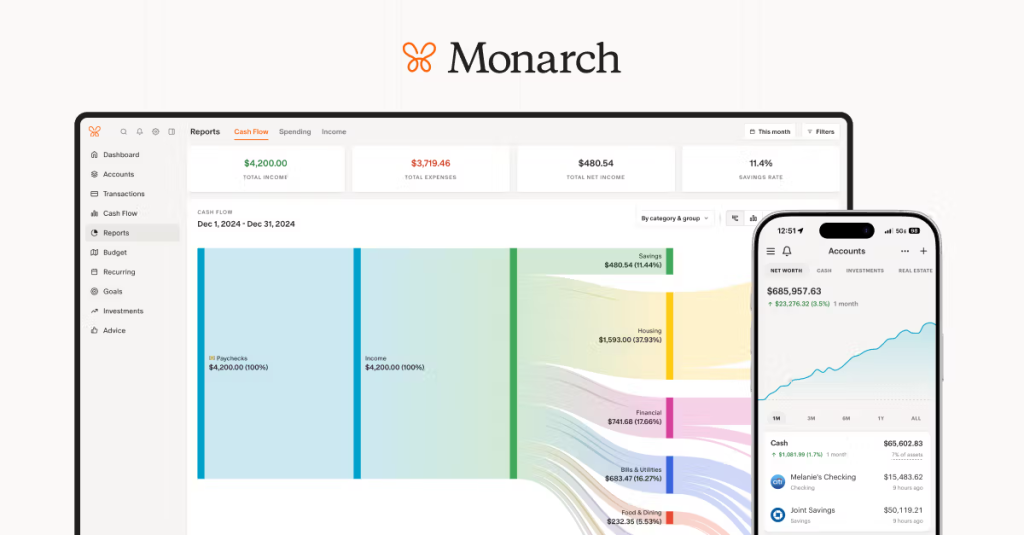
Since Mint shut down, Monarch has absorbed a huge share of its refugees, and the reviews show it: 4.9 stars across more than 81,000 App Store ratings, with “Mint shutting down was a blessing in disguise” showing up as an actual, unprompted review quote. It links over 13,000 US institutions, auto-categorizes with genuinely accurate rules, and lets partners or a financial advisor collaborate on the same account at no extra cost. The AI assistant now gives real-time status updates while it’s working, which sounds small until you’re waiting on a bank sync. $14.99 monthly or $99.99 annually, with a free trial.
iOS: App Store · Android: Google Play
Copilot Money
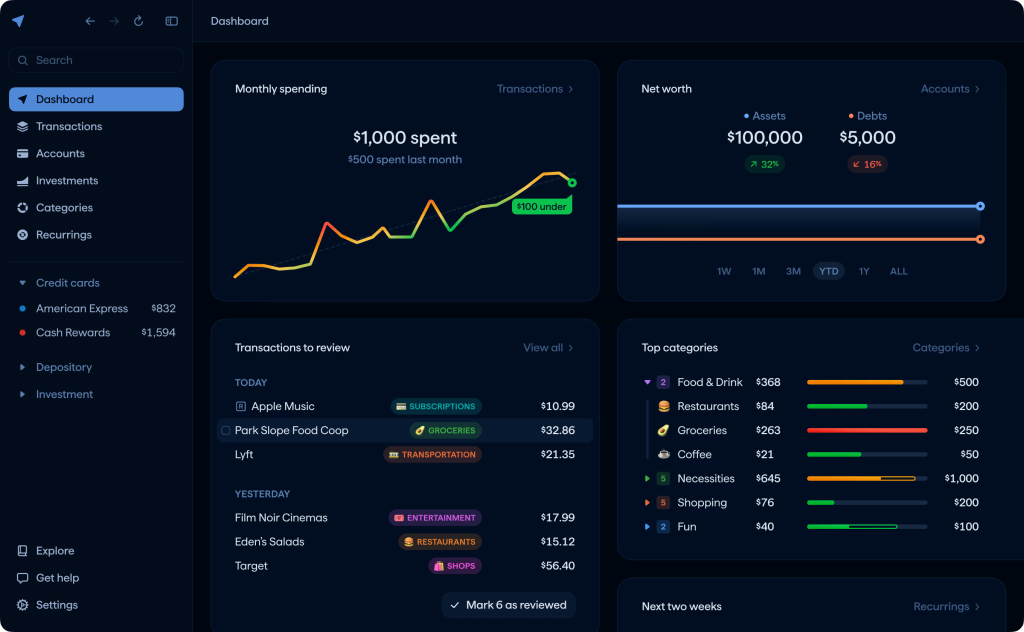
Widely, and correctly, called the best-looking budgeting app on the market, Copilot leans on an AI categorization engine that gets noticeably sharper the longer you use it, until it’s sorting your transactions with almost no manual correction needed. It held iOS exclusivity for years before finally shipping an Android app in 2024, and it shows in the 4.8-star, 27,500-review App Store rating built up over that Apple-only stretch. There’s no permanent free tier here, which is the trade-off for the polish, at roughly $13 a month or $95 annually.
iOS: App Store · Android: search on Google Play
Simplifi by Quicken
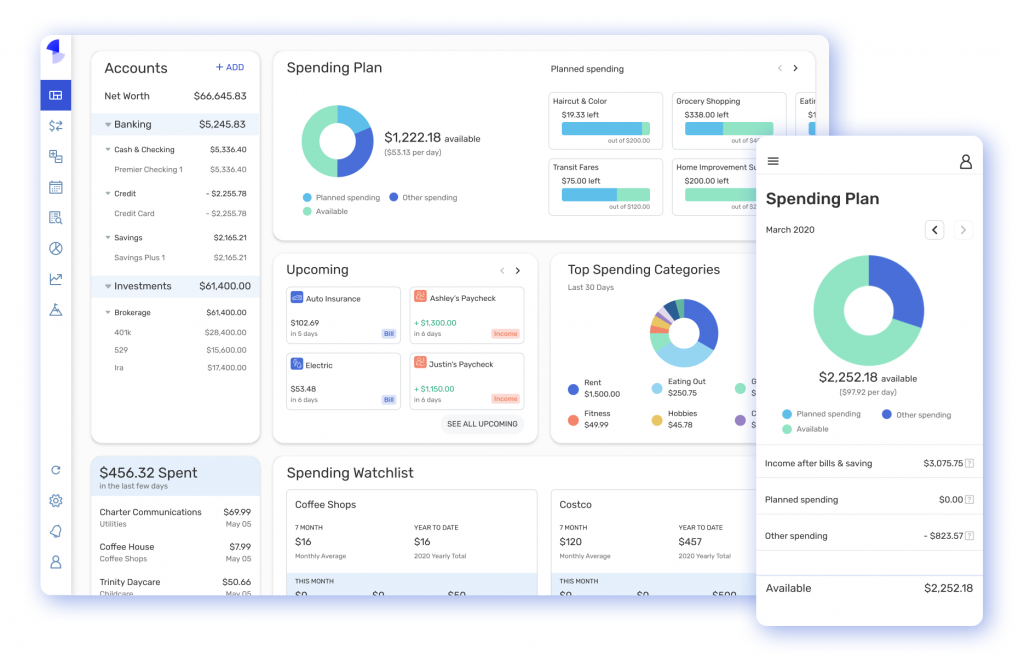
Backed by the 35-year-old Quicken name, Simplifi is the one to pick if you want serious financial software energy without opening a full desktop accounting program. Its standout is the 12-month cash flow forecast, genuinely rare at this price point, plus customizable Watchlists that flag categories before you’ve blown the budget rather than after. It’s rated 4.4 to 4.5 stars fairly consistently across both stores, and it’s the only app on this list with an identical experience on mobile, web and desktop. No free tier; $2.99 a month for the first year, then $5.99.
iOS: App Store · Android: search on Google Play
For finding the money leaking out of your account
Rocket Money
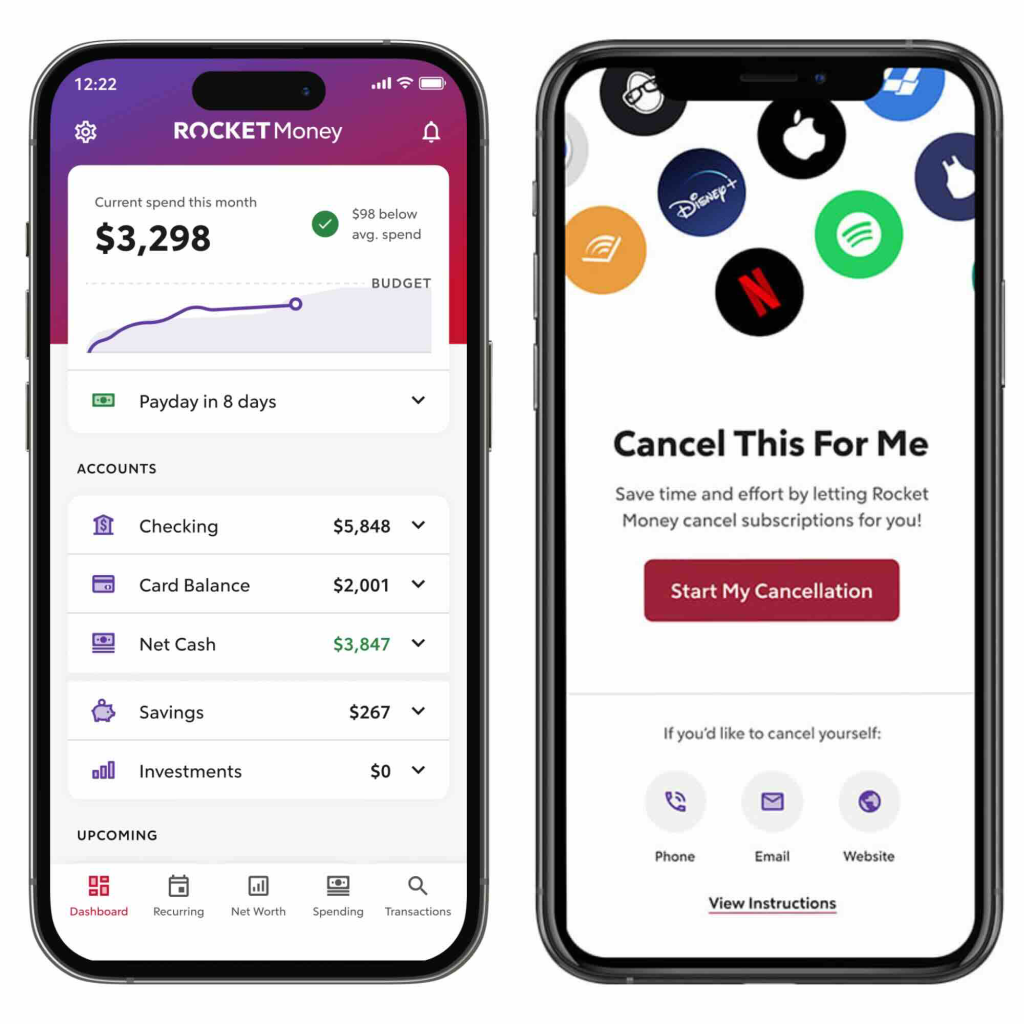
Formerly Truebill, this is less a budgeting app than a leak detector, and it’s the most-reviewed app on this entire list by a wide margin: 4.5 stars from over 369,000 App Store ratings, with more than 5 million members and over $2.5 billion collectively saved through subscription cancellations and bill negotiations. Link your accounts and it will find the forgotten $12.99 charge from three apps ago and cancel it for you with a couple of taps. The free tier genuinely does useful work here; Premium runs a pay-what-you-want model between $4 and $12 a month.
iOS: App Store · Android: search on Google Play
PocketGuard
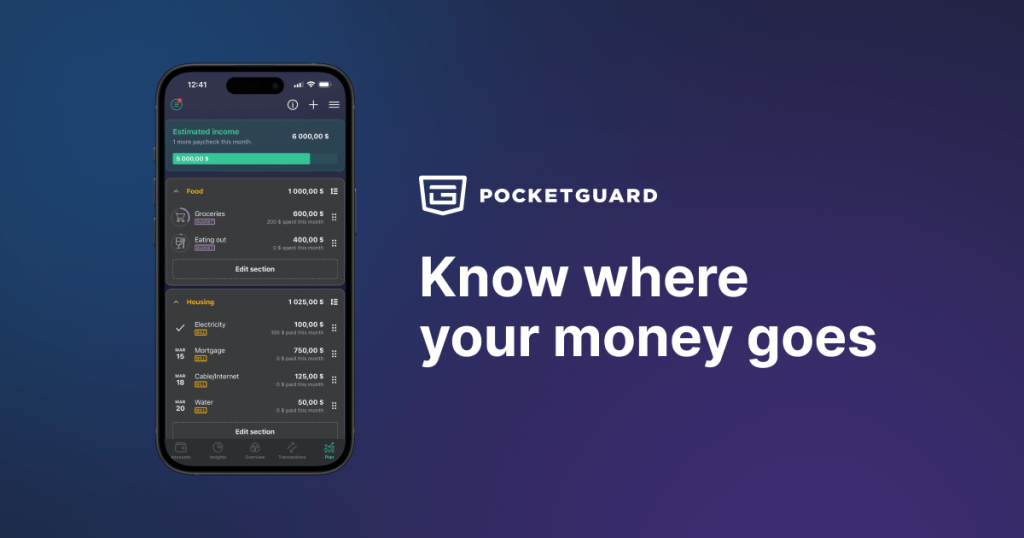
PocketGuard’s whole pitch rests on one number: “In My Pocket,” a live calculation of what’s actually safe to spend today once bills, savings goals and upcoming expenses are accounted for. It’s a genuinely simpler mental model than a full budget breakdown, which is why it holds a solid 4.6 stars on iOS even against far bigger competitors. A new “Pace” feature warns Plus subscribers when they’re burning through the month’s budget too fast, currently iPhone-only with Android support expected later this year. Free version available; Plus runs $12.99 monthly or $74.99 annually.
iOS: App Store · Android: search on Google Play
For couples, chat-based coaching, and the bigger financial picture
Honeydue
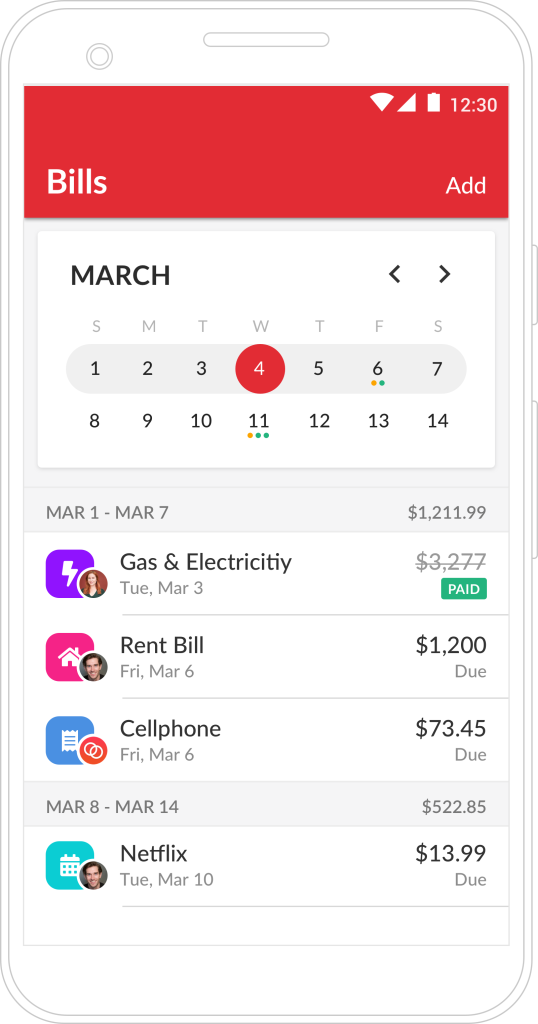
Built specifically for two people managing money together, Honeydue lets each partner choose exactly what to share, from full transparency down to just the joint bills, and layers in an actual chat function so you can ask “what was this $40 charge” without switching to text messages. It connects to more than 20,000 institutions across five countries and remains completely free, funded by in-app ads rather than a subscription. Reviews run around 4.5 stars on iOS and slightly lower on Android, which tracks for a couples app juggling two people’s connectivity issues at once.
iOS: App Store · Android: search on Google Play
Cleo
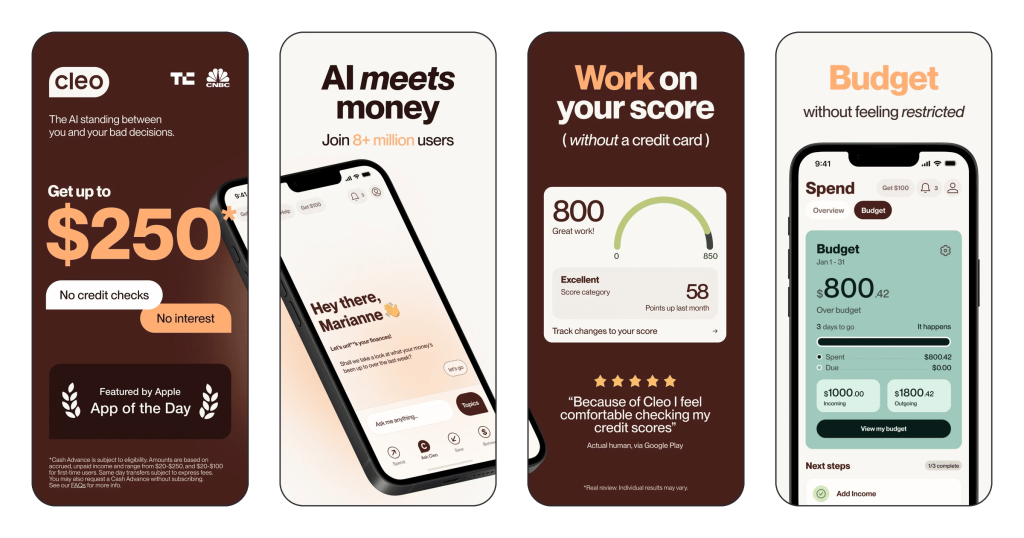
Cleo ditches dashboards entirely in favor of a text-message-style AI chat that will, if you ask nicely (or not so nicely), “roast” your spending habits with genuine attitude. It sounds like a gimmick until you notice the numbers: 4.7 stars across 214,000 App Store reviews and more than 8 million users, making it one of the most-downloaded finance apps for Gen Z and millennials specifically. Beyond the personality, it does real work quietly in the background, auto-saving small amounts and flagging low balances before an overdraft hits. Free core version; Plus unlocks credit-building tools for $5.99 a month.
iOS: App Store · Android: search on Google Play
Empower Personal Dashboard
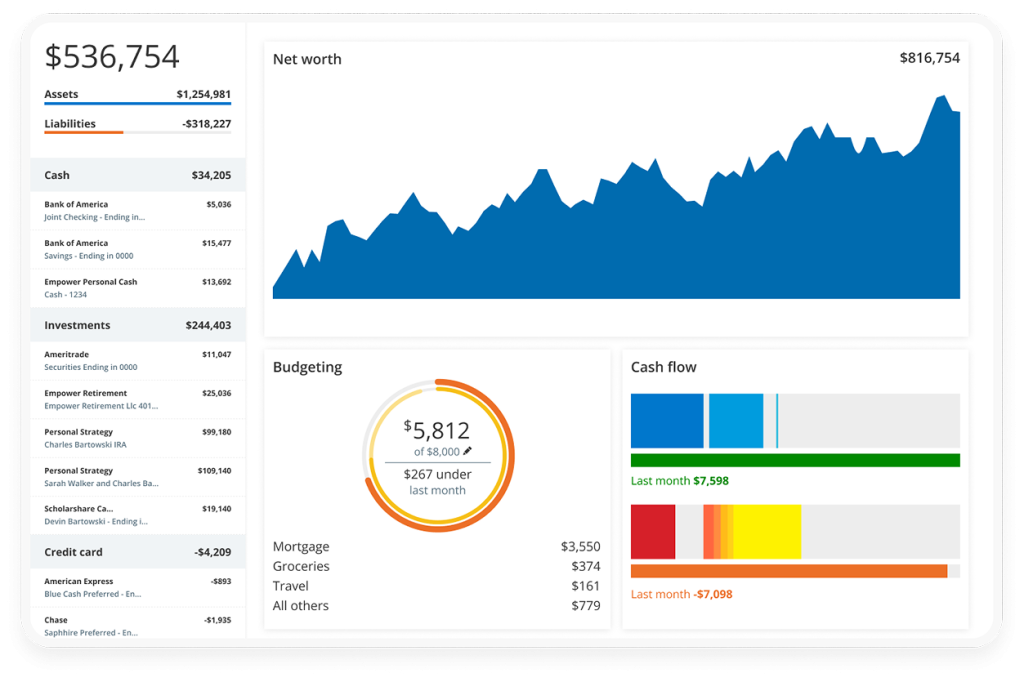
Formerly Personal Capital, Empower is less about categorizing your Tuesday lunch and more about the full financial picture: net worth tracking, retirement projections, and an investment checkup that compares your actual portfolio allocation against an ideal one. It’s held a remarkably steady 4.6-star rating across 46,500-plus App Store reviews for years, and crucially, the whole thing is free, monetized instead through the optional wealth management arm rather than a subscription. If YNAB is for people obsessing over next week, Empower is for people checking in on next decade.
iOS: App Store · Android: search on Google Play
Qapital
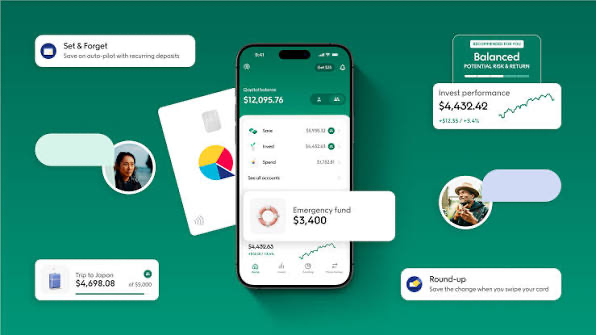
Qapital automates saving through “rules” rather than budgeting through categories: round up every purchase, save $5 every time you resist a takeout order, trigger a transfer every time you close an Apple Watch ring. It’s a genuinely different mental approach to the same problem, and its 2 million-plus members have collectively saved more than $3 billion through it, with a 4.8-star rating across 86,000 App Store reviews and an actual Google Play Editor’s Choice nod. Basic tier is free with an FDIC-insured savings account; Complete and Master tiers add a checking account, investing and joint budgeting.
iOS: App Store · Android: search on Google Play
How to actually pick one without wasting three weekends
Match the app to your actual failure point, not your ideal self. If you overspend because you don’t know what’s left to spend, get PocketGuard or Cleo. If you overspend because you have no plan at all, YNAB or EveryDollar force the plan first.
Don’t pay before you’ve used the free tier for two weeks. Rocket Money, PocketGuard, Cleo and Qapital all have genuinely useful free versions. See if you open the app daily before committing to an annual plan you’ll forget to cancel.
If money is a two-person problem, don’t budget solo. Monarch and Honeydue both build shared visibility in from day one rather than bolting it on, which avoids the arguments that come from one partner discovering spending after the fact.