



Someone has 3D printed a caravan out of 7,000 plastic bottles, and we kind of want one
Somewhere in Ukraine, a robot arm has been turning old plastic bottles into a caravan. It sounds like the opening of a children’s book, but it’s real, and it might be one of the more grown-up uses of 3D printing we’ve come across.
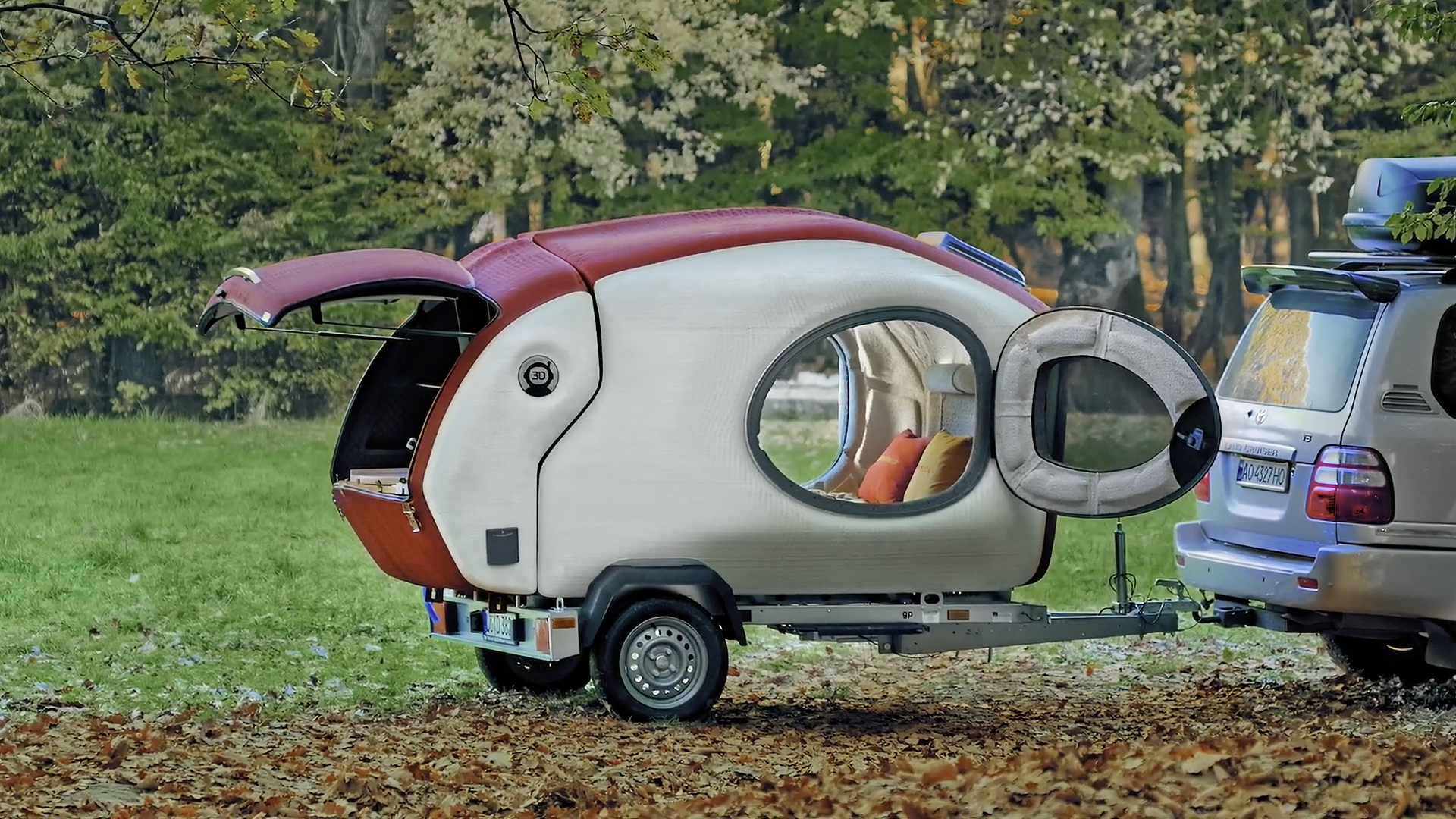
The camper is called the Discover 3D, though you may have seen it described as the Tiny Camper. It comes from Ukrainian-German firm Lemki Robotix and its large-format printing partner iScale3D, and its makers call it the world’s first 3D printed mobile home. We can’t verify that crown, but we can tell you it’s a properly interesting bit of kit.
It also lands at an interesting moment. Caravans have long been heavy, pricey and stubbornly old-fashioned to build, and plenty of us have looked at the cost of a new tourer and quietly closed the tab. A lighter alternative made from rubbish is exactly the sort of idea that deserves a closer look.
From bottle bank to campsite
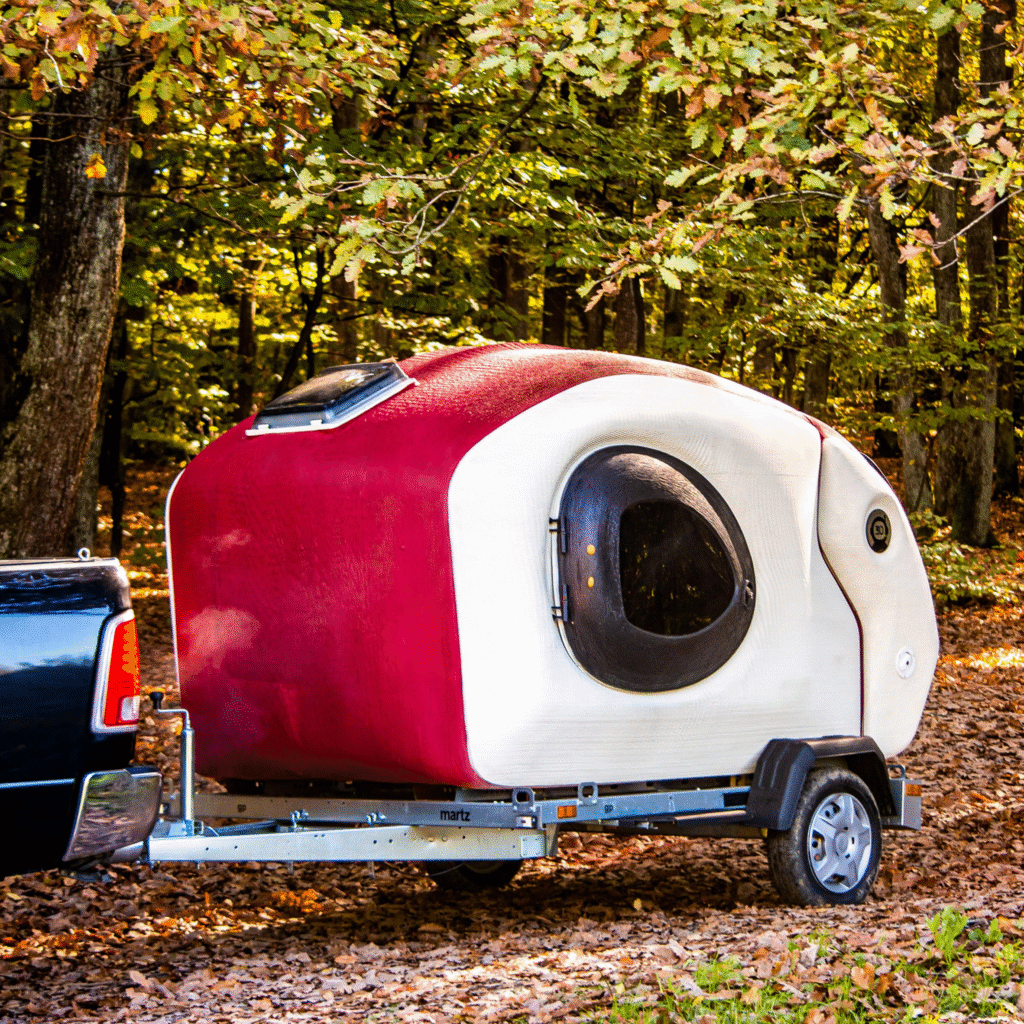
Each hull starts life as roughly 7,000 recycled plastic bottles. They’re turned into polypropylene granules, reinforced with fibreglass and fed into a printer using a process called Fused Granulate Fabrication, or FGF. The desktop printers most of us know melt a spool of filament. FGF works with pellets instead, which are cheaper, easier to make from recycled stock and far better suited to printing something the size of a small car.
The printer itself is a KUKA industrial robot arm running software Lemki Robotix built in-house. The team has worked with robotics and CNC machines since 2014, which goes some way to explaining how a start-up ends up printing caravans rather than phone cases. Because the shell comes out as one continuous piece, there are far fewer seams than in a traditional caravan, and seams are usually where the damp gets in.
It’s quicker to change, too. With no moulds to make, a tweak to the layout becomes a software job rather than a factory retool, which is why the company talks about customisation and, eventually, mass production. We’d take that last claim with a pinch of salt for now, but the logic is sound.
The company also says around 80 percent of the materials can be recycled when the camper reaches the end of its life, so in theory those bottles could get a third outing.
A teardrop with a few tricks up its sleeve
Shape-wise, picture a classic teardrop trailer reimagined as a smooth white pebble. It’s compact, measuring roughly 3.2 metres long and 1.8 metres wide and tall, and it’s designed to sleep up to three.
- Hull: 3D printed recycled polypropylene, reinforced with fibreglass
- Wall thickness: 9mm
- Weight: 250kg for the hull, 400kg for the complete camper
- Size: roughly 3.2m x 1.8m x 1.8m
- Sleeps: up to three
Weight is the standout figure. At 400kg, it’s light enough that you shouldn’t need a hulking 4×4 to tow it, which opens the door to drivers with ordinary family cars.
Inside there’s a sleeping nook, with shelving and storage moulded into the curves. The kitchen lives outside: lift the tailgate and you’ll find a two-burner propane stove, a sink and room for a water tank of around 40 litres. It’s simple, but it’s enough for morning coffee and a proper fry-up.
The tech is where it gets fun. Built-in batteries can be hooked up to rooftop solar panels for off-grid trips, and sensors track water level, battery charge and temperature. The printed shell is also designed to insulate against heat and noise, which you’ll appreciate when the rain starts drumming at 2am. It’s not quite a smart home on wheels, but it’s a good deal cleverer than the average trailer.
If you like your camping with a side of gadgets, our guide to the gadgets and accessories that make a camping getaway easier is a good starting point, and our piece on smart home tech for cosy camping shows how far you can take it. Off-grid solar is having a moment generally, as we noticed when picking the gadgets worth remembering from IFA 2026.
Who this is really for
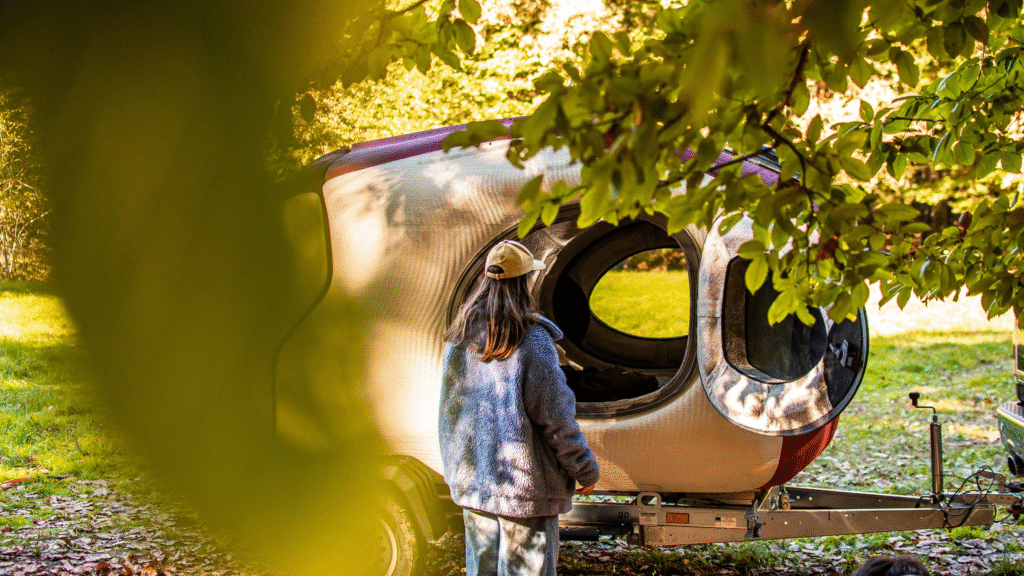
Not everyone, and that’s fine. This is a weekend-away machine for couples or a small family who want somewhere dry and comfortable to sleep without committing to a full-size caravan or a converted van. It’s also a neat fit for festival-goers and anyone whose car would wheeze at the thought of towing a traditional tourer.
It is not for anyone who wants standing room, a toilet or space to swing a cat. The bed is the main event and everything else is a bonus. If your idea of camping involves a separate lounge and an awning the size of a marquee, look elsewhere.
Could you actually buy one in the UK?
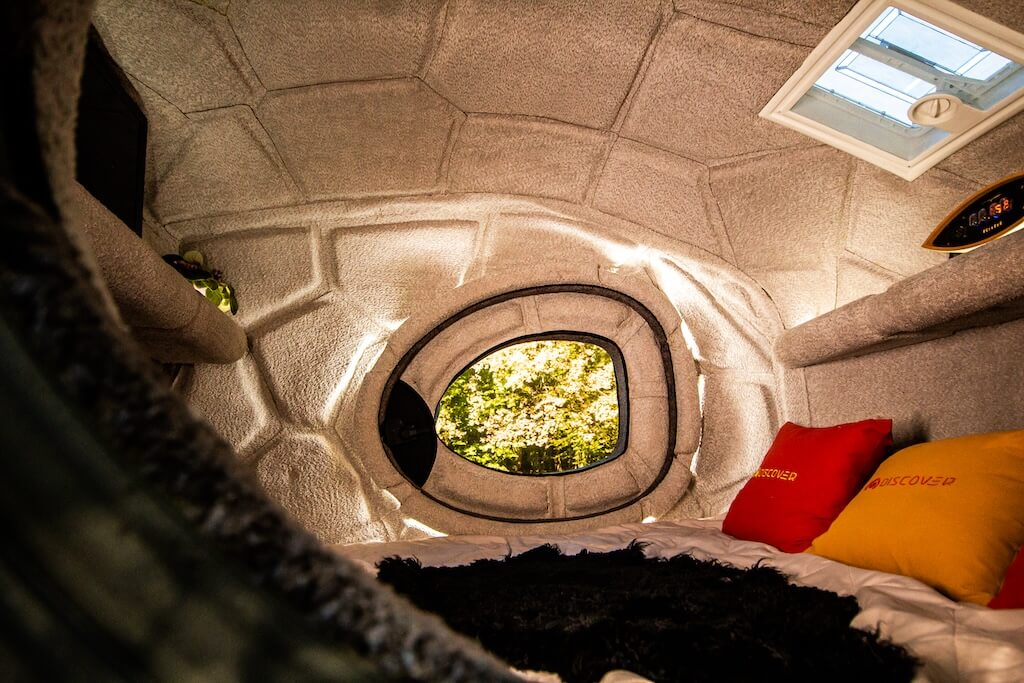
Not easily, at least not yet. iScale3D’s own page has pre-orders open, with the option to buy or rent, but no price listed. Reports from the original launch put pre-order pricing for a turn-key unit at around €12,000, rising towards €18,000 depending on spec. That’s approx. £10,000 to £15,500, though we haven’t been able to confirm a live UK price.
We can’t find a UK dealer either. The camper has been pitched at European buyers and renters, so anyone here would need to contact the company directly about delivery, registration and UK trailer rules. Coverage also disagrees on how ready it is: some still calls it a prototype, while the maker’s page says it’s production ready.
Our verdict: clever, charming and not quite on your driveway
We’ve been told that 3D printing will change everything for years, usually just before someone hands us a printed keyring. The Discover 3D feels different. It’s a real object tackling real problems: lighter shells, fewer leaks, less waste and a second life for plastic nobody wanted.
It’s also refreshing to see sustainability built into the product rather than bolted on in the marketing. Recycled bottles aren’t a sticker on the side here. They’re the whole shell, and that changes the conversation about what a caravan could be made of.
We haven’t seen one in person, and with no UK price or delivery date it’s one to watch rather than one to buy. But if Lemki Robotix gets the details right, this could be the first caravan you’d feel slightly smug about towing.


