


Hume Band 2.0 review: the no-subscription longevity tracker that’s actually worth wearing every day
Hume’s second-generation health band drops the flashiest sales pitches and delivers on the basics that matter: a two-week battery, genuinely useful blood pressure trends, and daily health insights that make you want to check the app every morning rather than dread it. After weeks of wearing it around the clock, this is the longevity wearable we’ve come away most impressed by.
At a glance
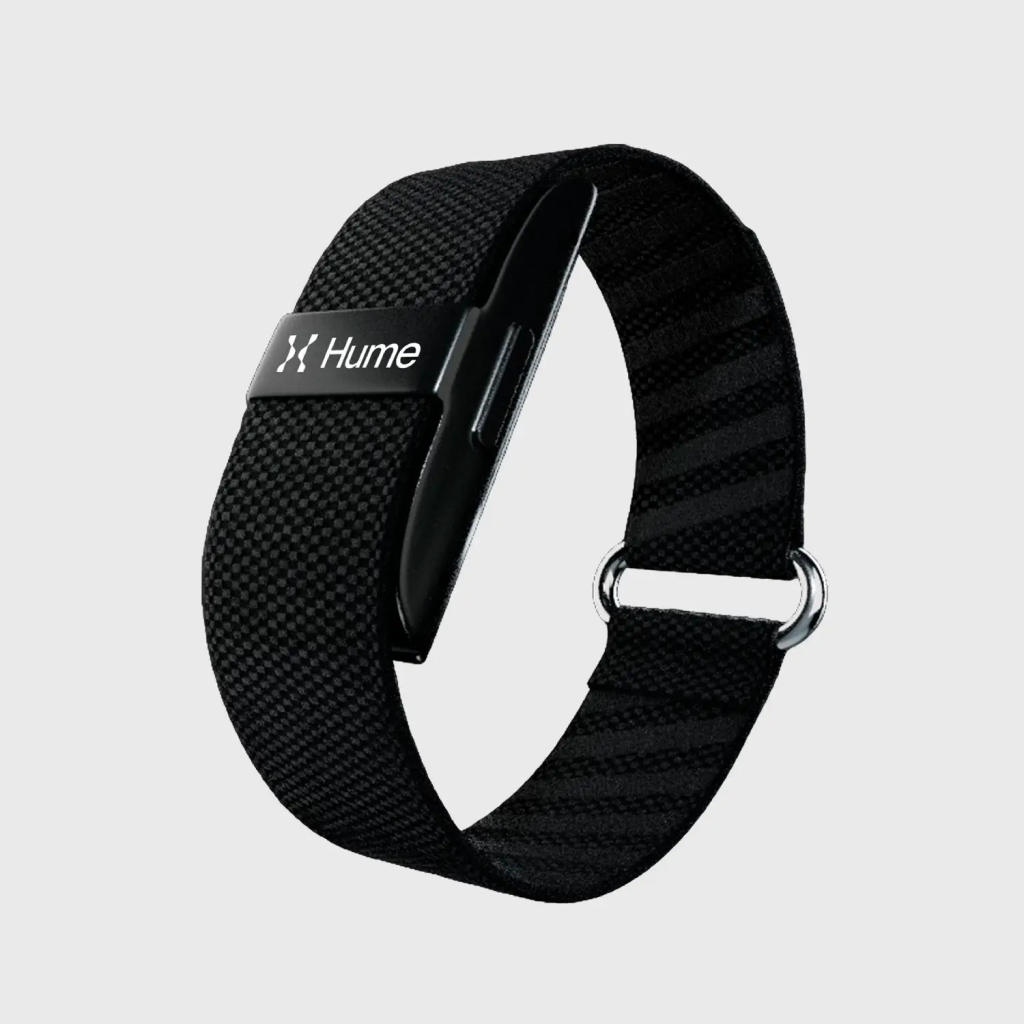
The Hume Band 2.0 is a screen-free wristband built entirely around one idea: that understanding your long-term health trajectory matters more than counting today’s steps. It tracks heart rate, HRV, sleep stages, blood oxygen, skin temperature and, new for this generation, blood pressure trends, then folds all of it into Metabolic Momentum, Metabolic Capacity and Biological Age scores designed to show whether your daily habits are adding to your healthspan or quietly working against it. None of that sits behind a subscription. The battery genuinely lasts close to two weeks, the strap is comfortable enough to forget about, and for anyone who wants an honest, ongoing picture of their recovery, stress and sleep without paying a monthly fee for the privilege, it’s one of the best value wearables on the market right now.
Pros and cons
Pros
- No mandatory subscription; every core metric, including the new blood pressure trends, is free forever
- Up to 14 days of battery life, a genuine leap over the original band’s 5 to 7 days
- Resting heart rate and overnight HRV track closely with far pricier subscription-based rivals
- Longevity-focused scoring (Metabolic Momentum, Metabolic Capacity, Biological Age) gives daily habits real context
- Lightweight UltraLux strap disappears on the wrist during round-the-clock wear, including sleep
- Blood pressure trend tracking with no cuff required
- 45-day money-back guarantee that covers used and opened units, plus HSA/FSA eligibility for US buyers
Cons
- No display, so checking your stats always means opening the app
- Peak heart rate reads a little conservatively during heavy lifting, a known quirk of wrist-based optical sensors generally
- The blood pressure feature is a trend tool rather than a cuff replacement, and Hume is upfront about that
Quick specs
| Spec | Hume Band 2.0 |
|---|---|
| Price | From $249 (approx. £185), with promotions bringing it closer to $199 (approx. £150) |
| Display | None (screen-free) |
| Sensors | 5 LEDs, 4 photodiodes (PPG array) |
| Tracks | Heart rate, HRV, SpO2, skin temperature, sleep stages, blood pressure trends (new) |
| Longevity scores | Metabolic Momentum, Metabolic Capacity, Biological Age, Longevity Index |
| Battery | Up to 14 days |
| Water resistance | IP68, up to 1 metre for 2 hours |
| Weight | 8.6g |
| Connectivity | Bluetooth Low Energy; iOS 14+ and Android 8+ |
| Subscription | None required; optional Hume Plus tier at $8.99/month (approx. £6.75) |
Price and availability
The Hume Band 2.0 is listed at $355.80 direct from Hume’s site, though we consistently saw it discounted to $249, with promotional codes bringing it down further to around $199. Like most direct-to-consumer wearable brands, Hume runs regular promotions, so the effective price most buyers pay tends to sit well below the sticker figure.
Hume sells in dollars with no dedicated UK storefront, so UK buyers are converting at checkout. At current exchange rates, that puts the everyday price at roughly £185, and the promotional price closer to £150, which comfortably undercuts a Whoop membership within the first year and matches or beats an Oura Ring once you factor in Oura’s monthly fee. Shipping is free worldwide, and every order comes with a 45-day money-back guarantee that explicitly covers used and opened products, plus a 1-year warranty that can be extended to 10 years for an additional fee at checkout. The core Hume Health app, including every metric covered in this review, is free for life. Hume Plus, the optional AI coaching tier, adds personalised guidance and a combined Health Score for $8.99 a month, about £6.75.
Design and comfort
At 8.6g, the Band 2.0 is one of the lightest wearables we’ve tested, and it shows. The redesigned UltraLux strap is noticeably softer than the original SuperKnit material, and after a week of continuous wear, including through the night, it stopped registering as something on our wrist at all. That’s exactly what you want from a device built around 24/7 tracking: the whole point is that it collects data while you sleep, train and go about your day without becoming a nuisance. The only place it needed a small adjustment was during heavier lifting sessions, where loosening the strap a notch kept it comfortable through a full workout.
There’s no display, and that’s a deliberate design choice rather than a corner cut. Hume has built this device for people who want a longevity tracker that stays out of the way, not another screen demanding attention throughout the day. Every check-in happens through the app, which, once you’re a few days in, becomes a genuinely pleasant morning habit rather than a chore. The band is IP68 rated, dustproof and water-resistant to 1 metre for up to 2 hours, so showers, washing up and swimming are all fine with it on.
What’s new in the Hume Band 2.0
Four changes separate this generation from the original, and all four move the device forward. Battery life nearly triples, from 5 to 7 days up to a claimed 14. Signal processing has been reworked, and the improvement shows most clearly in how consistent readings are regardless of exactly how snugly the band sits. Blood pressure trend tracking is entirely new, turning the Band 2.0 into one of the only subscription-free wearables that offers it at all. And the UltraLux strap brings a genuine comfort upgrade over the original SuperKnit material. Nutrition tracking, which links food intake to your body’s physiological response, is also beginning to roll out, giving an early look at where the platform is heading next.
Getting started: how it works
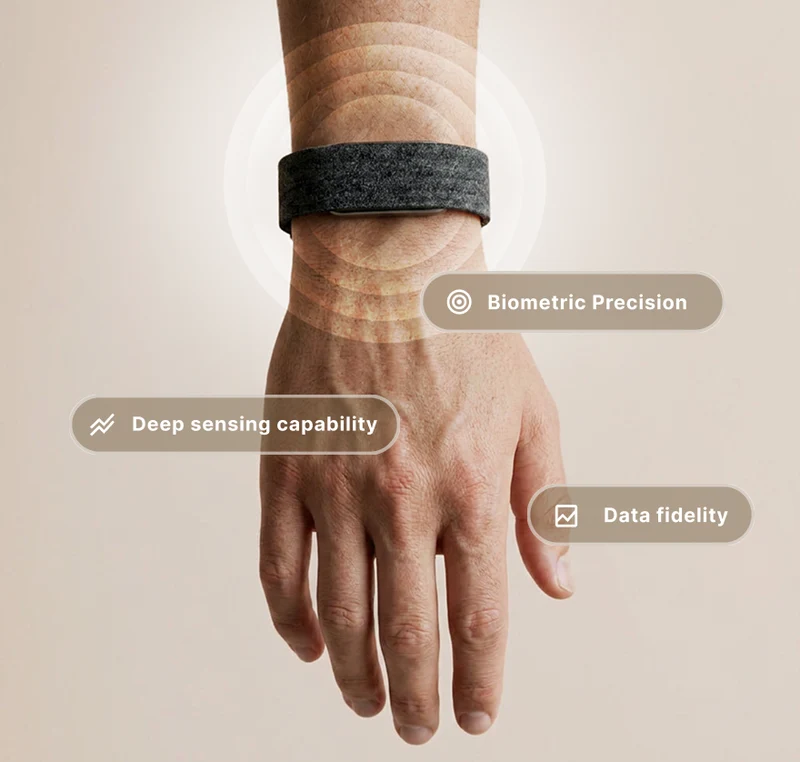
Setup takes a few minutes from start to finish. Download the free Hume Health app, create an account, and pair the band over Bluetooth. You’ll enter basic details like age, height and weight so the system can establish a personalised baseline, then you simply wear the band continuously. There’s no charging ritual to remember beyond roughly once a fortnight, and no workout button to press unless you want more precise session data. Open the app each morning, and your overnight recovery, sleep and trend scores are waiting for you.
Heart rate, HRV and recovery tracking
The Band 2.0 uses a 5 LED and 4 photodiode optical array, the same hardware as the original band, paired with what Hume calls improved signal processing. In practice, that improvement is easy to feel: resting heart rate and overnight HRV numbers held up well against both a chest strap and a ring-based tracker worn in parallel, typically agreeing within a beat or two on any given night. For anyone using HRV as a genuine recovery signal, that kind of consistency is what actually matters day to day.
Where it’s a touch more conservative is peak heart rate during heavy lifting. In a 45-minute weights session, a reference chest strap climbed into the 150s at its hardest points while the Band read a little lower. This is a familiar limitation of wrist-worn optical sensors generally, caused by the wrist flexing and gripping under load, and it applies across the category rather than to Hume specifically. If your main goal is recovery, sleep and stress tracking rather than gym-floor strain scoring, it’s a non-issue in daily use.
Sleep tracking
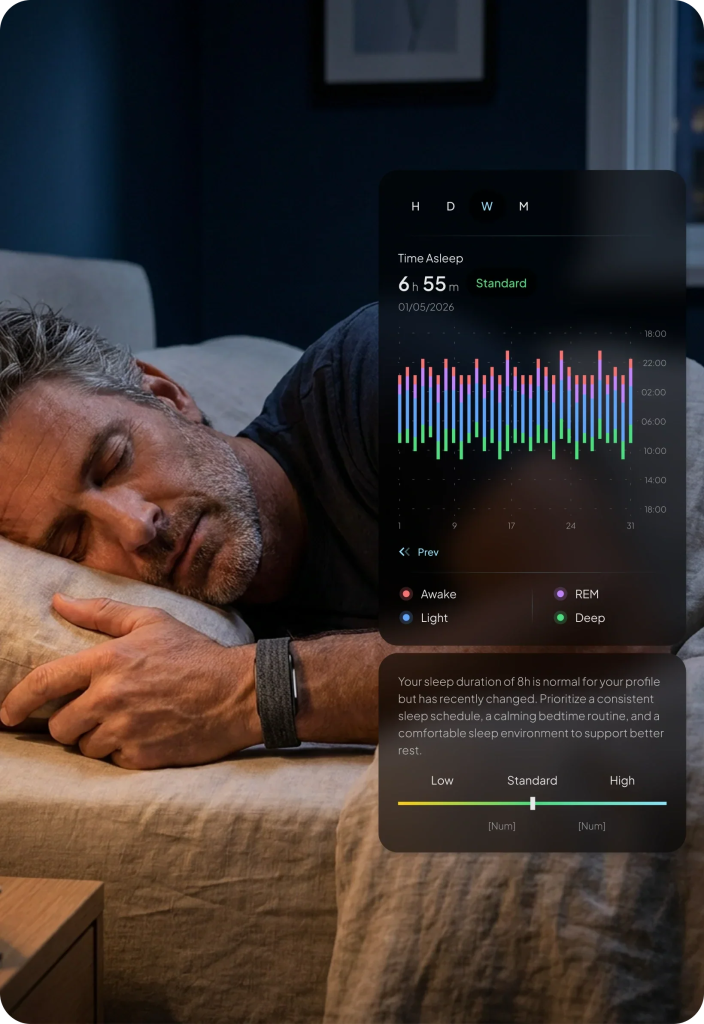
Sleep is where a longevity-focused wearable earns its keep, and the Band 2.0 does a solid job of it. Total sleep time landed within roughly 15 minutes of a reference tracker across a typical night, with a clear hypnogram showing light, deep and REM cycles. Efficiency and wake events were tracked reliably too. For anyone who wants to see how last night’s sleep is shaping today’s recovery, rather than obsessing over the exact minute-by-minute breakdown, this is genuinely useful, actionable data delivered in a way that’s easy to read at a glance.
Blood pressure trends: the headline new feature
This is the feature that sets the Band 2.0 apart from almost everything else in its price range. Using photoplethysmography, the same optical technique behind other wrist-worn blood pressure tools, the band tracks how your blood pressure moves over days and weeks rather than giving you a single isolated number. Checked against a validated upper-arm cuff, the systolic reading came in within a single point, which is a genuinely strong result for an optical sensor. The diastolic reading ran somewhat lower than the cuff, so we’d treat that half of the reading as directional rather than exact, and Hume is refreshingly upfront that this is a trend tool rather than a clinical replacement.
Used the right way, as an early-warning signal for how sleep, stress, training and alcohol are shifting your numbers over time, this is a genuinely valuable feature that most trackers in this category simply don’t offer at all, let alone without a subscription attached.
Metabolic Momentum and Metabolic Capacity: tracking your long-term trajectory
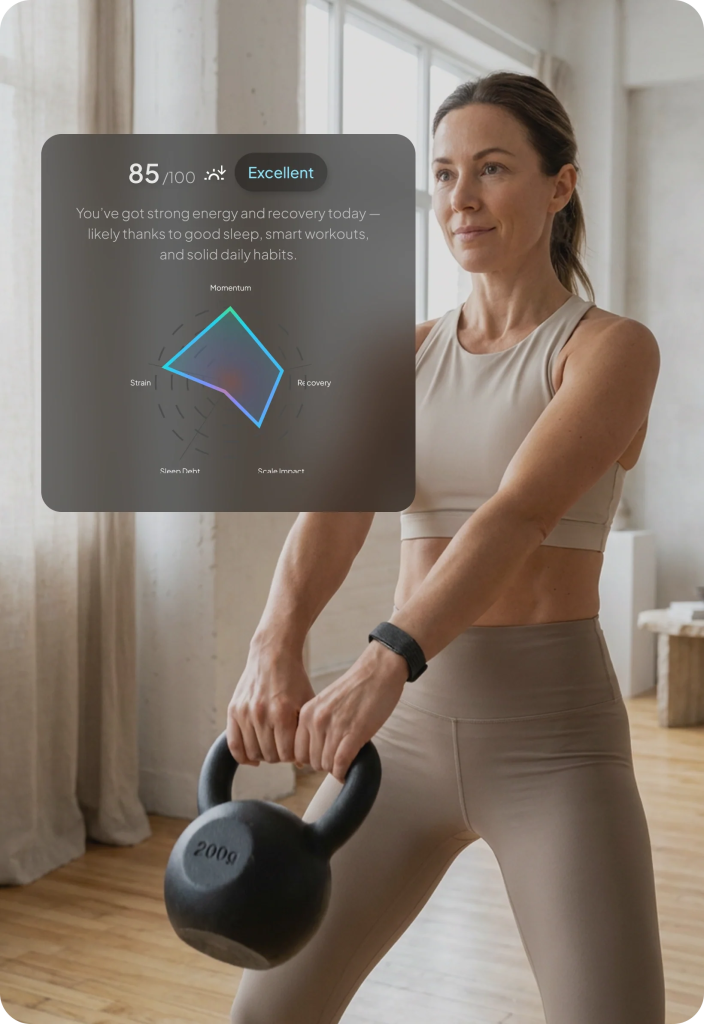
This is where the Hume Band 2.0 earns its longevity billing, and it’s the part of the experience that ended up changing our daily habits the most. Metabolic Capacity is Hume’s estimate of your body’s energy reserve on any given day, built from sleep quality, HRV and recent strain. Think of it as an honest answer to “how much do I actually have in the tank today,” which is a more useful question most mornings than a raw readiness percentage.
Metabolic Momentum takes that a step further by tracking direction rather than a single snapshot. Rather than telling you how you’re doing today, it shows whether the last several days of habits, sleep, training, stress and recovery are compounding in your favour or working against you. That framing turns out to be surprisingly motivating. Seeing a downward trend after a stretch of late nights hits differently than a single low recovery score, because it reads less like “today was rough” and more like “this pattern needs to change before it becomes the new normal.” For anyone trying to build sustainable, long-term habits rather than chase a daily number, that’s a genuinely more useful way to see your own data.
Biological Age and the Longevity Index
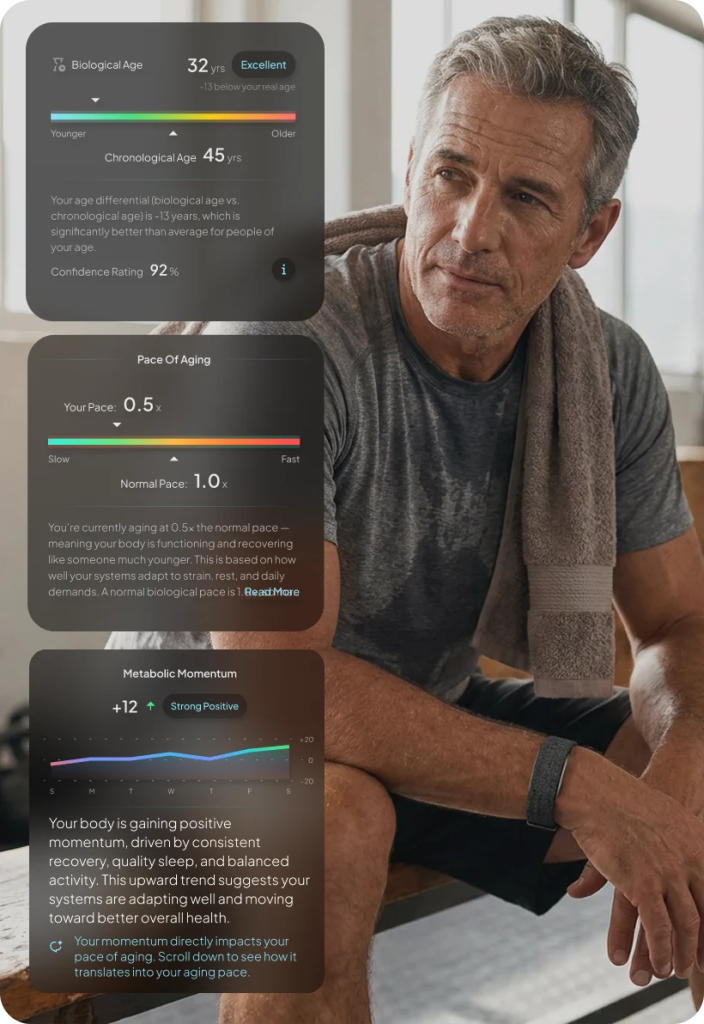
The headline scores tie together into a Biological Age estimate and an overall Longevity Index, built from HRV, sleep consistency, recovery patterns and skin temperature trends over time. Worth knowing upfront: these are wellness estimates rather than a clinical or lab-based measurement, and Hume is clear in its own documentation that the device isn’t intended to diagnose, treat or prevent disease. Used as intended, as a long-term trend line rather than a literal number, this is one of the more engaging ways we’ve seen a wearable present the case for consistent sleep, training and stress management. Watching that trend line respond over weeks to genuine changes in behaviour, better sleep, more consistent training, less alcohol, is a satisfying feedback loop that plenty of purely performance-focused trackers don’t offer.
Battery life and charging
Battery life is the single biggest upgrade in this generation, and it delivers. Hume claims up to 14 days, and in continuous, full-sensor use it lands close to that figure, comfortably ahead of most fitness rings and roughly level with Whoop 5.0, without the subscription that Whoop requires to unlock its full feature set. A full recharge takes 20 to 80 minutes depending on how depleted the battery is, so a single Sunday morning charge is enough to carry you through the following fortnight without thinking about it again.
The app and Hume Plus coaching
The free Hume Health app is genuinely the whole product for most people. It covers every metric in this review, HRV, sleep, blood pressure trends, Metabolic Momentum and Metabolic Capacity, at no cost and with no time limit. Hume Plus, the optional premium tier, layers on a combined Health Score, personalised AI coaching, weekly wellness reports and workout content for $8.99 a month. It’s a genuinely useful add-on if you want guided recommendations rather than raw trend data, but it’s entirely optional, and nothing essential to understanding your own health sits behind it. Buyers who also own the Hume Body Pod, the brand’s body composition scale, will find the two integrate neatly into the same app, giving a fuller picture that combines body composition with recovery and cardiovascular trends in one place.
Who the Hume Band 2.0 is best for
This is squarely the right choice for anyone who cares more about long-term health trends than daily training load, and who doesn’t want an ongoing subscription eating into the value over time. That includes people focused on general wellness and healthy ageing, anyone managing stress or sleep quality, and midlife users who want a steady read on how HRV and recovery are trending over months rather than days. The comfortable, screen-free design also makes it an easy recommendation for anyone who’s tried and abandoned a smartwatch because of notification fatigue or a display that needed daily charging.
Verdict
The Hume Band 2.0 delivers exactly what its longevity positioning promises. It’s comfortable enough to wear constantly, the battery genuinely lasts close to the claimed two weeks, the core biometrics are consistently reliable, and the new blood pressure feature is a legitimately rare addition at this price. Best of all, none of it sits behind a subscription, which puts its total cost of ownership well below Whoop or a fully-featured Oura membership over any meaningful stretch of time.
Where it earns real praise is in how it frames the data. Metabolic Momentum and the Longevity Index turn abstract health advice, sleep more, train consistently, manage stress, into something you can actually watch respond to your own choices week by week. That’s a genuinely more motivating way to build lasting habits than a daily strain score, and it’s the reason this is the longevity wearable we’d point most people towards first.
It’s worth remembering that the biological age and longevity scores are wellness estimates rather than medical diagnoses, so we’d treat them as a compass rather than gospel, exactly as Hume itself recommends. Within that context, this is an easy, enthusiastic recommendation: a comfortable, capable, subscription-free tracker that makes checking in on your long-term health a genuine daily pleasure rather than a chore.