

Honor MagicPad 4 review: the iPad Pro alternative nobody saw coming
At 4.8mm thin, with a 3K OLED screen and six years of updates, Honor just made the tablet market’s most comfortable assumptions look very shaky.
Let’s be honest about how most people buy tablets. They go to the Apple website, they wince at the price, they buy it anyway, and they tell themselves the ecosystem justifies the spend. Or they go Android, get something that costs half as much, and spend the next two years quietly aware that the display is not quite right and updates stopped arriving suspiciously early.
The Honor MagicPad 4 is the device that breaks that cycle. It is not trying to be a budget tablet with acceptable compromises. It is trying to be the best tablet at this price, full stop, and it makes a convincing case. A 3K OLED display with a 165Hz refresh rate. A fully metal chassis thinner than the iPad Pro. Six years of guaranteed software updates. A desktop mode that finally makes the laptop replacement argument stick. At £599, it costs less than an iPad Air and outperforms it on almost every measurable specification.
Honor does not get the press attention it deserves in the UK. That is about to become a more expensive oversight for anyone who keeps ignoring it.
Pros
3K OLED at 165Hz: the best display in this price category, and it is not close Thinnest tablet on the market at 4.8mm, with no structural compromises to show for it Six years of major Android updates: unprecedented at under £600 Desktop mode with taskbar and resizable windows works as advertised
Quick specs
| Price | From £599.99 (16GB/512GB: £699.99) |
| Display | 12.3-inch 3K (1920×3000) OLED, 165Hz |
| Chipset | Snapdragon 8 Gen 5 |
| RAM | 12GB / 16GB |
| Storage | 256GB / 512GB |
| Battery | 10,100mAh silicon-carbon, 66W wired |
| Cameras | 12MP rear, 9MP front |
| OS | MagicOS 10 (Android 15) |
| Weight | 450g |
| Dimensions | 273.4 x 178.8 x 4.8mm |
Price and availability
The MagicPad 4 starts at £599.99 for 12GB RAM and 256GB storage, stepping up to £699.99 for the 16GB and 512GB configuration tested here. Both models are available through Honor UK directly and via retailers including Very.
Honor runs promotions frequently enough that paying full price feels unnecessary if you can wait even a few weeks. At the time of writing, £100 off either model is live, with the keyboard case and Magic Pencil 3 stylus available as a bundle add-on for £50 on top. Over a typical product cycle, free earbuds, smartwatches, and chargers have all appeared as bundle incentives. Buy with a deal running and you are getting a quantity of hardware that makes the price look almost unreasonable in your favour.
The US and Australia caveat is a genuine limitation for buyers in those markets, where official availability is either non-existent or unreliable. For UK buyers, it is not a factor.
Design: the one that makes an iPad Pro owner look twice
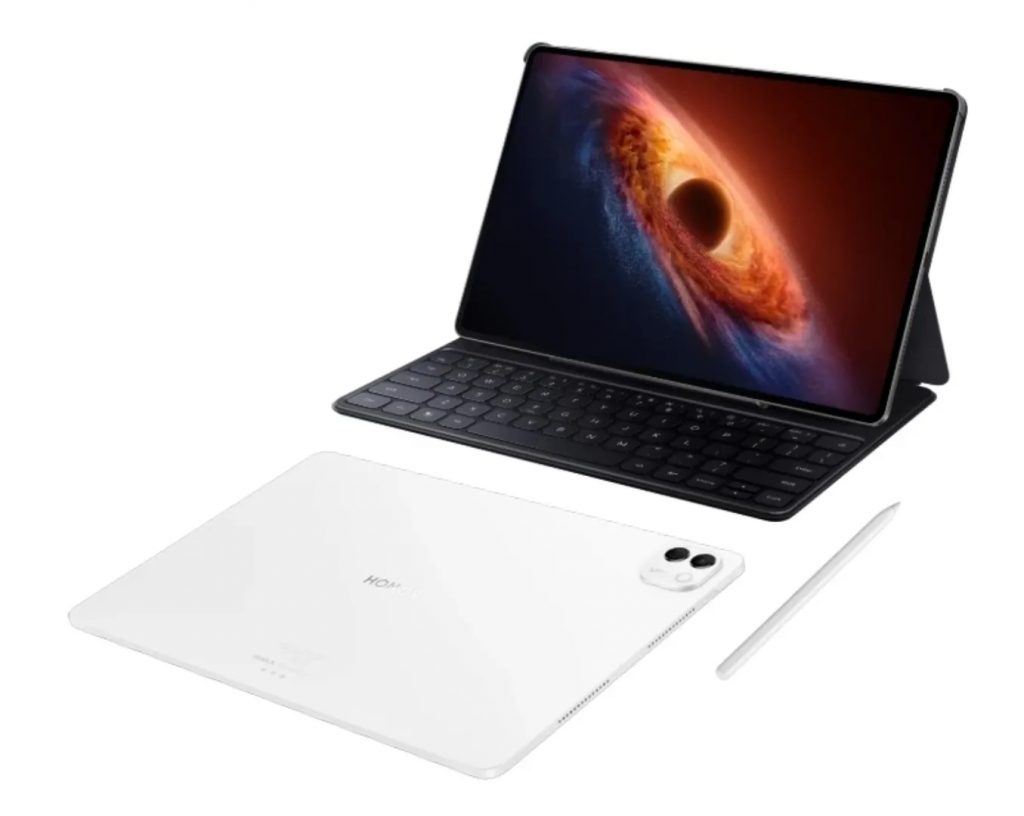
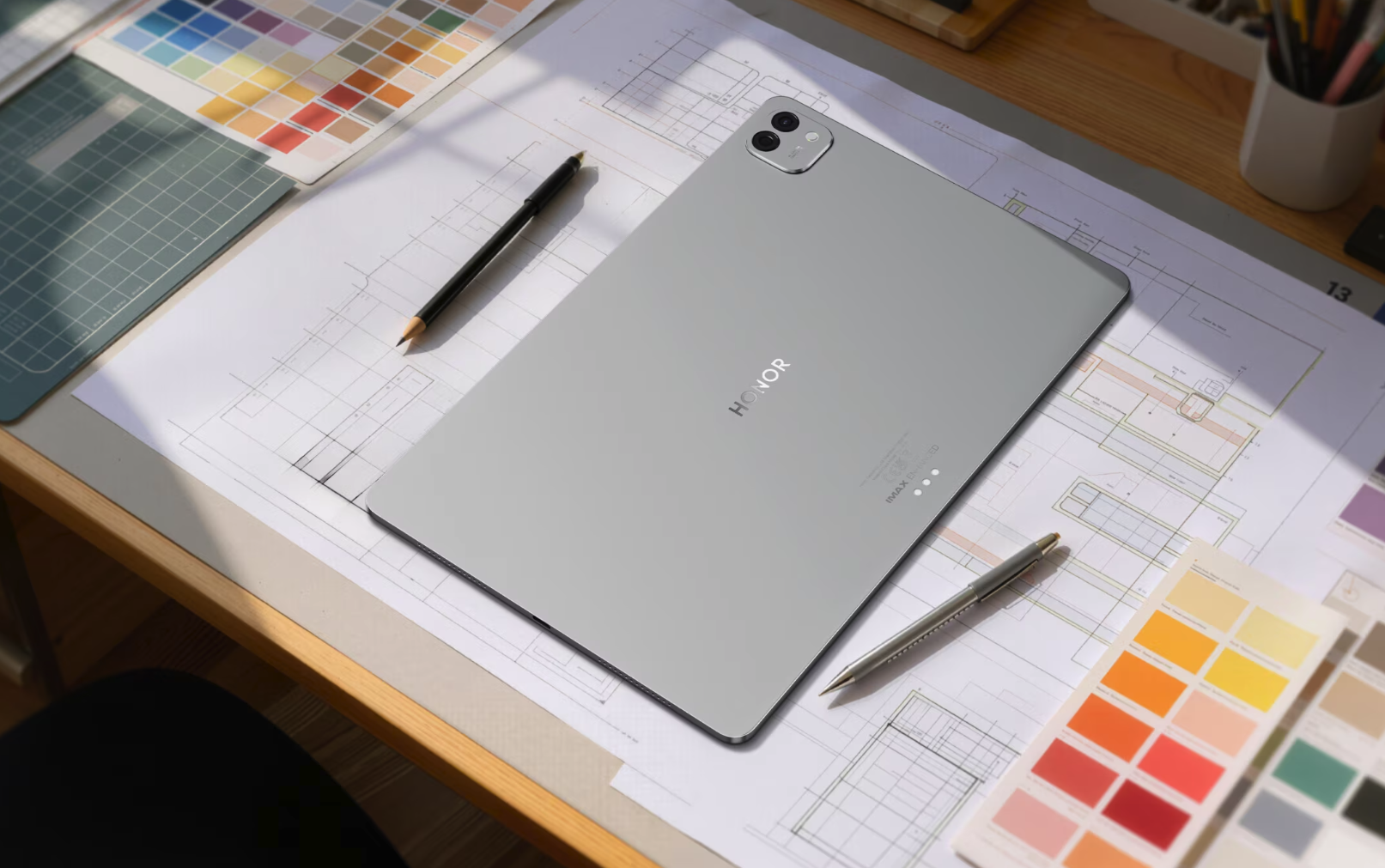
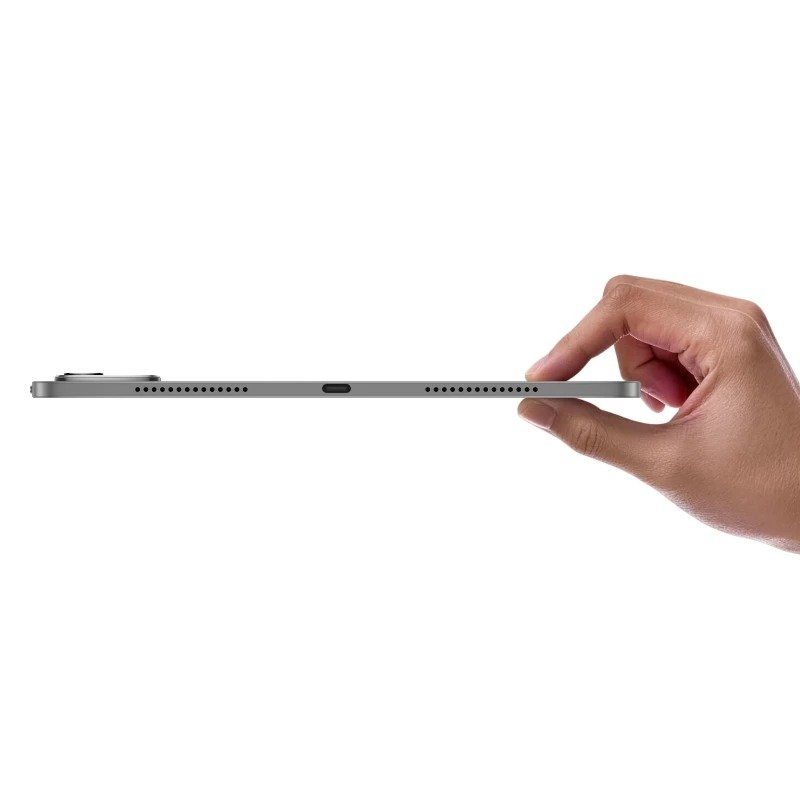
The thinness claim, 4.8mm against the iPad Pro’s 5.1mm, sounds like a specification fight nobody asked for. In practice, picking up the MagicPad 4 for the first time reframes it. This is a 12.3-inch tablet that you can hold in one hand for an extended period without your arm staging a protest. It slips into a bag alongside a laptop without adding meaningful bulk. It sits on a desk and looks, genuinely, like premium equipment.
What makes this more interesting than a marketing number is that nothing has been sacrificed to achieve it. The chassis is a single metal unibody with no visible seams and no flex under pressure. The finish holds up in real use without accumulating the surface damage that cheaper metal treatments pick up quickly. The USB-C port looks almost impossibly slim given the chassis depth but functions correctly and charges at full 66W speed.
The 4mm bezels frame a display that feels genuinely modern rather than dated, and the eight-speaker array positioned around the chassis produces sound that fills a room rather than pointing it at one corner. The bass is lighter than on thicker devices, which is the one honest concession to the slim profile, but clarity and detail are strong enough that this is one of the better tablet speaker setups available regardless of price.
One practical note on the speakers: MagicOS ships with sound enhancement features enabled by default that introduce an artificial brightness to the audio output. Turn them off immediately. The hardware underneath them is good enough that the processing adds nothing and takes something away.
The magnetic stylus strip, auto-pairing keyboard case, and folding stand design round out an accessory ecosystem that works without friction. The stand folds to show the tablet’s full slim profile when the keyboard is in use, which manages to be both a practical design choice and a quietly confident one.
Display: where the price advantage becomes embarrassing for the competition
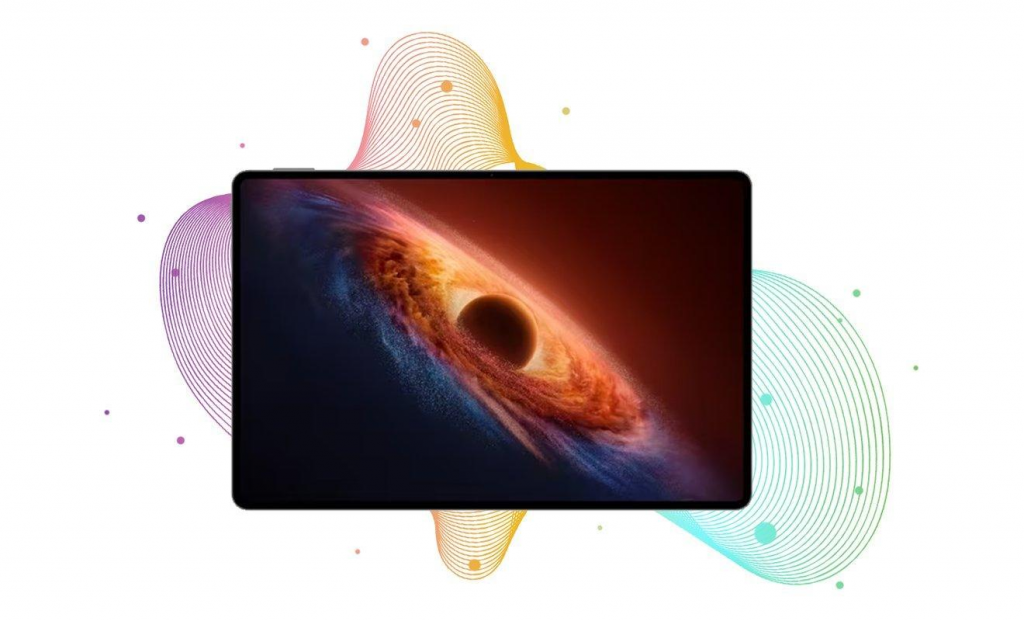
Tablet displays at the £500 to £700 price point split cleanly into two categories. There are LCD panels with competent but ultimately flat colour reproduction, and there is the MagicPad 4′s 3K OLED. Putting them side by side is not a close comparison.
The 1920×3000 resolution at 12.3 inches produces text sharp enough that reading on this display is genuinely pleasant rather than acceptable. Colour accuracy is strong across the range, with deep blacks and saturated highlights that make content look significantly more alive than on LCD alternatives. The 165Hz refresh rate means every interaction, from scrolling a webpage to switching between apps, has a smoothness that 60Hz or even 90Hz screens cannot match once you have lived with it.
Peak brightness of around 2,400 nits means outdoor visibility is not a problem even in direct sunlight, which is where mid-range tablets typically fall apart. HDR content gets the full treatment rather than the half-hearted tone mapping that cheaper panels apply. IMAX Enhanced certification, rare at this price, confirms the display meets specific colour and brightness standards that translate to noticeably better rendering of supported content.
The 5,280Hz PWM dimming rate is worth flagging for anyone who has experienced eye strain or fatigue on other tablets. It is a subtle specification that most buyers will not think to look for, but reducing PWM flicker at this level makes a measurable difference to how long you can use the screen comfortably. It is the kind of consideration that separates a display engineered by people who care from one specified by a committee hitting a price point.
Performance: fast enough to stop you asking the question
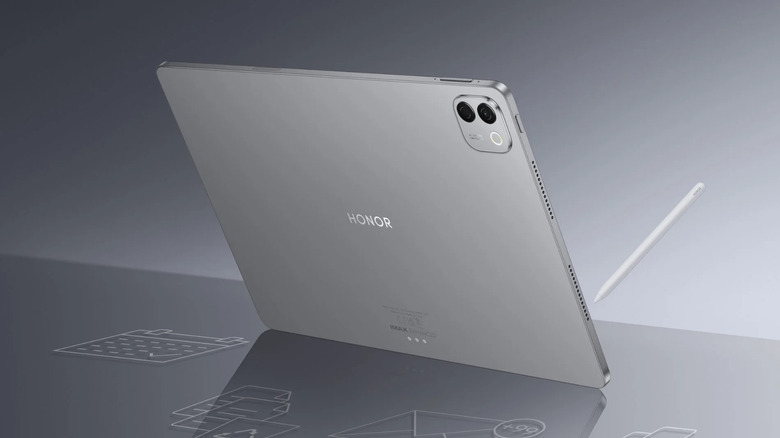
The Snapdragon 8 Gen 5 is not the newest chip Qualcomm makes, and Honor does not pretend otherwise. What it is, is more than fast enough for everything the MagicPad 4 will be asked to do by the overwhelming majority of people who buy it.
Day-to-day use is fluid and consistent. Switching between apps, running multiple browser tabs, streaming across different services simultaneously, none of it produces the stuttering or reloading that cheaper tablets introduce when multitasking gets busy. Gmail, Slack, Chrome, and Google Docs running simultaneously in desktop mode creates no performance anxiety.
Gaming sits comfortably above what the price point typically delivers. Demanding titles run smoothly at quality settings that mid-range devices normally cannot reach. The thermal management, handled by a dual-direction vapour chamber fitted inside a chassis with almost no room for one, keeps sustained performance stable without the device becoming uncomfortable to hold. It warms during heavy loads. It does not throttle or overheat. For a tablet this thin running this hard, that outcome should not be taken for granted.
Software: the upgrade that changes what this tablet actually is
MagicOS 10 runs on Android 15 and looks, fairly candidly, like someone studied iOS and kept the parts that work while adding Android’s customisation underneath. For former Apple users this is immediately familiar in the best possible way. For anyone coming from standard Android, the polish is a visible step up.
The headline addition is a proper desktop mode, and this is where the MagicPad 4 earns its laptop replacement pitch in a way previous versions of the software could not. A persistent taskbar sits at the bottom of the screen. Apps open in resizable windows that snap to different screen regions. The whole system behaves like a simplified but functional desktop OS rather than a phone interface stretched to fill a larger screen.
Paired with the keyboard case, this turns the MagicPad 4 into a device that handles real work without the constant awareness that you are on a tablet. Email, documents, spreadsheets, browser-based tools: all of it works without the fiddly workarounds that made earlier productivity-focused tablets a compromise rather than a solution.
The update commitment is the software story that matters most for long-term ownership. Six major Android updates guaranteed for EU buyers puts Honor ahead of Samsung, OnePlus, and almost everyone else in this category. The MagicPad 3 shipped with one Android upgrade and two years of security patches, which was the device’s most significant flaw. Honor has overcorrected in the right direction and the result is a tablet you can buy without immediately calculating when it will become obsolete.
Battery: a step back that mostly stays theoretical
The 10,100mAh silicon-carbon cell is slightly smaller than the MagicPad 3’s battery, and the difference shows in extended comparisons. The MagicPad 4 is a full-day tablet rather than a multi-day one under heavy use. That is the honest version.
The practical version is that a full day of mixed work, streaming, and gaming is handled comfortably with charge remaining at the end. A long-haul flight with brightness cranked and consistent heavy use finishes with the majority of the battery still available. For light daily use, a week between charges is realistic. None of this makes the battery a problem. It makes it the one area where the MagicPad 3 was technically superior, which is a narrow criticism in a device that outperforms its predecessor in every other respect.
66W wired charging means a full recovery in under an hour and a half. A short charge during a break makes a meaningful difference, which reduces the practical impact of the smaller cell for most real-world schedules.
Verdict
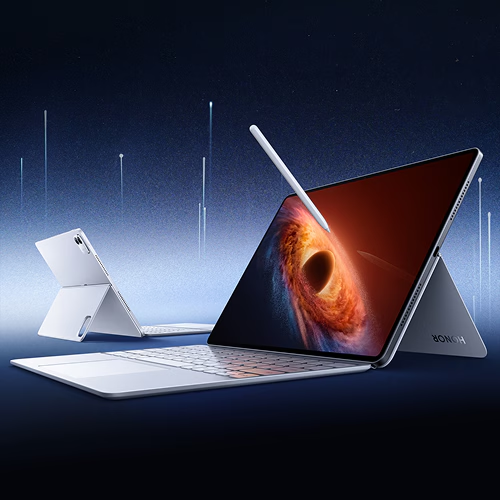
The Honor MagicPad 4 makes a straightforward argument and then spends the entire review proving it. At under £600, no Android tablet offers this display, this build quality, this software support, or this combination of all four simultaneously. The iPad Air costs more and delivers less on nearly every measurable specification except the software ecosystem, which is a legitimate reason to buy Apple if you are embedded in it, but not a reason that applies to everyone.
For buyers who want the best possible tablet at this price and are not locked into Apple’s world, the MagicPad 4 is the answer. Buy it with a bundle deal active. Add the keyboard case. Use it as the laptop replacement it has finally become.