

iPhone Duo or iPhone + an iPad Mini? We Did the Maths
Apple’s first foldable costs £1,999. For the same money you could walk out with an iPhone 17 and the brand new iPad mini and still have £401 in your pocket. So which is the smarter buy? We ran the numbers, then looked hard at everything the numbers miss.
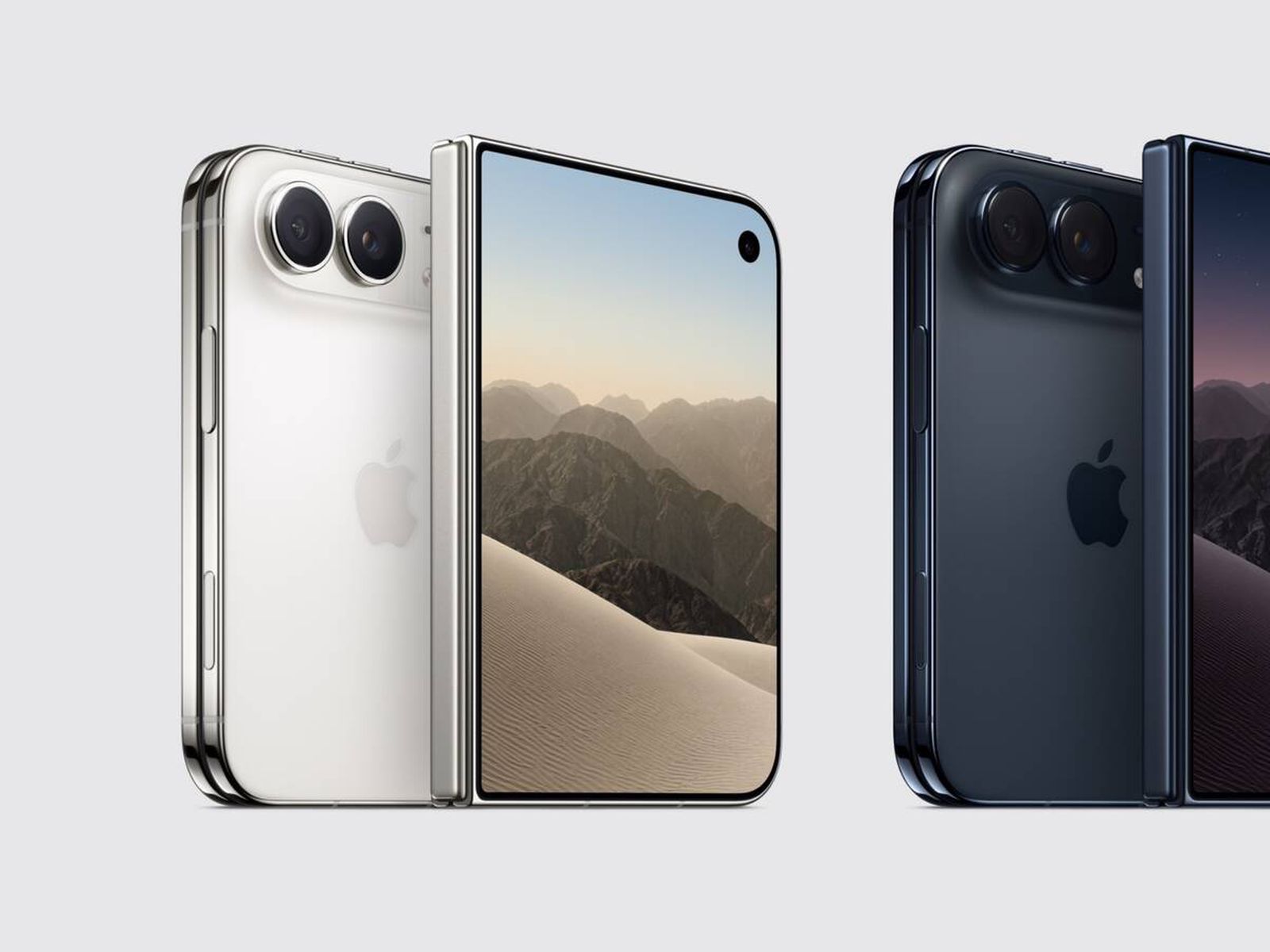
Here’s the thing nobody at the Apple Store will say out loud. The iPhone Duo is, in the simplest terms, a phone and a small tablet fused together with a very expensive hinge. Open it and you get a 7.6-inch screen. Close it and you have a 5.4-inch phone. That’s the pitch.
Which raises an obvious question. If what you really want is a phone plus a bigger screen for reading, Netflix in bed and the odd spreadsheet, why not just buy a phone and a small tablet? Apple sells both. The new iPad mini lands in shops on 6 November with an 8.5-inch OLED screen, which is bigger than the Duo’s inner display.
We’ve spent the week with spreadsheets open (on a laptop, sadly, not a foldable). Here’s where the money goes, and where it doesn’t.
The prices we’re working with
All prices below are Apple UK list prices at the time of writing. Apple has been moving prices up all year, so check before you buy.
| Device | Storage | UK price |
|---|---|---|
| iPhone Duo | 256GB | £1,999 |
| iPhone Duo | 512GB | £2,199 |
| iPhone 18 Pro | 256GB | £1,199 |
| iPhone 18 Pro Max | 256GB | £1,299 |
| iPhone 17 | 256GB | £899 |
| iPhone 17e | 256GB | £699 |
| iPad mini (A20 Pro), Wi-Fi | 128GB | £699 |
| iPad mini (A20 Pro), Wi-Fi | 256GB | approx. £799 |
Two things jump out straight away. First, the Duo starts with 256GB, while the cheapest new iPad mini only gives you 128GB. Second, every phone in Apple’s range went up by £100 on the day the Duo was announced. The iPhone 17 launched at £799 last year and now costs £899 for exactly the same phone. If you were hoping last year’s model would be the bargain route, it isn’t anymore.
Option by option: what you save
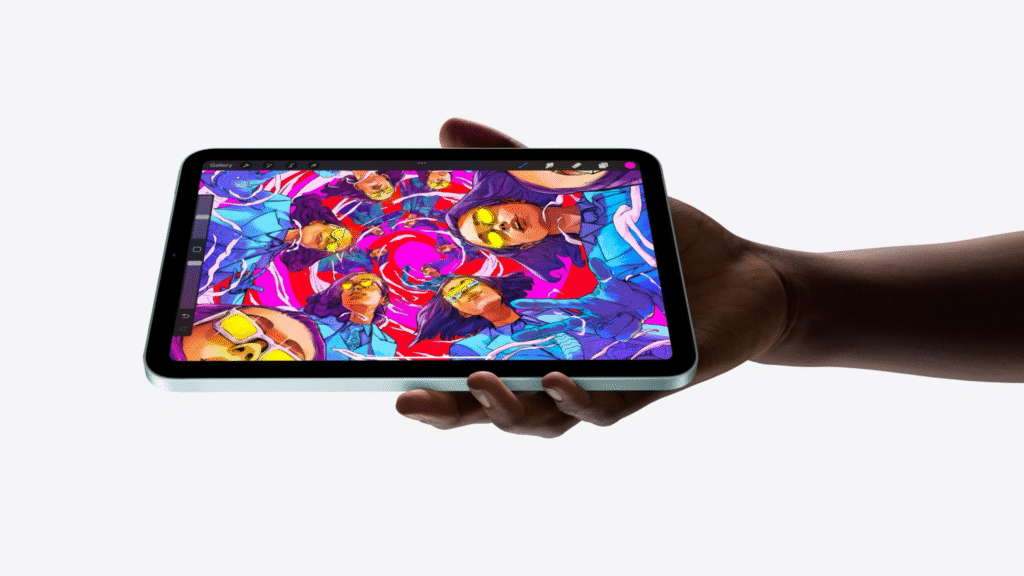
We paired each realistic phone with the entry iPad mini at £699 and compared the total with the £1,999 Duo.
| Setup | Total | Versus the Duo |
|---|---|---|
| iPhone 17e + iPad mini | £1,398 | £601 cheaper |
| iPhone 17 + iPad mini | £1,598 | £401 cheaper |
| iPhone 18 Pro + iPad mini | £1,898 | £101 cheaper |
| iPhone 18 Pro Max + iPad mini | £1,998 | £1 cheaper |
| Keep your current phone + iPad mini | £699 | £1,300 cheaper |
That last row is the one we keep coming back to. Most people reading this already own a perfectly decent iPhone. If it’s working fine, the honest cost of getting a bigger screen into your life is £699, not £1,999.
And look at the Pro Max line. For £1 less than a Duo, you get Apple’s best phone, with its bigger battery and proper telephoto camera, plus a separate tablet with a larger screen. On paper, that’s the strongest value in the whole table.
Spread over 30 months
Apple’s own 0% finance in the UK runs over 30 months, and this is how a lot of people actually buy phones. The Duo works out at £66.63 a month for the 256GB model.
If you spread the alternatives over the same 30 months, the iPhone 17 and iPad mini combination comes to roughly £53.27 a month. The iPhone 17e pairing is about £46.60. That’s a difference of £13 to £20 a month, which sounds small until you multiply it out. Over two and a half years, £13 a month is £400. That’s a weekend away. It’s also a lot of Pret.
One caveat. We’ve done the iPhone and iPad monthly sums ourselves by dividing the list price by 30. Apple’s iPad finance terms can differ, so treat those as a guide rather than a quote.
What £1,999 actually gets you
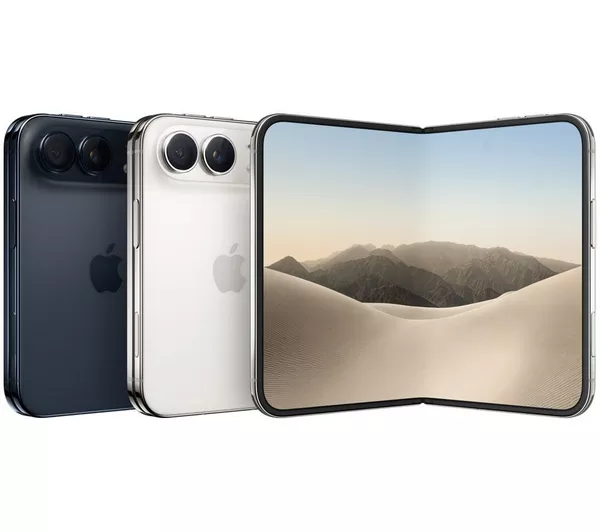
Let’s be fair to the Duo, because it’s a genuinely clever bit of engineering.
Closed, it’s 11.3mm thick and weighs 254g. Open, it’s just 5.2mm thick. Inside is the same A20 Pro chip as the iPhone 18 Pro, with 12GB of RAM, so performance is not the compromise here. The inner screen runs at 120Hz and goes up to 3,000 nits outdoors, which matters on a sunny platform.
The big win is that it’s one device. One thing in your pocket. One battery to charge, one data plan, one set of notifications. You can pull it out on the Tube, unfold it and read a long article on a proper screen, then fold it away when your stop comes. A separate iPad mini simply can’t do that. Nobody wants to fish a tablet out of a tote on a packed Northern line carriage.
The Duo also runs two apps side by side on the inner screen, which is properly useful if you live in email and a calendar, or a chat app and a document. Apple’s own apps handle the bigger screen well. Some third-party apps still need updating, so expect the odd app that looks stretched for now.
Early reviewers have been impressed by how hard the crease is to spot when you look at the screen head-on. Apple uses a matte nano-texture coating on the inner display, which cuts glare and helps hide the fold.
What the Duo gives up
This is where the maths starts to tip.
No telephoto camera. The Duo has two 48MP cameras, a main and an ultrawide. Its 2x zoom is a crop from the main sensor, not a dedicated lens, and there’s no 4x telephoto like the iPhone 18 Pro has. If you take a lot of photos of your kids at the far end of a school hall, or plates of food across a restaurant table, you’ll notice.
Shorter battery life. Apple rates the Duo for up to 44 hours of video on the cover screen, but only 31 hours on the big inner screen. In real life, early reviews report it gets through a full day. That’s fine. It’s just not the day-and-a-half that a Pro Max owner gets used to.
Touch ID, not Face ID. There’s no room in the folding body for Apple’s face-scanning hardware, so the Duo uses a fingerprint reader in the side button. Plenty of people prefer Touch ID. Some will find it a step backwards.
eSIM only. There’s no SIM tray at all. That’s fine with the big UK networks, which all support eSIM. It’s more of a faff if you travel a lot and like buying cheap local SIM cards when you land.
The crease is still there, and it gets deeper. In one lab test by HTX Studio, the depth of the Duo’s crease grew from 48 microns to 167 microns after 3,000 folds. That’s about three times deeper after what amounts to a few months of normal use. Out of the box it’s one of the least visible creases on any foldable. We’d just want to see how it looks after a year before calling the problem solved.
What two devices give you that one can’t
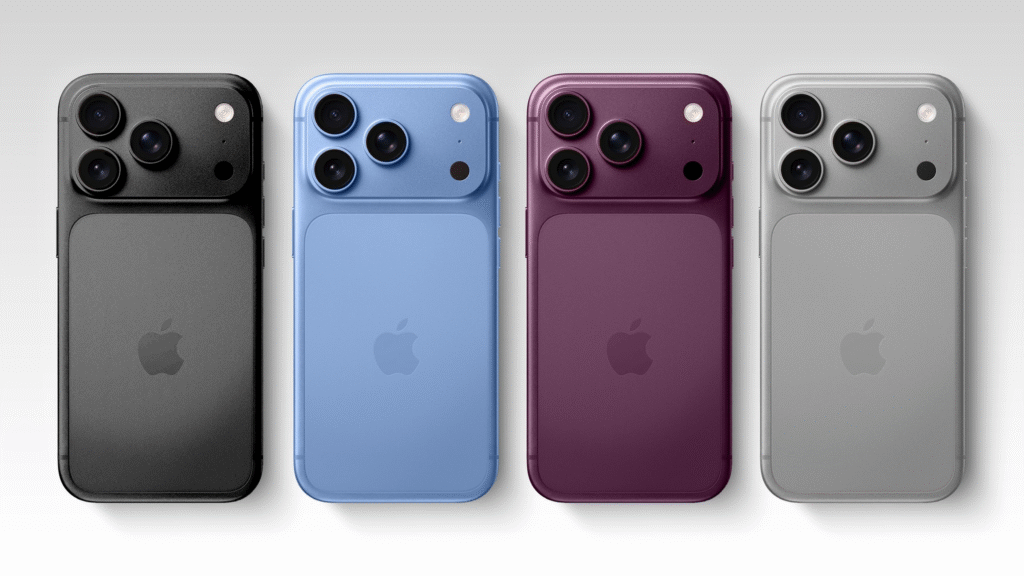
Now the case for splitting it.
A bigger screen. The new iPad mini has an 8.5-inch OLED display. That’s almost an inch bigger than the Duo’s inner screen, with no crease at all. For reading, films and comics, bigger and flat is simply better.
Someone else can use it. This is the point that sold us. When the tablet is a separate device, your partner can read on it while you’re on your phone. Your kids can watch something on it in the car without you handing over your entire digital life, banking app included. A foldable is one person’s device, full stop.
Two batteries. If the iPad goes flat after a long-haul flight, your phone is still on 80%. With a foldable, a heavy evening of streaming on the big screen drains the same battery you need for your boarding pass and your Uber home.
Pencil support. The new iPad mini works with Apple Pencil Pro and Apple Pencil (USB-C). If you sketch, annotate PDFs or take handwritten notes, that’s a real advantage.
Water resistance. The new iPad mini is IP67 rated, a first for an iPad, and the Duo is IP68. Both will survive a splash from the bath, so call that one a draw.
Cheaper repairs, probably. Crack an iPad mini screen and you’re fixing a tablet. Crack the Duo’s inner folding screen and you’re fixing a £1,999 phone. Apple hasn’t published UK AppleCare+ or screen repair prices for the Duo at the time of writing, so we can’t give you a figure. Our strong advice is to price up AppleCare+ before you commit, not after.
What the iPad mini gives up
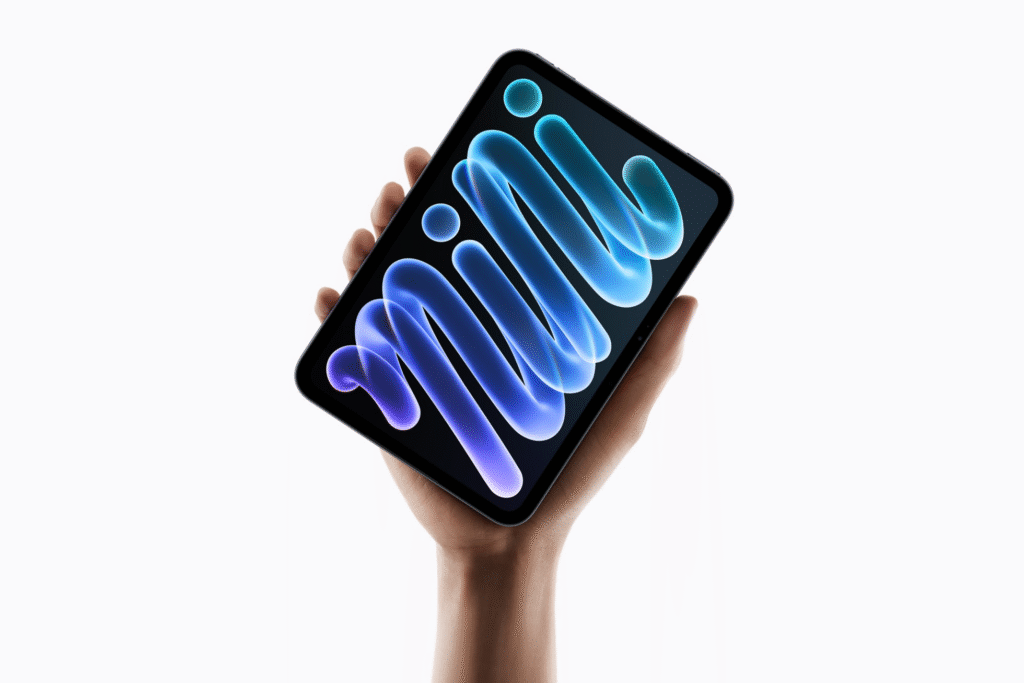
The mini isn’t perfect either.
Its screen still runs at 60Hz, while the Duo and the iPhone 18 Pro run at 120Hz. You’ll notice it most when scrolling. It’s smooth enough, just not silky.
The entry model also has only 128GB of storage. That’s fine for a reading and streaming tablet, but if you download a lot of films for flights, the 256GB version at around £799 is the safer choice. That narrows the savings in our table by £100.
It also costs a lot more than it used to. The previous iPad mini launched in the US at $499 back in 2024. The new one starts at $699, and UK pricing has followed the same upward path to £699. Apple’s small tablet is no longer the cheap way into the iPad range.
If you want cellular data on the go, that adds another £150. Most people can just use their phone’s hotspot, so we’d skip it.
Weight and pockets
The Duo weighs 254g. The Wi-Fi iPad mini weighs 255g on its own, and then you’re carrying a phone too. So the two-device setup is roughly 430g in total once you add an iPhone 17 (approx. figure, depending on model).
In practice, that matters less than it sounds. Nobody carries an iPad mini in a jeans pocket. It lives in a bag, and you carry it on days you know you’ll want it. The Duo’s real advantage is that you never have to decide. The big screen is always with you, whether you planned for it or not.
The extras nobody mentions
Here are the small costs that quietly add up on each side.
For the Duo: you’ll want a case, because nobody should carry a £2,000 hinge naked. Apple’s own Duo Case and Folio are $79 and $129 in the US, and UK prices weren’t confirmed when we checked. AppleCare+ is close to essential on a foldable. You’ll also want a screen protector you trust for the cover display.
For the two-device route: the iPad mini needs its own case or Smart Folio, and Apple Pencil is extra if you want one. That’s easily £60 to £200 more depending on what you add. Factor that into the totals above.
Is there a cheaper foldable?
If you’re not tied to iPhone, yes. Samsung’s Galaxy Z Fold8 launched at £1,699, and at the time of writing it’s been on sale SIM-free from around £1,344. It also has the same 7.6-inch inner screen size. Switching from iPhone to Android is a big decision, though, and if your life runs on iMessage, AirDrop and an Apple Watch, the saving probably won’t feel worth it.
So who should buy what?
Buy the iPhone Duo if you already wanted a new top-end iPhone anyway, you read and work on your phone constantly, and you love the idea of one device that does everything. If your current phone is on its last legs and you were about to spend £1,199 or more, the jump to £1,999 is easier to justify. Wait a month or two if you can, so early buyers can report back on the crease.
Buy an iPhone 17 and an iPad mini if you want the bigger screen for home, travel and evenings, and you’re happy carrying a bag. You save £401, you get a bigger, flat screen, and the tablet can be shared with the household.
Buy an iPhone 18 Pro Max and an iPad mini if your camera matters to you. For £1 less than a Duo, you get the best iPhone camera, the best iPhone battery and a separate tablet. On pure value, this is the combination we’d recommend.
Just buy the iPad mini if your current phone works. Honestly, this is most people. £699 gets you the big screen, and you keep £1,300 in the bank.
Our verdict
The iPhone Duo is the most exciting iPhone in years, and we’d be lying if we said we didn’t want one. Opening it for the first time is a little bit magic.
But excitement and value are different things. On the numbers alone, the Duo is a luxury purchase. It costs more than a Pro Max plus an iPad mini, it has a weaker camera than the Pro, and its battery doesn’t last as long. What you’re paying for is convenience: the big screen that’s always in your pocket.
For some people, that convenience is worth £401 or more. If you’re on your phone for most of your working day, it might be. For everyone else, the smartest move is the boring one. Keep the phone you have, buy the iPad mini, and see whether you really miss having it all in one.
We’ll be watching how the Duo’s crease holds up over the coming months. If it ages well, the second-generation model could be the one that changes our minds.


