



Garmin Venu 4 review: the classiest Garmin yet, if you can stomach the price
A stainless steel redesign, a built-in torch and brilliant battery life make this the best-looking Venu so far, just don’t check the price tag too closely.
As an Amazon Associate we earn from qualifying purchases.
The Garmin Venu 4 is the clearest sign yet that Garmin knows exactly who its lifestyle watch is for. The stainless steel case finally makes it look like something you’d choose for how it looks, not just what it tracks, and the fitness and health tools underneath are as deep as anything on your wrist. Battery life comfortably outlasts the Apple Watch and Galaxy Watch crowd, and the new flashlight turns out to be a surprisingly clever addition. The problem is the price. A jump from £469.99 is a big ask for a watch that still can’t match Apple or Samsung on smart features, and the move to two buttons and a proprietary charger feel like steps backwards rather than forwards.
Pros and cons
Pros
- Stainless steel build finally looks premium, in or out of the gym
- Bright, sharp 1.4-inch AMOLED display with up to 2,000 nits
- Battery life that puts rival smartwatches to shame
- Dual-frequency GPS and a genuinely handy Health Status feature
- A built-in flashlight that’s more useful than it sounds
Cons
- £469.99 is a significant jump over the Venu 3’s £399.99 launch price
- Smart features (no app store, patchy Garmin Pay, no LTE) still lag Apple and Samsung
- Down to two physical buttons, which can feel limiting mid-workout
- Still charges on Garmin’s own proprietary cable instead of USB-C
Quick specs
- Price: £469.99 / $549.99 / AU$949 (41mm and 45mm, same price)
- Display: 1.4-inch AMOLED, 454 x 454, up to 2,000 nits peak brightness
- Case: Stainless steel with fibre-reinforced polymer back
- Water resistance: 5ATM (50m)
- Battery life: Up to 12 days smartwatch mode (45mm), up to 10 days (41mm)
- GPS: Multi-band GNSS (GPS, GLONASS, Galileo, QZSS, BeiDou)
- Heart rate: Garmin Elevate wrist sensor
- Sport modes: 80+
- Weight: 46g (41mm with band), 56g (45mm with band)
Price and availability
The Venu 4 launched on 22 September 2025 in 41mm and 45mm sizes, both priced at £469.99 in the UK, $549.99 in the US and AU$949 in Australia, with a leather-strap option pushing the US price to $599. That’s roughly £70 more than the Venu 3 cost at launch, and the size of that jump is the single biggest talking point around this watch.
Garmin has justified the price before with genuine upgrades, and to be fair, there’s a case for it here too. The metal case and flashlight alone bring the Venu 4 close to the sportier Forerunner 570, which costs almost exactly the same at £459.99. But stacked against the competition outside Garmin’s own range, including several of the options in our pick of the best smartwatches right now, the gap is harder to ignore. The Apple Watch Series 12 starts at £369 and the Samsung Galaxy Watch 8 at £319, both of which undercut the Venu 4 by a decent margin while offering far broader app support.
Deals have already started appearing since launch, and given this lands right in the run-up to Black Friday, it’s worth holding off and shopping around rather than paying full price. The outgoing Venu 3 is also still on sale and now sits well below its original price, which is worth a look if the metal case and flashlight aren’t deal-breakers for you.
Both case sizes cost exactly the same, so the decision there comes down to wrist size rather than budget. The 41mm suits smaller wrists and shaves a little off the weight, while the 45mm gets the longer battery life figures and arguably makes more sense if the screen’s brightness and sharpness are a big part of the appeal for you.
Buy the Garmin Venu 4 45mm on Amazon UK
Design and build quality
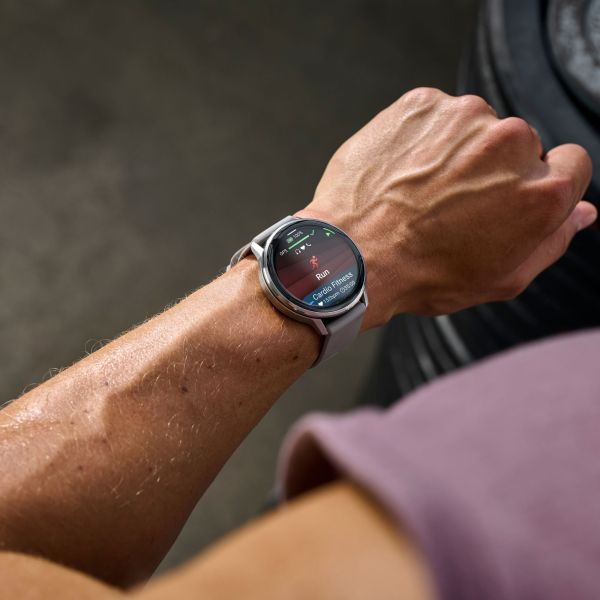
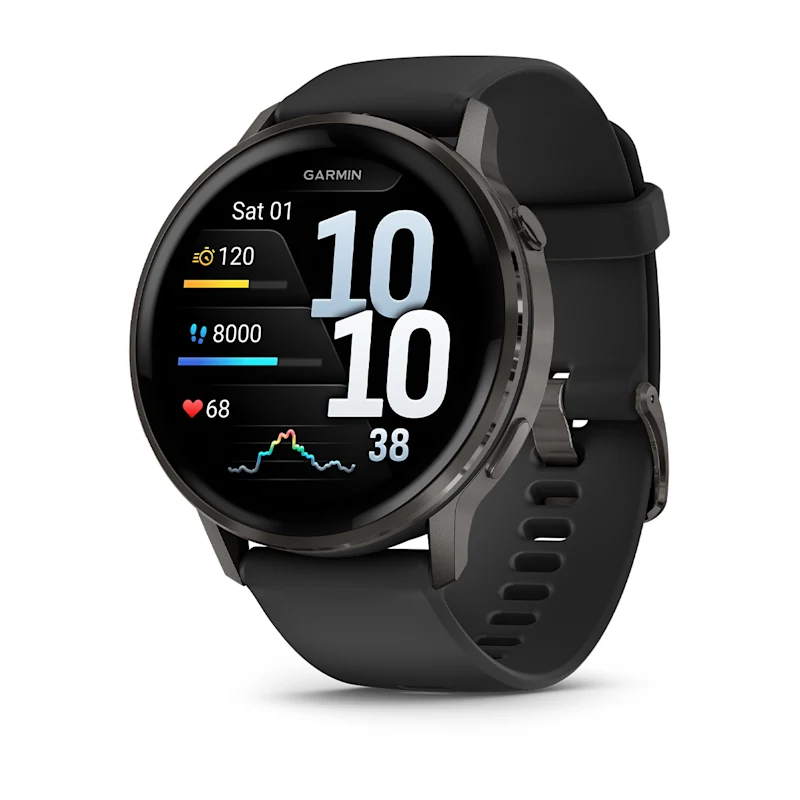
This is where the Venu 4 earns its keep. Garmin has swapped the Venu 3’s part-plastic construction for a full stainless steel case and bezel on both sizes, and it changes the character of the watch completely. It sits on the wrist with the kind of heft and finish you’d expect from a watch costing this much, rather than feeling like a fitness tracker wearing a smart-watch’s clothes.
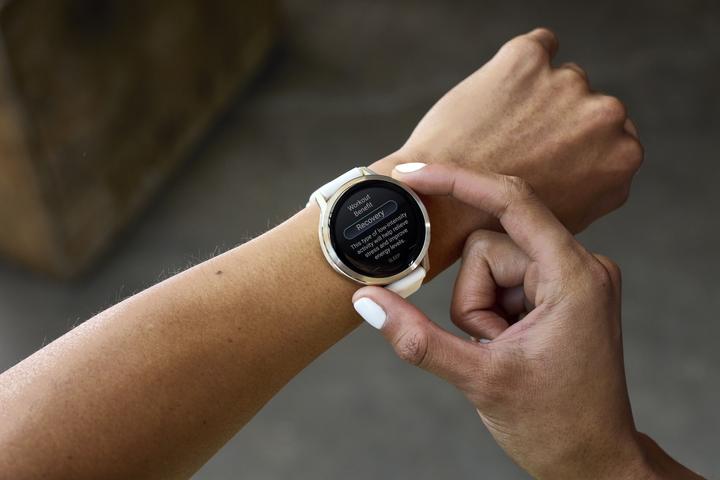
The case comes in Slate, Silver and Lunar Gold, alongside configurations with fabric or leather straps that dress the watch up considerably. Swap the sports band for leather and the Venu 4 could easily pass for an everyday watch with a shirt and smart trousers; swap back to silicone and it’s instantly ready for a run. That dual identity is exactly what the Venu line has always chased, and this is the generation that nails it.
The 1.4-inch AMOLED display on the 45mm model is the headline feature, and deservedly so. Garmin quotes up to 2,000 nits of peak brightness, and that shows in outdoor visibility: direct sunlight shouldn’t be a problem for reading the screen, even with the always-on mode switched off to save battery. One disappointment is that Garmin has stuck with Gorilla Glass 3 rather than upgrading the cover glass, which feels like an odd corner to cut on a watch pitched as premium.
The new LED flashlight sitting on the top edge of the case sounds like a gimmick on paper, but it’s a properly thought-through addition. A torch built into your wrist means not fumbling for your phone to find a door lock in the dark or light a path home after a late run, and it’s noticeably brighter than the old trick of flashing the display white that older Garmin watches relied on.
The biggest design compromise is the move from three physical buttons on the Venu 3 down to two on the Venu 4, leaning more heavily on the touchscreen for navigation. That’s a non-issue sitting at a desk, but with sweaty fingers mid-workout, missed taps are a realistic annoyance that the bigger, brighter screen doesn’t fully make up for.
At 46g for the 41mm and 56g for the 45mm, both with band included, the Venu 4 is noticeably heavier than its predecessor thanks to that metal case, though reports suggest it still sits comfortably enough to wear overnight. With 5ATM water resistance, it’s rated to handle swimming, showers and general weather, so there’s little reason to take it off outside of charging.
Display
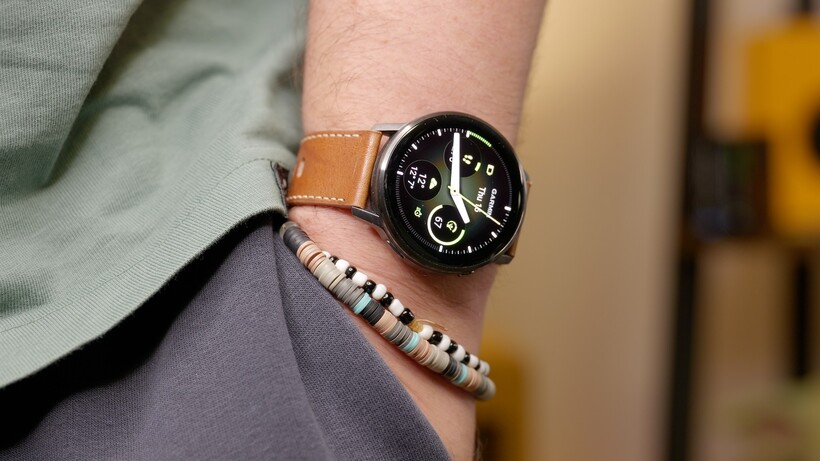
The display deserves a word on its own, because this is simply one of the best screens Garmin has put on a watch. The 454 x 454 resolution on a 1.4-inch panel makes text, graphs and watch faces look sharp rather than merely adequate, and the brightness ceiling means it should hold up in direct summer sun without the usual squinting that plagues cheaper AMOLED panels.
Always-on mode is available if you want the watch to look the part at a glance without raising your wrist, though it does eat noticeably into that battery figure, dropping the 45mm model from around 12 days to roughly 4. Whether that trade is worth it will come down to how much you value the always-visible watch face versus not having to think about charging every few days.
Performance and real-world use
Underneath the new design, the Venu 4 is still a proper Garmin fitness watch first and a smartwatch second, and that shows in where its strengths lie. Dual-frequency GPS is the standout upgrade, bringing the Venu 4’s positioning accuracy in line with Garmin’s dedicated running watches, with faster lock-on and more reliable tracking under tree cover or around tall buildings than older single-band setups tend to manage.
Heart rate comes from Garmin’s Elevate wrist sensor, the same unit used across its recent lineup, and it’s generally considered dependable for steady-state efforts like runs and gym sessions, with the usual minor drift during sharp interval efforts that affects most wrist-based sensors. Garmin’s broader health ecosystem remains one of the most detailed around: Body Battery for energy tracking, Training Readiness for deciding whether to push or rest, a sleep alignment metric, and more than 80 built-in sport modes covering everything from open-water swimming to indoor climbing.
The new Health Status feature is one of the more interesting additions, tracking heart rate, HRV, respiration, SpO2 and skin temperature overnight and flagging anything that looks off. It’s still labelled as a beta feature, which shows in how it presents information, but it’s already useful enough to glance at each morning alongside your sleep score.
As an everyday smartwatch rather than a fitness tool, the Venu 4 is solid without being exceptional. Notifications, on-wrist calls through the built-in speaker and mic, and offline music support for Spotify and YouTube Music all work as expected. What’s missing is anything resembling an app store, LTE connectivity, or dependable Garmin Pay bank support in the UK, which puts a hard ceiling on how far this can replace a phone day to day.
Battery life is where the Venu 4 pulls well clear of its smartwatch rivals, even if it’s a step down from its own predecessor. Garmin quotes up to 12 days in smartwatch mode on the 45mm model, dropping to around 10 on the smaller 41mm. The Venu 3 actually lasted longer on paper, up to 14 days, so this is one area where the newer watch has given a little ground in exchange for the dual-frequency GPS and brighter screen. Either way, anyone coming from an Apple Watch’s one-or-two-day cycle will find even the reduced figure a revelation.
The other recurring gripe across early reviews is that Garmin still ships the Venu 4 with its own proprietary charging cable in 2026, rather than USB-C. It’s not a deal-breaker, but it is an avoidable annoyance that means packing yet another cable when travelling.
Multisport fans get a genuine upgrade too. The sport-mode list now stretches to triathlon, trail running and more detailed cycling profiles alongside the usual gym, swim and strength options, closing some of the gap to Garmin’s dedicated running watches like the Forerunner 570 without asking you to give up the everyday-wearable looks.
Software and health features
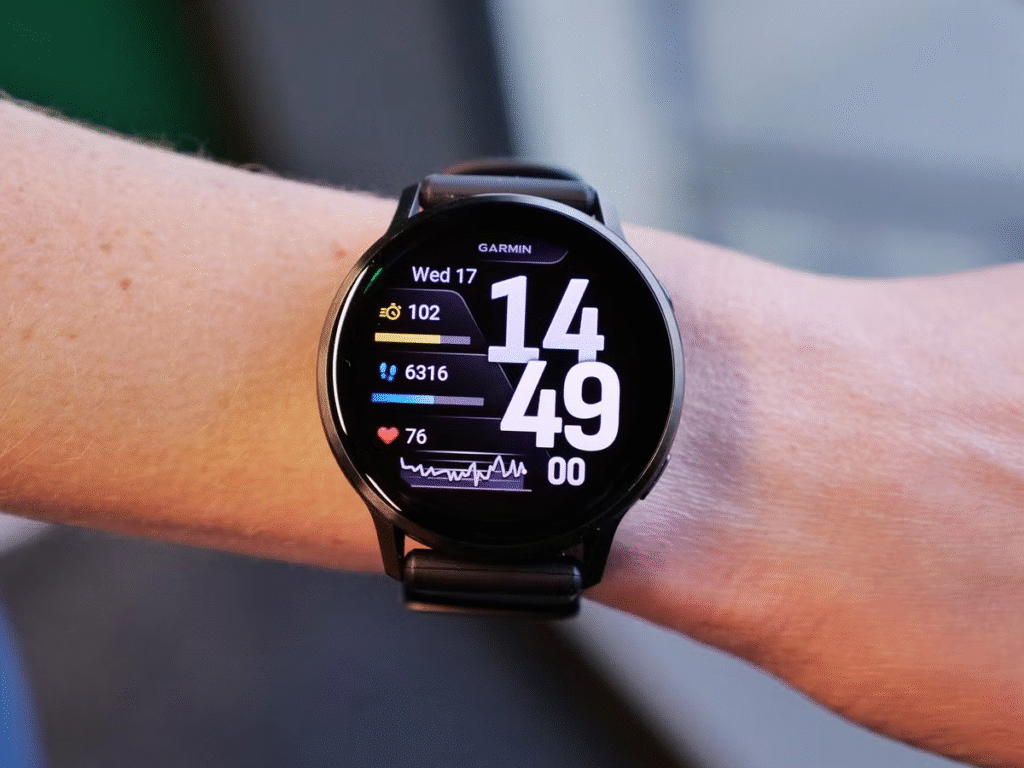
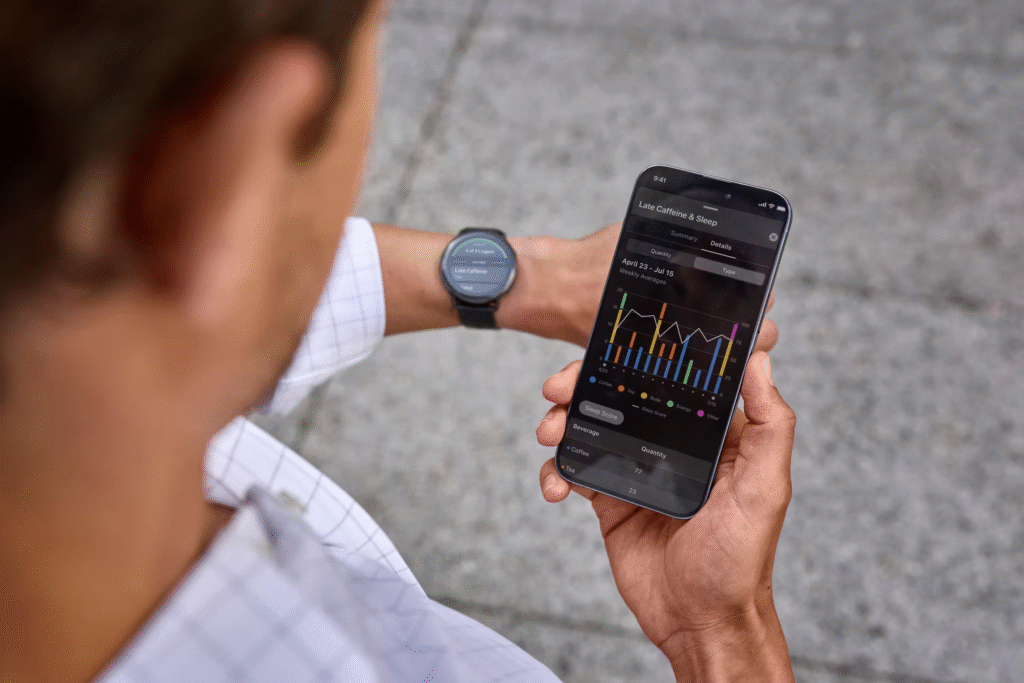
Garmin’s software is both the Venu 4’s biggest strength and its most obvious ceiling. On the health side, Lifestyle Logging lets you record habits like caffeine or stress and see how they line up against your recorded metrics, while the Health Status beta ties sleep data together in a way that’s easier to read than scrolling through separate graphs. An ECG app is also supported, though this isn’t exclusive to the Venu 4, as Venu 3 models can get it too via a software update, subject to regional approval. If you mainly want the health tracking without the smartwatch trappings, it’s also worth comparing against a dedicated band like the Hume Band 2.0, which we found does a similarly deep job on recovery metrics without the subscription.
Where the software falls short is anything adjacent to a general smartphone replacement. There’s no proper third-party app ecosystem to speak of, voice assistant support is more basic than what you’d get from Apple or Google, and UK banking support for Garmin Pay remains patchy enough that you shouldn’t buy this expecting to leave your wallet at home. If deep fitness and health software is what you’re after, none of that will matter. If you want a watch that can increasingly do your phone’s job, it will. And if a screen on your wrist isn’t the appeal at all, we’ve also rounded up a dozen smartwatch-free wearables worth a look instead.
Verdict
Put simply, this is the best version of the Venu that Garmin has built. The stainless steel case looks and feels like a step up rather than a tweak, the display is one of the best on any watch at this price, and the fitness and health tracking underneath is still as good as anything on the market. Battery life, even slightly reduced from the Venu 3, still leaves Apple and Samsung’s efforts looking thin by comparison.
What holds it back from an easy recommendation is the price. A £469.99 starting point is a significant jump from the Venu 3’s launch price, and it arrives alongside a reduction to two buttons and the continued annoyance of a proprietary charger rather than USB-C. None of those are dramatic flaws on their own, but together they make the Venu 4 feel like a watch that’s asking for more money while giving up one or two small conveniences in return.
If you want a watch that takes training seriously, looks good enough to wear to dinner afterwards, and doesn’t need daily charging, the Venu 4 is still a very easy watch to recommend, just try not to pay full price for it. If smart features and app support matter more to you than fitness depth, an Apple Watch or Galaxy Watch remains the better call.
Also consider
Apple Watch Series 12 (from £369): The obvious pick if you want a genuine smartphone companion on your wrist, with a far deeper app ecosystem, proper cellular options and tighter iPhone integration, at the cost of battery life measured in hours rather than days.
Samsung Galaxy Watch 8 (from £319): Android’s answer to the Apple Watch, cheaper than the Venu 4 and stronger on smart features, though it won’t touch Garmin’s multi-day battery life or sports depth.
Garmin Venu 3: Now routinely discounted well below its original price, the outgoing model keeps most of the Venu 4’s fitness and health smarts, plus arguably longer battery life, if you can live without the metal case and flashlight.
The TechSpy rating: 7.5/10
Design: 8/10 | Fitness tracking: 9/10 | Battery life: 8/10 | Smart features: 6/10 | Value: 6/10


