



Samsung S99H review: Mini-LED brightness, OLED blacks and one very shiny talking point
Samsung’s 2026 flagship QD-OLED gives us the best picture we’ve seen from the brand, though its art-TV makeover won’t win everyone over
As an Amazon Associate we earn from qualifying purchases.
The Samsung S99H takes the picture of last year’s excellent S95F and makes it brighter without losing its composure. HDR has real punch, films look natural and gaming is about as good as it gets on a television right now. The anti-glare screen keeps reflections under control in a normal living room. The catches are a divisive silver “FloatLayer” frame, a flagship price, no Dolby Vision and a matte coating that greys blacks slightly in bright rooms. If you want the best all-round TV Samsung makes, this is it. If the frame puts you off, the frameless S95HF gives you the same panel without it.
Pros
- Gets close to 3,000 nits on HDR highlights yet still delivers inky OLED blacks
- Four HDMI 2.1 ports running 4K at up to 165Hz, rising to eight with the optional Wireless One Connect box
- Standard mode is bright and balanced enough to leave on for everyday viewing
- 70W 4.2.2-channel speakers are better than most TVs manage on their own
Cons
- The silver FloatLayer frame divides opinion and makes wall mounting less tidy
- The matte anti-glare finish lifts blacks a touch when lamps are on
- Still no Dolby Vision support
- Our early sample showed occasional judder
Quick specs
| Samsung S99H | |
|---|---|
| Price (UK) | From £1,999 (55in), £2,799 (65in), £3,799 (77in), £5,599 (83in) |
| Price (US, sold as S95H) | From $1,999.99 (55in) |
| Panel | 4K QD-OLED (55, 65, 77in), W-OLED (83in), OLED Glare Free matte finish |
| Processor | Samsung NQ4 AI Gen3 |
| Refresh rate | Up to 165Hz, VRR from 48Hz |
| HDR | HDR10, HDR10+, HDR10+ Gaming, HLG (no Dolby Vision) |
| Ports | 4 x HDMI 2.1 (eARC on HDMI 3), 2 x USB-A, optical, Ethernet |
| Audio | 70W, 4.2.2 channels, Dolby Atmos, Object Tracking Sound+ |
| Wireless | Wi-Fi 6E, Bluetooth 5.3, AirPlay 2, Google Cast |
| OS | Tizen, with seven years of upgrades promised |
| Size/weight (77in, no stand) | 1782.6 x 1049.6 x 26.6mm, approx. 31kg |
Price and availability
The S99H launched in spring 2026 in 55, 65 and 77-inch sizes, with an 83-inch model arriving later. That big one swaps QD-OLED for a W-OLED panel, so it isn’t quite the same TV. Prices have already come down a fair bit. The 77-inch we tested launched at £4,599 and now sells for £3,799, with the 65-inch at £2,799 and the 55-inch at £1,999. Retailer promo codes and Samsung cashback deals can knock off a few hundred more, so shop around.
Naming gets confusing here. In the US, this exact TV is called the S95H, where the 55-inch is now $1,999.99. In the UK, the S95H name belongs to a different, lower model. There’s also the S95HF, a UK-only version of the S99H without the silver frame, which currently starts at around £1,889 for the 55-inch (approx., prices are moving fast). US buyers can’t get the frameless version at all.
Design and build
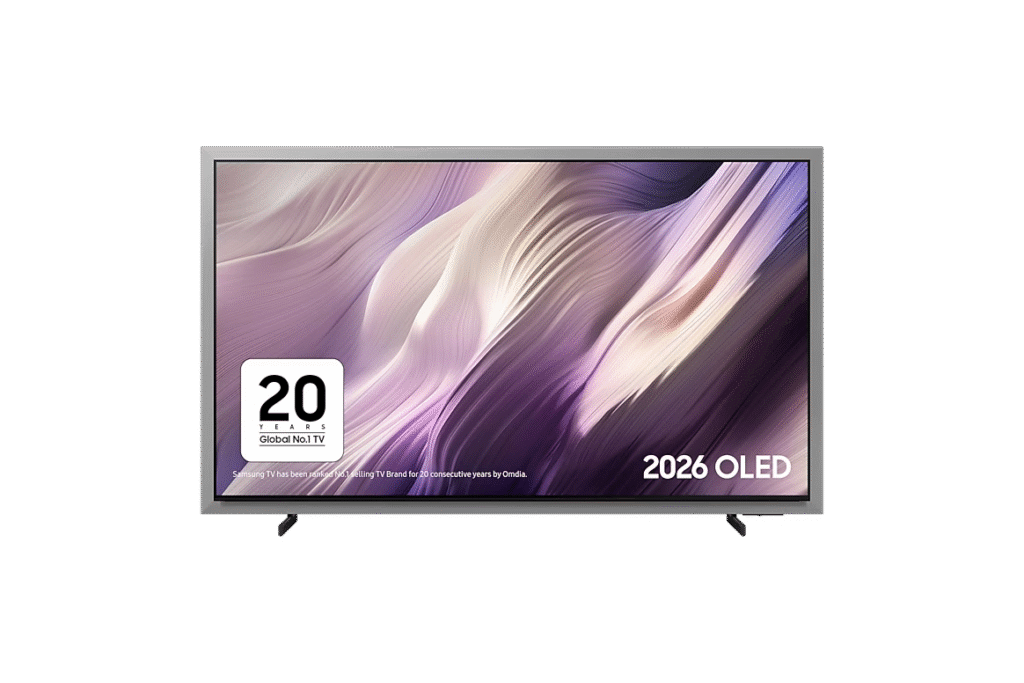
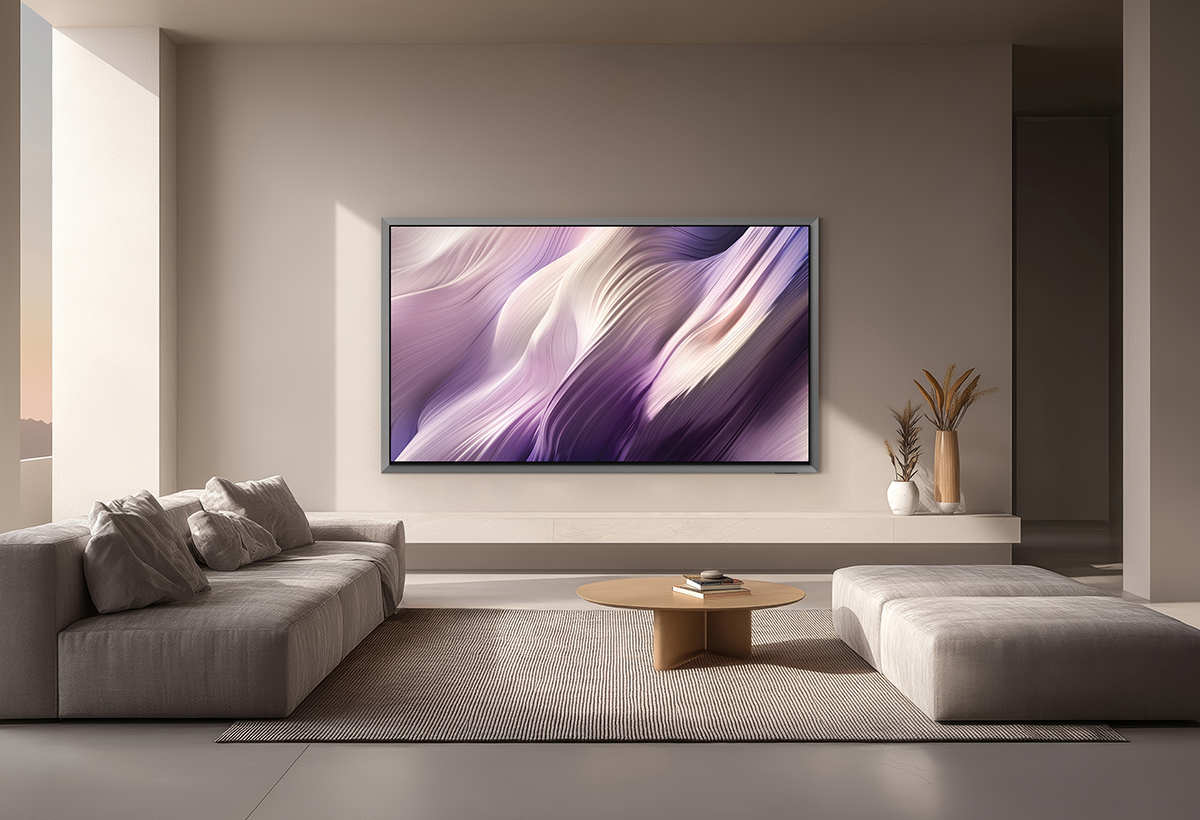
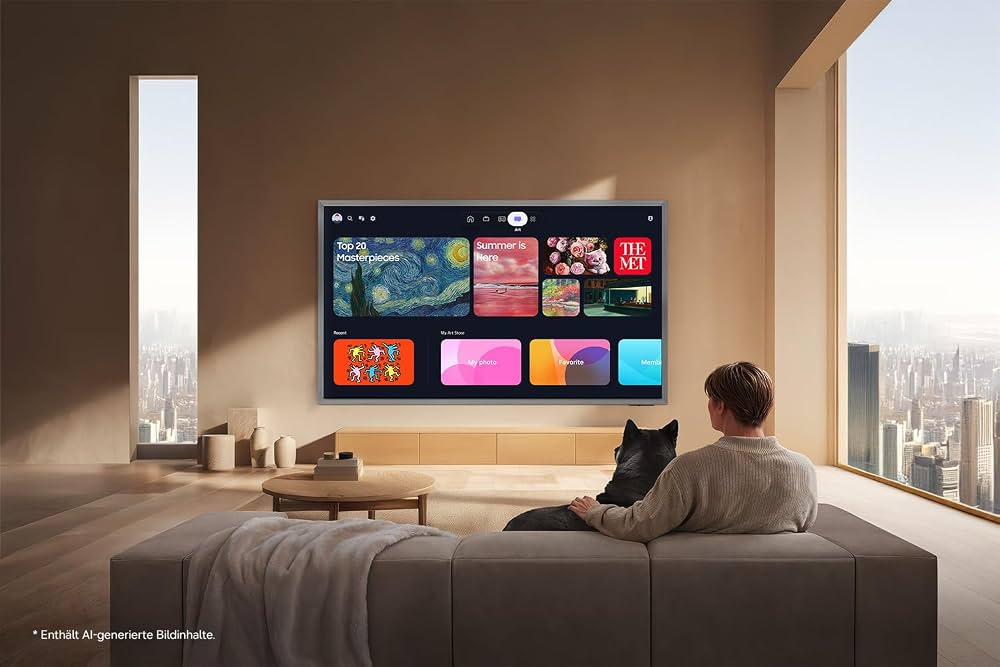
You’ll notice the frame first. Samsung calls it FloatLayer: the screen is mounted a couple of centimetres in front of a slightly larger silver metal plate, so it looks like a framed picture. In a dark showroom it barely registers. In our living room, on a 77-inch set, we found it hard to ignore for the first few days. Give it a week, though, and we started to like it. It makes the TV look more like a piece of furniture and less like a big black rectangle.
Not everyone will come round to it. If you plan to wall mount, the floating look is less appealing, and we’d steer you to the S95HF instead. That’s the one we’d buy ourselves.
Setup couldn’t be easier. The feet slot onto couplings with no screws, and there are two height positions so a soundbar can sit underneath. Compared with Samsung’s fiddly 8K sets, it took us minutes.
Samsung has dropped the One Connect box as standard, so the four HDMI 2.1 ports are back on the TV itself. That makes the chassis thicker than art-TV fans might like, but it cuts latency for gamers. HDMI 3 handles eARC, which is slightly unusual, and all four ports run 4K at up to 165Hz. If four isn’t enough, the optional Wireless One Connect box adds four more for eight in total. No other TV maker currently offers that many, and it solves our biggest complaint with TV connectivity.
Picture quality
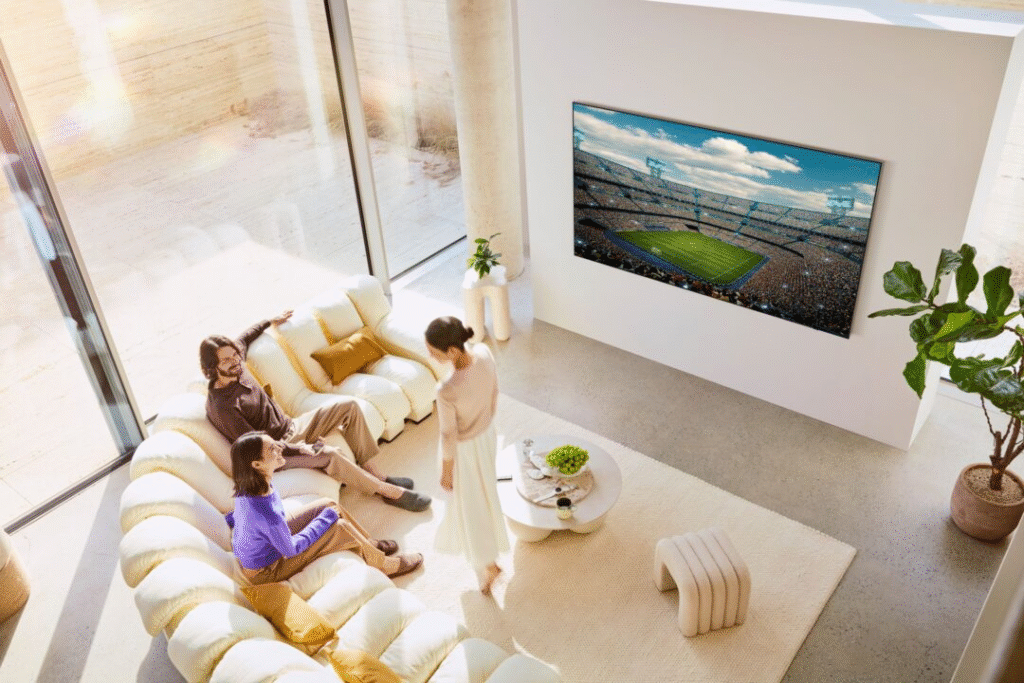
This is where the S99H justifies its price. We thought the S95F was superb, and the S99H is better again. QD-OLED keeps everything that makes OLED great, including perfect contrast and true blacks, then adds colour and brightness on top. Samsung claims HDR highlights approaching 3,000 nits, and in practice it’s bright enough to embarrass plenty of Mini-LED sets.
The Standard picture mode surprised us. Most brands push colour so hard in their default mode that it looks cartoonish. Samsung’s version is bold but balanced, and we left it on far more than we normally would.
Movie mode and Filmmaker Mode are where the real finesse shows. Dark scenes are handled with care, shadow detail holds up and skin tones look natural. Film fans will need only a few tweaks to get a picture that feels genuinely cinematic.
There are two caveats with the screen. First, every 2026 Samsung QD-OLED uses the anti-glare matte coating, so there’s no glossy option. It does a brilliant job of diffusing lamps and windows, but in a bright room blacks lift slightly towards grey. Home cinema owners with blacked-out rooms have been asking for a glossy version for a while, and we’d like one too. Second, Samsung still won’t support Dolby Vision. HDR10 and HDR10+ (mostly found on Prime Video) look great and Dolby Vision content still plays in standard HDR, but it’s a gap at this price.
Our pre-release sample also showed occasional judder, regardless of source or mode, with even 24p 4K Blu-rays dropping the odd frame. Samsung has fixed similar teething problems on previous S-series sets with firmware updates, so make sure yours updates when you first switch it on.
Gaming
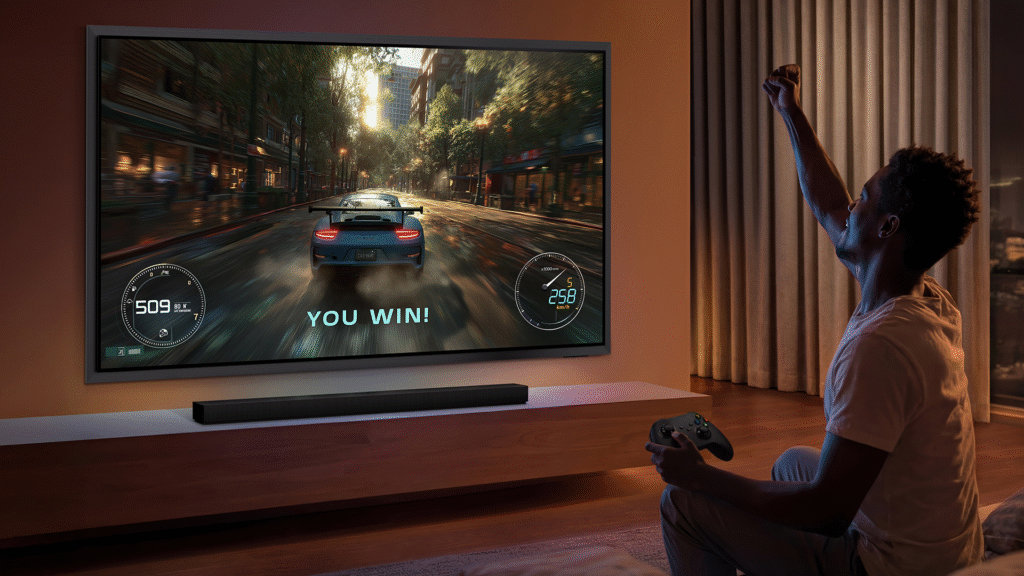
Switch to Game mode and the S99H might be at its best. Horizon Zero Dawn looked incredible, with some of the brightest, richest HDR we’ve seen on any TV and very smooth motion. VRR, ALLM, FreeSync Premium Pro and HDR10+ Gaming are all supported. PC gamers get 4K at 165Hz on every HDMI port, while PS5 and Xbox Series X players get 4K/120Hz without having to plan which device goes where. It’s the best gaming TV we’ve used this year.
Sound
Samsung uses the extra depth well. The speakers sit between the screen and the back plate: four handle the front sound, two hidden woofers sit at the back and two up-firing drivers add height for Dolby Atmos. That’s 70W across 4.2.2 channels, plus Object Tracking Sound+, which makes voices and effects seem to come from the right part of the screen.
Bass is limited, as you’d expect, but it’s stronger than most TVs. We mostly used Samsung’s HW-Q990H soundbar during testing, which can make sound feel a little low. The TV’s own speakers place dialogue better. If you don’t watch at high volumes, you could skip the soundbar.
Software and AI features
Samsung’s Tizen software is busy but usable. The home screen shows what you’re watching, popular searches, your apps and plenty of streaming suggestions, including Samsung TV Plus. It’s a little confusing having two remotes with different shortcut buttons, but you get used to it quickly.
Samsung Vision AI is one button press away, with voice search powered by Copilot and Perplexity. It works, though we didn’t use it much. The AI Picture settings were more mixed: they’re useful for sport, especially AI Football Pro mode, but we preferred manual modes for everything else. The Samsung Art Store is easy to find if you want to treat the TV like a Frame, though it costs a monthly subscription. Samsung also promises seven years of Tizen upgrades, which is reassuring at this price.
Verdict
After a fortnight with the 77-inch S99H as our main TV, we’re impressed. Samsung improved on a TV that was already brilliant, and the result is a picture that is bright and dramatic when needed but natural and controlled for films.
What makes it stand out isn’t the art-gallery styling or the Art Store. It’s how well Samsung handles the basics: picture quality, gaming, connectivity and decent built-in sound.
Buy the S99H if you want the brightest, most versatile OLED Samsung makes, game a lot, or watch in a room with lots of daylight or lamps. If you dislike the silver frame, buy the S95HF in the UK and get the same picture. Skip both if you watch mostly in a dark room and care about Dolby Vision, because the matte screen and missing format matter more there.
Buy the Samsung S99H (77in) on Amazon UK
Also consider
Samsung S95F (2025): Last year’s flagship has no silver frame and is now much cheaper. It isn’t as bright, but it’s the smart buy if you want most of the S99H’s quality for less.
Sony Bravia 8 II: Sony’s QD-OLED offers exceptional picture processing and supports Dolby Vision, making it a strong option for dark-room film viewing.
LG OLED G6: LG’s 2026 flagship is the obvious rival if you prefer LG’s software and want Dolby Vision, with a slim, flush design made for wall mounting