




Horizon Goes Co-Op: Guerrilla’s Monster Hunter-Inspired Spin-Off Is a Bold, Calculated Power Move
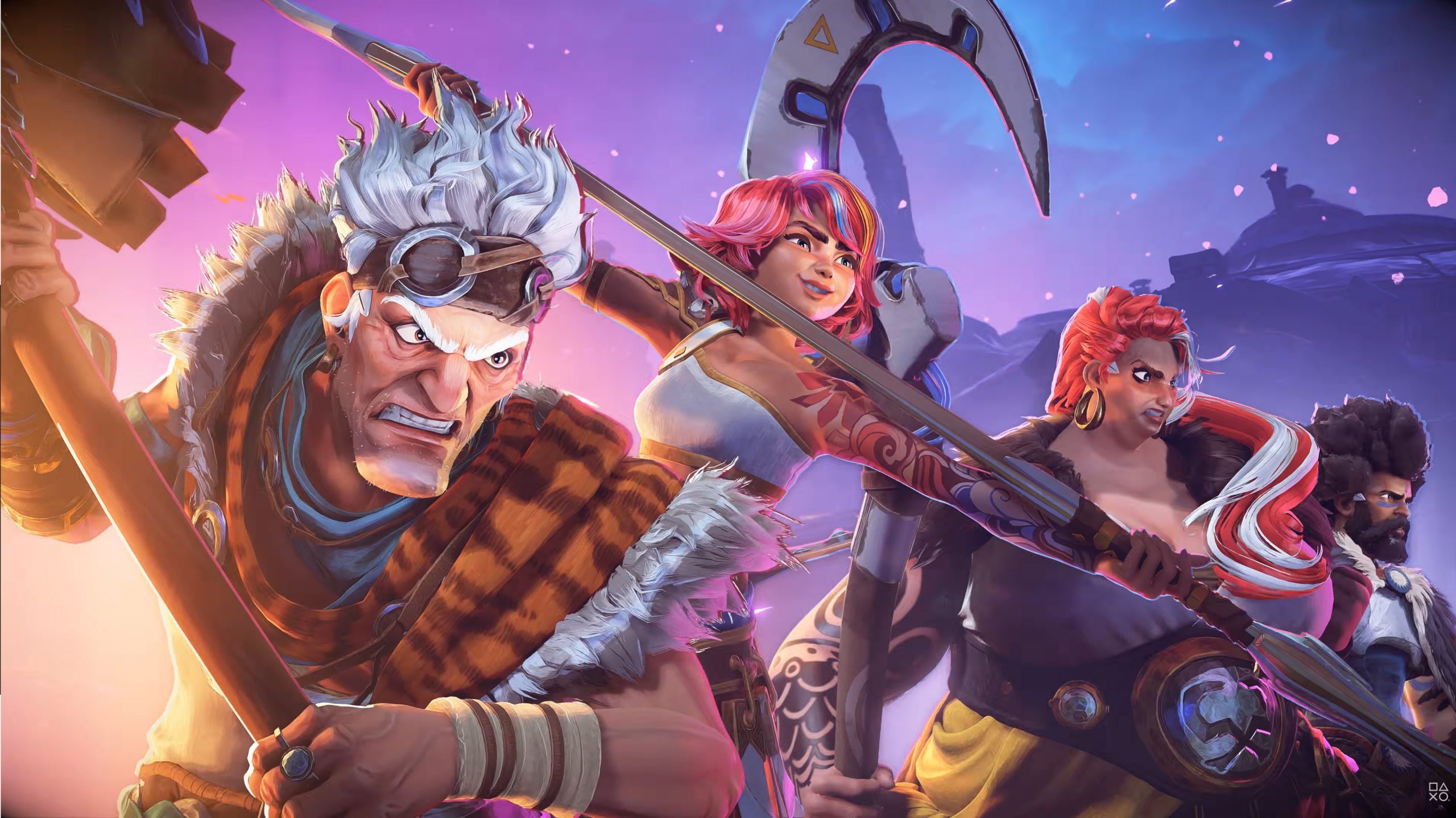
Guerrilla Games has officially done the unexpected. With the reveal of Horizon Hunters Gathering, the studio behind one of PlayStation’s most cinematic single-player franchises is stepping into new territory, and doing it with confidence. This isn’t Horizon 3, and it’s not trying to be. Instead, it’s a co-operative action spin-off that reshapes the Horizon universe into something faster, more social, and unapologetically built around teamwork. Think less solitary wandering across ruined landscapes and more tightly coordinated machine hunts with friends, where preparation, roles, and strategy matter just as much as reflexes.
It’s a move that might raise eyebrows at first, but the more you look at it, the more it feels inevitable.
A Radical Shift That Actually Makes Sense
For years, Horizon has been defined by prestige single-player storytelling. Aloy’s journey has always been personal, cinematic, and introspective, a carefully crafted experience designed to be played alone. So the idea of Horizon going co-op could easily have felt like a betrayal of its roots. Instead, Hunters Gathering reframes the franchise without undermining it, positioning itself as an expansion of the world rather than a replacement for what came before.
Guerrilla isn’t abandoning Horizon’s identity, it’s stress-testing it. By spinning off into a co-op format, the studio gains freedom to explore new gameplay structures without compromising Aloy’s narrative arc. This isn’t Horizon losing its soul, it’s Horizon trying on a new outfit, and surprisingly, it fits.
Monster Hunter Energy, Horizon DNA
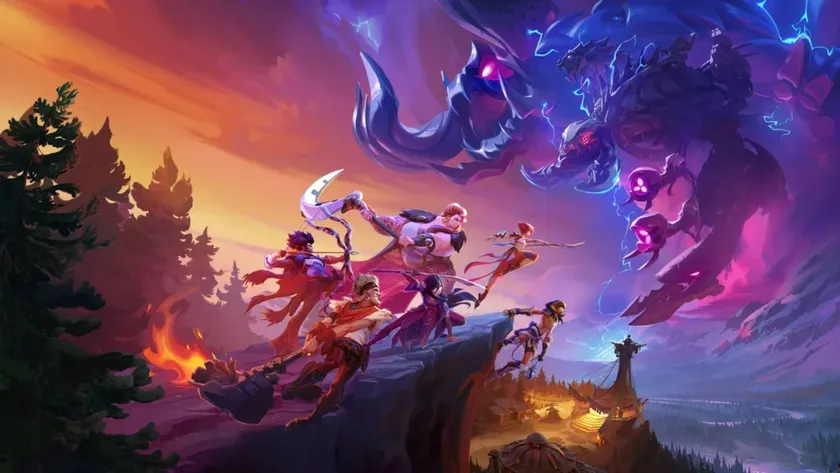
The Monster Hunter comparisons are unavoidable, and honestly, Guerrilla seems perfectly comfortable with that. Hunters Gathering revolves around coordinated team-based hunts against massive mechanical creatures, complete with loadouts, specializations, and repeatable missions. The structure will feel familiar to anyone who’s spent time tracking beasts across Capcom’s sprawling ecosystems.
What sets it apart is Horizon’s mechanical logic. These machines aren’t just big enemies with health bars, they’re systems. Components can be stripped, behaviors can be disrupted, and success depends on understanding how each machine functions. Translating that into a co-op framework feels like a natural evolution rather than a genre pivot. Horizon’s combat has always rewarded precision and planning, and Hunters Gathering simply turns that philosophy into a shared experience.
Co-Op That Rewards Thinking, Not Chaos
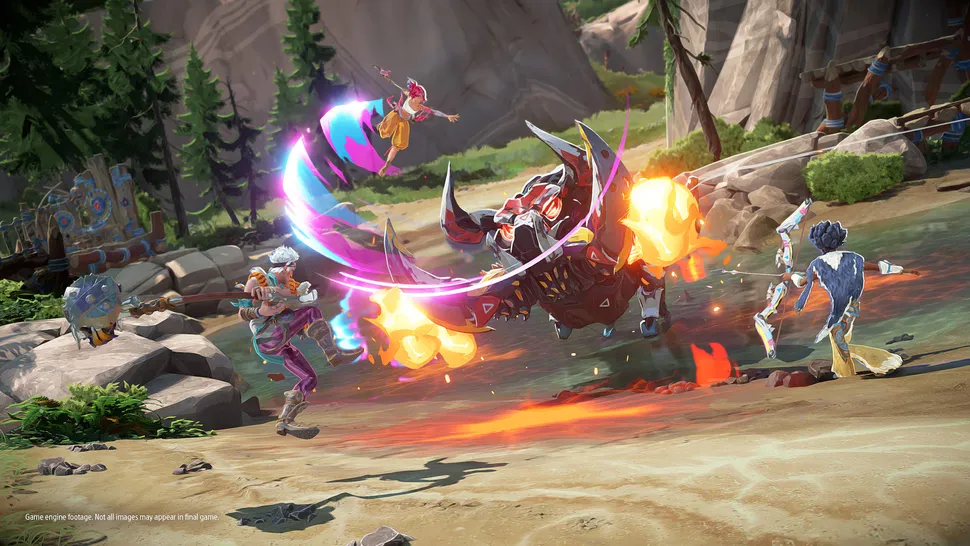
Early impressions suggest this isn’t a messy free-for-all where four players spam abilities and hope for the best. Instead, Hunters Gathering leans into deliberate, tactical co-op where each player brings a defined role to the table. Loadouts matter. Positioning matters. Timing matters. Whether you’re locking down a machine’s movement, dealing sustained damage, or supporting the team from range, success depends on coordination rather than raw firepower.
Preparation appears to be a core pillar of the experience. Choosing the right gear for the hunt, understanding the machine’s attack patterns, and adapting on the fly are all central to how the game plays. It’s Horizon combat distilled and sharpened, designed for players who enjoy mastering systems as much as landing the final blow.
Life Without Aloy, And Why That’s Okay
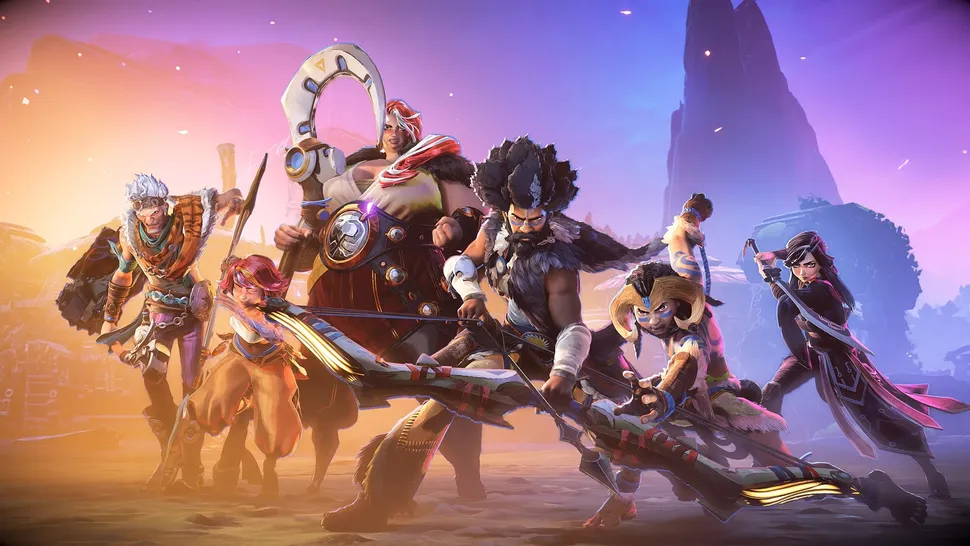
Perhaps the most surprising element of Hunters Gathering is Aloy’s absence. This spin-off shifts the spotlight to a broader cast of hunters, each with their own tools and identities. For a franchise so closely tied to one protagonist, that’s a significant change, and a risky one.
But it’s also smart. Aloy’s story carries emotional weight, and tying her to a repeatable co-op structure would have risked flattening her character. By stepping away, Guerrilla preserves the integrity of Horizon’s main narrative while opening the door to new perspectives within the same universe. The world of Horizon has always been bigger than one person, and Hunters Gathering finally lets that idea take center stage.
Built for Longevity, Not Just Launch Week
Structurally, Hunters Gathering appears designed for repetition, and not in a lazy way. Instead of a single sprawling open world, the game is built around hubs, regions, and mission-based hunts that can evolve over time. This opens the door to rotating challenges, new machines, seasonal content, and long-term support that keeps players coming back.
It’s a clear nod to modern engagement-focused design, but so far, it feels measured rather than aggressive. The hope is that Guerrilla uses this structure to deepen the experience rather than pad it out. Horizon works best when progression feels earned, not artificially extended.
A Smart, Necessary PS5 and PC Launch
Launching simultaneously on PS5 and PC is another telling choice. This isn’t a traditional PlayStation prestige title that eventually trickles onto PC years later. Hunters Gathering is designed to be social, and social games need healthy player populations to thrive. Releasing on both platforms from day one isn’t just generous, it’s strategic.
It also reflects Sony’s broader shift toward ecosystem thinking rather than platform exclusivity. Horizon, once a console-selling single-player experience, is now being positioned as a shared universe that lives across platforms.
Guerrilla’s Quiet Confidence
What makes this announcement especially compelling is the timing. Guerrilla didn’t need to do this. Coming off the success of Horizon Forbidden West, the studio could have safely stayed in its lane. Instead, it chose to experiment, and that signals confidence in both its technology and its audience.
This isn’t a studio chasing trends out of panic. It’s one making a calculated bet that Horizon’s systems, machines, and world-building are strong enough to support new forms of play. That confidence is earned, and it shows.
The Inevitable Live-Service Question
Let’s address the elephant in the room. A co-op, hunt-based game in 2026 immediately raises questions about monetization, progression pacing, and long-term support. Players have been burned before, and skepticism is healthy.
So far, Guerrilla hasn’t shown its hand, and that’s probably intentional. The success of Hunters Gathering will hinge on how respectfully it treats players’ time. If progression feels fair and content feels meaningful, this could be a standout example of how to do modern co-op right. If not, it risks being dismissed as another well-made but short-lived experiment.
Why This Could Be Horizon’s Most Important Spin-Off
Here’s the honest take: Horizon needed a shake-up. Not because it was failing, but because it was becoming predictable. Big open world, big story beats, big emotional arcs. Excellent, but familiar.
Hunters Gathering injects flexibility into the franchise. It invites new players in, gives longtime fans a different way to engage, and positions Horizon as a living universe rather than a series of isolated releases. That’s a powerful shift, and one that could define the franchise’s next decade.
A Risk Worth Taking
Horizon Hunters Gathering is bold without being reckless, experimental without being dismissive of what came before. It feels like a studio expanding its creative vocabulary rather than abandoning its roots. If Guerrilla can balance depth, accessibility, and long-term support, this could become a defining moment for the franchise.
Not every Horizon story needs to be walked alone.
Sometimes, the hunt is better with a team.