
Insta360 Luna Ultra review: the only camera your content needs
Two Leica lenses, a screen that detaches into its own remote, and enough stabilisation for the street, the studio and the summit. This is the pocket camera we stopped putting down.
At a glance
Most pocket cameras ask you to pick a lane: wide and steady for vlogging, or rugged and forgettable for adventure clips. The Luna Ultra doesn’t pick. It pairs a proper 1-inch main sensor with a genuine telephoto lens rather than a digital crop, wraps both in Leica colour science, and bolts on a detachable screen that turns the whole unit into a wireless remote the moment you need to step in front of the lens instead of behind it. Add 8K capture, 47GB of onboard storage and a gimbal smooth enough to make a tripod feel unnecessary, and you get a camera that genuinely earns the description “does it all.” It costs £649 to get in the door, and the battery won’t survive a full day of heavy 8K shooting without help, but for the first time in a while we found ourselves reaching for one camera instead of three.
Pros:
- Two genuinely useful lenses, a 20mm-equivalent Leica Summicron main and a 60mm-equivalent telephoto, rather than one lens and a digital crop
- Detachable 2-inch OLED remote with its own mic turns the camera into a proper hands-free rig for interviews, walk-and-talks and solo shoots
- 8K/30fps and 10-bit I-Log with 14 stops of dynamic range give it real grading headroom most pocket cameras can’t touch
- 47GB of built-in storage means you can shoot for days on location without ever buying a microSD card
- Genuinely strong low-light performance for a sensor this size, useful for golden hour, evening events and anything after the sun drops
Cons:
- £649 for the Standard Bundle, £829 if you want the accessories most creators will actually reach for
- Claimed four-hour battery life drops closer to two hours once you’re shooting 8K or slow motion
- Hard plastic build with no official water or dust rating, so it wants a bit more care outdoors than a dedicated action camera
Quick specs
- Price: £649 Standard Bundle / £829 Creator Bundle ($769.99 / $969.99 in the US)
- Main sensor: 1-inch, Leica Summicron 20mm equivalent, f/1.8, 14 stops dynamic range
- Telephoto sensor: 1/1.3-inch, f/2.0, 3x optical, up to 6x lossless and 12x digital zoom
- Video: Up to 8K/30fps and 4K/120fps, Dolby Vision, 10-bit I-Log
- Display: Detachable 2-inch OLED, 1000 nits, wireless control claimed to 20m
- Storage: 47GB built-in, microSD up to 1TB
- Battery: 1550mAh, up to 4 hours claimed, 80% charge in around 23 minutes
- Weight & size: 233g, 170 x 51 x 38mm
- Colours: Cosmic Black, Stellar White
Price and availability
The Luna Ultra went on sale in June 2026, arriving a little earlier than planned once stock started turning up at retailers ahead of schedule. The £649 / $769.99 Standard Bundle gets you the camera, a wind guard for the built-in mic, a wrist strap and a basic thread handle, everything you need to start shooting the same day it arrives. Spend £829 / $969.99 on the Creator Bundle instead and you also get a battery handle for longer sessions, an Insta360 Mic Pro wireless transmitter and a wide-angle lens, which between them are the three accessories most people end up wanting within the first month of ownership anyway.
Both colourways, Cosmic Black and the marginally heavier Stellar White, are available now through Insta360’s own store, plus Amazon, Best Buy and a handful of specialist UK camera retailers. Nothing about the core feature set is locked behind a subscription, and none of it needs to live in the cloud to work, which is worth flagging given how many camera companion apps have started charging monthly for features that used to be free.
Design and build
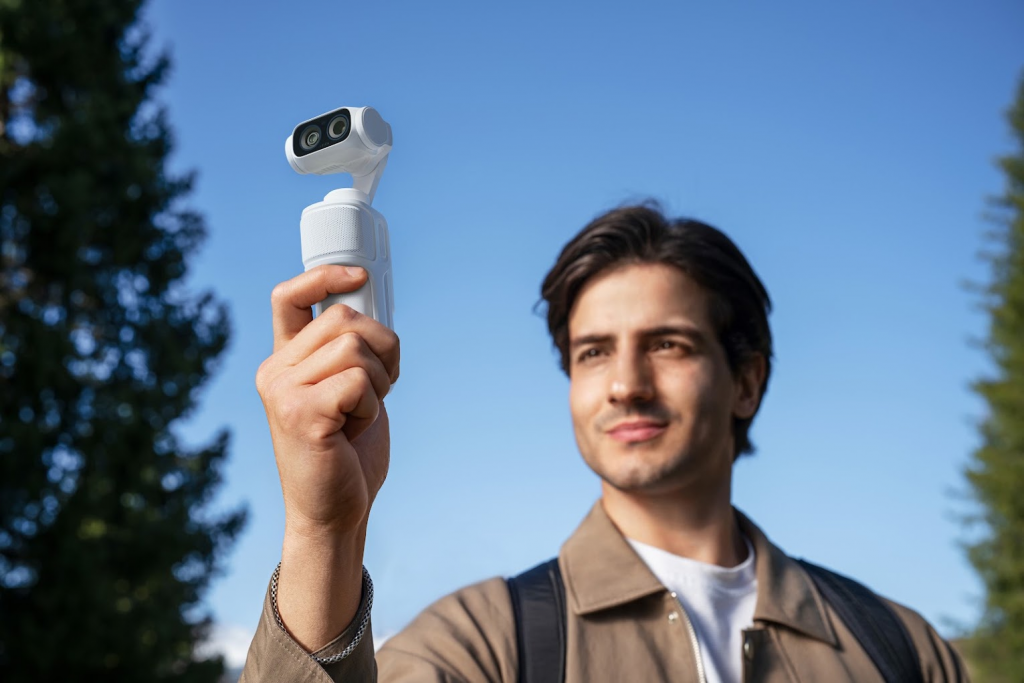
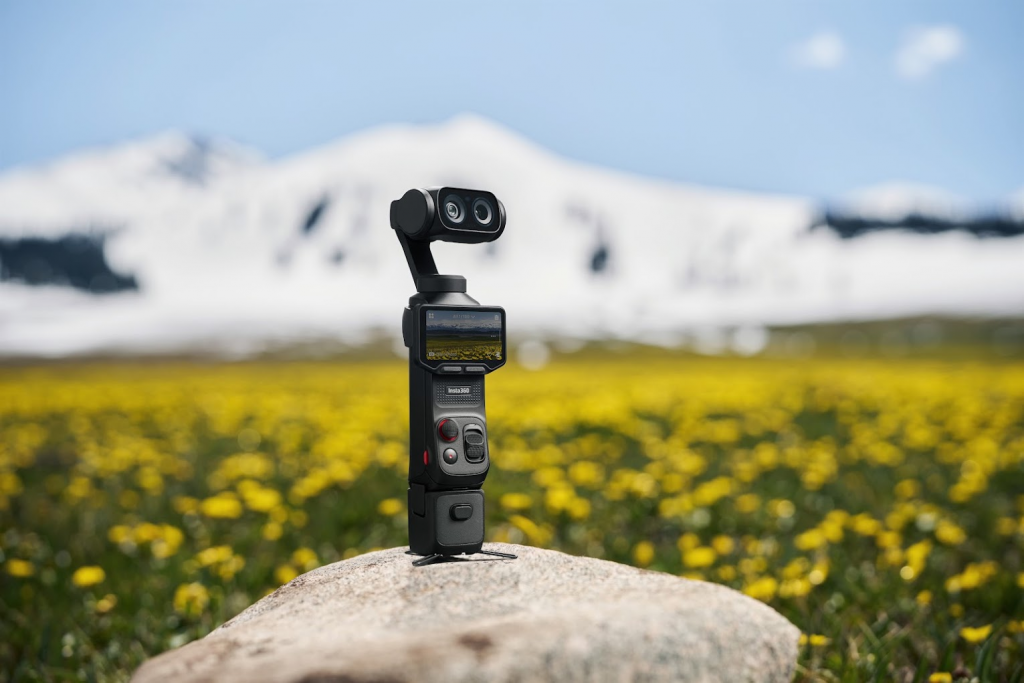
Powered down, the Luna Ultra folds its lenses away behind the gimbal arm and stands there looking a bit like a small robot at attention. It’s hard not to think of WALL-E. At 233g and 170 x 51 x 38mm, it isn’t the smallest pocket camera on the market, but it’s still light enough to live in a jacket pocket, a bag’s front pouch or a bike bag without you noticing much once you’re moving.
Build quality is solid rather than plush. The body is hard plastic instead of metal, which keeps the weight sensible but means this isn’t something you’d want to drop onto pavement or a rocky trail. A plastic clip-on shield covers the lens housing when it’s not in use, and the Creator Bundle throws in a proper zip case for carrying the whole kit between locations. Round the base there’s a standard 1/4-inch-20 tripod thread, a set of flip-out metal feet for standing it on a table or ledge, and a snap-on extension handle for extra reach on overhead shots, low-angle shots, or just getting the lens further from your face when you’re talking to it.
The grip itself is shaped to sit comfortably in one hand for long stretches, with the joystick and both physical buttons falling naturally under your thumb. It’s a small thing, but after an hour of walking and shooting, small things matter.
Built for the desk and the trail
What separates this from most “content creator” cameras is that it doesn’t fall apart the moment you take it outside. The 3-axis mechanical gimbal, backed by electronic stabilisation, handles uneven pavement, gravel paths and stairs without the footage turning into a mess, which matters if your content involves any kind of walking, hiking or moving through a crowd. The wind guard fitted over the built-in mic array genuinely helps outdoors, cutting the low rumble that ruins so much on-location audio, and when conditions get worse than that, the camera pairs wirelessly with Insta360’s own Mic Air and Mic Pro transmitters so you’re never stuck with what’s built in.
For hands-free work, the optional POV Head Tracker lets the camera follow your head movement so you can walk, gesture and film at the same time, useful for travel content, product demos or anything where holding a handle isn’t practical. The battery handle included in the Creator Bundle exists specifically for this kind of longer outdoor session, extending your shooting window well past what the camera manages on its internal cell alone.
One honest note: there’s no official water or dust resistance rating published for the Luna Ultra, so we’d treat it the way we’d treat any bare pocket camera in the field. Fine in light drizzle or humidity if you keep moving and dry it off afterwards, but we’d bag it up rather than push it through anything heavier, and we wouldn’t take it near open water without a case. It’s built for outdoor content creation, not for being submerged or thrown around, and that distinction is worth understanding before you buy.
Display
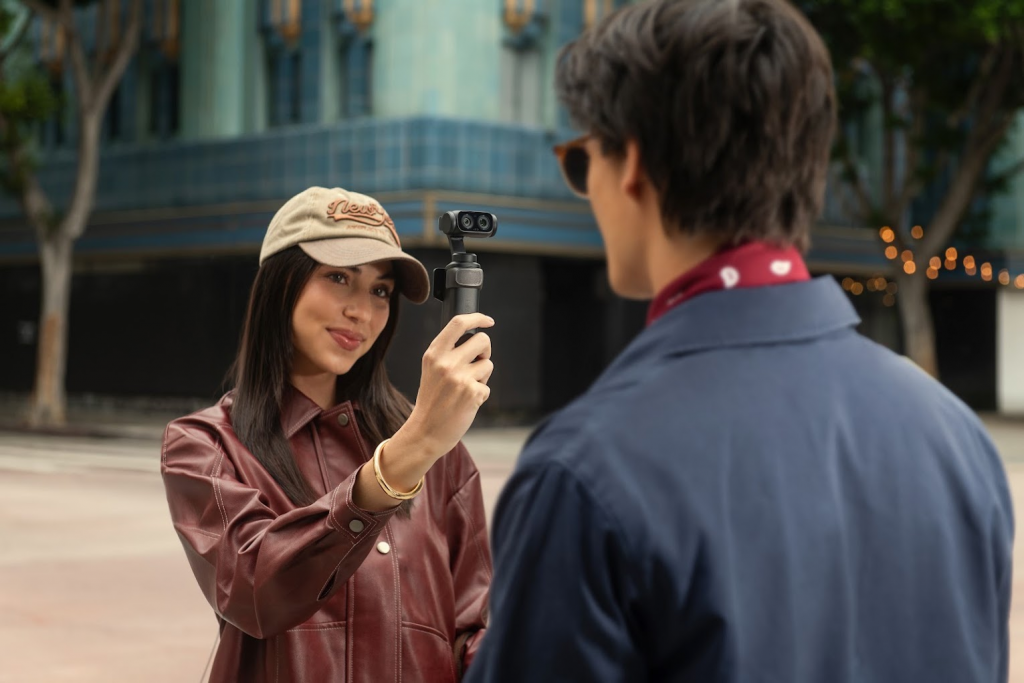
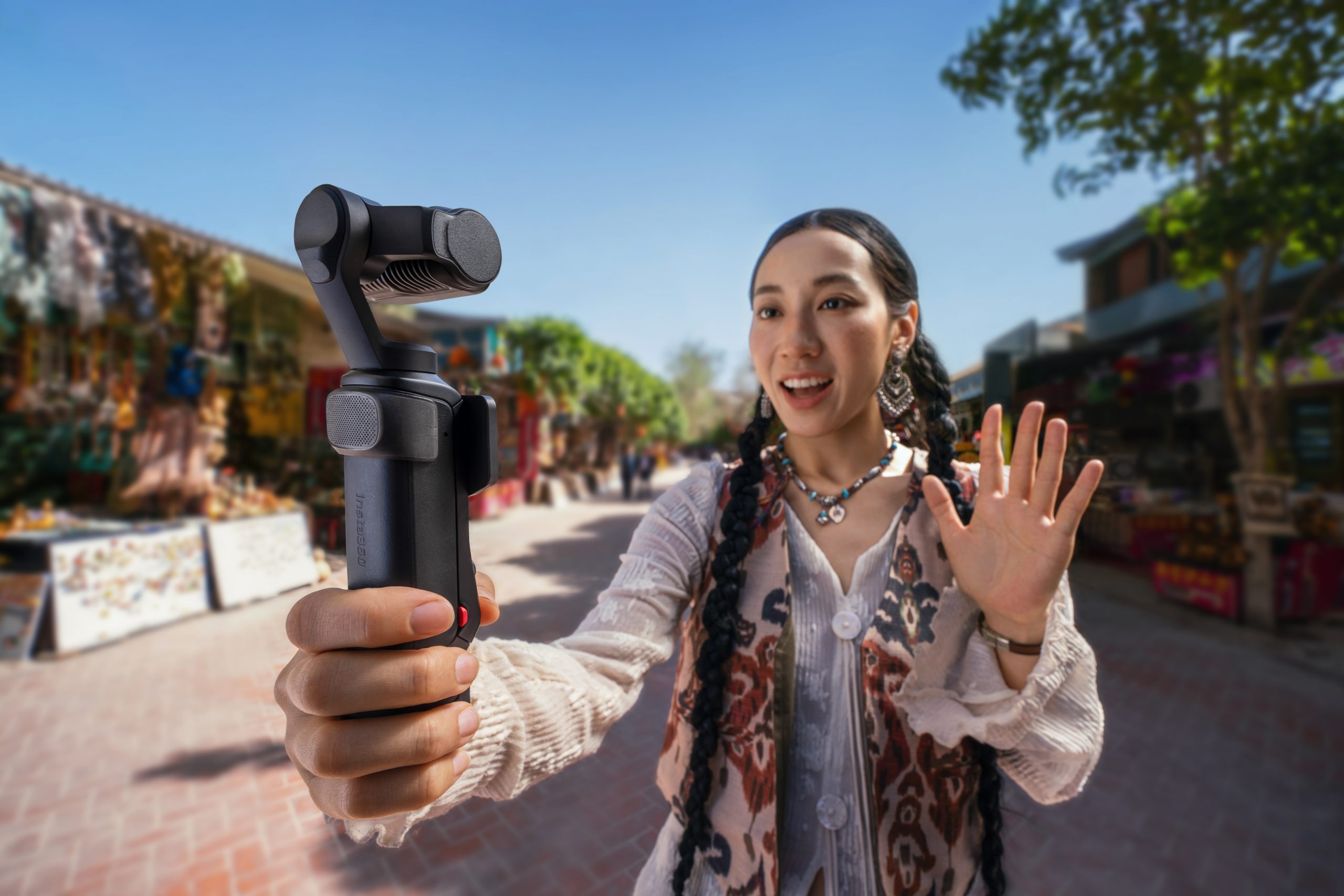
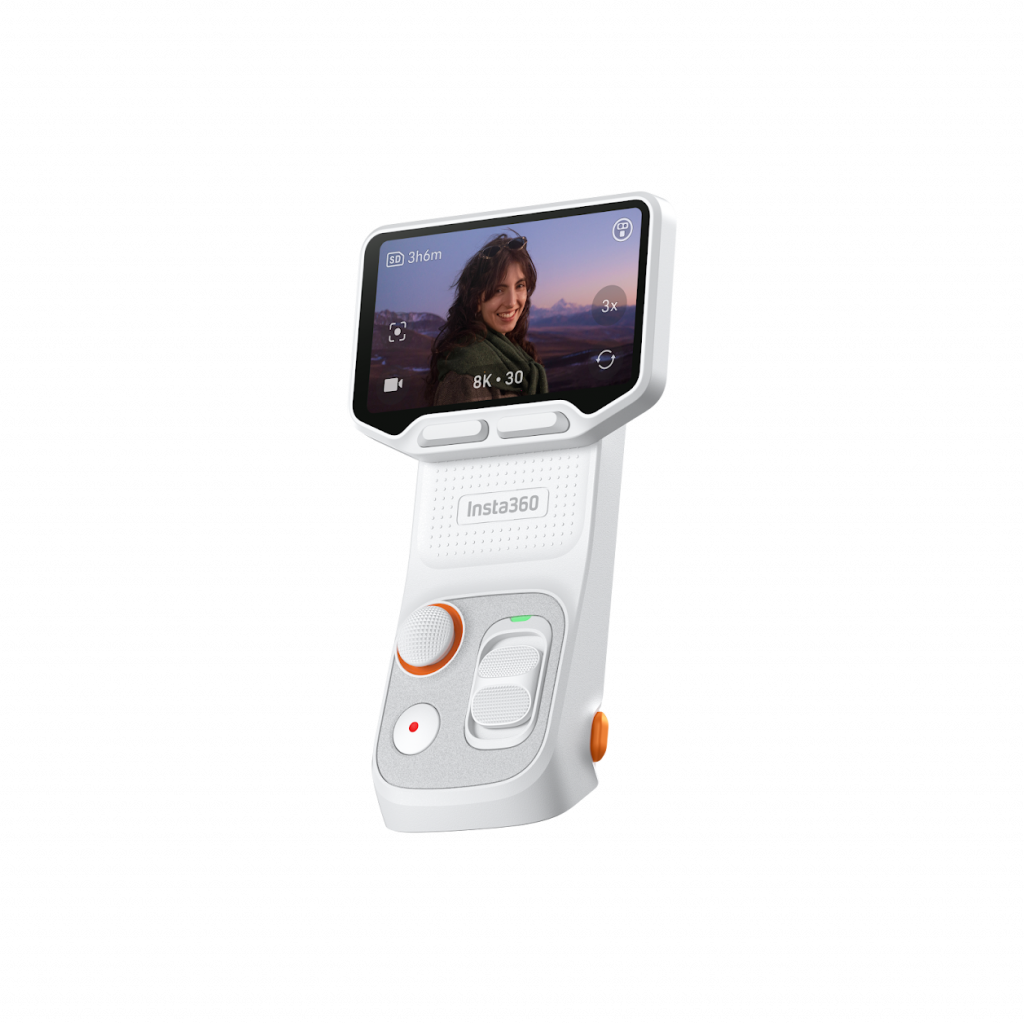
Two small red release clips on either side let you pull the entire control unit, screen, joystick, buttons and a built-in microphone, clean off the top of the handle. What’s left behind carries on recording. What comes away in your hand becomes a wireless remote and monitor, with Insta360 claiming a 20-metre range. In practice, expect that to hold up reliably to about 6 metres before you start seeing dropouts, which is still plenty to walk yourself into frame, hit record and step back for a piece to camera, or set the camera up on a tripod across a room and direct the shot from where your subject is actually sitting.
This is where the Luna Ultra earns its keep as a genuine one-person production tool. Interview someone while checking your own framing on the detached screen. Set the camera up wide to capture a cooking demo, then walk around to narrate from off to the side while watching exactly what the lens sees. Mount it on a tripod at the edge of a trail, walk into the shot, and use the screen in your pocket to start and stop recording without doubling back.
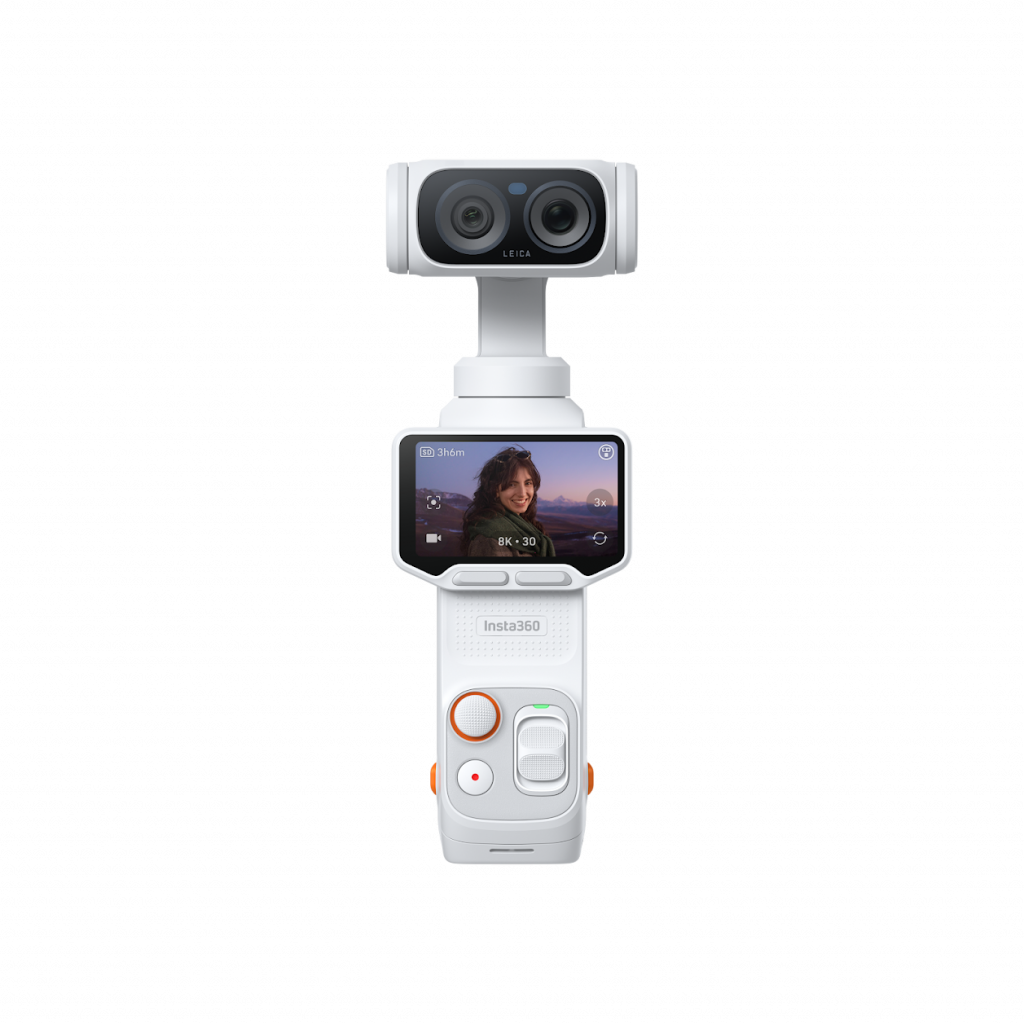
The 2-inch OLED panel itself is bright, a claimed 1000 nits, and easy enough to read in daylight, but the resolution is modest at roughly 564 x 318 pixels, so nailing critical focus by eye alone takes a bit of trust in the camera’s own systems rather than your eyesight. Two physical buttons sit below the display and are both programmable for a single press and a double press, a small touch that saves a surprising amount of menu-digging once you’ve set them up the way you actually work.
Performance and real-world use
The gimbal is the reason to reach for this over a phone, and it earns that trust. Walking shots stay level, pans are smooth, and Deep Track 5.0, Insta360’s subject-tracking system, holds focus on a moving person through its auto tracking, active zoom tracking and group tracking modes without much fuss. We tested it following a subject weaving through a busy street and cutting between two people mid-conversation, and it kept up in both cases. Large, fast vertical movements can still throw it off occasionally, running up stairs two at a time being the obvious example, but that’s a minor caveat against how reliable the rest of the tracking is.
Battery life is where the spec sheet and reality pull apart, and it’s worth planning around rather than being surprised by. Insta360 rates the 1550mAh cell for up to four hours, but that figure comes from a 1080p24 test in a temperature-controlled lab. Shoot in 8K or lean on slow motion, which most people buying this camera will want to do at least some of the time, and two hours is a far more honest number. The fix is straightforward: the 45W USB-C charger gets you back to 80% in around 23 minutes, so a short break between setups keeps you shooting, and the battery handle in the Creator Bundle effectively doubles your runway for a full day out.
Low-light performance is a genuine surprise for a sensor this size. Footage shot in dim rooms, evening markets and low-lit venues holds onto detail well and avoids the muddy, smeared look that plagues most pocket cameras once the sun goes down. For anyone shooting golden hour content, evening events or anything after dusk, that alone changes what’s possible without switching to a bigger camera.
Camera, audio and connectivity
The main camera pairs that 1-inch sensor with a Leica Summicron lens at a 20mm equivalent focal length and f/1.8 aperture. The telephoto sits behind a smaller 1/1.3-inch sensor at f/2.0, giving a roughly 60mm equivalent view and genuine 3x optical zoom, not a crop pretending to be one. Push further and you get 6x zoom that Insta360 calls lossless, and images here still look sharp in decent light, followed by up to 12x digital zoom, where softness starts creeping in but remains usable for casual social clips.
Video tops out at 8K/30fps, with 4K available up to 120fps for slow motion. Dolby Vision is supported, though it can occasionally oversaturate bright skies and add slightly fuzzy edges around high-contrast detail like leaves against blue sky, so it’s worth testing on your own footage before you commit to it for anything important. For grading, the 10-bit I-Log profile is ACES-compatible, and Insta360 also bakes in three Leica-flavoured colour looks, Natural for true-to-life travel and documentary footage, Vivid for punchy content built for social feeds, and Chrome for something moodier and more cinematic, alongside further filter-style presets for anyone who wants a finished look straight out of the camera with no grading at all.
Audio is good without being exceptional. The built-in mic array copes fine indoors and in calm conditions, but struggles once the wind picks up, even with the bundled wind guard fitted, and anyone doing serious interviews or narration will still want an external mic in the bag. That’s where the wireless pairing with Mic Air and Mic Pro earns its place, and the detached screen unit carries its own microphone too, handy for recording a clean voiceover remotely while the camera itself sits on a tripod capturing the wide shot.
Software and AI features
Insta360’s companion app remains a mixed bag. It handles framing, playback and getting footage off the camera without drama most of the time, but connection hiccups crop up often enough to be a genuine irritant rather than a one-off. Working directly from the camera, especially with the screen attached, tends to be the smoother experience for anything time-sensitive.
Built-in timecode support means the Luna Ultra can sync properly with other cameras and audio recorders in a multi-camera setup, useful if you’re running two of these for an interview, one on each person, or pairing it with a separate audio recorder for a cleaner mix. Footage drops straight into DaVinci Resolve, Adobe Premiere Pro and Final Cut Pro without a conversion step first, which matters more than it sounds once you’re editing on a deadline and don’t want to fight your software before you’ve even made a cut.
Which bundle should you buy
The Standard Bundle at £649 covers the essentials well: the camera, wind guard, wrist strap and thread handle are genuinely enough to shoot with from day one, and it’s the sensible choice if you already own a wireless mic or tripod setup you’re happy with.
The Creator Bundle at £829 is where we’d point most people seriously considering this as their main camera. The battery handle solves the single biggest limitation of the camera on its own, the Mic Pro transmitter solves the audio ceiling of the built-in mics, and the wide-angle lens adds a genuinely useful field of view for interiors, group shots and tight spaces where the standard 20mm equivalent isn’t wide enough. Buying these three accessories separately later would cost more than the £180 difference between the two bundles, so if there’s any chance you’ll want them, it’s worth paying up front.
Beyond the two bundles, the wider accessory range, Black Mist filters for a softer, diffused look and the POV Head Tracker for hands-free shooting, are both worth adding once you know how you actually use the camera day to day, rather than buying blind on day one.
Our verdict
The Luna Ultra is the rare camera that actually lives up to the phrase “does it all.” Two real lenses instead of one, a detachable screen that adds genuine function rather than gimmick, image quality that holds its own against much bigger sensors, and a gimbal steady enough to handle a busy street or an uneven trail without flinching: this is a camera built around how creators actually work, not around a single use case.
It asks a fair amount in return. £649 for the Standard Bundle, £829 for the kit most people will actually want, is serious money for a pocket camera, and the battery needs active management if you’re shooting anything demanding for a full day. There’s no official water or dust rating either, so this wants a bit more care in genuinely rough conditions than a dedicated action camera would.
None of that changes the overall picture. For anyone making content across multiple settings, studio interviews one day, a walk-and-talk through a city the next, an evening event after that, the Luna Ultra removes the need to own three different cameras for three different jobs. That’s a genuinely rare thing to be able to say about anything this size, and it’s why this is the camera we’d recommend first to anyone serious about content creation right now.