


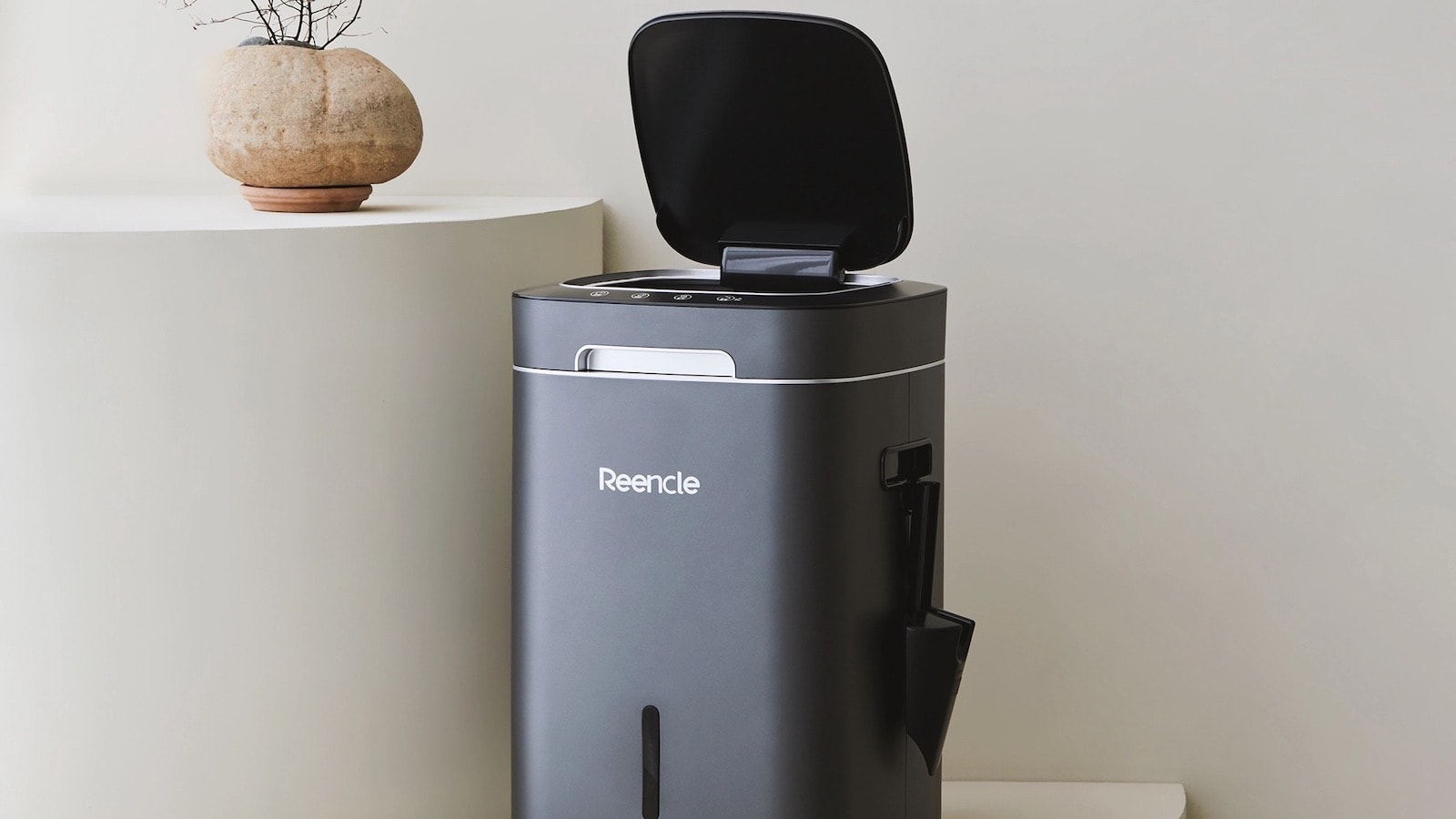
Reencle Food Waste Composter Review: When Sustainability Finally Feels Like Good Tech
There’s a specific type of disappointment reserved for eco-tech that promises the future and delivers a compromise. Kitchen composters, until recently, sat squarely in that category. Well-intentioned, often expensive, and usually reduced to glorified dehydrators that made food waste less gross but not fundamentally better.
Reencle is different, and not in a marketing way. In a systems-thinking, biology-meets-engineering way. The kind of product that doesn’t just reduce guilt, but replaces an inefficient process with a smarter one.
This is not a gadget that pretends composting is easy. It’s a gadget that understands composting deeply enough to make it manageable indoors, without asking you to become a soil scientist or sacrifice your kitchen to worms and bins.
If you care about environmental impact, love well-designed tech, and enjoy owning products that feel like quiet revolutions rather than loud gimmicks, the Reencle deserves your attention.
The Problem Reencle Is Actually Solving
Let’s zoom out for a second.
Food waste is one of the most underestimated environmental problems in modern homes. Not because people don’t care, but because the systems we’re given are bad. Food scraps end up sitting in kitchen bins for days. Even with compostable bags, they smell, leak, and create friction. Eventually, they’re tossed into general waste or a municipal system that often sends them to landfill anyway.
Landfills don’t compost food aerobically. They break it down anaerobically, releasing methane: a greenhouse gas significantly more damaging than CO₂ in the short term.
Traditional composting solves this, but only if you have outdoor space, time, and tolerance for mess. Apartment dwellers, renters, city residents, and many tech-forward households are effectively locked out of the process.
Reencle steps into that gap and says: what if composting was treated like an appliance problem instead of a lifestyle one?
Not a Dehydrator Disguised as Composting
This is where Reencle immediately separates itself from most countertop composters.
Many competitors rely on grinding and heating food waste until it’s dry, light, and shelf-stable. That material can be useful, but it isn’t compost in the biological sense. There’s little microbial activity left, and the transformation is mostly mechanical.
Reencle takes a fundamentally different approach. It uses aerobic microorganisms; specifically Bacillus strains commonly found in compost heaps; and creates a controlled environment where they can thrive. Heat, oxygen, moisture, and agitation are all carefully balanced to accelerate natural decomposition.
This matters because composting isn’t about appearance. It’s about transformation. Organic matter broken down into something plants can actually use.
The Technology Under the Hood (Where It Gets Interesting)
Inside the Reencle is a system that feels closer to a bioreactor than a bin.
You start with a bran mixture that contains live bacteria and activated charcoal. The bacteria are the engine of decomposition. The charcoal plays a supporting role, improving airflow and helping manage odours while the microbes do their work.
Once activated with water, the system enters a steady state where food waste is gradually folded into the existing composting medium by a rotating paddle. This constant mixing increases surface contact and prevents anaerobic pockets: the main cause of compost smells.
Temperature is maintained between roughly 50 and 60°C, which is ideal for fast aerobic decomposition without sterilising the system. This is a critical distinction. Too hot, and you kill the microbes. Too cold, and the process slows to a crawl. From a tech perspective, this is elegant. It’s not brute force. It’s environmental control.
Daily Use: Why This Feels Like a Premium Appliance
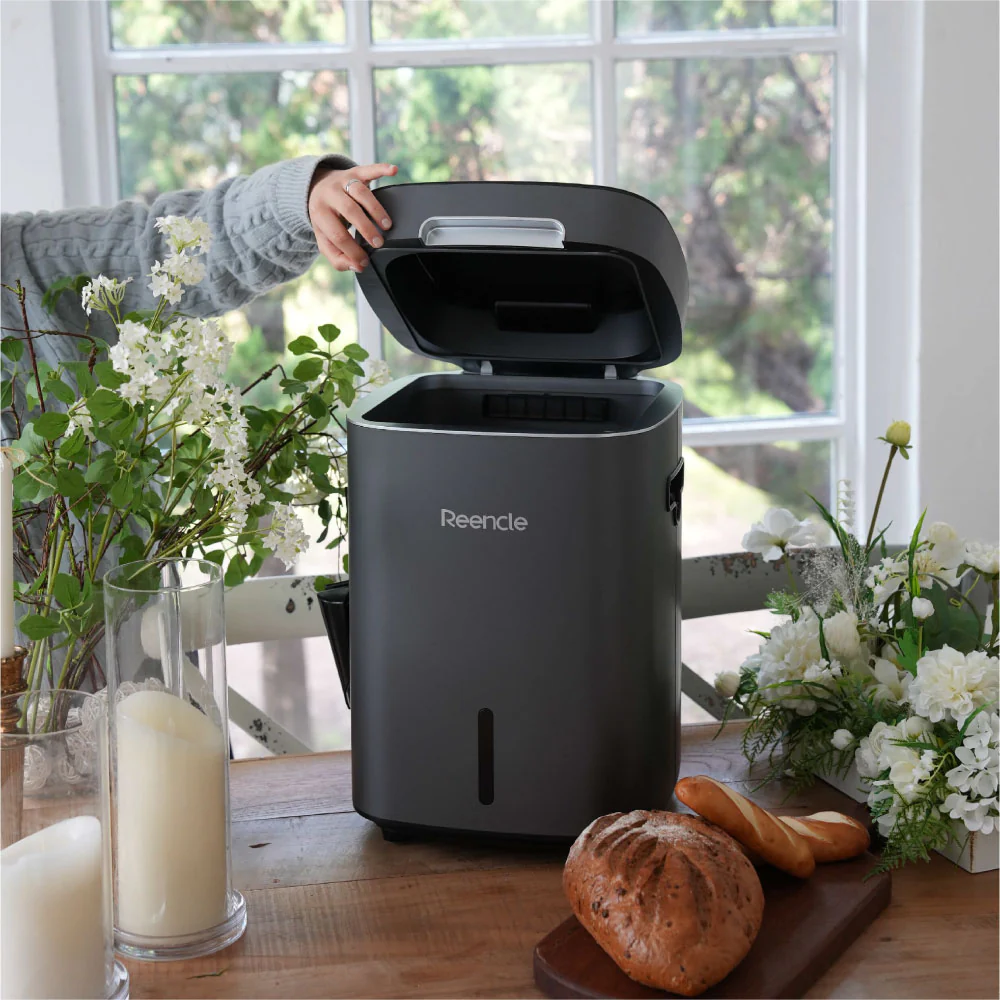
Living with the Reencle feels less like “doing composting” and more like interacting with a well-designed kitchen system.
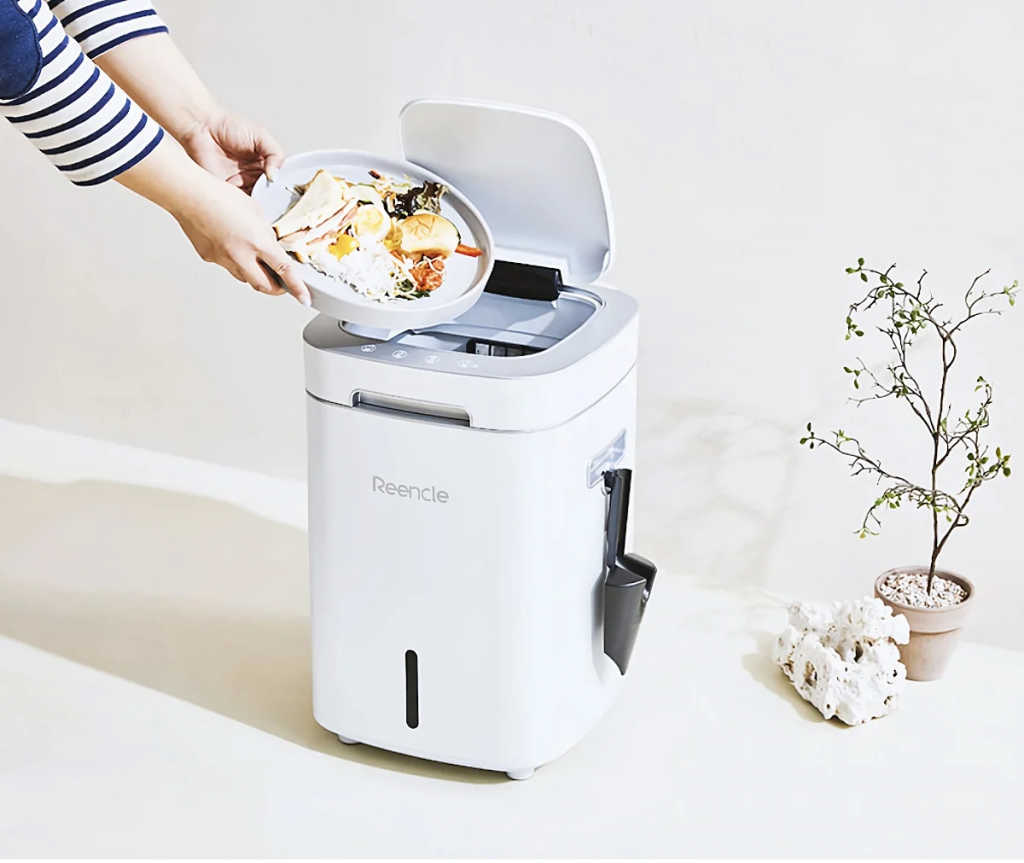
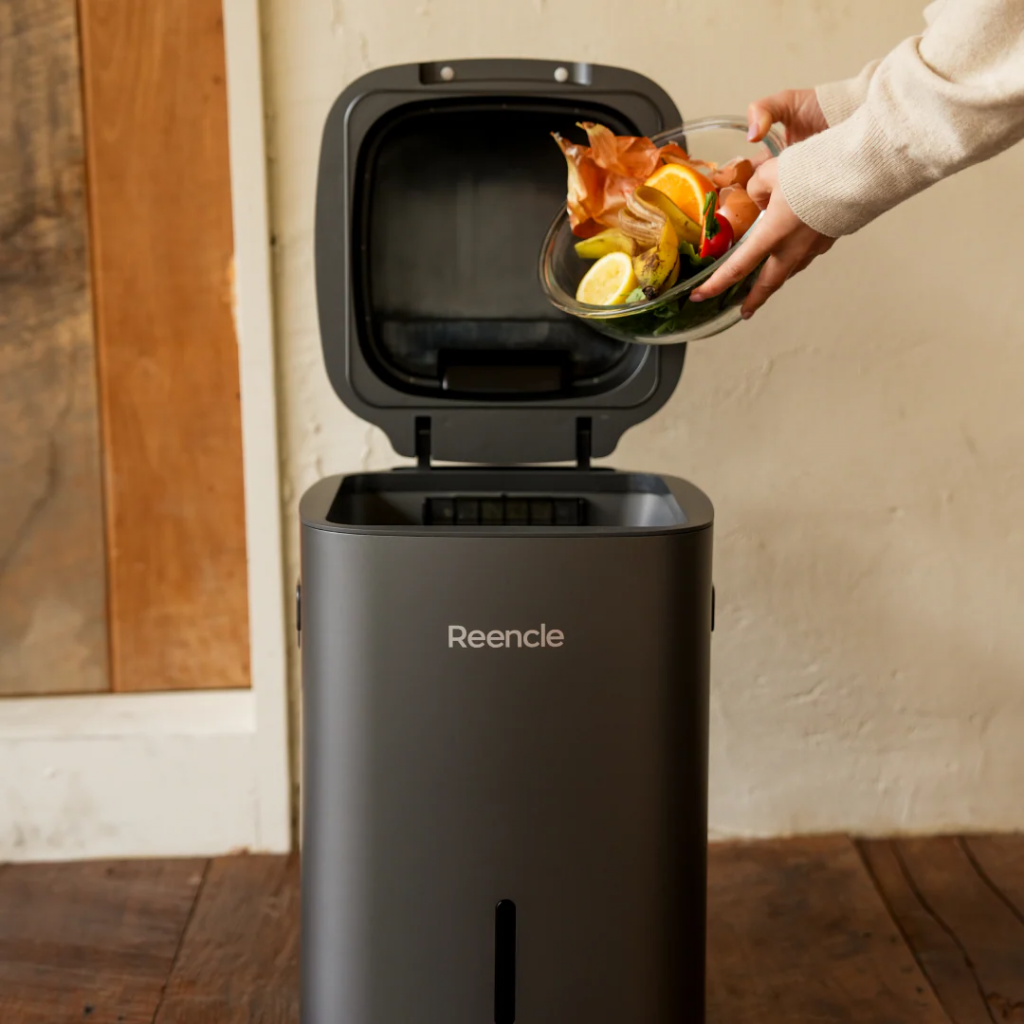
You scrape food into it. The lid opens with a hand wave. The waste disappears over hours or days depending on its composition. There’s no dripping bin liner, no smell creeping out at night, no mental note that today is “bin day.”
The sensory experience matters here. The Reencle is quiet, visually clean, and surprisingly reassuring. You can hear the paddle if you’re nearby, but it’s a gentle, mechanical whisper rather than an appliance demanding attention.
Smell Control: The Unsexy But Crucial Win
Odour is where most kitchen compost solutions die.
Reencle handles this exceptionally well. Not because it masks smells, but because aerobic composting simply produces fewer offensive byproducts. When you open the lid, there’s sometimes a mild earthy scent, the kind you’d expect from healthy soil, but not the sour, rotting smell associated with food waste.
There’s filtration at the back, charcoal in the mix, and an optional purify function if needed. But the real hero is the biology. Proper oxygenation prevents the compounds that cause truly unpleasant smells from forming in the first place.
For people who care about their living space, and let’s be honest, most gadget lovers do, this is one of the Reencle’s strongest advantages.
Energy Use: The Trade-Off, Done Honestly
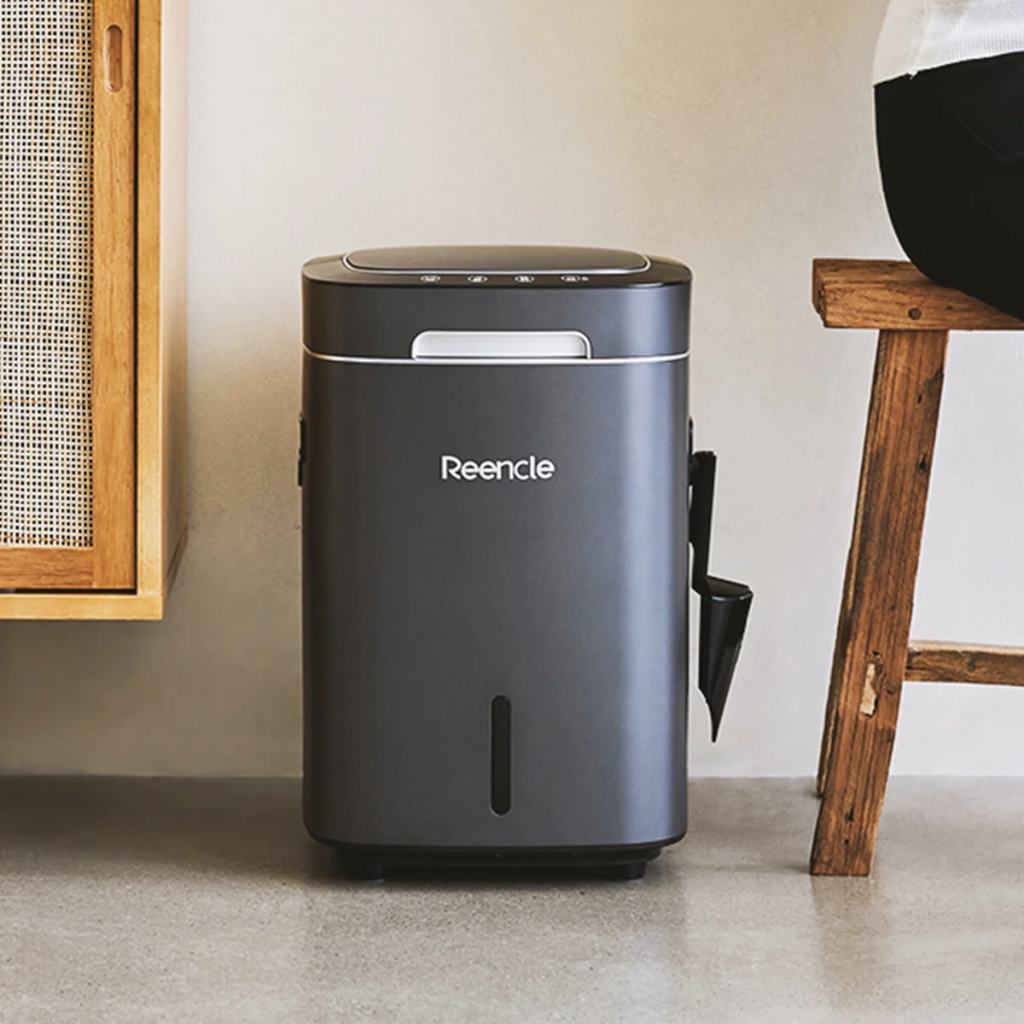
Reencle does use electricity. That’s unavoidable.
At full continuous operation, it draws around 1.25 kWh per day. In real-world use, most households won’t run it nonstop. Running it a few hours during cooking and cleanup is usually sufficient, dramatically reducing energy consumption.
Here’s the key point: even with electricity usage, aerobic composting at home is generally better than sending food waste to landfill, where methane emissions are far worse.
If you’re the kind of person who tracks energy usage or uses a renewable tariff, Reencle fits neatly into an environmentally responsible lifestyle. It’s not pretending to be zero-impact. It’s offering a net improvement over existing waste systems.
What You Can and Can’t Compost (And Why That’s Fine)
Reencle works best with everyday food waste: cooked grains, vegetable scraps, fruit peels, bread, leftovers, and most kitchen offcuts.
Some items slow things down. Large bones, very sticky sauces, and certain dense materials aren’t ideal. That’s not a limitation of the machine. That’s composting physics.
What’s impressive is how flexible the system becomes once established. Smaller bones can break down over time. Fibrous materials can be managed with patience. Adding carbon sources like sawdust or shredded paper improves balance and increases compost output.
Compost Output: From “Not Much” to Surprisingly Useful
Early impressions can be misleading. At first, it might feel like the Reencle isn’t producing much compost.
Over time, as you learn to balance inputs and occasionally add carbon material, output increases significantly. Users regularly report producing enough compost to meaningfully supplement houseplants, balcony gardens, or shared green spaces.
The texture looks and feels like compost. Dark, crumbly, organic. Not powder. Not flakes.
Independent testing shared by Reencle shows high organic matter and nitrogen content, good germination rates, and low sodium; all indicators of usable compost.
The one rule that matters: maturity. Like any compost, it benefits from resting before use. Let it stabilise, and it becomes a legitimate growing medium rather than a novelty byproduct.
The Minor Frictions (Handled Gracefully)
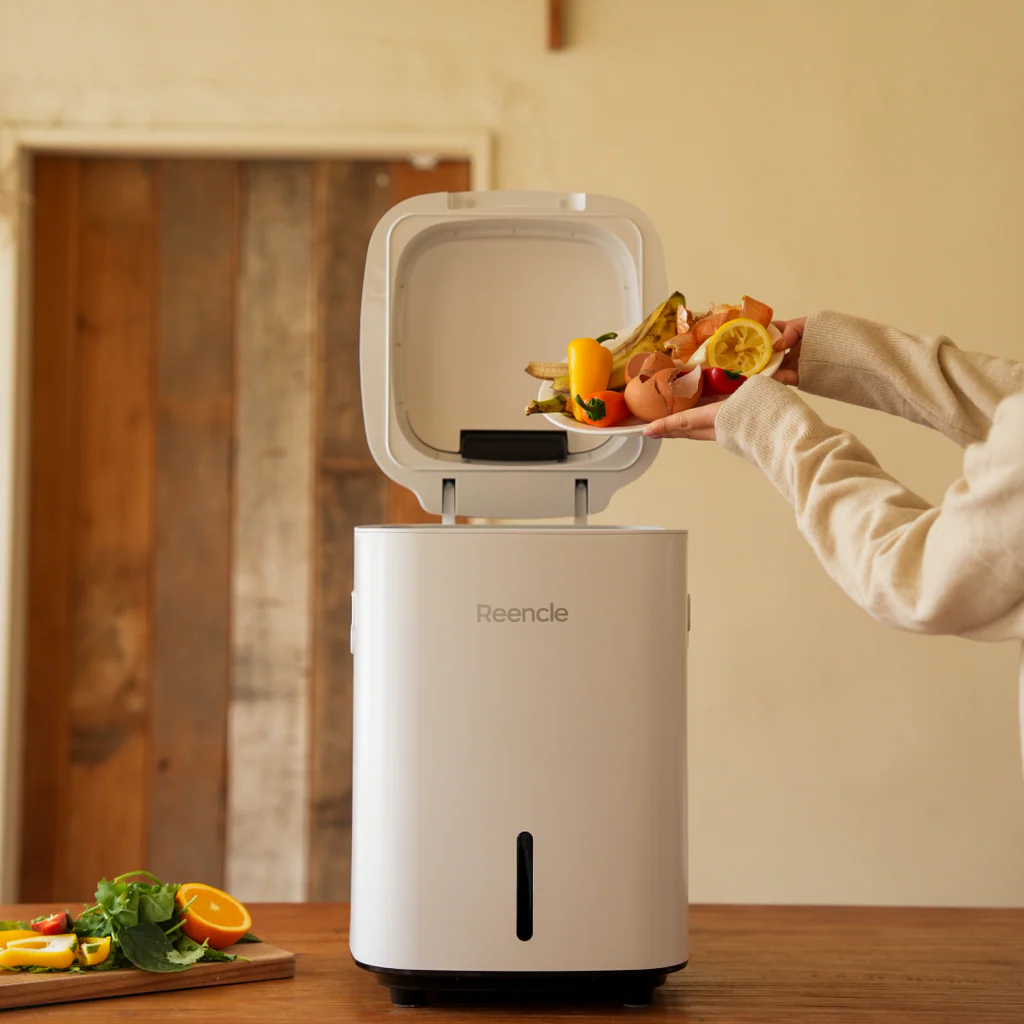
The motion sensor for the lid can be a bit enthusiastic. It occasionally opens when you walk past. It also closes relatively quickly, which encourages efficient loading rather than leisurely scraping.
The instructions could use professional proofreading. Nothing is unclear, but the language doesn’t always match the premium feel of the hardware.
And no, it won’t compost absolutely everything. If your expectation is zero food waste forever, you’ll need to recalibrate. If your expectation is dramatically reduced waste with minimal effort, you’ll be delighted.
These are small trade-offs in a system that otherwise feels remarkably polished.
Who Reencle Is Really For
Reencle is not for people who already have a perfect composting system and abundant outdoor space.
It is for apartment dwellers, urban households, renters, and anyone who wants to compost without restructuring their life.
It’s for people who care about environmental impact but refuse to live with bad user experience.
It’s for tech lovers who appreciate systems that work quietly in the background and solve real problems rather than performative ones.
Most of all, it’s for people who want to turn daily waste into something useful without thinking about it constantly.\
Final Verdict: Composting, Reimagined as Infrastructure
The Reencle Food Waste Composter isn’t cheap. It doesn’t break the laws of biology, but what it does is far more impressive: it takes a messy, inconvenient, environmentally harmful process and turns it into a controlled, elegant system that fits modern living. It respects composting instead of faking it. It reduces waste without adding stress. And it makes sustainability feel like a design upgrade rather than a sacrifice.
For eco-conscious gadget lovers, this is one of the most convincing pieces of home tech to arrive in years.