



Samsung’s Micro RGB TVs Are Getting Bigger, Smarter, and Seriously More Ambitious for 2026
Samsung is doubling down on one thing the premium TV market can’t stop chasing: picture perfection. For 2026, the company has confirmed a major expansion of its Micro RGB TV lineup, scaling the technology from ultra-cinematic 115-inch giants all the way down to more living-room-friendly 55-inch models. It’s a move that signals confidence, not just in Micro RGB as a technology, but in a future where ultra-precise colour and intelligent processing become the baseline for high-end home entertainment.
This isn’t just about adding more sizes to a spec sheet. It’s about taking one of Samsung’s most advanced display technologies and making it relevant across more homes, more rooms, and more viewing habits.
From Statement Screens to Everyday Luxury
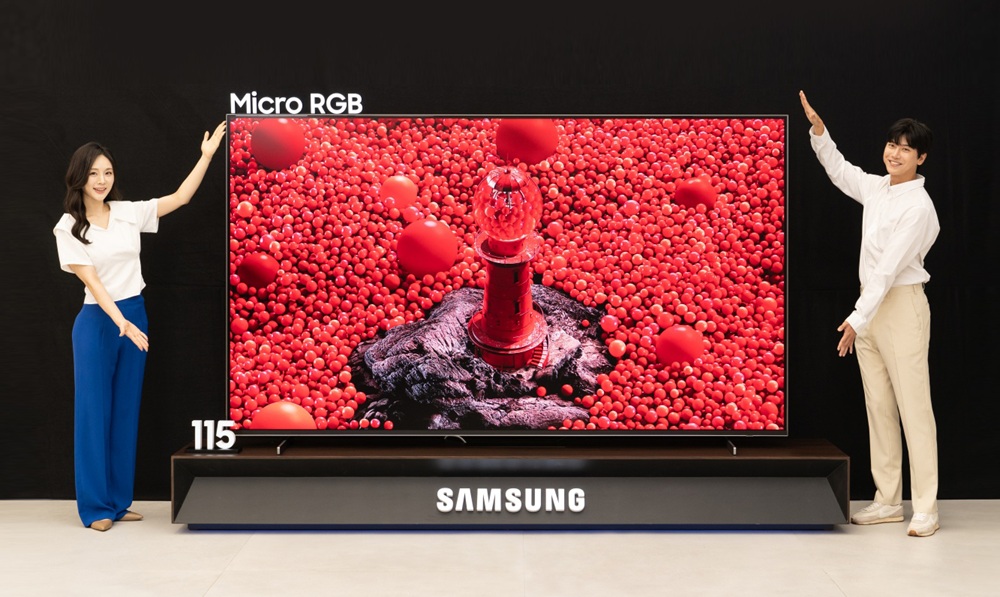
When Samsung first introduced its 115-inch Micro RGB TV in 2025, it was clearly a statement product. A screen designed for dedicated cinema rooms, luxury homes, and buyers who want the absolute best, regardless of size or cost. For 2026, Samsung is shifting gears slightly, without losing that premium edge.
The expanded lineup will include 55, 65, 75, 85, 100, and 115-inch models, effectively covering everything from high-end apartments to sprawling open-plan living spaces. The message is simple: Micro RGB is no longer just a showpiece technology. It’s becoming a scalable premium platform.
Hun Lee, Executive Vice President of Samsung’s Visual Display Business, summed it up neatly by positioning Micro RGB as a new category altogether. One that maintains Samsung’s highest picture standards while adapting to the realities of modern living spaces.
What Makes Micro RGB Different, Really?
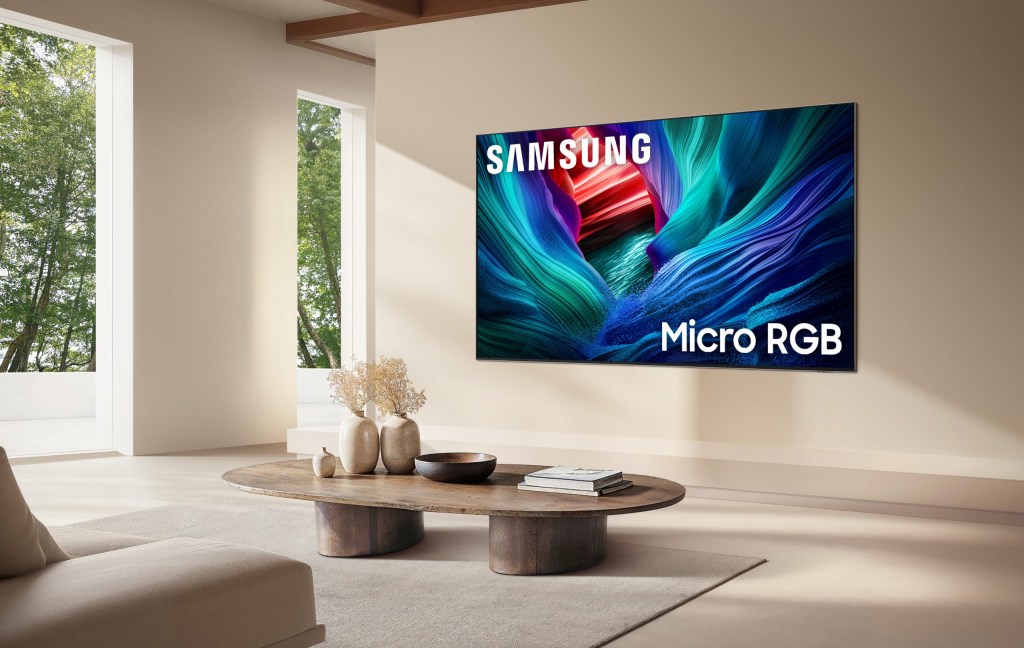
Micro RGB isn’t just another buzzword in the ever-growing alphabet soup of TV tech. At its core, it’s about control. Each red, green, and blue LED is smaller than 100 micrometers and emits its own light independently. There’s no colour filtering, no backlight bleeding through layers. What you see is exactly what the display is producing, pixel by pixel.
In practical terms, that means colours that feel more lifelike and less processed. Reds don’t bloom, greens don’t oversaturate, and subtle gradients don’t collapse into flat tones. Whether you’re watching a dimly lit drama or a sun-drenched sports broadcast, the screen has the precision to handle both without compromise.
This level of control also gives Samsung more room to push brightness and contrast without losing accuracy. It’s the kind of tech that doesn’t shout at you in a showroom, but quietly impresses once you live with it.
AI That Actually Has a Job to Do
Of course, hardware is only half the story. Samsung’s 2026 Micro RGB TVs are powered by a new Micro RGB AI Engine Pro, a next-generation chipset designed to process every frame with surgical precision.
This isn’t AI for the sake of marketing slides. The system analyses content in real time, adjusting colour, motion, and clarity depending on what’s on screen. Fast-moving sports benefit from smoother motion and sharper edges, while films retain their cinematic pacing and tonal depth.
Features like 4K AI Upscaling Pro and AI Motion Enhancer Pro work quietly in the background, refining lower-resolution content and cleaning up motion without introducing the artificial “soap opera” effect that still plagues lesser TVs. The goal here isn’t to make everything look hyper-real, but to make everything look right.
Colour That Hits the Industry Ceiling
One of the headline achievements of the new Micro RGB lineup is Micro RGB Precision Color 100, which delivers full coverage of the BT.2020 colour gamut. That’s the widest colour standard currently used in professional video production, and something most TVs still struggle to approach.
Certified by VDE, this means the colours you see on screen are not just vibrant, but accurate. Skin tones look natural, animated content pops without looking cartoonish, and HDR highlights retain detail instead of blowing out into white blobs.
For viewers who care about filmmaking, photography, or simply want their TV to stop “guessing” what colours should look like, this is a big deal. It’s one of those upgrades that’s hard to unsee once you’ve experienced it.
Designed for Real Homes, Not Just Dark Rooms
Samsung is also leaning heavily into usability, especially with its proprietary Glare Free technology. Premium TVs are often judged in ideal lighting conditions, but real homes are anything but controlled environments.
By minimising reflections and preserving contrast even in bright rooms, Micro RGB TVs are clearly designed to be watched during the day as much as at night. That makes them far more practical for living rooms, kitchens with island seating, or open-plan spaces where blackout conditions just aren’t realistic.
This focus on real-world performance is what separates aspirational tech from genuinely livable tech, and Samsung seems keenly aware of that distinction.
Sound That’s Finally Catching Up
For years, premium TVs have outpaced their own audio. Samsung’s 2026 lineup makes a strong case that this gap is finally closing.
Dolby Atmos support delivers multidimensional sound, while Adaptive Sound Pro adjusts audio output based on both room acoustics and content type. Add Q-Symphony into the mix, which syncs the TV’s speakers with compatible Samsung soundbars, and you get a broader, more immersive soundstage without having to manually tweak settings.
Perhaps most interesting is the inclusion of Eclipsa Audio, Samsung’s new spatial sound system designed for immersive 3D audio across all 2026 TVs. It’s another signal that Samsung is thinking holistically, not just about how content looks, but how it feels to experience.
Why This Matters for the Premium TV Market
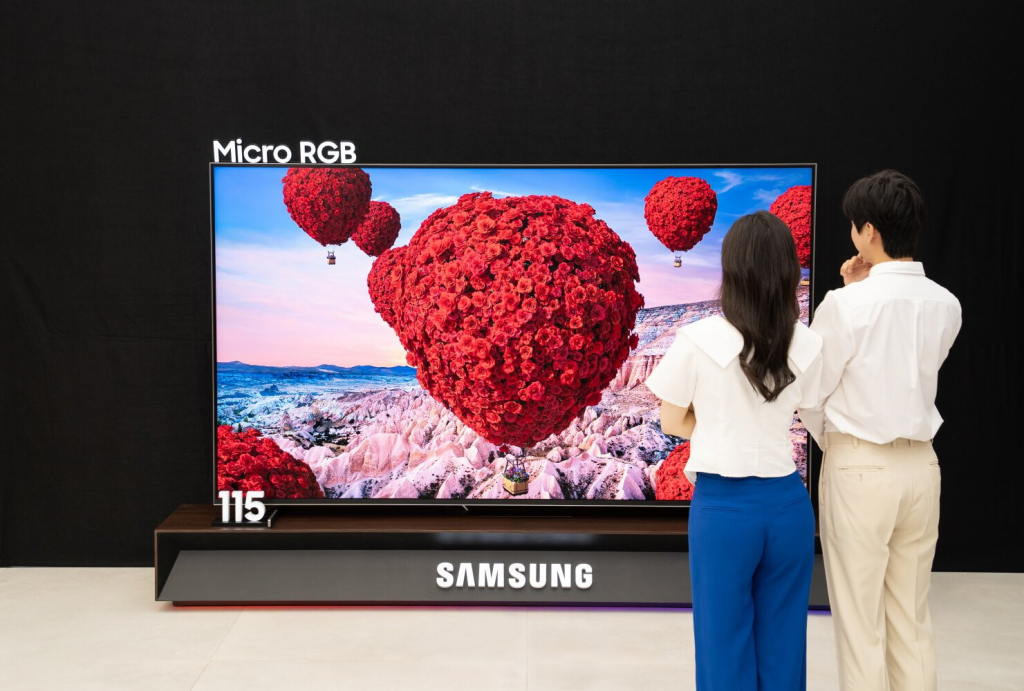
The premium TV space has become fiercely competitive, with OLED, Mini LED, and Micro LED all fighting for dominance. Micro RGB positions itself differently. It’s not trying to replace OLED outright, nor is it chasing raw brightness numbers alone.
Instead, it’s carving out a space focused on precision, consistency, and intelligence. For consumers upgrading to premium TVs, picture quality has become the deciding factor, and Samsung is betting that colour accuracy and processing finesse will matter more than ever.
By expanding Micro RGB into more sizes, Samsung is effectively saying that this level of performance shouldn’t be confined to extreme screen sizes or niche buyers.
All Eyes on CES 2026
Samsung will officially showcase the expanded Micro RGB lineup at CES 2026 in Las Vegas, running from January 6 to 9. The event will serve as the first real-world look at how these TVs perform across different sizes and environments.
CES has always been Samsung’s stage for setting the tone of the year ahead, and Micro RGB is clearly central to that vision. Expect the company to position this lineup as a cornerstone of its premium strategy moving forward.
The Bigger Picture
Samsung’s 2026 Micro RGB expansion feels less like a product update and more like a statement of intent. It’s about redefining what premium TV ownership looks like, moving beyond sheer size or brightness into a space where accuracy, intelligence, and adaptability matter just as much.
For consumers, it means more choice without compromise. For the industry, it raises the bar yet again. And for Samsung, it reinforces a familiar message: when it comes to display technology, the company isn’t just following trends. It’s trying to set them.
If Micro RGB lives up to its promise across all these sizes, 2026 could be the year premium TVs stop being about extremes, and start being about excellence, no matter the room.