



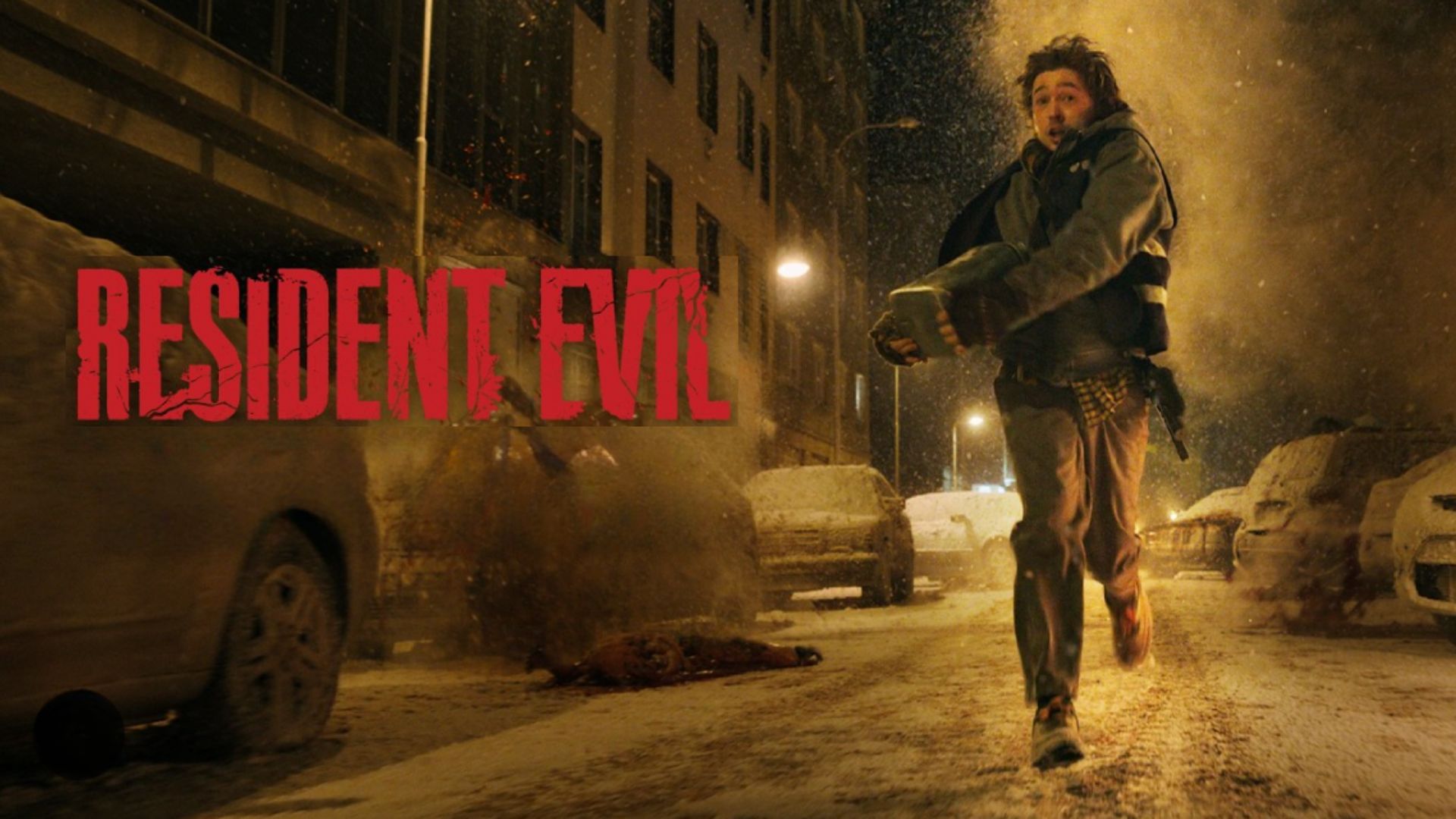
Resident Evil claws its way back from the dead with a $60m franchise record
Zach Cregger’s original-story reboot has opened far above forecasts, handed Sony the biggest debut in the series’ 24 years and given the video game adaptation curse a proper kicking.
Sony’s Resident Evil did not so much open at the box office as burst through the floorboards. The reboot took $60 million in North America over its first weekend, plus $48.3 million overseas, for a global start of $108.3 million. Industry tracking had pointed to a domestic debut of $40 million to $50 million. It beat that comfortably, and it did so as the only major new release on the calendar.
For a franchise that has spent years as a punchline among film fans, that is a remarkable turnaround. It is also a reminder that the fastest way to fix a struggling adaptation may be to stop adapting.
A very low bar, cleared with ease

To see how big the number is, look at what came before. The Resident Evil films began in 2002, with Milla Jovovich as Alice, and she returned for five sequels across the 2000s and 2010s. Every one of those original films opened somewhere around the $20 million mark. The previous record-holder for a debut was 2010’s Resident Evil: Afterlife, which took $26 million in its first weekend. That film is still the series’ top earner, with about $300 million worldwide.
The last attempt to restart things went badly. 2021’s Resident Evil: Welcome to Raccoon City opened to just $5.3 million and finished with $42 million worldwide against a $25 million budget. Sony had every reason to be nervous about trying again five years later, and it spent three times that budget, around $75 million, on the new film.
The bet has paid off quickly. The new film has more than doubled the old franchise record, and it is already well on its way to covering its costs.
The Cregger effect
The single biggest factor is the man in the director’s chair. Zach Cregger began his career in comedy, then broke out in horror with the low-budget hit Barbarian in 2022. Last year’s Weapons took him to a different level. It opened to $43 million domestically, blew past forecasts and kept drawing audiences for weeks. It ended its run with roughly $270 million worldwide from a budget of $38 million, and it won Amy Madigan an Oscar for best supporting actress.
That track record matters enormously to horror fans, who are quick to reward filmmakers with a distinctive voice. Box office analyst Paul Dergarabedian credits Cregger with making a familiar property feel fresh again, and points out that Gen Z has become a major driver of ticket sales and has a real appetite for scary movies. When a director has earned that kind of trust, the name above the title can sell tickets as effectively as the franchise itself.
Cregger has also reunited with Austin Abrams, who appeared in Weapons and now leads this film. He plays Bryan, a medical courier who finds himself fighting through a viral outbreak of monstrous infected creatures in Raccoon City. That is a smart bit of casting, because Abrams is an everyman rather than an action hero, and the film’s tension relies on him being out of his depth.
An original story, not a retelling
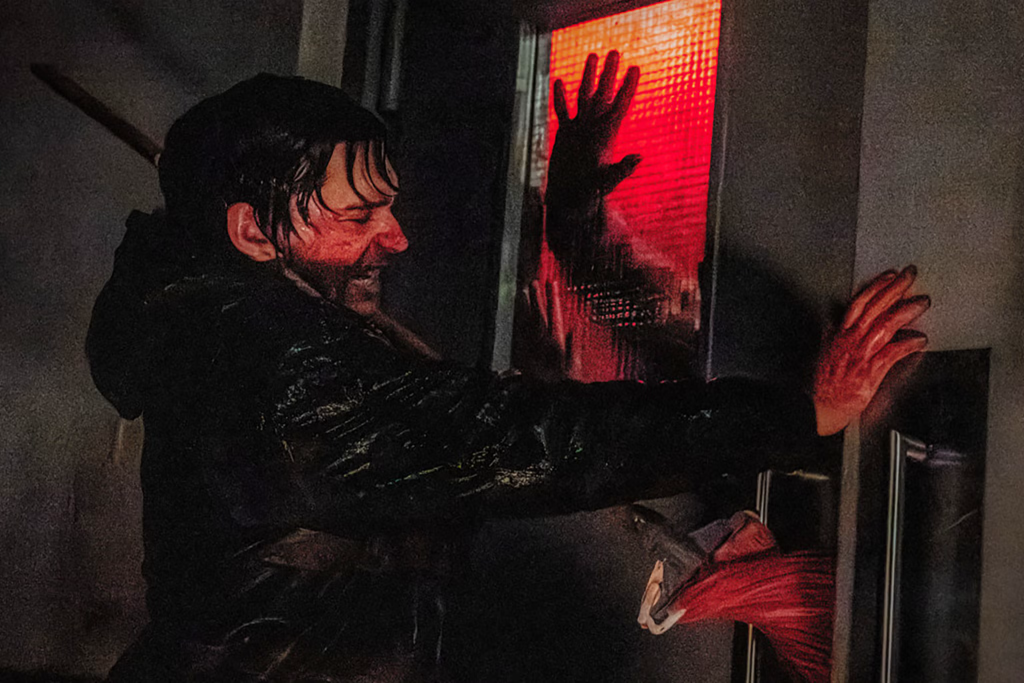
The most interesting decision is what Cregger chose not to do. This is not a straight adaptation of one of the video games, and it is not a continuation of the Jovovich films either. Cregger has said the screenplay, which he wrote with Shay Hatten, is an original story with nothing to do with the earlier movies. Instead of retelling plot points that game fans already know by heart, it keeps the series’ central ingredients: a city in crisis, a fast-spreading infection and monsters that punish anyone who lets their guard down. It also keeps the running time tight, at around 95 minutes.
That approach seems to have paid off with both critics and audiences. The film holds a 96% score on Rotten Tomatoes and a B+ from CinemaScore’s exit polls. Those are excellent numbers for a horror film, a genre that audiences often grade harshly. Box office analyst David A. Gross describes the result as a big comeback after the last instalment stumbled during the pandemic, and says the reviews and audience scores are strong for the genre.
Strong word of mouth is what gives a horror opening legs. Fans of the games get to enjoy a story that respects the series’ spirit without repeating it, and newcomers do not need any homework. That combination is exactly what studios have been chasing for decades with video game adaptations, and it has rarely worked this cleanly. Cregger has previously said he designed the film as a one-off, but with numbers like these, expect Sony to ask the question anyway.
The rest of the chart
Resident Evil had the weekend largely to itself, and the rest of the top five is a lesson in how differently big films behave over time.
In second place, Practical Magic 2 took $12 million from 4,163 theatres, a 60% fall from its disappointing $30 million debut. Its domestic total is $49 million. Overseas it has made $26.8 million from 78 markets, for $76.8 million worldwide. With a $75 million budget and cinemas keeping roughly half of ticket sales, the Nicole Kidman and Sandra Bullock sequel could struggle to break even in theatres.
Spider-Man: Brand New Day was third with $6.5 million in its eighth weekend. Sony’s comic book blockbuster has now earned $944 million in North America, recently overtaking Star Wars: The Force Awakens as the highest-grossing domestic release in history. Worldwide, Tom Holland’s latest outing stands at $2.45 billion, the third-biggest release of all time.
Fourth place went to Christopher Nolan’s The Odyssey with $4.9 million in its tenth weekend, bringing its totals to $609 million in North America and $1.72 billion globally. Coyote vs. Acme rounded out the top five with $4.3 million from 3,035 venues in its fourth weekend, and $54.6 million so far. That is a tidy result for a film Warner Bros. shelved as a $30 million tax write-off before indie distributor Ketchup Entertainment picked it up.
Smaller films, big numbers
Specialty cinemas had their own good news. The Weight, a Depression-era drama with Ethan Hawke and Russell Crowe, opened in ninth place with $2.3 million from 1,504 screens. Hawke plays a widower separated from his daughter when he is sent to a brutal work camp.
Even more striking was John Wilson’s documentary The History of Concrete, which made $90,000 from a single screen, the IFC Center in New York. That is the second-biggest weekend in the venue’s history, behind only Parasite, which took $119,407 in one weekend in October 2019. Magnolia Pictures plans to expand the film to more markets in the coming weekends.
What it means for game adaptations
The bigger question is what the Resident Evil result tells us about video game films as a whole. In recent years, hits such as The Super Mario Bros. Movie and Sonic the Hedgehog 3 have shown that game adaptations can work when they respect the source and find the right tone. Cregger’s film suggests there is another route: hand the keys to a filmmaker with a strong voice, let them build an original story inside the world, and trust audiences to follow.
That is a different lesson from the one Hollywood usually takes from a hit. The safe move is to copy the formula, and studios will no doubt look for the next game series they can hand to a proven horror director. But what made this film work was not a formula. It was a director allowed to do something odd and personal on a franchise budget.
It also matters for the wider box office. This summer was the biggest on record, and many observers expected a lull between the end of the season and the holidays. Dergarabedian says the strength of Resident Evil shows that fear was overblown, and that breakout performances have been more common all year than people assumed.
The next few weeks will test that idea. Next weekend brings three new releases: Paramount’s Brad Pitt survival thriller Heart of the Beast, Universal and DreamWorks Animation’s Forgotten Island and A24’s Primetime, a To Catch a Predator-inspired film starring Robert Pattinson. October then opens with Tom Cruise’s dark comedy Digger and Anne Hathaway and Dakota Johnson’s psychological thriller Verity.
Resident Evil will not stay at the top of the chart forever, and horror films typically fall steeply in their second weekends. But with strong reviews, good audience scores and a global start north of $108 million, it has already done what no instalment in this franchise has managed before. It has made people want to see a Resident Evil film again.