
Masaj is pairing massage with red light therapy, and honestly, it makes a lot of sense
London bodywork brand Masaj has teamed up with wellness tech company Bon Charge to bring red light therapy into its treatment rooms. Here’s what the science actually says about combining the two, and why it might be a genuine preview of where wellness is heading.
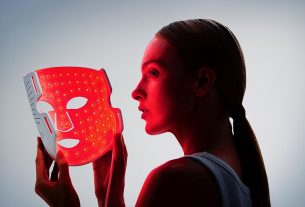
Masaj opened its third London studio in Islington in June, an eight room space with two couples’ rooms and one accessible room, joining existing sites in Shoreditch and Marylebone. To mark the launch, the bodywork brand brought in Bon Charge, the wellness tech company best known for its red light devices, and put the brand’s Red Light Face Mask and Red Light Wand on the treatment menu.
The timing isn’t an accident. Masaj has just raised £2 million from Figr Ventures, Sorven Capital and angel investor Giles Brook, money it says will go toward opening more London studios over the next year. Co-founders Scarlet Amies and Alice Vaughan built the brand in 2021 around a genuinely good insight: the UK massage industry is a patchwork of hotel spas, members’ clubs and one-off studios with no consistent quality bar and a workforce treated like gig economy labour. Masaj’s answer was to hire therapists properly, offer predictable hours, and let guests choose who they see based on style and expertise rather than whoever happens to be free. It seems to be working. The brand reports a 90 per cent therapist retention rate against an industry average closer to 70, and revenue grew 43 per cent year on year in the last financial year.
Bringing in Bon Charge fits that same professionalising instinct. Rather than bolt on a gimmick to justify the funding headline, Masaj has added a treatment with a genuine, if still developing, evidence base behind it.
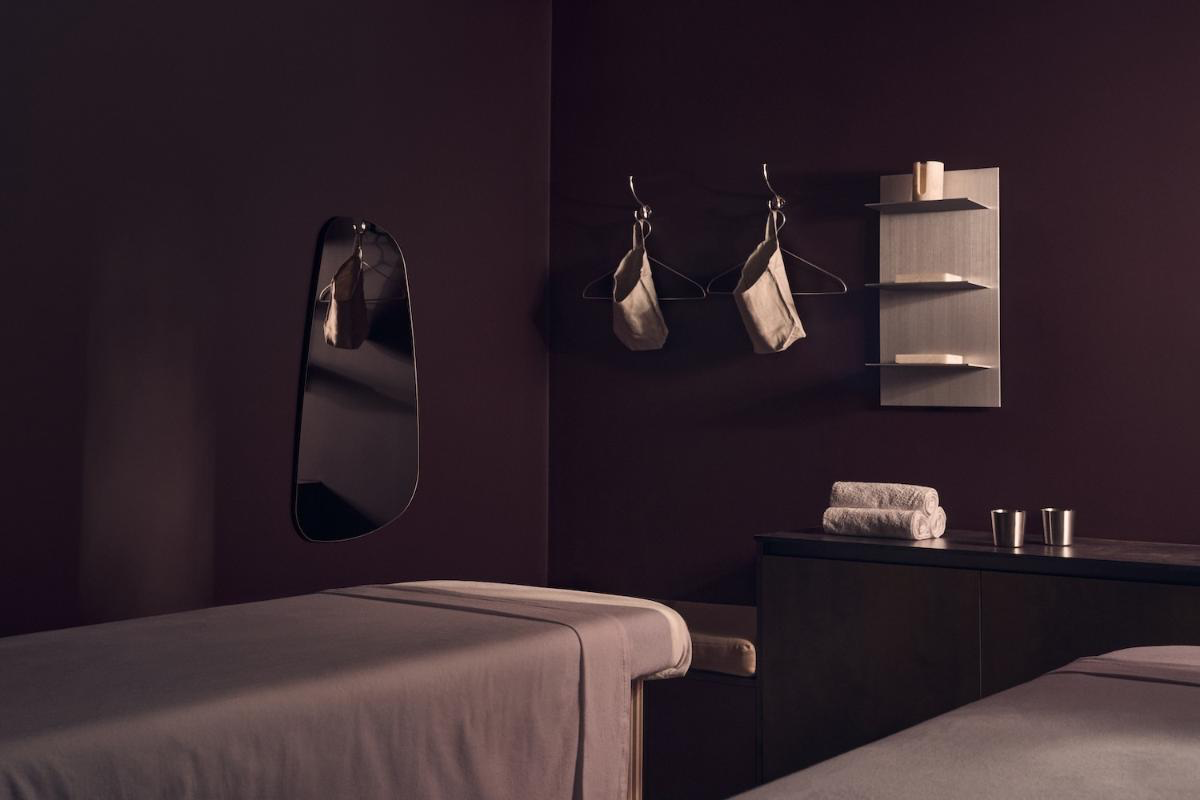
The Islington studio itself is built to support that pitch rather than distract from it: calm, warm, understated interiors across eight treatment rooms, covering everything from deep tissue and sports massage to lymphatic drainage, facials, couples’ treatments and maternity therapy, with sessions running from 30 minutes up to two hours. Slotting the red light face mask and wand into that existing menu, rather than launching it as its own standalone service, is arguably the smartest part of the whole move. It doesn’t ask guests to book something new. It just asks them to add fifteen minutes onto something they were already planning to do.
What red light actually does to your face
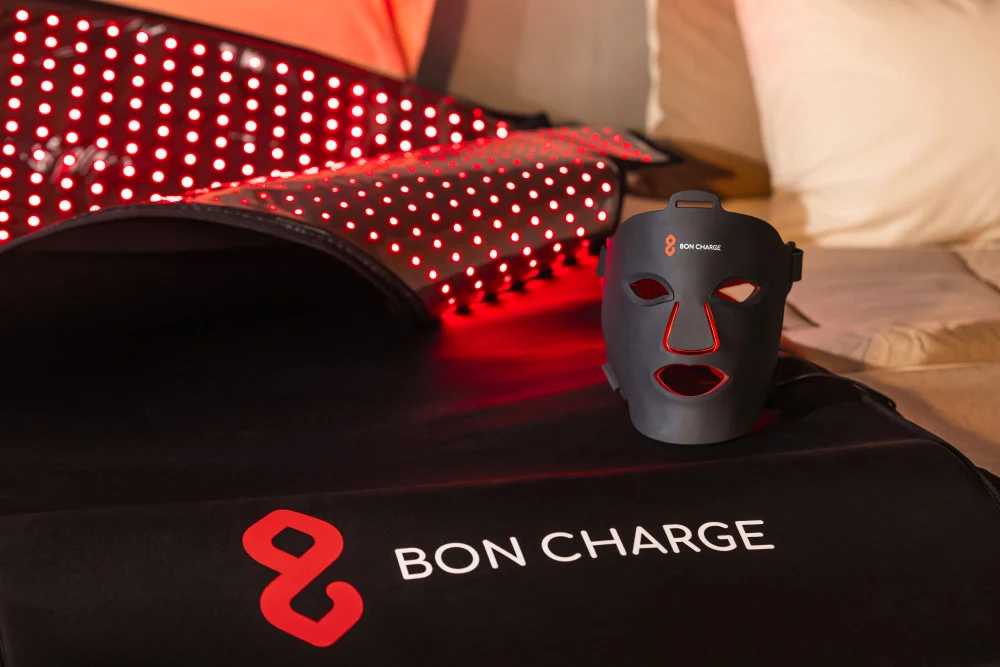
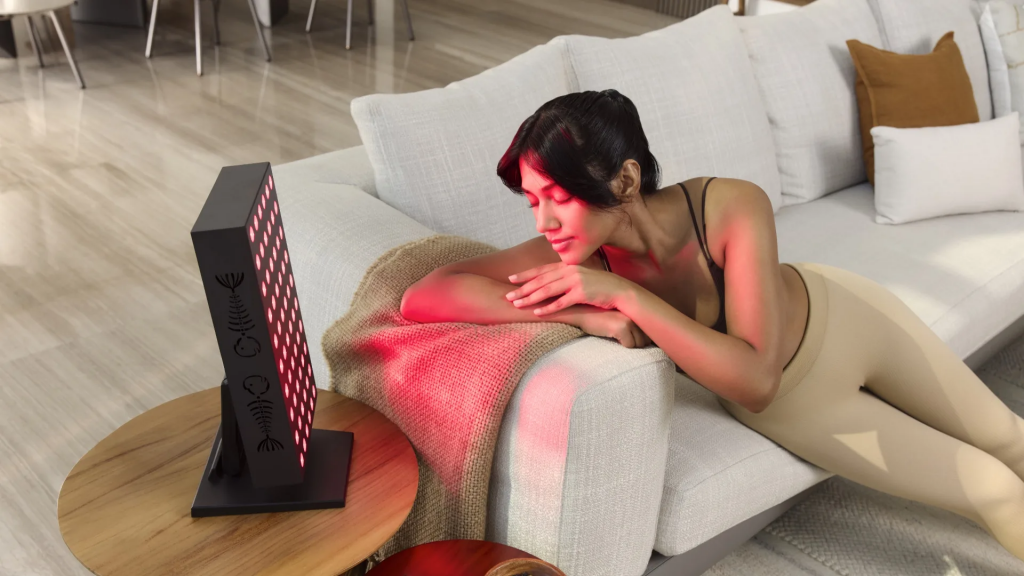
The pitch for red light therapy, or photobiomodulation if you want the proper term, is that specific wavelengths of red and near infrared light, roughly 630 to 850 nanometres, get absorbed by mitochondria inside your cells and prompt them to produce more ATP, the molecule that fuels pretty much everything a cell does. More cellular energy, the theory goes, means faster repair and regeneration.
On skin specifically, the evidence is decent. A study published in the Journal of the American Academy of Dermatology found that low level red and infrared light significantly increased expression of collagen, elastin and hyaluronic acid in human skin within a week of treatment. Clinical trials have also reported visible reductions in wrinkle depth and improved skin firmness after several weeks of regular sessions, alongside better circulation and a more even tone. It’s also being explored for wound healing, sun damage, scarring and hair regrowth, though the evidence for some of those uses is thinner than for others.
Worth saying clearly: not everything red light gets marketed for is settled science yet. The Cleveland Clinic’s own guidance is that most experts see real promise in the early results but don’t yet know if it works for the full list of things brands claim. Treat the face mask as a genuinely plausible bonus, not a guaranteed transformation.
And for the body
The body side of red light therapy lines up more obviously with what a massage is already trying to achieve. Physios and athletes have used red and near infrared light for recovery for years, and the research holds up reasonably well. A systematic review in the journal Pain Research and Management found the therapy reduced pain and improved physical function in people with knee osteoarthritis, and smaller studies in athletes have linked it to less post-exercise soreness and quicker returns to training after injury. Some early research also links evening use to better sleep, likely through its effect on circadian signalling, though those studies are still small.
There’s a nice bit of trivia buried in the history here too. Red light therapy’s roots trace back to NASA, which originally investigated it for speeding up plant growth and wound healing in astronauts. It’s a reminder that, unlike a lot of wellness tech, this one didn’t start life on TikTok.
Why pairing it with massage actually makes sense
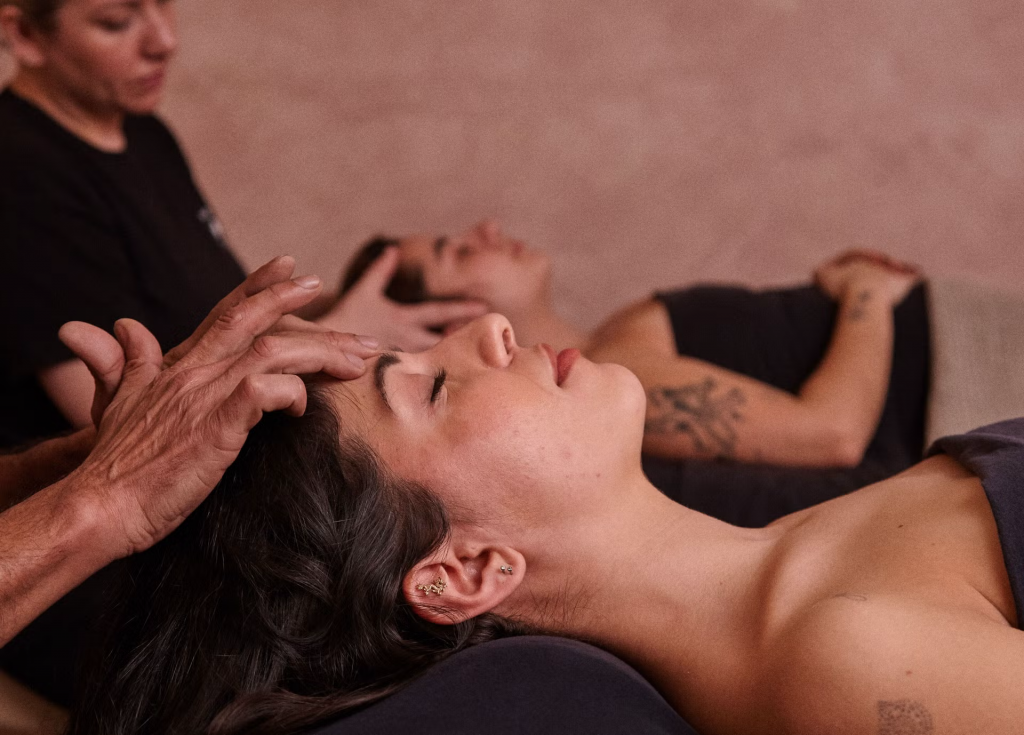
This is the part that lifts the Masaj and Bon Charge tie-up above a straightforward product placement. Massage works mechanically. Hands manipulate soft tissue, break up tension, and get blood moving through areas that have spent all day sitting at a desk. Red light works at a cellular level, several layers deeper than any therapist’s hands can reach. Stack the two and, at least in theory, you’re addressing recovery and relaxation from two different directions in a single session.
Katie Mant, co-founder of Bon Charge, made a similar point when the partnership launched, telling Spa Business that people are increasingly time poor and want their massage and wellness tech treated as one journey rather than separate trips. There’s also a simpler, less clinical case for combining the two: touch itself is calming, and pairing it with a treatment that asks you to lie still under warm light for fifteen minutes probably does as much for your nervous system as it does for your skin. Nobody’s measured that in a lab, but anyone who’s tried to relax while checking their phone every ninety seconds will recognise the logic.
Two brands actually worth watching
Bon Charge is the more established name in wellness tech, and its backstory is more interesting than the average LED gadget company’s. Founded in Australia in 2017 by Katie and Andy Mant, it started out making blue light blocking glasses after Andy overhauled his sleep and general health following a personal health crisis a few years earlier. The brand has since built what it calls the widest range of light and recovery tech on the market, spanning red light face masks and wands, infrared sauna domes that combine PEMF with near infrared light, sleep focused blackout masks, and, as of last year, a red light toothbrush. It’s already worked with Mandarin Oriental Hyde Park, supplies part of Fulham FC’s recovery setup, and sits inside Fitness First clubs, so the Masaj deal fits a clear pattern of pushing into spaces people already visit to look after themselves.
Masaj, meanwhile, is doing something less flashy but arguably harder: professionalising an industry that’s historically run on inconsistency. Previous collaborations with Nike, Gymshark and Home House suggest a brand comfortable sitting next to bigger names without losing its own identity, and the plan to expand beyond London over the next year or two will be the real test of whether the model scales the way the founders want it to.
Where this leaves wellness and longevity
Mant has also framed the partnership as part of something bigger than one studio launch. Her argument is that spas, clinics and recovery spaces more broadly are moving away from treating massage, recovery and wellness tech as separate categories, and toward folding them into a single, personalised routine, aimed at long-term health rather than a one-off glow. That’s essentially the longevity pitch in miniature, minus the eye-watering supplement stacks and biohacker jargon that usually comes attached to it.
Neither brand is claiming red light therapy will reverse ageing or replace a proper skincare routine, and we’d raise an eyebrow at anyone who does claim that. What’s actually happening here is more modest, and more interesting: two companies betting that the future of wellness looks like layered, evidence-informed treatments delivered somewhere you’d already go anyway, rather than one more device gathering dust on a bathroom shelf.
If the last few years of wellness tech have taught us anything, it’s that convenience wins. A red light mask at home requires a level of discipline most of us don’t have. A red light mask added to a massage you’d already booked requires none. That, more than any specific claim about collagen or ATP, is probably why this particular partnership is worth watching.
For reference, a standard 30 minute treatment at Masaj starts at £70, with 60 minutes at £115. The red light add-on is currently available at the Islington studio.