
Mova P50 Pro Ultra review: the robot vacuum that makes premium feel affordable
The P50 Pro Ultra carries all the specs of last year’s flagship Dreame in a more accessible package, and in daily use it’s genuinely hard to fault
The Mova P50 Pro Ultra sits in an interesting position. It costs £699, which is real money for a robot vacuum, yet it consistently undercuts the competition it’s actually going up against. Paired with a full self-cleaning dock, 19,000Pa of suction and an extending mop and brush system, this is a machine that would have cost you well over £1,000 twelve months ago. The question is whether Mova, a brand new to most UK buyers, can actually deliver on the hardware’s promise.
I’ve been running the P50 Pro Ultra through its paces across a multi-room home with hard floors throughout, a mix of low and high-pile rugs, and two pets. The short version: it cleans as well as robots costing hundreds more, the self-cleaning dock actually works as advertised, and the few areas where it falls short are either fixable in a software update or minor enough to live with. If you’ve been waiting for a robot vacuum that does everything the category promises without requiring a second mortgage, this is a strong contender.
Pros
- Exceptional edge cleaning thanks to FlexReach extendable mop and brush
- CleanChop anti-tangle brush handles long hair without regular manual intervention
- Full self-maintaining dock: auto-empty, 75C mop wash, hot-air dry, auto-refill
- Accurate LiDAR mapping completes full room scans in under ten minutes
Cons
- At 10.4cm tall, clearance under low furniture can be tight
- Obstacle avoidance occasionally misses small or irregularly shaped objects
- App routing requires several taps too many for basic cleaning commands
Quick specs
| Price | £699 RRP |
| Suction | 19,000Pa |
| Navigation | LiDAR + RGB obstacle-detection camera |
| Mop system | Dual rotating pads with FlexReach edge extension, CleanLift carpet detection |
| Brush | Anti-tangle CleanChop roller |
| Dock functions | Auto-empty (75-day bag), 75C mop wash, hot-air dry, auto water/solution refill |
| Robot height | 10.4cm including LiDAR tower |
| Connectivity | Wi-Fi, companion app (iOS/Android) |
Design and build
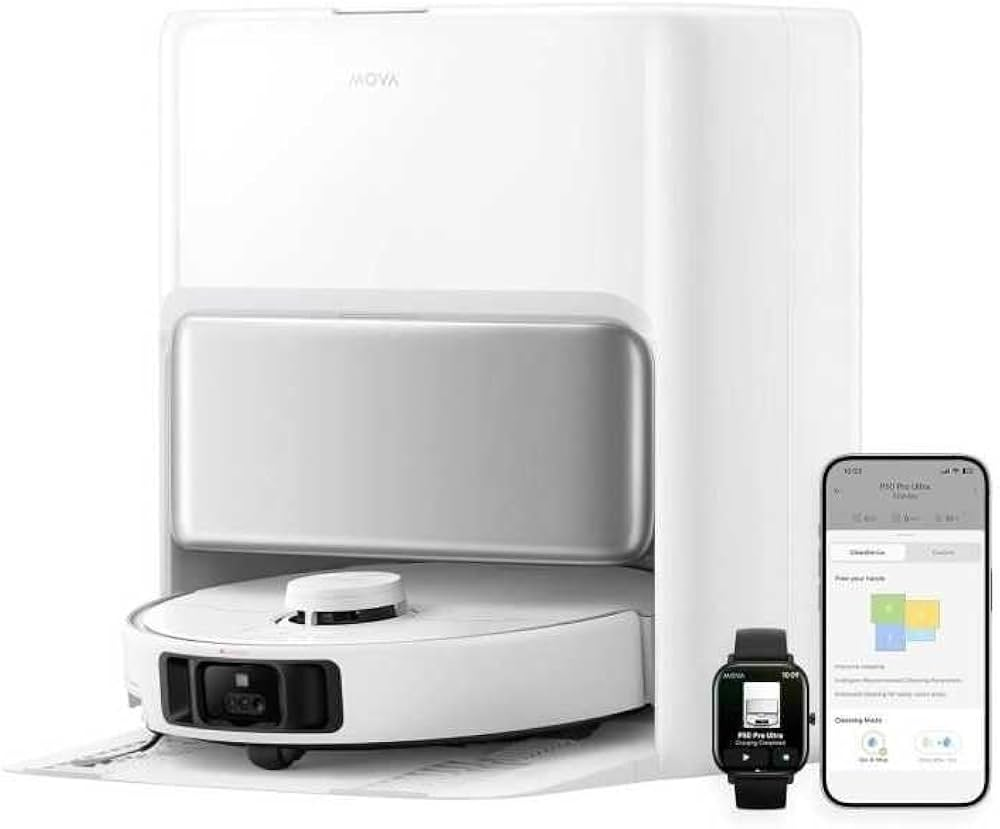
Mova is a subsidiary of Dreame, and it shows. The P50 Pro Ultra uses the same core hardware platform as Dreame’s flagship range: the brushes are identical, the dock is closely related, and the app shares the same underlying architecture. That’s not a criticism. It means you’re getting proven engineering at a lower price point, similar to how Skoda and Seat share platforms with Volkswagen without the VW badge markup. If you’ve used a Dreame robot vacuum before, the P50 Pro Ultra will feel immediately familiar from the moment you open the box.
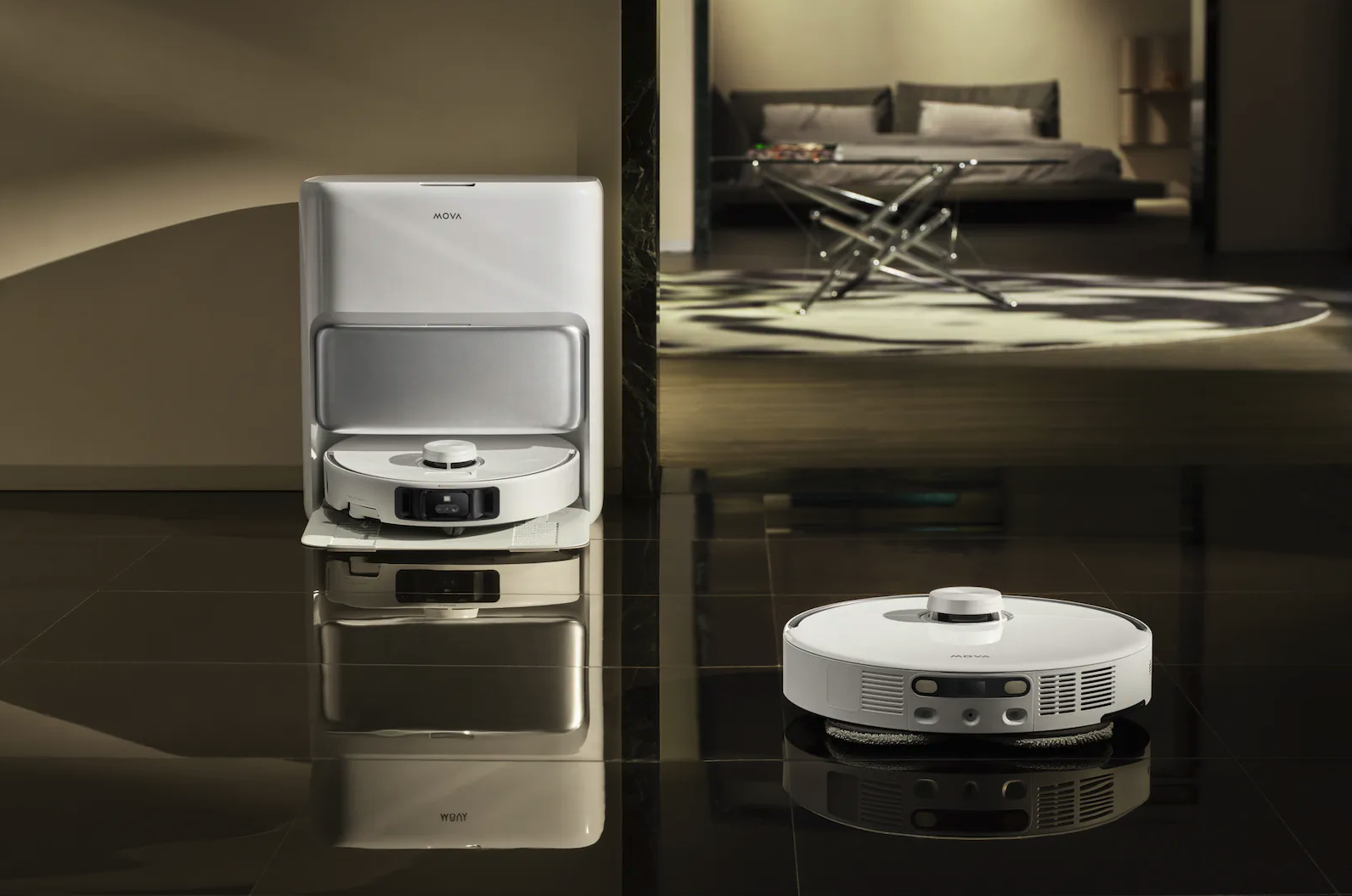
The robot is finished in white with a smooth, low-profile disc design. The circular LiDAR tower sits centrally on top and is the machine’s main physical constraint: the full height of 10.4cm means anything below that clearance, furniture-wise, is off limits. The latest flagships from Roborock and Dreame’s own X50 line have brought this down to under 10cm, with retractable towers pushing some models as low as 8cm. The P50 Pro Ultra doesn’t have a retractable tower, so if your sofa or bed frame sits low, measure before you buy.
Build quality is solid throughout. The exterior panels are rigid without feeling brittle, the mop pads attach and detach cleanly via a magnetic connection, and the robot’s undercarriage, where the brush and wheels live, feels well-sealed against the kind of debris it’ll be picking up daily. Nothing rattles, and after extended testing there were no signs of wear or loosening in any of the moving parts.
The dock is the larger part of the system, standing roughly 45cm tall. Inside, it houses a 3.2-litre dust bag, separate clean and dirty water tanks, and the heating elements for mop washing and drying. On the outside, there’s a self-cleaning washboard built into the dock entry point that scrubs the mop pads as the robot returns. All of the tanks are accessible from the front and straightforward to remove. The overall footprint is comparable to competitors at this tier, and while it needs a power socket and a bit of clear floor space, it doesn’t dominate a room.
Cleaning performance
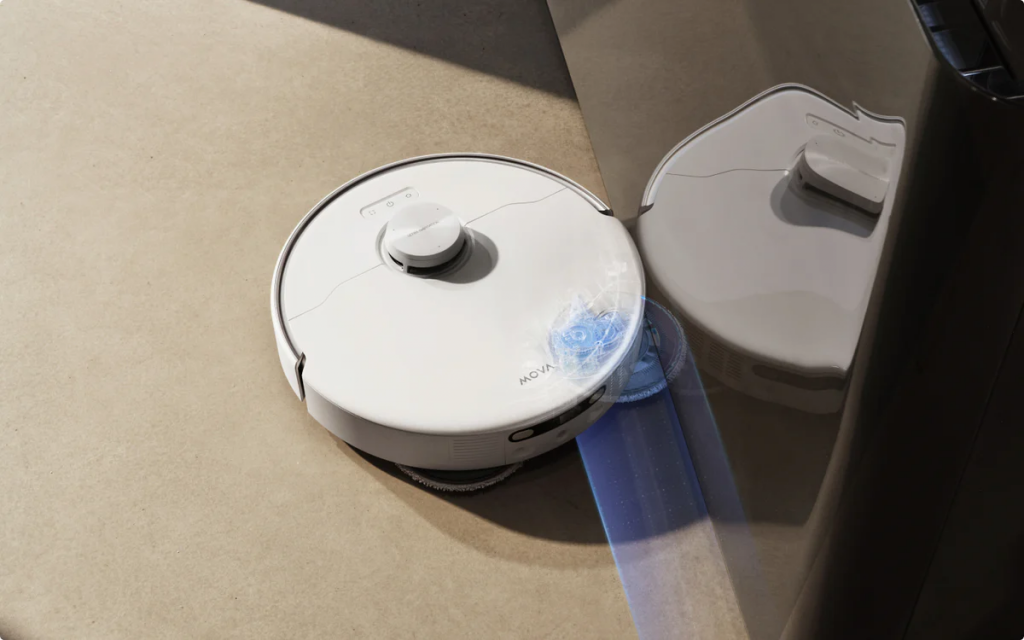
This is where the P50 Pro Ultra earns its price. The 19,000Pa suction figure is among the highest currently available in the category, and crucially, real-world cleaning backs it up. Pet hair, crumbs, dust and the general accumulation of daily household mess disappear reliably across hard floors and low-pile carpet. In extended testing across different room types, the suction never felt inadequate for any surface it encountered.
Suction numbers alone don’t tell the whole story in robot vacuums. A 19,000Pa rating only means anything if the rest of the system, the brush roll, the filters, the airflow path, is properly matched to it. On the P50 Pro Ultra, it is. The combination of strong airflow and a well-designed brush roll means debris is actually lifted into the machine rather than pushed ahead of it, which is a failure mode you’ll notice on cheaper robots almost immediately.
The FlexReach system is one of the P50 Pro Ultra’s most practically useful features. During edge cleaning passes, it extends the side brush and one of the two mop pads outward to reach further into corners and along skirting boards. Robot vacuums traditionally struggle with edges, leaving a visible strip of unclean floor that requires following up with a handheld. FlexReach genuinely narrows that gap. Corners and wall edges that most robots skip over get meaningfully cleaner, and in a home with pets or heavy foot traffic near doorways and baseboards, that makes a real difference to the end result.
The CleanChop anti-tangle brush is one of the better hair management solutions currently on the market. The roller uses a cutting mechanism that continuously slices through hair as it accumulates, preventing the kind of dense hair wrap around the axles that plagues most robot vacuums and most brush rolls generally. After weeks of testing in a home with multiple long-haired occupants as well as pets, the brush roller showed minimal accumulation and required no manual clearing. That’s a genuine time-saver, and the roller comes included in the box rather than as a paid accessory, which isn’t something every competitor can say at this price.
Mopping performance is solid and, more importantly, well-integrated with the vacuuming workflow. The dual rotating pads add scrubbing action rather than just dragging a damp cloth, which makes a real difference on dried spills and high-traffic patches. CleanLift automatically raises the mop pads when the robot detects carpet, so you don’t come home to damp rugs or a robot that’s avoided an entire room because it couldn’t handle the floor transition. Adjustable moisture settings let you fine-tune the wetness level to your floor type, and the targeted zone cleaning function in the app means you can send the P50 Pro Ultra back to a specific area without scheduling a full clean.
The intelligent dirt detection deserves a mention too. The RGB camera analyses what it’s seeing in real time and adjusts suction intensity and pass behaviour when it identifies a concentrated mess or spill. In practice, this means it doesn’t just vacuum to a fixed schedule and call it done: it responds to what’s actually on the floor. High-traffic zones in front of doors and beneath dining tables received noticeably more thorough passes without any manual input.
Navigation and mapping
LiDAR navigation is now the standard expectation at this price tier, but there’s meaningful variation in how well different robots actually implement it. The P50 Pro Ultra implements it well. Initial room mapping for an average-sized home completes in under ten minutes, which is among the faster times in the category. The map that comes back is accurate: rooms are correctly identified and labelled, furniture boundaries are respected, and the robot keeps its bearings reliably in low-light conditions where camera-only navigation would struggle.
Once the map is set, the P50 Pro Ultra plans efficient cleaning routes that avoid unnecessary doubling-back and complete full cycles without losing position. In extended daily use across several weeks, it didn’t get lost once. That sounds like a low bar, but it’s a bar cheaper robots regularly fail, and it matters when you’re running the machine unattended.
The map editing tools in the app are good. Room boundaries can be adjusted manually, no-go zones are easy to place and resize, and if the initial scan splits a room incorrectly (the P50 Pro Ultra did this with one longer room in testing), merging it back together takes about thirty seconds. Multi-floor mapping is supported, with separate plans stored for each level.
Obstacle avoidance is good rather than excellent. Cables, shoes, chair legs and most everyday floor clutter are handled reliably. Where it occasionally falls short is with small, dark or low-contrast objects, particularly on darker carpet. Those can be clipped rather than avoided. It’s an edge case rather than a recurring problem, and for the majority of home environments it won’t come up often, but if your floors regularly have small toys, dark socks or similar low-profile items scattered around, it’s worth knowing.
The self-cleaning dock
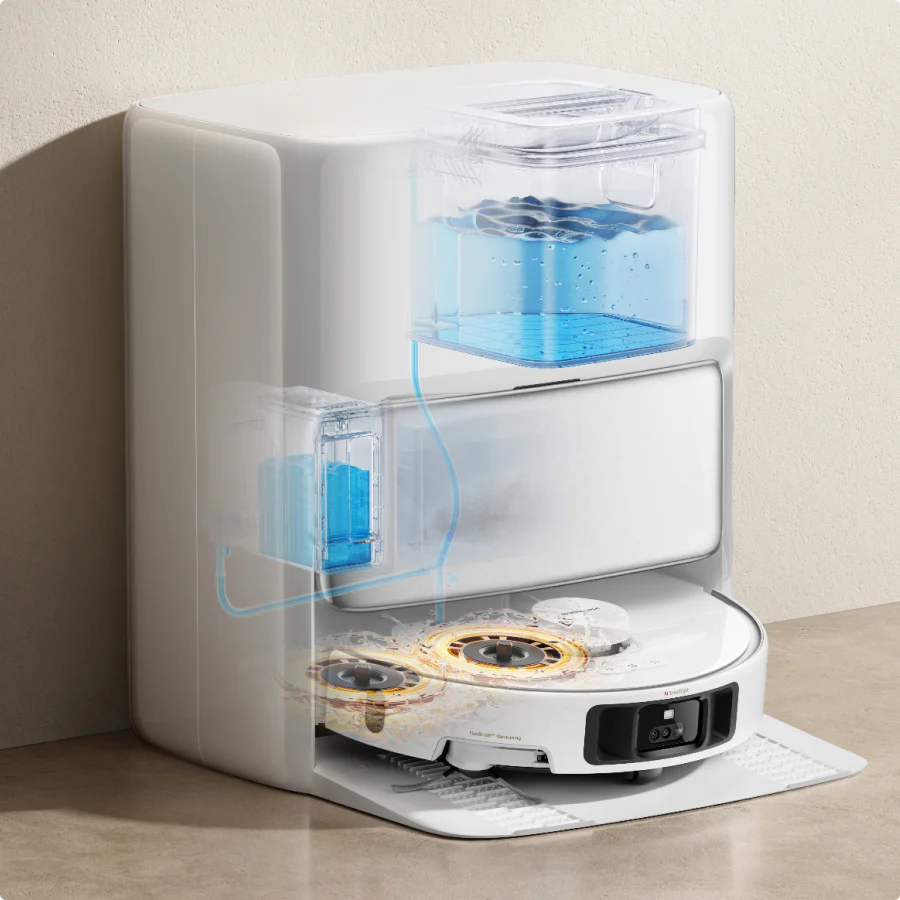
The dock is where the P50 Pro Ultra‘s automation story really comes together. When the robot returns from a clean, the dock does most of the maintenance work automatically: the dust bin is emptied via suction into a 3.2-litre bag that Mova rates for up to 75 days between changes, the mop pads are washed using water heated to 75 degrees Celsius, then dried using a hot-air cycle that keeps them from developing the damp smell that plagues mop systems that just air-dry. The cleaning solution tank refills automatically from the onboard reservoir, and fresh water is topped up without any manual intervention.
The practical effect of all this is that you can run the P50 Pro Ultra on a daily schedule and not think about it for the better part of two months. The only consumables that need monitoring are the dust bag, the clean water tank and the cleaning solution. All three are visible through the dock’s transparent panels or via the app, so there’s no need to check manually.
The self-cleaning washboard built into the dock entry is a smaller feature but a useful one. It physically scrubs the mop pads as the robot docks, which removes surface-level debris before the hot wash cycle runs. Over time this keeps the wash water cleaner and extends the life of the mop heads.
One practical note: the dock needs a clear space of roughly 50cm on each side to allow the robot to approach and dock correctly. It’s not a difficult constraint to meet, but it’s worth accounting for when you’re deciding where to position it.
App and software
The Mova app shares its structure and underlying logic with the Dreame app, which is a broadly positive baseline. Room maps are displayed clearly, the zone editing interface is responsive, and the full range of controls, cleaning frequency, suction intensity, moisture level, no-go zones, room-specific schedules and cleaning mode selection, covers everything most users will actually need.
The main frustration is the number of steps required to get to the controls you use most. Configuring a specific cleaning routine from scratch, choosing a room, setting suction level, deciding on mopping intensity, involves navigating through several screens that could reasonably be collapsed into one. There’s no quick-access panel for the handful of commands most people use day to day. For a product that’s otherwise designed to minimise friction, the app adds some back in.
That said, once your schedules are configured and your map is set correctly, you rarely need to open the app at all. The cleaning automation handles most scenarios on its own, and voice assistant integration means you can trigger cleans without touching a phone.
Privacy controls are present but not complete. You can prevent images captured by the obstacle-detection camera from uploading to the cloud, which is good. The room map, however, is always saved remotely. For most buyers that’s unlikely to raise concerns, but if it matters to you, it’s worth knowing before purchase.
Mova notes that AI-based obstacle detection and the RGB camera features require accepting a separate privacy policy. You can run the vacuum without these enabled, in which case it navigates on LiDAR alone, but you lose the real-time dirt detection and some of the obstacle granularity.
Verdict
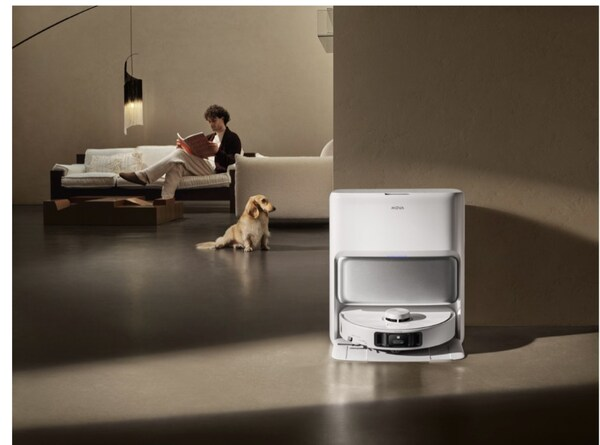
The Mova P50 Pro Ultra is the robot vacuum to buy if you want flagship-level cleaning without flagship pricing. It vacuums thoroughly, mops properly, maintains itself between runs without complaint, and maps your home with enough accuracy that you can genuinely forget about it for weeks at a time. For households with pets, anyone who finds themselves hoovering more often than they’d like, or anyone who simply wants clean floors without spending time on them, this machine removes most of that effort entirely.
The FlexReach edge system and CleanChop brush are not just marketing features. They do the things they claim to do, and they do them better than most competing implementations. The dock is genuinely hands-off in a way that some self-cleaning systems still aren’t: the hot mop wash and active drying in particular are the details that separate a system that works from one that just sounds impressive on a spec sheet.
The caveats are real but modest. At 10.4cm, the P50 Pro Ultra is taller than the very latest premium flagships, which will be an issue for some furniture configurations. The app has room to improve, particularly around quick-access controls. Obstacle avoidance is reliable in most home environments and occasionally imprecise with small, dark objects. None of these are reasons to avoid it.
At £699, it sits comfortably against the Dreame L40 Ultra and Roborock S8 MaxV Ultra and holds its own against both. When it drops to the £560 range it regularly hits at major retailers, it’s one of the most compelling buys in the category, full stop. If you’re ready to hand floor cleaning over to a machine that will actually do it properly, buy this one.
Also consider
Dreame L40 Ultra (from £749): The step-up model from Mova’s parent brand. The headline addition is a retractable LiDAR tower that brings clearance height down to under 10cm, so if the P50 Pro Ultra’s height is a concern for your furniture, this solves it. Obstacle avoidance is also a touch more refined. Worth the extra specifically if low clearance is your problem.
Roborock S8 MaxV Ultra (from £799): Roborock’s flagship for 2024. The FlexiArm brush extension system does something similar to FlexReach for edge cleaning, and the obstacle detection is arguably the sharpest in the category at this price. The dock is slightly bulkier. If you’re already using Roborock’s app and ecosystem, this is the natural choice over switching brands.
Dreame X40 Ultra Complete (from £750): Last year’s top Dreame model, now available at similar pricing to the P50 Pro Ultra. Suction is lower at 12,000Pa, but the build is mature and well-proven. The P50 Pro Ultra is the better current buy on paper, but the X40 appears at significant discount regularly and remains a capable machine.