

TCL launches new QLED TV range in the UK with Google TV and Fire TV options, starting at £379
The Chinese TV giant is expanding its UK lineup with four new series spanning 43 to 98 inches, and a rare dual-platform smart TV strategy that gives buyers a genuine choice between Amazon and Google.
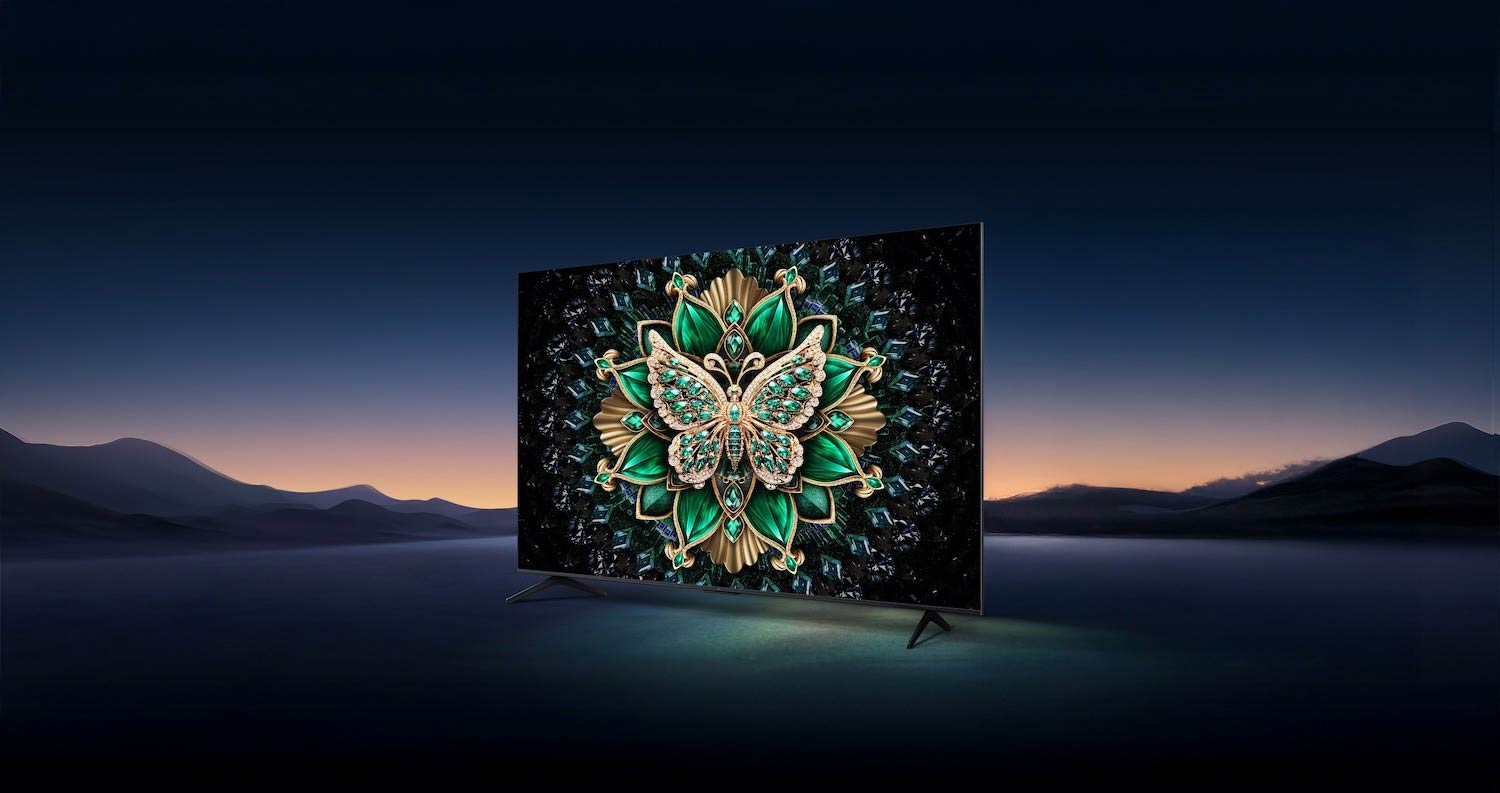
TCL has announced a new wave of QLED televisions for the UK market, covering everything from entry-level Fire TV sets to a flagship QD-Mini LED model with specs that put it squarely in competition with Samsung and LG’s premium ranges. The new lineup includes the P8L, P7L, V6D and C6K series, with 19 models in total ranging from 43 to 98 inches, and prices starting at £379. All models will be available from major UK retailers from May 2026.
The launch represents one of TCL’s most significant UK rollouts in recent years, and the brand is making a clear play for multiple market segments simultaneously. At the top end, the P8L series targets gamers and cinephiles with QD-Mini LED panel technology, a 144Hz refresh rate and HDMI 2.1 ports. At the other end, the V6D series brings Amazon’s Fire TV platform to a budget-friendly 4K HDR range starting at just £379 for the 43-inch model. In between, the P7L and C6K series cover the mid-range ground that TCL has historically dominated in the UK.
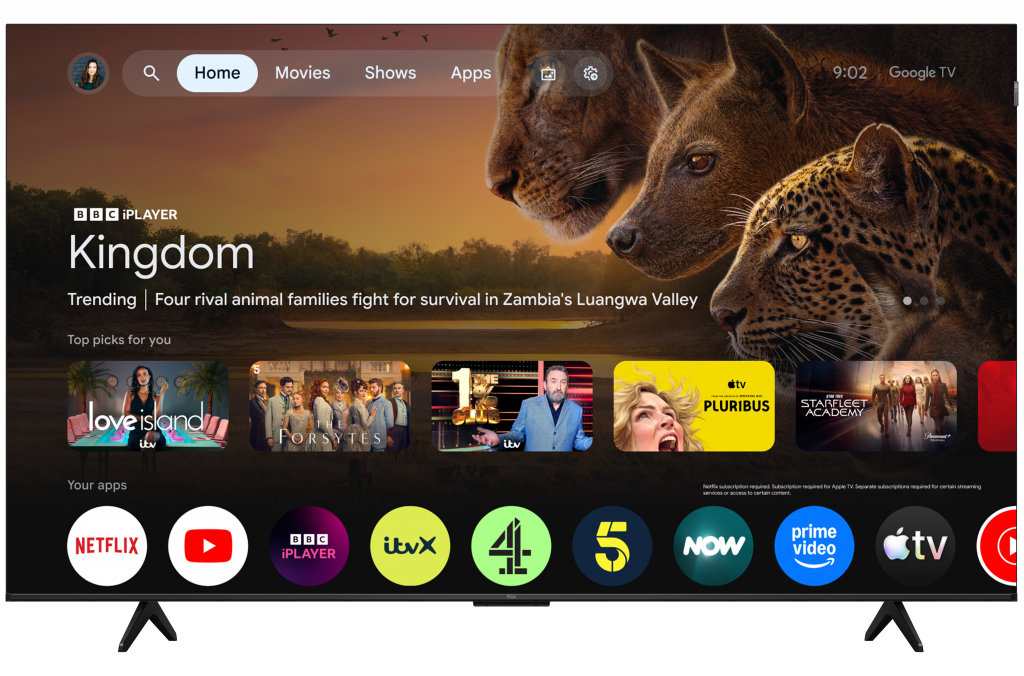
What makes this launch particularly notable is TCL’s decision to offer both Google TV and Fire TV across the same product family. Most TV brands commit to a single smart platform across their range. TCL’s dual-platform approach means buyers can choose the smart ecosystem that actually suits them, rather than being funnelled toward whichever software deal a manufacturer has struck. Google TV powers the P8L, P7L and C6K series, while the V6D runs Amazon’s Fire TV platform with an Alexa-enabled Voice Remote included in the box.
The flagship: P8L QD-Mini LED Google TV
The P8L is TCL’s headline act this year, and on paper it’s a serious piece of kit. The series combines QD-Mini LED local dimming with QLED colour processing, TCL’s AiPQ picture processor, and full HDR support across Dolby Vision, HDR10+ and HLG. The 144Hz native refresh rate is paired with HDMI 2.1, variable refresh rate (VRR), and Auto Low Latency Mode (ALLM), making it a credible option for PS5 and Xbox Series X gaming alongside 4K film watching.
The gaming credentials go further with TCL’s Game Accelerator technology, which the company claims can push the panel to an effective 288Hz through frame interpolation. It’s a spec that will resonate with PC gamers in particular, even if interpolated refresh rates should always be viewed with some scepticism versus native equivalents. FreeSync Premium certification and an upgraded Game Bar interface round out the gaming package.
For film fans, Filmmaker Mode is supported, disabling all post-processing so content is displayed as the director intended. Dolby Vision and HDR10+ support means the P8L is compatible with the widest possible range of streaming content without locking viewers into a single HDR ecosystem, which is a genuine differentiator from some rival sets that still carry only partial HDR format support.
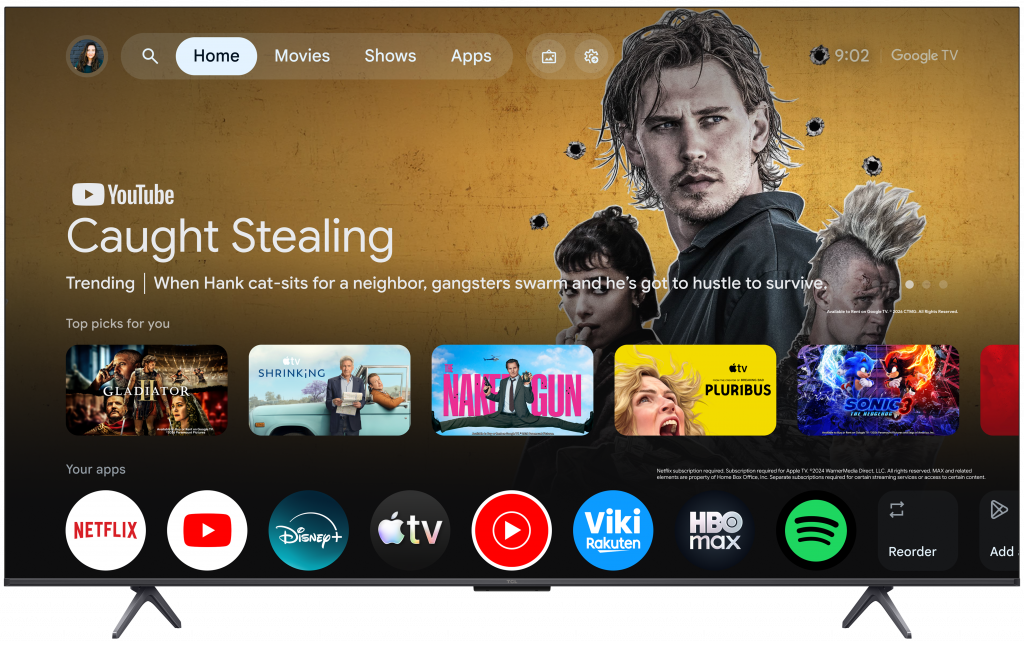
Smart features run through Google TV with Google Assistant built-in and Hands-Free Voice Control, so you can talk directly to the TV without picking up a remote. Casting options cover all bases with Miracast, Google Cast and AirPlay 2 all supported. The P8L is available in 55, 65, 75 and 85-inch sizes, priced at £649, £849, £1,049 and £1,399 respectively.
The mid-range: P7L QLED Google TV
The P7L is likely to be the volume seller of this launch, and TCL has put genuine work into the picture quality credentials at this price point. The series uses an HVA panel with what TCL describes as upgraded Quantum Crystal material, achieving 93% coverage of the DCI-P3 colour space. That’s a figure you’d more typically associate with TVs at a significantly higher price, and it suggests TCL is serious about closing the gap between mid-range and premium performance.
The HVA panel uses nanoscale film-layer techniques to create what TCL calls a butterfly-wing-shaped liquid crystal molecular microstructure, which sounds like marketing language but refers to a genuine optical engineering technique for improving contrast and viewing angles in LCD panels. Whether that translates to a meaningfully better picture than competing mid-range sets remains to be tested, but the specification is encouraging.
The P7L also runs Google TV with TCL’s AiPQ Processor, and adds AI-powered picture modes including an AI Cinematic Agent for film content and an AI Gaming Agent that adjusts settings dynamically during gaming sessions. Audio comes courtesy of integrated Onkyo speakers, with 2.0 channel systems in the 43 to 75-inch sizes and a 2.1 channel setup in the 85-inch model. Connectivity includes Bluetooth 5.4, Wi-Fi 5, an HDMI 2.1 eARC port and AirPlay 2 support. The design is slim and bezel-less across all sizes.
Pricing for the P7L runs from £399 for the 43-inch up to £1,299 for the 85-inch, with 50, 55 and 65-inch options at £449, £499 and £699 respectively.
The budget option: V6D Fire TV
The V6D takes a different direction, pairing a 4K HDR panel with Amazon’s Fire TV platform and focusing on simplicity and value. Where the P8L and P7L push picture processing and gaming features, the V6D’s proposition is more straightforward: a clean, modern 4K television with access to Amazon Prime Video, Netflix, Disney+ and the rest of the Fire TV app ecosystem, controlled by an Alexa-enabled Voice Remote.
HDR support covers 4K HDR and HDR10+, with Dolby Atmos for audio. Game Master features including VRR and ALLM are present, meaning casual gaming on current-gen consoles is supported even at this price point. The bezel-less design matches the rest of the range aesthetically.
For viewers already embedded in the Amazon ecosystem, the V6D makes a compelling case. The Alexa integration extends beyond TV control to smart home management, music playback and app launching by voice. At £379 for the 43-inch, it’s one of the more affordable 4K HDR sets available from a brand with TCL’s manufacturing scale and quality track record. The range extends to a 75-inch at £699.
The premium mid-ranger: C6K QD-Mini LED
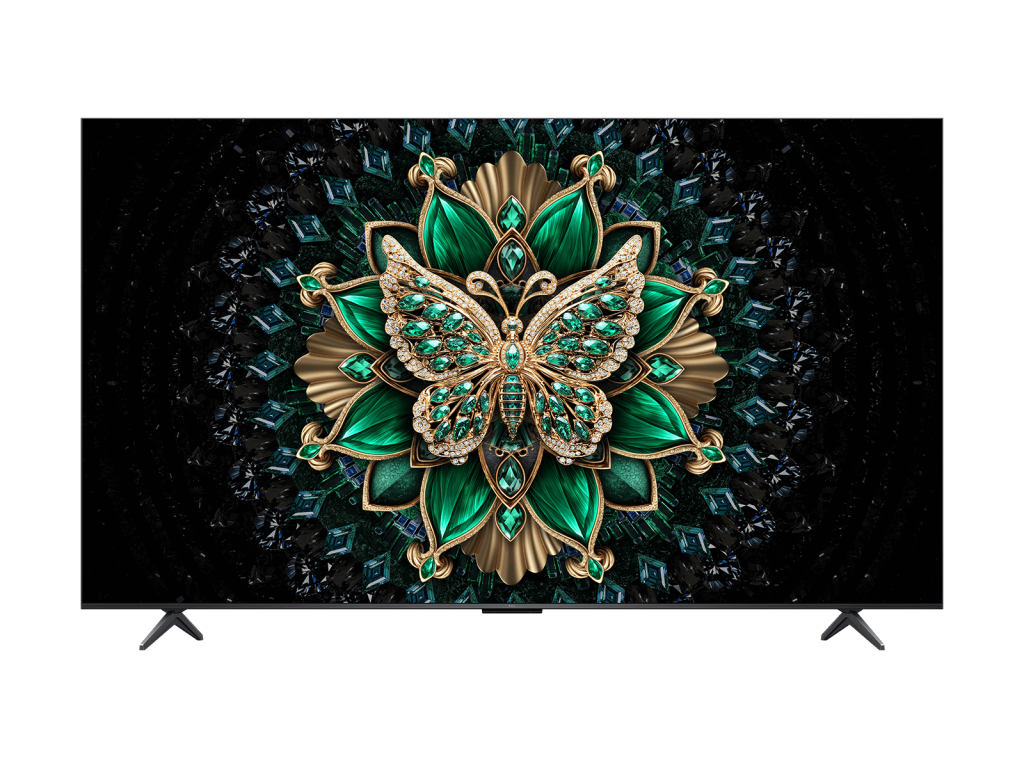
The C6K sits between the V6D and P8L in terms of positioning, using QD-Mini LED panel technology to deliver premium picture performance at prices that stop short of flagship territory. The 50-inch starts at £579, with the range topping out at a 98-inch model priced at £1,999, making it one of very few near-100-inch televisions available at that price point in the UK.
TCL markets the C6K as a step-up option for families upgrading from older LED sets, and the specification supports that positioning. Dolby Vision IQ adjusts brightness and contrast automatically based on room lighting, while an integrated Onkyo 2.1 sound system provides a more immersive baseline audio experience than most flat panel televisions at this size. The combination of QD-Mini LED contrast and Dolby Vision IQ adaptive processing should deliver a meaningfully better HDR picture than standard QLED sets in the same price bracket.
Competitive context
TCL enters this cycle as a stronger proposition than it was even two years ago. The brand’s manufacturing scale, as the world’s second-largest TV producer by volume, allows it to bring technologies like QD-Mini LED and 144Hz gaming panels to market at prices that would previously have required spending with Samsung or Sony. The P8L at £649 for 55 inches, for example, sits in territory where Samsung’s equivalent QLED offering typically commands a significant premium.
The dual smart platform strategy is also a point of genuine differentiation. Competitors including Hisense, Philips and Panasonic have generally committed to either Google TV or Amazon Fire TV across a given range, not both. For retailers, it simplifies the conversation with customers who arrive with a platform preference. For consumers, it removes one of the less enjoyable parts of the TV buying process.
Hands-on testing will determine whether the specifications translate into real-world picture quality that justifies the positioning, particularly for the P7L’s DCI-P3 colour claims and the P8L’s QD-Mini LED contrast performance. TCL’s recent track record in the UK is encouraging, but the proof, as always, will be in the watching.