
After 1,000 Hours on the Nintendo Switch 2, These Are the 10 Games That Made It Worth It
Not the ones with the best review scores. The ones you’ll still be playing a year from now.
Numbers can lie. The Nintendo Switch 2 has sold faster than any Nintendo hardware before it, which sounds like a statement about how good it is and is more accurately a statement about how much people trusted the Switch 1’s library and how effectively Nintendo managed the launch window. But 1,000 hours of play time across a year doesn’t lie in the same way. You can’t spend a thousand hours on something because you were excited in January.
I bought the Switch 2 at launch. I played everything Nintendo and third parties put in front of me. I tracked my hours, because I find it interesting to know where time actually goes rather than where I think it goes. A year in, the picture is clear enough to be worth writing about.
What follows is not a best-reviewed list. Metacritic can give you that. It’s a list built on time: which games have genuinely held up, which ones delivered a surprise when the launch excitement faded, and which Switch 2 features actually changed how those games felt to play. Some of these titles are exactly what you’d expect. A few won’t be.
First: what the Switch 2 actually changed
Before the games, the hardware deserves a moment of honest assessment, because the Switch 2‘s qualities and limitations are the context in which all of these games exist.
The 7.9-inch LCD display supporting HDR and 120fps is meaningfully better than the Switch 1’s screen. Text is sharper, motion is smoother, and in games built around fast action the 120Hz capability is noticeable rather than just a spec sheet number. The screen is larger than the original without the console becoming unmanageable: it’s still genuinely portable in a way that handheld PCs like the Steam Deck OLED and ASUS ROG Xbox Ally X aren’t, not quite, despite both being excellent machines.
The Joy-Con 2 controllers are more substantial in the hand than the original Joy-Con and the magnetic attachment is significantly more satisfying than the click-slide system. The new GameChat function, which allows voice chat and screen sharing directly from the console, has been used less often than I expected and more than I’d admit publicly. The mouse functionality in the right Joy-Con has had limited software support so far, though a handful of games have used it interestingly.
The library is backwards compatible with nearly the entire Switch 1 catalogue, which matters because it means the Switch 2 benefited immediately from one of the greatest software libraries in console history. You don’t buy a Switch 2 as a fresh start. You buy it as an upgrade to everything you already had, with new things arriving.
What it isn’t: a machine for people who primarily want to play games that look as good as a PlayStation 5. The Switch 2 docked outputs up to 4K in supported titles via upscaling, and games like Cyberpunk 2077 and the Resident Evil Requiem port look better than they have any right to on this hardware. But the Switch 2 is not competing with a home console on visual terms and the best games on it know that. They’re designed around what Nintendo hardware does well: accessible controls, pick-up-and-play depth, and experiences that work on a sofa, in a car, and at a kitchen table with equal success.
1. Donkey Kong Bananza
Played: ~90 hours | The one that earned every superlative
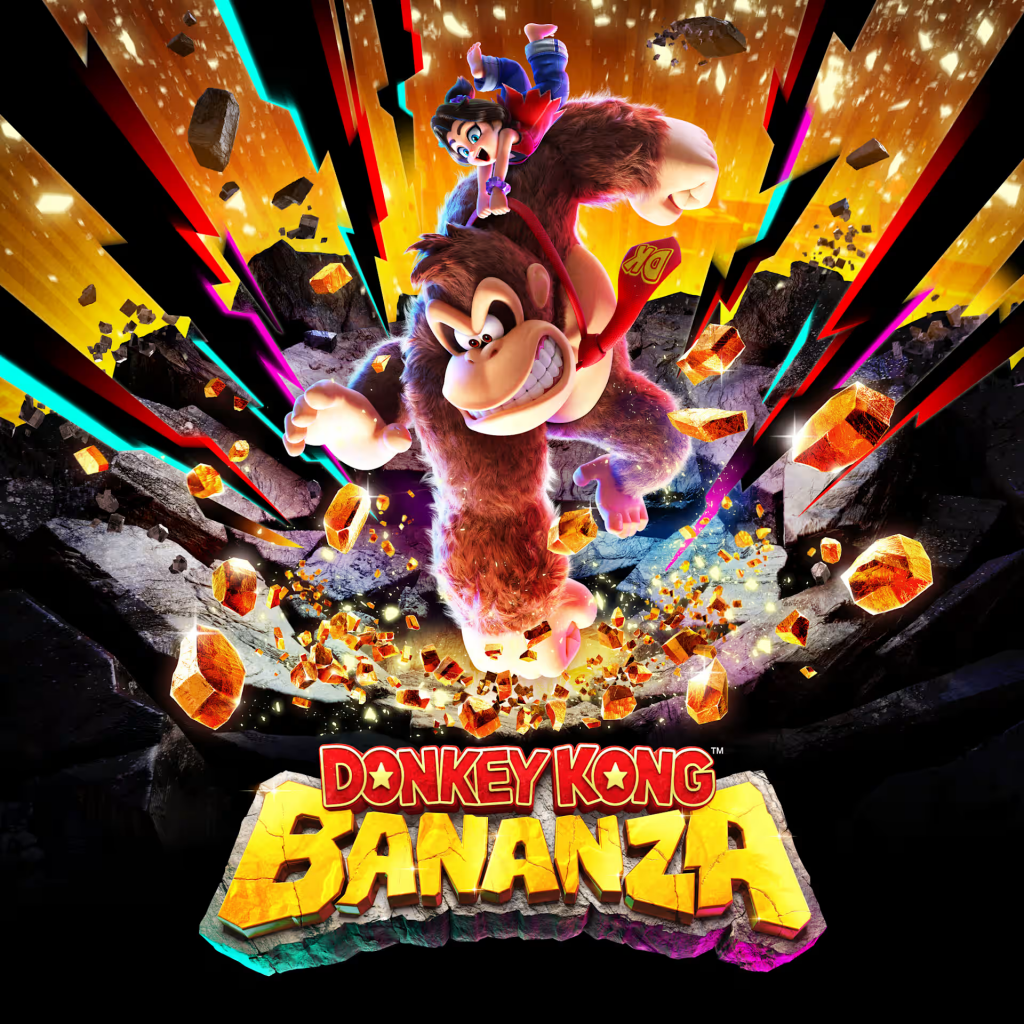
Donkey Kong Bananza is the game I’ve thought about most in the past year, which is a strange thing to say about a platformer where the primary mechanic involves punching things until they break. But it’s also the most physically expressive 3D platformer Nintendo has released since Super Mario Odyssey, the game that showed most clearly what the Switch 1 was capable of, and Bananza does something similar for the Switch 2.
The voxel-based terrain destruction that Nintendo revealed before launch turns out to be genuinely transformative for game feel in a way that’s hard to fully convey in a review. You don’t just navigate Bananza’s environments: you reshape them. A wall blocking your path is a wall you punch until it’s rubble. A deep underground area you can’t reach is an area you burrow to. The game’s structure, which initially looks like a traditional collect-athon, reveals itself to be something more interesting: a world where progress is limited by what you’ve learned to do with DK’s strength rather than by checkpoints or gating.
The camera is the one area the game hasn’t fully solved. In enclosed spaces formed by terrain destruction, it occasionally loses itself. It’s a known complaint across every Switch 2 review of the title and it hasn’t fully gone away after a year of playing. The rest of the game is polished enough that this feels like a fixable problem in a patch that hasn’t arrived yet rather than a fundamental design issue.
Ninety hours in, I still boot it occasionally to finish a hidden area I missed. The game earns that revisiting.
2. Cyberpunk 2077 (Switch 2 Port)
Played: ~120 hours | The port that shouldn’t work
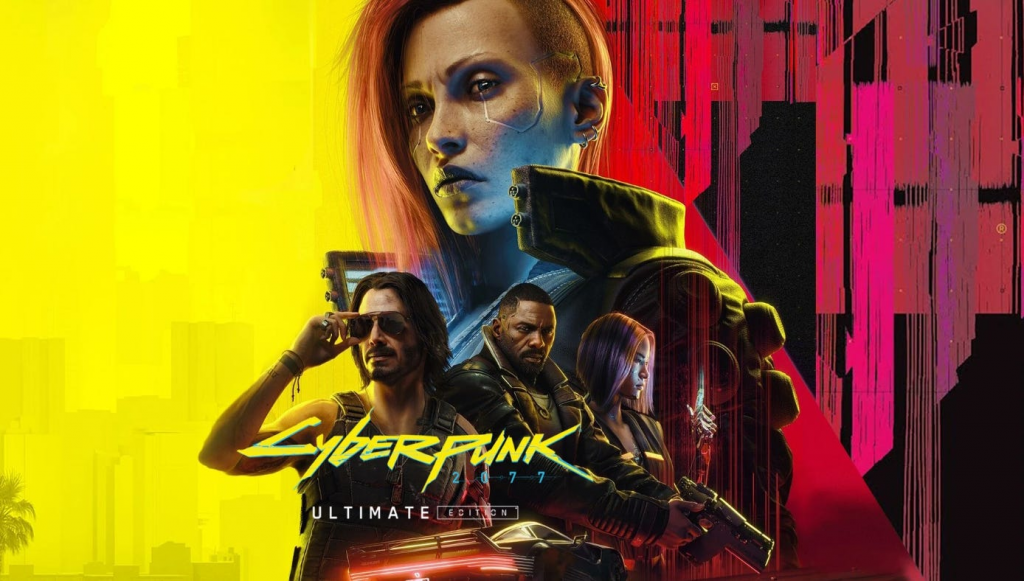
The Cyberpunk 2077 port to Switch 2 should not exist in its current form. CD Projekt Red’s open-world RPG is a game that pushed PC hardware hard at launch in 2020 and still runs demanding hardware configurations when played at high settings with ray tracing enabled. The Switch 2 running it in docked mode at a resolution that upscales to 4K, with frame rates averaging around 30fps and occasionally touching 60fps in quieter areas, is an engineering achievement that deserves more credit than it gets.
What it is not is the definitive version of the game. On a PC with current-generation hardware, Cyberpunk 2077 is still a visual spectacle that the Switch 2 cannot match. Night City looks compressed in handheld mode in a way that the PC or PS5 version doesn’t. The frame rate target is more consistent in some areas than others.
But here is what actually matters after 120 hours: the game is Cyberpunk 2077. The story, the RPG systems, the character builds, the side missions, the atmosphere of Night City at 3am in a hotel room in a city you don’t know. All of that is fully present and fully functional. The Nintendo Switch 2 version of Cyberpunk 2077 is what you play when you want to play Cyberpunk 2077 on a Tuesday morning train commute or on a weekend away. It’s a compromise that costs you visual fidelity and gains you the freedom to play it anywhere, and for 120 hours that trade was worth it.
DLSS AI upscaling is doing significant work here and it shows in the Switch 2 version more than any other title I’ve tested. Understanding that the image you’re seeing has been reconstructed rather than natively rendered takes some adjustment, but the adjustment happens quickly.
3. Pokémon Pokopia
Played: ~85 hours | The direction the series needed to go
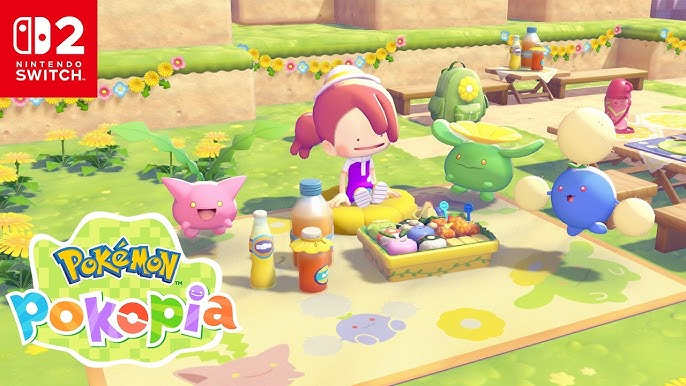
The Pokémon series has been in a complicated place since Legends: Arceus proved that an open-world format worked and Scarlet and Violet proved that an open-world format could also ship in a state that was embarrassing for a franchise of this size. Pokémon Pokopia, which launched as a Switch 2 exclusive in the autumn, felt like the series committing to getting the open-world approach right rather than revisiting what it had done previously.
Performance is the first thing to say, because Pokémon fans have been burned enough times that it needs saying clearly: Pokopia runs well. The Switch 2’s extra headroom over the original hardware means the frame rate inconsistencies that defined Scarlet and Violet’s launch are largely absent here. The world is dense, the draw distance is reasonable, and in eighteen months of playing across multiple save files I’ve encountered serious performance issues exactly once.
The game itself is the most mechanically interesting mainline Pokémon in a decade. The new regional forms are well-designed. The late-game difficulty curve is steeper than recent entries in a way that Pokémon’s older audience has been asking for. The post-game content is genuinely extensive. None of this makes it a revolution for the series: it remains a Pokémon game, with everything that implies. But as a Pokémon game, it’s among the best.
The eighty-five hours figure is honest: thirty-five of those were a second playthrough with a deliberately different team, which tells you something about the game’s replay case.
4. Hollow Knight Silksong
Played: ~70 hours | Worth the wait, with caveats
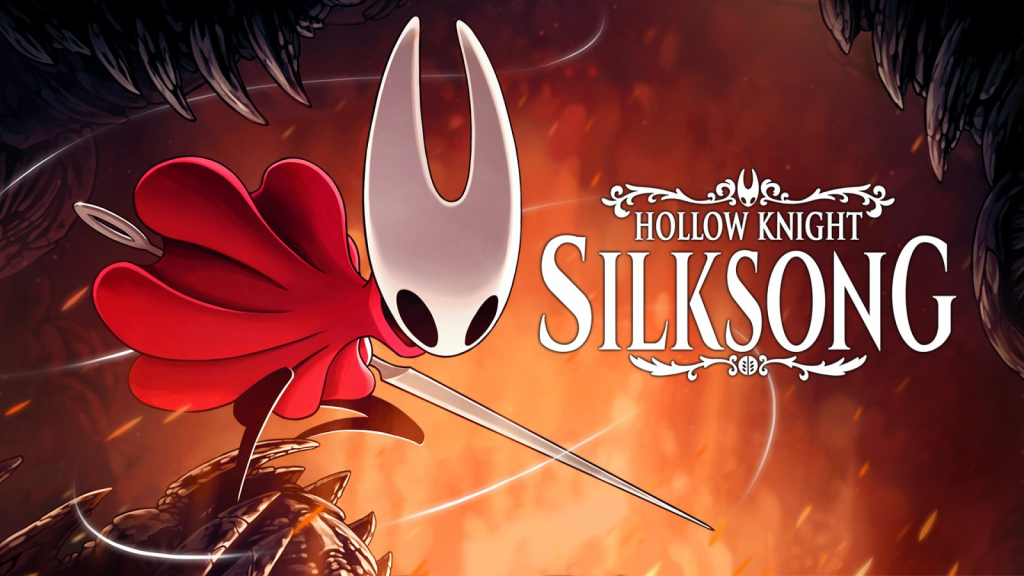
The wait is over and it ended well, mostly. Hollow Knight Silksong, which finally arrived on Switch 2 as a timed exclusive window before the PC version launched several months later, is a genuinely excellent Metroidvania with a higher mechanical ceiling than its predecessor. Hornet’s movement kit is more expressive than the Knight’s, the world design is more vertically ambitious, and the boss encounters are, collectively, the most demanding in Team Cherry’s library.
The caveats: the narrative is more opaque than Hollow Knight’s, and Hollow Knight’s narrative was already famously opaque. Players who loved piecing together the lore of Hallownest through item descriptions and environmental details will find the same process in Silksong rewarding. Players who were frustrated by it in the first game will be more frustrated here. The final third of the game is where most of the debate has happened over the past year, and the debate is legitimate: the pacing shifts in a way not everyone has found satisfying.
Seventy hours includes a second playthrough and most of the optional content. The game has genuine staying power for players who enjoy the precise, demanding combat at its core. It is not the transcendent universal hit that years of hype made it feel like it should be. It is very good at what it is, which may be enough.
5. Mario Kart World
Played: ~60 hours (and counting) | The one that never leaves the hall table
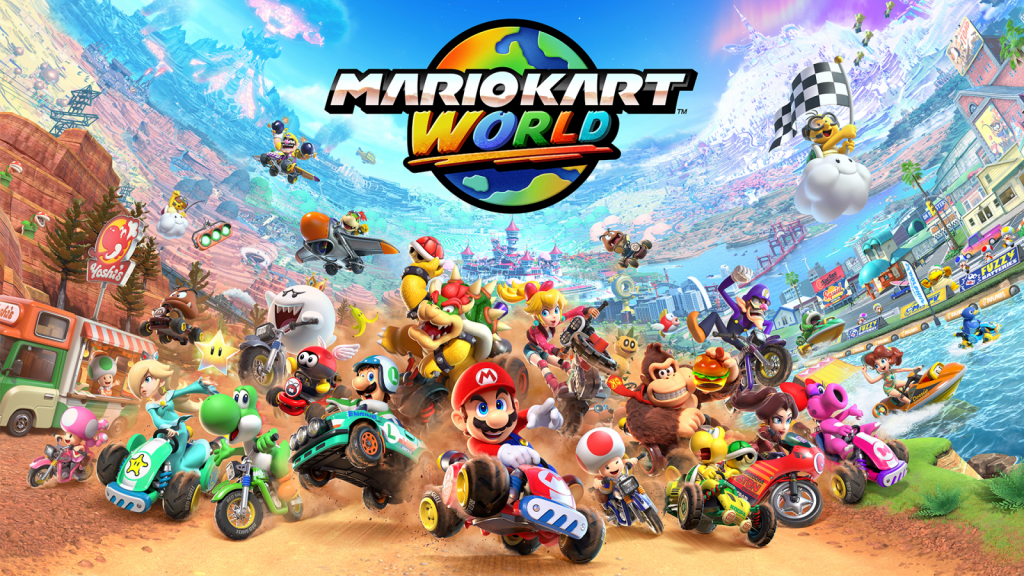
Mario Kart World is not the most individually interesting game on this list. It is the most played game in my household by a substantial margin, because it’s the game that comes out when there are two adults, a twelve-year-old, and a six-year-old in the same room and everyone wants to do something together. Nothing else in gaming reliably solves that problem in 2026.
The “World” format, which connects all of the game’s tracks into a continuous globe that can be raced across in a single grand prix session, is a more significant structural change than it initially appears. The transitions between tracks, which earlier in development looked like they might feel gimmicky, work in practice because they reset the field in a way that makes extended sessions less punishing for weaker players. The six-year-old in my household wins occasionally and the twelve-year-old cannot always tell whether it was the new format or genuine skill. This is excellent game design.
The roster is the largest in Mario Kart history and the new items include a handful of additions that don’t quite land alongside the classics. The balance is imperfect. None of it matters because sixty hours of four-player races proves the fundamentals are right.
6. Resident Evil Requiem
Played: ~45 hours | The horror game that works in handheld
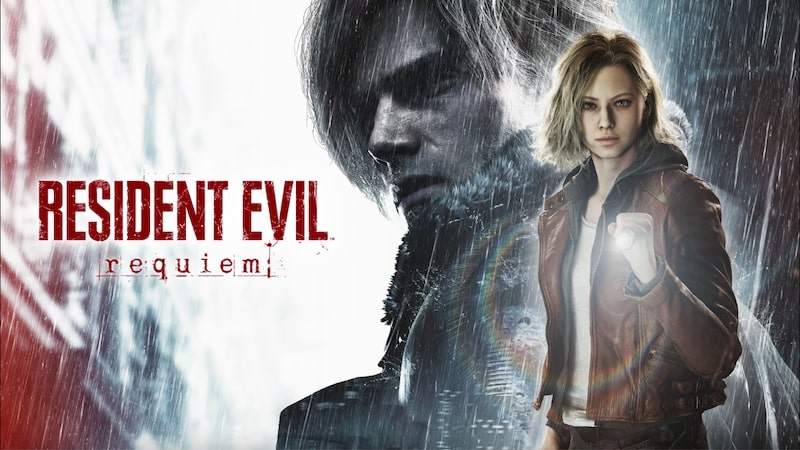
Resident Evil Requiem is the first mainline Resident Evil game that I’ve finished twice on the same platform, which isn’t something I expected to say about a Switch version of a game in this series. The Switch 2 port is technically impressive for the same reasons the Cyberpunk 2077 port is impressive: it makes significant compromises on visual fidelity to run on mobile hardware and most of those compromises are less visible in practice than they sound in a spec comparison.
What Resident Evil Requiem brings to the Switch 2 is something the series has always done well and which portable play enhances rather than undermines: atmosphere. Playing a survival horror game in a dark room on a handheld with headphones on is, it turns out, a good way to experience survival horror. The Switch 2’s screen size makes this more viable than it was on the Switch 1, and the audio quality through the device’s speakers is good enough that headphones aren’t mandatory.
The game itself is a return to form after some criticism that the series had become too action-focused. Resource management is meaningful. The environments are designed with enough visual noise that threats are genuinely hard to read before they arrive. The story is not the series’ strongest but the mechanical execution is.
7. Tetris Effect Connected (Switch 2 Edition)
Played: ~150 hours | The unexpected one
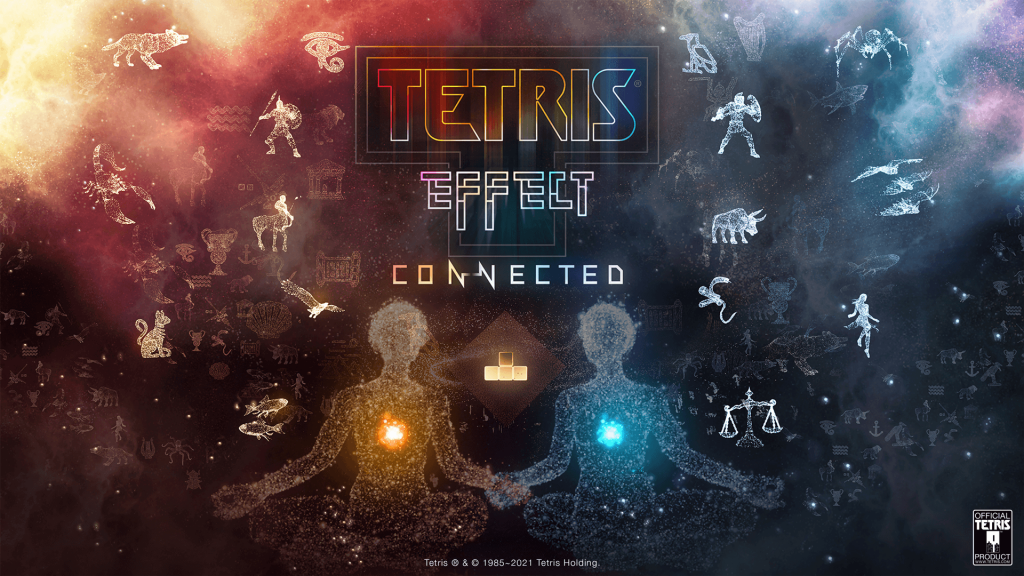
I am aware that Tetris Effect Connected is not a Switch 2 game in the sense of being designed for the hardware. The Switch 2 edition is an enhanced port with performance improvements and additional content, not a new title. I’m including it anyway because it accounts for more of my 1,000 hours than any other entry on this list and because the reason for that is specific to what the Switch 2 does well.
Tetris Effect Connected at 120fps on the Switch 2’s HDR display in a darkened room is a different experience from playing it on the Switch 1. The music and visuals are the same. The haptic feedback from the Joy-Con 2 during line clears is more precise than the Switch 1 equivalent. The 120Hz capability means the game moves at a speed that the Switch 1 couldn’t fully represent, and for a game where timing is everything, this is not a trivial difference.
One hundred and fifty hours of a puzzle game sounds like a character defect. It’s actually a statement about what Tetris Effect Connected is: a game with no ending that scales in difficulty precisely with your improvement, with a soundtrack that conditions you to return, and with a flow state that is difficult to find in most other game experiences. The Switch 2 makes it better. It was already good.
8. Balatro (Switch 2, with Joy-Con Mouse Mode)
Played: ~55 hours | The best use of the mouse feature
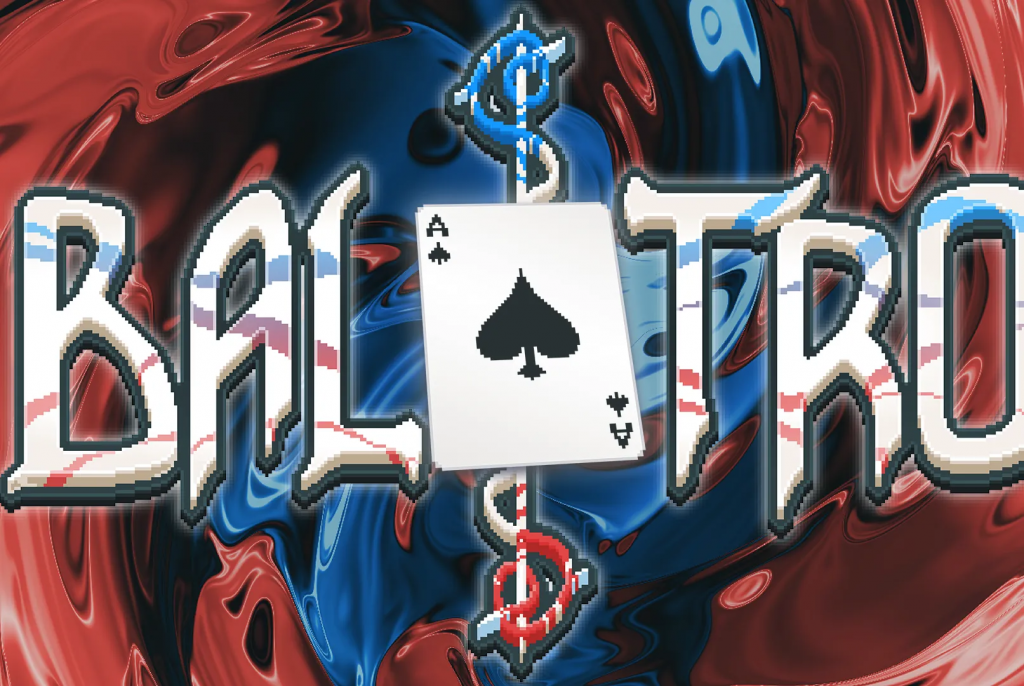
Balatro, the poker-based roguelike that became an unexpected cultural phenomenon on PC in 2024, was available on Switch 1 and was perfectly playable there. The Switch 2 version with Joy-Con mouse mode is a meaningfully different experience that I’d argue is closer to the PC version than any console port has previously been.
The Joy-Con 2 used in mouse mode on a flat surface is not a precision instrument by PC gaming standards. It’s imprecise enough that competitive FPS games would be frustrating. Balatro is a card game where the primary inputs are selecting cards, pressing buttons, and navigating menus. For these inputs, the mouse mode works very well. The tactile pleasure of clicking on a hand of cards and watching the joker combinations trigger is heightened by the physical action of the mouse click versus a button press.
Fifty-five hours in and I’m still finding Joker combinations I haven’t seen. The game is deep enough that the portable format serves it well: it’s the kind of game where fifteen minutes on a lunch break leads naturally to another fifteen minutes and then you’ve played for an hour. Switch 2 is the best hardware for games that work in variable-length sessions.
10. Sayonara Wild Hearts
Played: ~12 hours | The short one that lands hardest
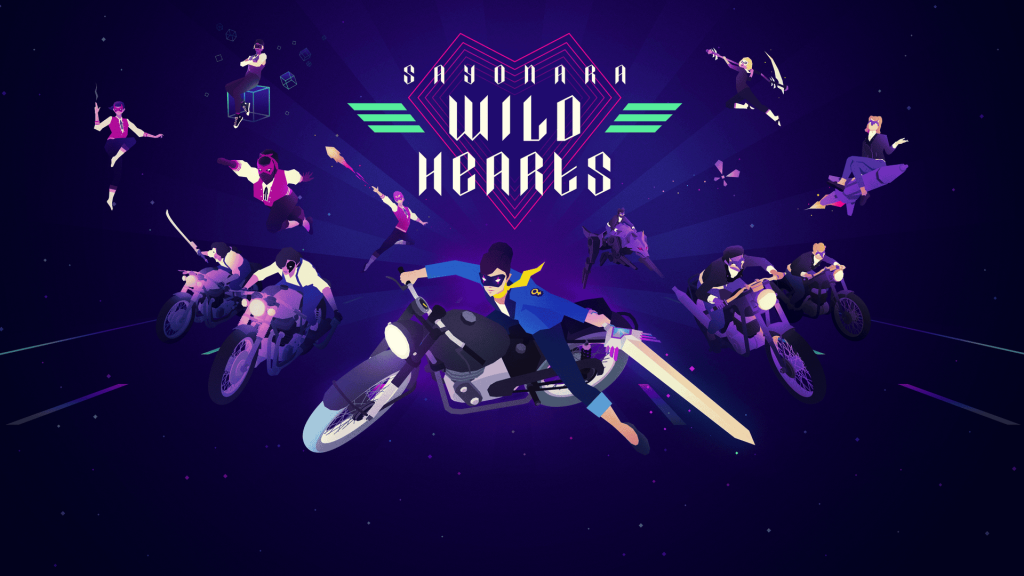
Sayonara Wild Hearts was a Switch 1 game. The Switch 2 enhanced version adds nothing mechanically and very little technically. It runs at a higher resolution and a smoother frame rate and it is twelve hours long across multiple playthroughs. I’m including it because it’s the game I’ve recommended most often to people who think they don’t play games, and because on the Switch 2 it looks and sounds better than it did on any platform previously available.
Sayonara Wild Hearts is an interactive music album disguised as a rhythm game. It takes ninety minutes to complete on a first play. The soundtrack is one of the best in any piece of media from the past decade. The visual design is confident enough that every screen is worth pausing to look at. And it does things with the relationship between music, movement, and emotion that most games with ten times its budget and ten times its runtime don’t attempt.
Twelve hours is twelve playthroughs. I’ve played it once by myself and eleven times with people who’d never played a game with me before. Every time, it delivered. Not every game that earns its place on a list like this needs to be ninety hours long.
What a year actually teaches you
One thousand hours of Switch 2 software produces some conclusions that were harder to reach at launch.
The library’s strength is breadth, not depth in any single direction. The Switch 2 is not the best hardware for competitive gaming, not the best for visual fidelity, and not the most powerful portable PC. It is the best hardware for being immediately available wherever you are, for being playable by people of any age or skill level, and for having a library that spans Tetris Effect and Cyberpunk 2077 and Sayonara Wild Hearts without any of them feeling like they’re in the wrong place.
The backwards compatibility with Switch 1 is more valuable than it first appeared. At least two hundred of my thousand hours are in Switch 1 games: Hollow Knight, Hades, Celeste, Stardew Valley, and several others that are demonstrably better at 120fps on the larger screen. The Switch 2 didn’t replace the Switch 1 library. It upgraded it.
The question of whether the Switch 2 is worth buying in 2026 has a simpler answer now than it did at launch: yes, if you have a household where games are a shared activity and the portability matters, or if you travel frequently and want to play full games rather than mobile games. If you’re a solo player who mainly games at home on a TV and visual quality is your priority, a PlayStation 5 at around £400 or a gaming PC remains a stronger argument.
None of this is to say the Switch 2 is perfect. The online infrastructure remains behind Sony and Microsoft. The storage (256GB internal) fills up faster than it should. The Joy-Con 2, for all its improvements, drifts if you’re unlucky.
But the library, after a year, is the argument. And the argument is strong.