



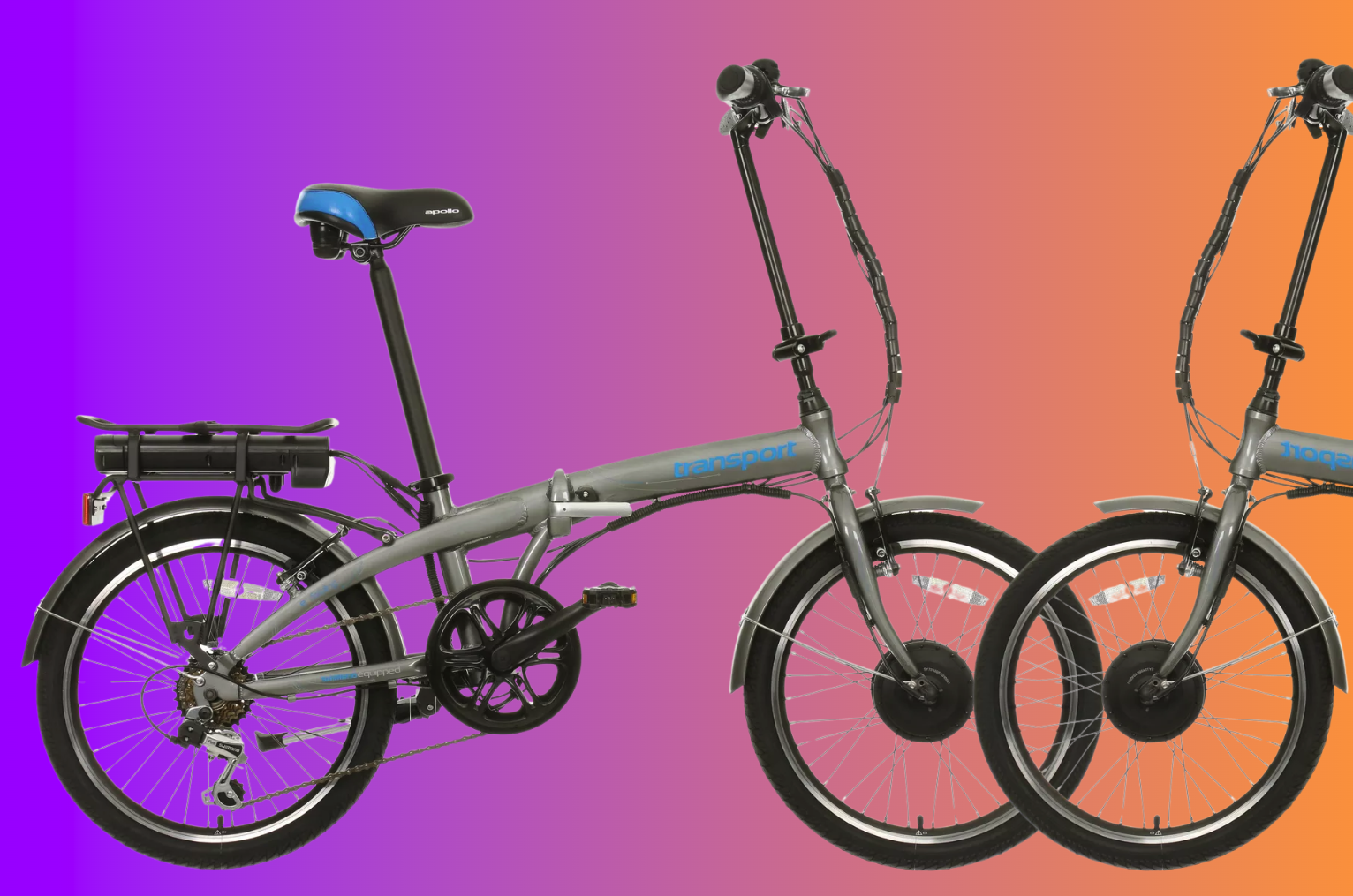
Apollo Transport Electric Folding Bike review: The commuter’s shortcut that knows its limits
Light enough to carry up stairs, small enough to slide under a desk, and priced under £850. For the right commuter, this no-frills folding e-bike gets the job done
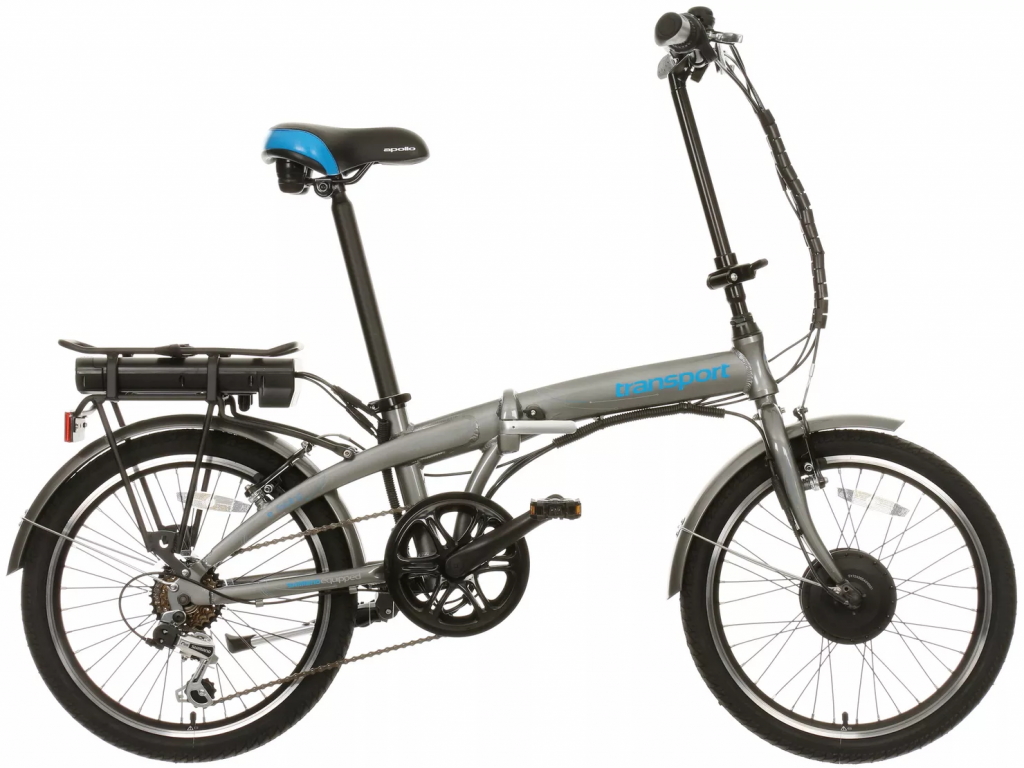
If your daily commute involves a train, a bus, or a lift that doesn’t always work, the Apollo Transport has one genuinely compelling argument in its favour: at 16kg, it’s 30% lighter than the average electric folding bike in its price bracket, and it folds down to something you can actually carry without regretting your life choices. The Shengyi 250W front hub motor is smooth and unobtrusive in traffic, the fold is quick to learn, and the kickstand and rear carrier come included rather than costing extra. The catch, and it’s a real one, is a 209Wh battery that delivers 10-15 miles on a typical charge. For a three-to-five-mile commute each way, that’s fine. Ask it to do more and you’ll need a lunchtime top-up. Know that going in, and the Transport is a well-priced, practical piece of commuter kit.
Buy the Apollo Transport Electric Folding Bike at Halfords for £849
Pros
- 16kg is genuinely light, particularly noticeable on stairs and station platforms
- Clean, learnable fold: frame, stem, and pedals all collapse
- Kickstand and rear carrier included as standard
- Smooth motor delivery for stop-start urban riding
- 2-year electrical warranty from a high-street retailer with service centres nationwide
Cons
- 209Wh battery is 43% smaller than the category average: real-world range of 10-15 miles is a hard constraint
- V-brakes rather than hydraulic discs, limiting wet-weather confidence
- 85kg rider weight limit is below category average
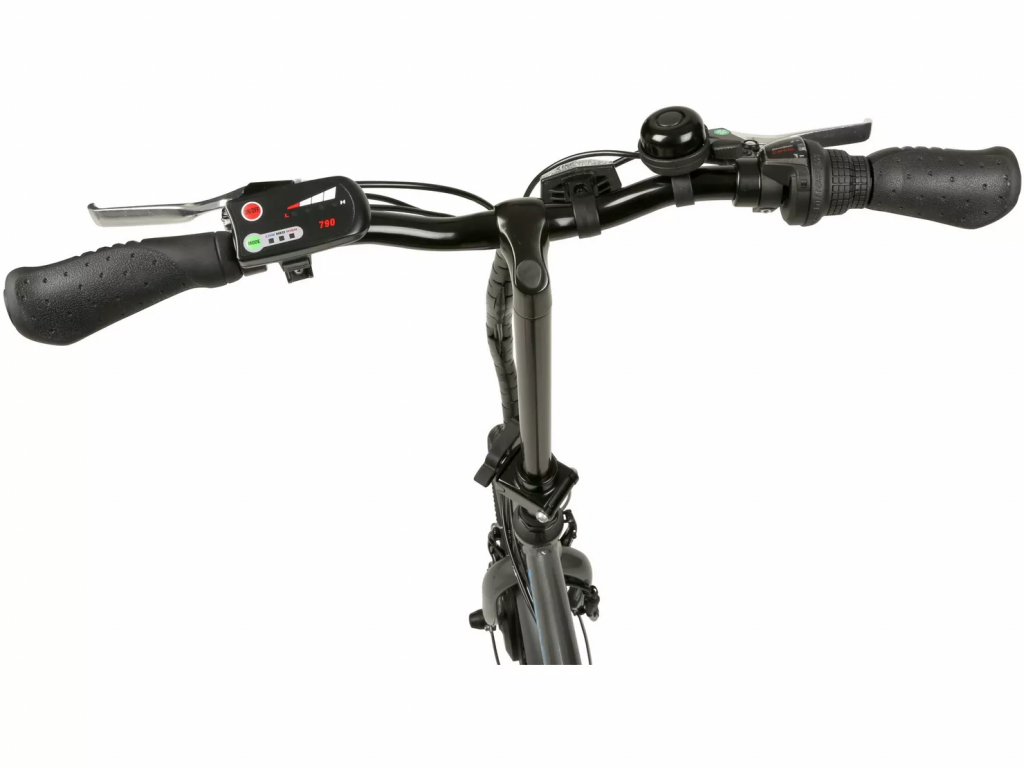
- Basic three-button LED display: no range estimate, no trip data
- Front hub motor affects handling feel when the bike is loaded
Quick Specs
| Price | £849 |
| Motor | Shengyi front hub, 24V 250W |
| Battery | Samsung cell, 209Wh / 8.7Ah |
| Range | 10-15 miles average (20 miles max) |
| Gears | 6-speed Shimano Tourney TY-21 |
| Brakes | Alloy V-brakes, front and rear |
| Wheels | 20″ double wall alloy rims, Kenda anti-puncture tyres |
| Weight | 16kg |
| Charge time | 5 hours |
| Max assisted speed | 15.5mph |
| Rider weight limit | 85kg |
This Bike Is Not For Everyone. Here’s Exactly Who It’s For.
The Transport was built with a specific kind of commuter in mind, and it’s worth being precise about who that is before going any further. You live within four to six miles of your office, or within that distance of a train station. You take public transport at least part of the way, which means at some point during your day you’re carrying this bike up stairs, through ticket barriers, or slotting it into an overhead luggage rack. You don’t have a dedicated bike storage space at work. You have a hallway at home, a corner of a kitchen perhaps, and not much more room to play with.
If that’s you, the Transport makes a lot of sense. At 16kg, it’s significantly lighter than the folding e-bike category average of 23kg, and that 7kg difference sounds like a spec sheet number until you’re hauling it up two flights of stairs at a station that’s decided its lift is on the blink again. That scenario happens more often than any commuter would like, and it’s the moment where the weight saving stops being theoretical and starts being the difference between arriving at work with your temper intact or not. The 20″ wheels roll quickly and handle urban surfaces competently, and the fold, once you’ve done it a dozen times, takes under a minute. Frame hinge, stem, pedals: that’s the sequence. You don’t need to refer to a diagram, and after a week it becomes as automatic as locking your front door.
What the Transport is not is a bike for longer rides, more ambitious weekend loops, or the kind of mixed-terrain adventure a folding e-bike sometimes gets drafted into. The 209Wh Samsung battery is honest about its limits in a way the marketing copy is perhaps not. Apollo claims up to 20 miles per charge, and that figure is technically achievable under a fairly specific set of conditions: flat terrain, Low assist, light rider, mild weather, freshly charged battery. In real commuting conditions, with a backpack, some hills, a headwind, and the temptation to lean on Medium or High assist because it’s a Tuesday morning and you’re running late, budget for 10-15 miles round trip. That comfortably covers most short urban commutes. It does not cover an eight-mile each-way ride with a laptop on the back and a significant hill in the middle, and if that’s your situation, the Transport is not the right bike.
First Impressions: Lighter Than You Expected, More Practical Than It Looks
There’s a particular kind of mild surprise that good budget products produce, and the Transport delivers it. Pick it up off the shop floor at your local Halfords and it’s noticeably lighter than it looks, which matters enormously when your daily routine involves carrying it. The aluminium frame is unpretentious, the finish is plain, and the overall impression is of something built to a clear brief rather than to impress on a showroom floor. That’s not a criticism. For a bike you’re going to lock to a railing, squash into a luggage rack, and roll across station concourses, something that doesn’t attract too much attention is arguably an advantage.
The 20″ wheels are the right call for a commuter of this type. Smaller wheels fold down more compactly, but they sacrifice the rolling efficiency and pothole resistance that 16″ or 14″ options give up. Twenty inches sits in a sensible middle ground: compact enough to fold down to a manageable size, large enough to deal with the variable surface quality of real city roads without rattling your teeth. The Kenda anti-puncture tyres at 44mm width add a useful layer of puncture resistance, which is something any commuter who has locked their bike near a pub on a Friday night will appreciate.
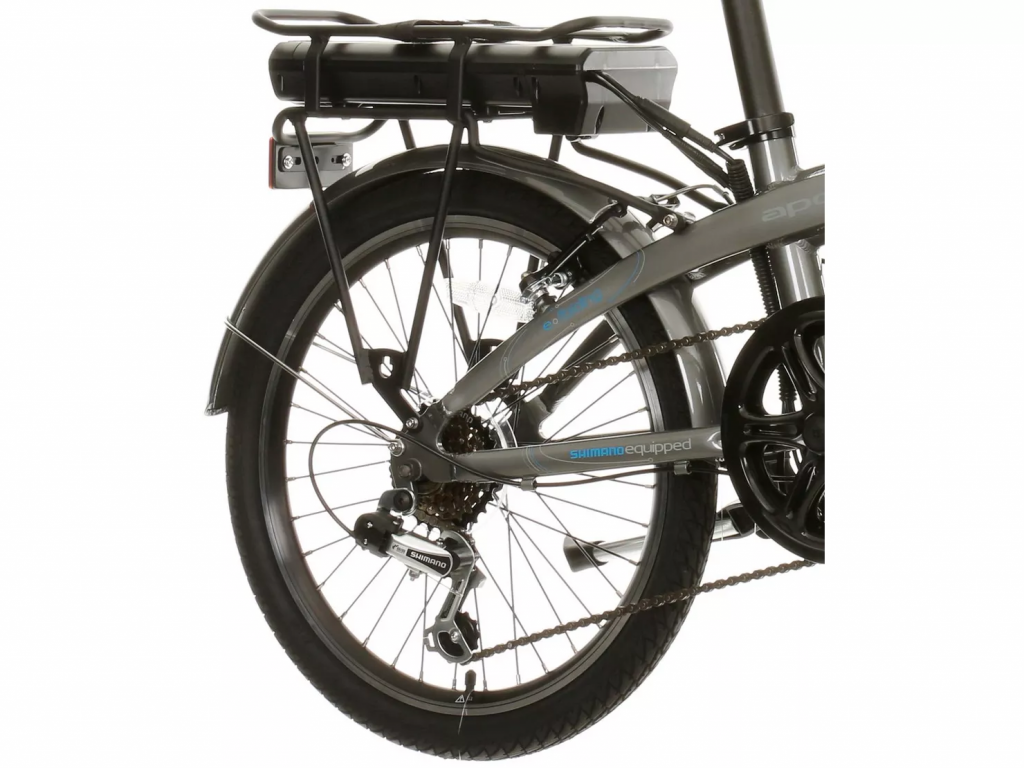
The included kickstand and rear carrier are worth calling out specifically, because they’re the kind of practical details that matter every single day and that many bikes in this bracket leave you to source separately. The carrier takes 15kg, which handles a backpack or a week’s worth of lunches. The kickstand means you can prop the bike anywhere without leaning it against a wall or persuading a stranger to hold it for a moment. Neither of these things is exciting. Both of them are useful every time you ride.
On The Road: Where It Earns Its Keep
Pull away from a junction and the first thing you notice is how unobtrusive the Shengyi motor is. It engages via a speed sensor once you start pedalling, which produces smooth, progressive assistance rather than the lurch of a poorly calibrated system. In stop-start city traffic this is exactly the behaviour you want. The assist builds naturally with your pedalling cadence, you hit 15.5mph without really trying on the flat, and when you slow for lights the motor backs off cleanly. It doesn’t fight you, it doesn’t surprise you, and after a few minutes you stop thinking about it, which is the best thing a commuter e-bike motor can do.
The 6-speed Shimano Tourney TY-21 drivetrain is not a component that inspires excitement in cycling circles, but it is one that works reliably and requires very little thought in day-to-day use. For a commuter who wants to get from A to B without fiddling with gear selection, six speeds is plenty. You’ll find a comfortable cruising gear on the flat and a lower gear for whatever hills your route involves, and the system shifts cleanly enough that you won’t be cursing it at junctions.
The three assist levels, Low, Medium, and High, give you meaningful control over how hard the battery is working. Low is for flat terrain when you’re not in a hurry and want to preserve range. Medium is the practical default for most commuting conditions. High is for hills and headwinds and mornings when you’re already late. The important thing to understand is that High accelerates battery depletion noticeably, so if you’re riding close to the limits of the battery’s range, you’ll want to use it sparingly. On a short commute this isn’t a problem. On a longer one it becomes a calculation you’re making regularly.
Where the Transport shows its budget origins most clearly is under braking in the wet. The alloy V-brakes are adequate in dry conditions and require no particular effort to operate confidently. In the rain, which British commuters encounter for a meaningful portion of the year, they demand earlier, more deliberate application. They don’t fail, but they’re less reassuring than the hydraulic disc brakes you’d find on bikes from the next price tier up. This is the single component that most directly affects the commuting experience in a day-to-day way, and it’s worth being clear-eyed about before you commit to a bike you’ll be riding in all weathers.
The display is minimal by modern standards: a small LED unit on the left handlebar with a power button and a single control for cycling through the three assist modes. Speed is shown, battery level is indicated in broad segments, and that’s broadly it. There’s no range estimate, no trip distance, no average speed, and no USB charging output. For a first-time e-bike buyer this simplicity is easy to navigate. For someone moving down from a more feature-rich bike, it takes some adjustment.
Living With It: The Details That Actually Matter
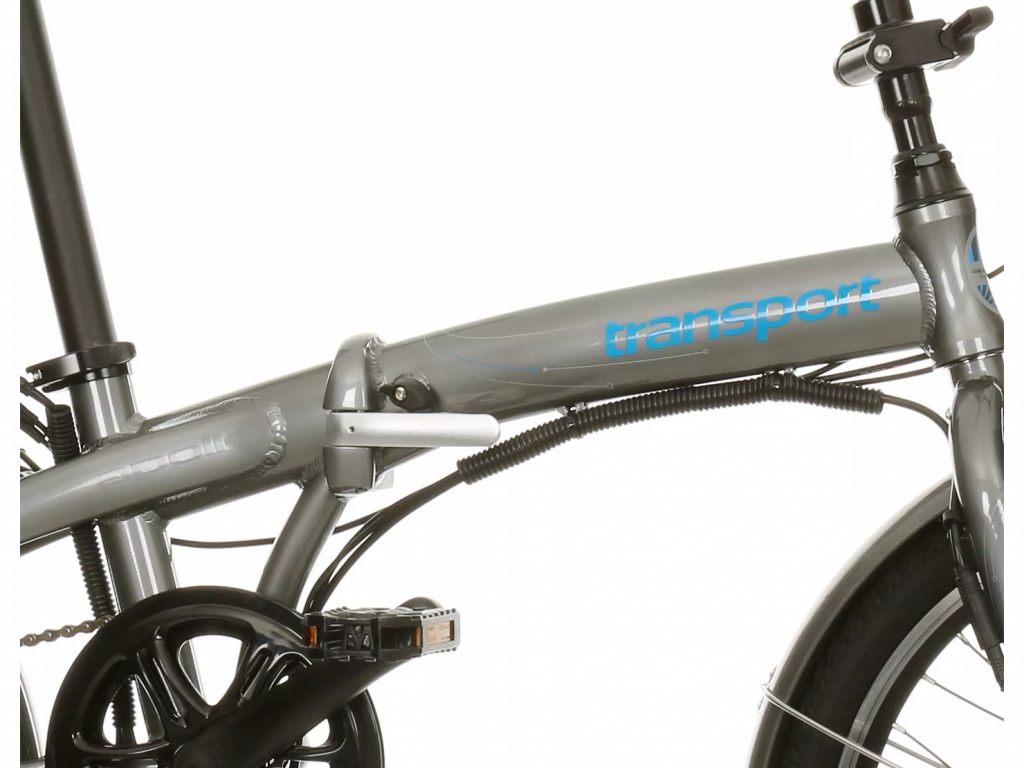
The fold is genuinely functional for the money. The main frame hinge sits at the centre of the bike, the stem folds flat against the top tube, and the pedals collapse inward to reduce the overall width. Folded, the bike is compact enough to stand in a hallway without dominating it, slide under most office desks, or fit in the boot of an average hatchback alongside a bag or two. The sequence becomes natural quickly, and there are no fiddly catches or levers that require excessive force on a cold morning.
It doesn’t have the satisfying locked-together solidity of the fold on more expensive bikes, where the two halves clip securely into each other and the whole thing can be rolled through a station like a piece of luggage. The Transport folds and stays folded, but it doesn’t grip itself together, so you’ll prop it on the kickstand or lean it against something rather than rolling it. For most commuters this is a minor inconvenience rather than a genuine problem, but it’s noticeable if you’ve experienced better-engineered folding mechanisms.
The battery removal and charging process is straightforward. The pack mounts on the rear carrier and pulls free without tools, which means you can charge it at your desk if the bike is locked somewhere without a nearby socket. Five hours from flat to full is standard for the class. The charging port is on the battery itself, so the cable goes into the pack rather than the bike, and the whole thing can sit on a desk or windowsill while it charges without drawing any particular attention. Given that a significant proportion of commuters are charging their e-bike battery at work, this kind of inconspicuous portability is a small but real advantage.
One number that needs flagging directly is the 85kg rider weight limit. That’s notably below the 100-120kg limits you find on many competing bikes at similar prices. For riders above that figure, or those who regularly carry significant luggage on top of their own weight, this isn’t the right bike. It’s a hard constraint and worth checking before purchase rather than after.
The Verdict: Short Commutes Only, But Very Good At That
The Apollo Transport is an honest bike at an honest price. It solves a specific commuting problem, namely getting a lighter-than-average, compact, affordable e-bike into the hands of someone who needs it for short multi-modal journeys, and it solves that problem well. The weight advantage over category rivals is real and felt every time you carry it. The motor is smooth enough that it improves the experience meaningfully without calling attention to itself. The fold works. The practical accessories are included. And the Halfords network means that when something needs attention, there’s a service centre within reasonable reach of most UK addresses, with technicians who know the bike and stock the parts.
The battery range is the defining constraint, and it’s worth saying clearly one final time: this is a bike for commutes of roughly ten to fifteen miles round trip, not for twenty. If your numbers are in that range, the Transport will handle your working week without drama. If they’re not, the gap between what the Transport can do and what you need it to do will become a daily frustration.
At £849 all-in, with no meaningful extras to add and a high street retailer standing behind it, the Apollo Transport makes a credible case for the commuter who needs a first e-bike, not necessarily their last one. If you outgrow it in a year and use the Halfords trade-in scheme to put the money towards something better, that’s not a failure. That’s the Transport doing exactly what it was designed for.
Buy the Apollo Transport Electric Folding Bike at Halfords for £849
Buy it if: Your commute is under six miles each way, you regularly carry your bike on public transport, you’re under 85kg, and you want a low-maintenance, affordable entry point into e-bike commuting with a safety net of high-street support.
Skip it if: You ride more than six miles in either direction, commute year-round through heavy rain and want better braking, weigh over 85kg, or are looking for a bike that will grow with your cycling ambitions over several years.
Also Consider
Carrera Crossfire-E Electric Hybrid Bike | View at Halfords If your commute is longer or hillier and you don’t need the fold, Carrera’s Crossfire-E is one of Halfords’ strongest own-brand e-bikes. A larger battery and more confident braking make it a better fit for riders who are pushing past the Transport’s range limits.
Carrera Subway-E Electric Hybrid Bike | View at Halfords A step up in spec from the Transport for riders who want a more planted, full-size commuter e-bike. No fold, but if that isn’t a requirement, the Subway-E offers better range and a more confident ride for a modest price premium.
Carrera Vengeance-E Electric Mountain Bike | View at Halfords For commuters whose route involves rougher terrain, canal towpaths, or unpaved surfaces, the Vengeance-E gives you the same Halfords support network with a spec built for more demanding riding. Not a folding bike, but a compelling alternative if portability is less of a priority than capability.