


POCO X8 Pro Series Is Here and It’s Coming For Everyone Above Its Price Point
Landing in London today, 17 March 2026, the POCO X8 Pro Max and POCO X8 Pro are the brand’s biggest swing to date. POCO has binned the old X Series name entirely and reborn it as the X Pro Series, and if that sounds like marketing fluff, the hardware underneath is anything but. This is the launch where POCO starts being the answer to a question nobody expected to ask: do you actually need to spend flagship money anymore?
Spoiler: increasingly, no.
First In Line For the Good Stuff

There’s a reason chip debuts matter in phone launches, and POCO has bagged not one but two of them here. The X8 Pro Max is the first phone anywhere in the world to ship with MediaTek’s Dimensity 9500s, a 3nm flagship chip with a 4+4 All Big Core CPU design running up to 3.73GHz. The AnTuTu score? A deeply unnecessary 3,085,998. That’s not a benchmark, that’s a personality trait.
The X8 Pro, meanwhile, gets the global debut of the Dimensity 8500-Ultra Mobile Platform: a 15.8% AnTuTu improvement over its predecessor and a 25% GPU performance boost thrown in for good measure. Both phones also pack hardware-level ray tracing, meaning in-game lighting actually behaves like light, rather than that slightly unconvincing approximation we’ve been putting up with for years.
Keeping all that silicon from throttling itself into oblivion is where POCO’s LiquidCool technology steps in. The X8 Pro Max features the brand’s 3D IceLoop Cooling System with a 5,800mm² liquid cooling area and a specialised 3D bulge directly over the chipset, cutting SoC temperatures by up to 3°C. The X8 Pro gets its own 5,300mm² Dual-layer IceLoop setup. Unglamorous engineering, genuinely important results.
The Battery Situation Is Getting Ridiculous (In a Good Way)
At some point, phone batteries stopped being a spec and became a conversation. POCO has fully leaned into that.
The X8 Pro Max carries an 8,500mAh battery, the largest in POCO’s history, promising two full days of use on a single charge. It also retains over 80% capacity after 1,600 charge cycles, which works out to roughly six years of regular use. For a phone at this price, that’s a commitment to longevity you don’t often see written into the hardware itself.
The X8 Pro steps down to a still-very-generous 6,500mAh silicon-carbon unit, and both phones support 100W HyperCharge alongside 27W reverse charging, the latter being class-leading right now. Smart Charging manages heat and power distribution throughout, keeping everything stable rather than racing to full and cooking the cells in the process.
Screens, Sound, and the Bit Where It Gets Genuinely Pretty
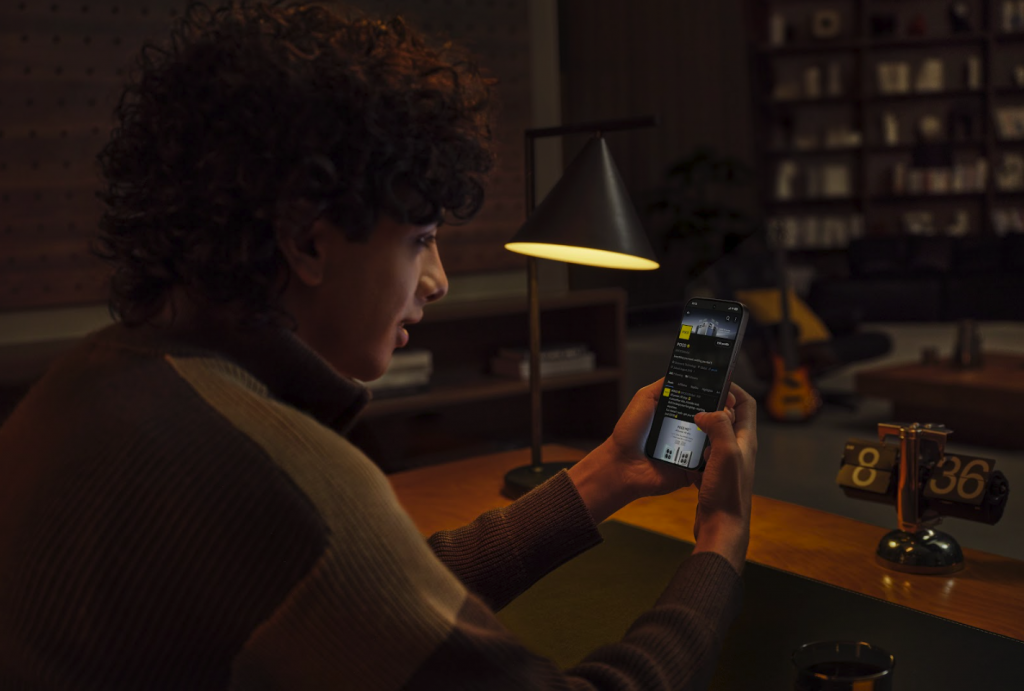
Both displays hit up to 3,500 nits peak brightness across 25% of the screen, the X8 Pro Max on a 6.83-inch panel, the X8 Pro on a 6.59-inch, and both are built on flagship M10 panels using a new red luminous material that improves brightness efficiency while actually pulling less power. On the X8 Pro specifically, that red luminous material delivers a 20% luminous efficiency boost over its predecessor. 3840Hz PWM dimming and triple TÜV Rheinland eye-care certifications round things out for anyone who spends long hours staring at a screen (so, everyone).
The X8 Pro Max also gets an ultrasonic fingerprint sensor: faster, more reliable, works with wet fingers, and dual 1115F symmetrical speakers tuned for Hi-Res Audio and Dolby Atmos. There’s a 400% volume boost mode for open spaces, and a Nighttime low-volume mode for when you’re watching something at 1am and basic social awareness kicks in.
Design That Actually Has a Point of View
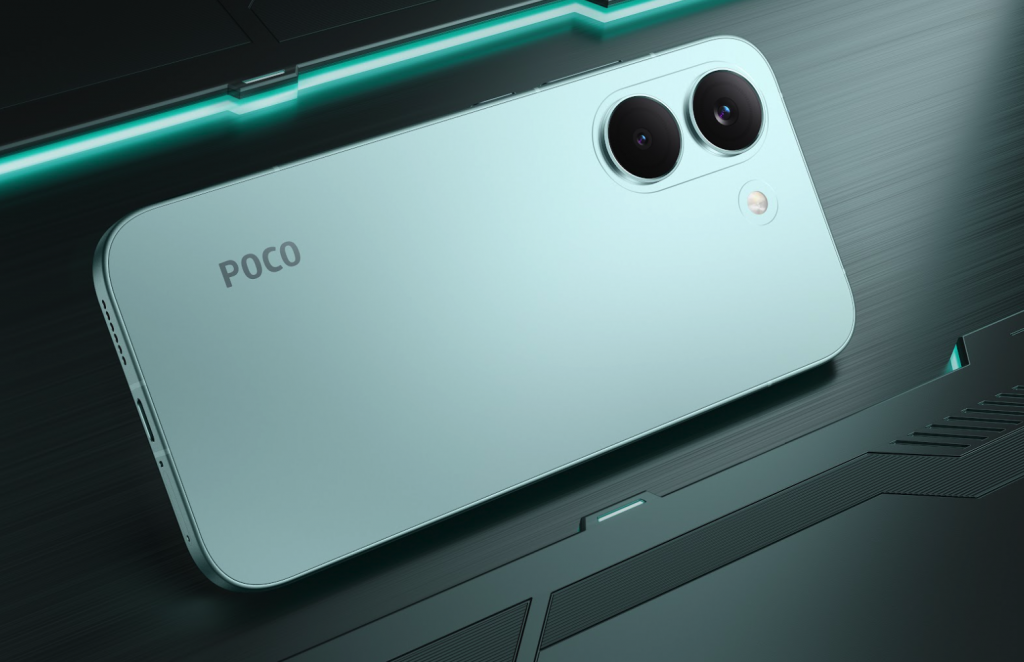
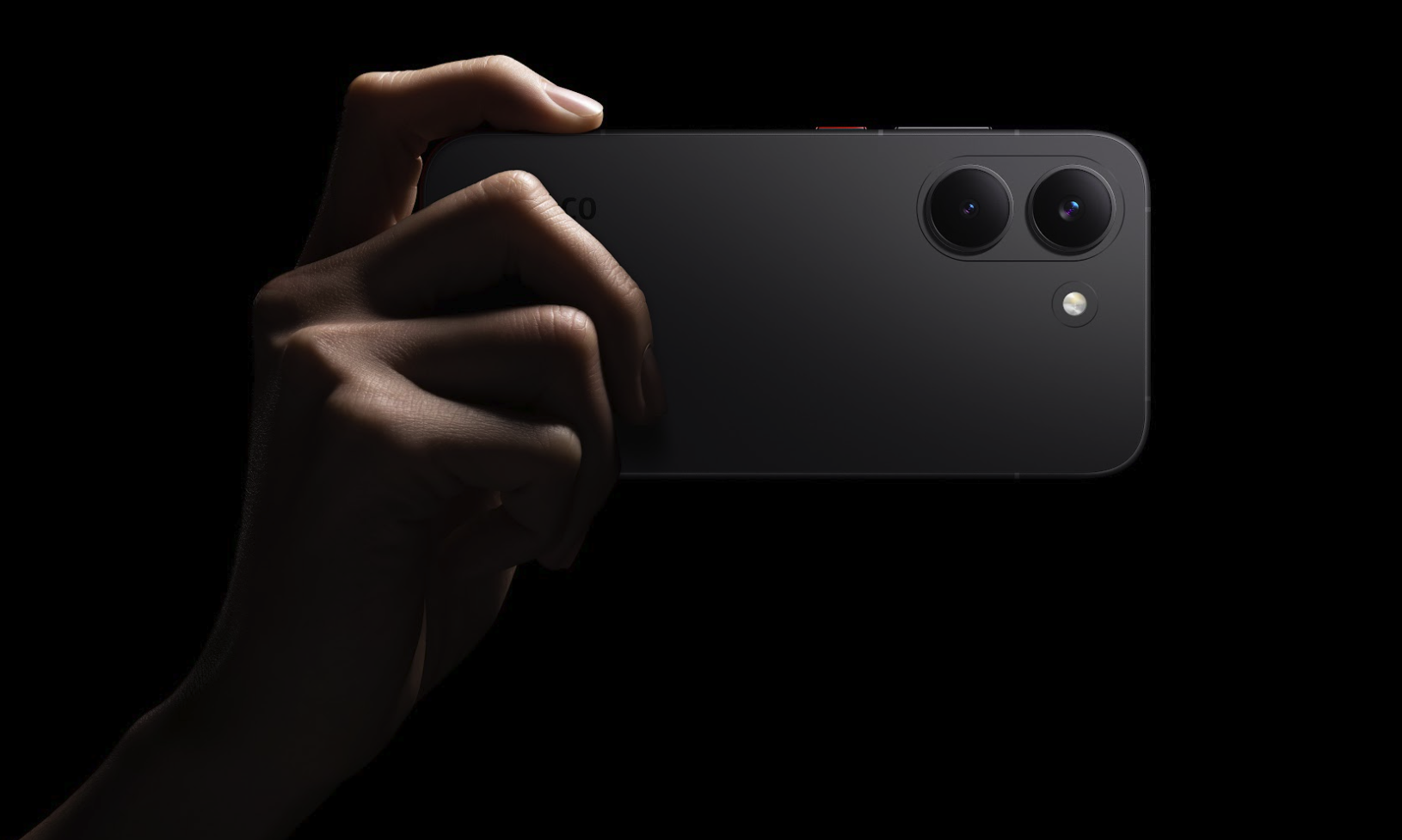
Minimalist metal frame, fibreglass back, ultra-slim bezels on the X8 Pro: neither of these phones is trying to be invisible. The racetrack-inspired camera module integrates a Dynamic RGB light that reacts to notifications, charging, gaming, music, and camera use. It’s extra. It works. Both models ship with Corning Gorilla Glass 7i and a full IP66, IP68, IP69, and IP69K rating suite, dust, water, pressure-wash, the lot. The X8 Pro Max has also passed SGS 5-Star Premium Performance Certification for drop, crush, and bend resistance. These are not phones you’ll be wrapping in bubble wrap.
Cameras, AI, and the Software Story
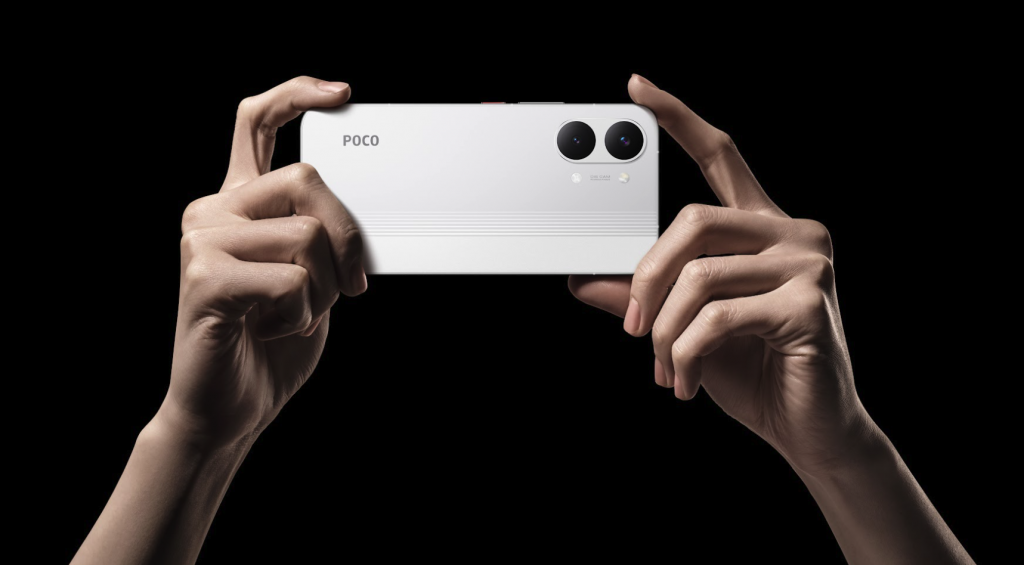
Both phones carry a 50MP main camera and a 20MP front shooter: the X8 Pro Max using POCO’s Light Fusion 600 sensor, the X8 Pro running a Sony IMX882. AI features include UltraSnap for fast-motion capture, Dynamic Shots, seamless video-to-live-photo conversion, and an AI Creativity Assistant for editing. Nothing groundbreaking in isolation, but competently assembled and backed by solid sensor hardware.
On the software side, Xiaomi HyperOS 3 powers the experience, with Google Gemini and Circle to Search baked in. A new Ticket Purchase Mode, appearing for the first time on a POCO device, optimises touch response and processing power during high-demand sales windows. Chaotic? A little. Useful? Absolutely. The X8 Pro Max also supports eSIM, and both phones introduce Xiaomi Offline Communication for voice calls without a network signal.
What It’ll Cost You
POCO X8 Pro Max launches at £469 (12GB/256GB) and £519 (12GB/512GB). POCO X8 Pro starts at £349 (8GB/256GB), £399 (8GB/512GB), and £429 (12GB/512GB).
But, and this is the headline for anyone buying before 31 March: there’s a launch promotion running on mi.com/uk that drops the X8 Pro Max to £359 and £399, and the X8 Pro to as low as £289. Add trade-in discounts, student vouchers, a three-month Spotify Premium trial, and two months of YouTube Premium, and POCO is essentially daring you to find a reason not to.
POCO X8 Pro Series is available now at mi.com/uk.