



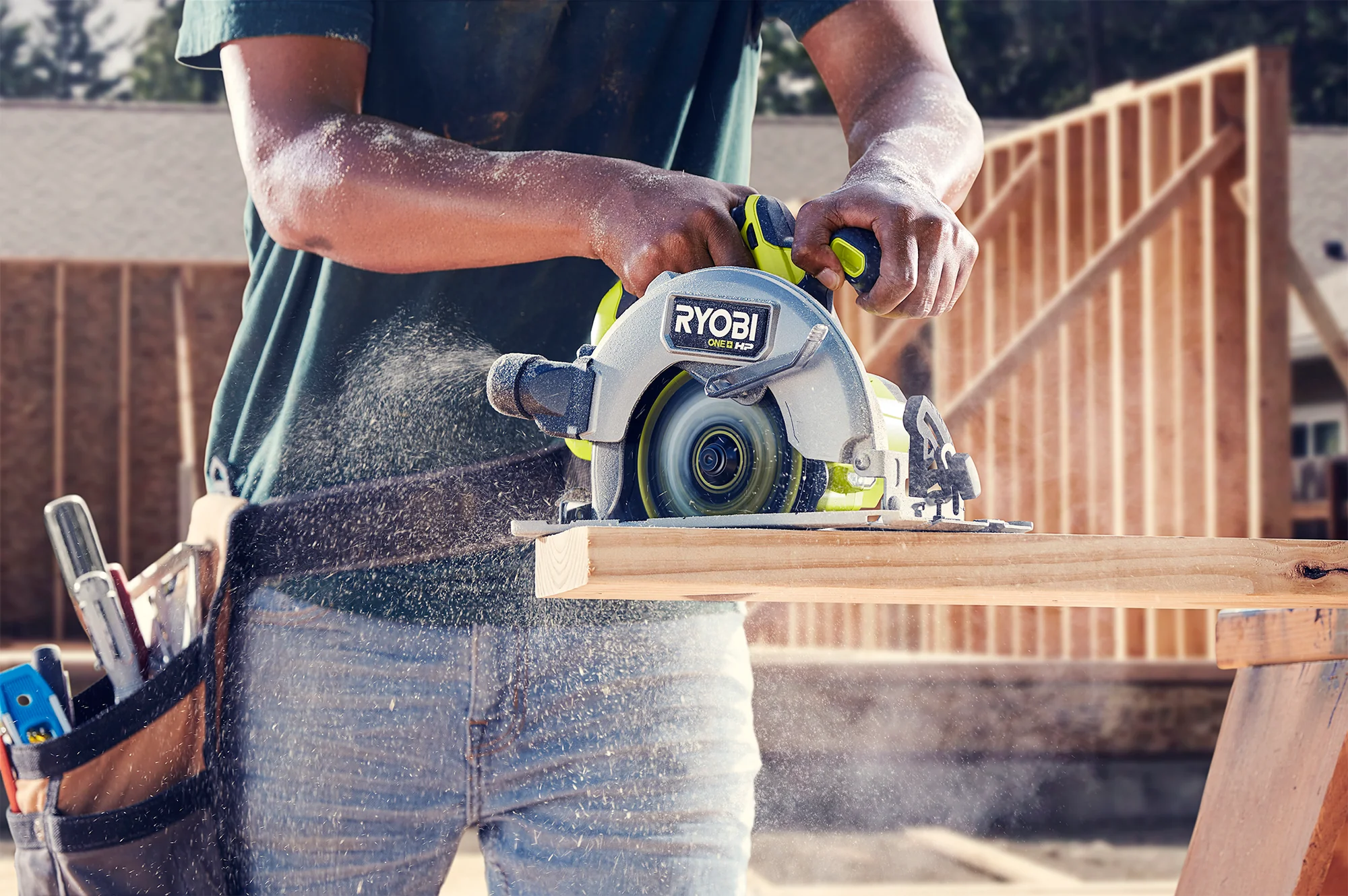
Ryobi 18V ONE+ HP Brushless 7-1/4″ Circular Saw Review: A Serious Upgrade for DIYers Who Want Cordless Power Without the Pro Price
For years, cordless circular saws sat in an awkward middle ground. They were convenient, portable, and easy to bring onto a job site or into a garage workshop, but when it came to raw cutting power they rarely matched their corded counterparts. That gap has been shrinking quickly over the past few generations of battery tools, and the latest Ryobi 18V ONE+ HP Brushless 7‑1/4-inch Circular Saw shows just how far things have come.
Ryobi has built a reputation for making capable tools that sit comfortably between casual DIY equipment and full professional-grade hardware. The brand’s ONE+ ecosystem already powers everything from drills to lawn tools with the same battery platform, which makes each new addition to the lineup especially interesting for anyone invested in the system.
With the second-generation HP Brushless circular saw (model PBLCS302), Ryobi promises more power, faster cutting speeds, improved ergonomics, and smarter design upgrades over the previous generation. On paper, those improvements look meaningful rather than incremental, but the real question for DIY enthusiasts and home builders is whether those upgrades translate into real-world cutting performance.
After spending time with the saw in the workshop and putting it through a series of common DIY tasks; from framing cuts to bevel adjustments; it becomes clear that Ryobi’s latest cordless circular saw isn’t just catching up with corded tools. In many scenarios, it’s replacing them entirely.
First Impressions: A Cordless Saw That Feels Built to Work

Take the saw out of the box and the first thing you notice is how substantial it feels in the hand. At 8.3 pounds as a bare tool and about 9.8 pounds with a 4.0Ah battery installed, this circular saw is heavier than the previous generation model, but the added weight actually signals something positive.
Ryobi has replaced several plastic components with metal parts and integrated a larger brushless motor, which contributes both to durability and improved cutting performance. Instead of feeling bulky, the saw has a reassuring solidity that suggests it was designed for real work rather than occasional weekend tasks.
The overall design follows the familiar Ryobi aesthetic; bright green housing paired with rugged black accents; but the layout feels cleaner and more refined than earlier models. The tool’s footprint is compact enough to maneuver comfortably in tight spaces while still providing the stability needed for long cuts.
The baseplate, or shoe, sits flat and steady against the work surface, which is exactly what you want from a framing saw. For DIY users working on projects like deck construction, shelving systems, framing repairs, or furniture builds, that stable platform is critical for maintaining clean, straight cuts.
Brushless Power That Feels Surprisingly Aggressive
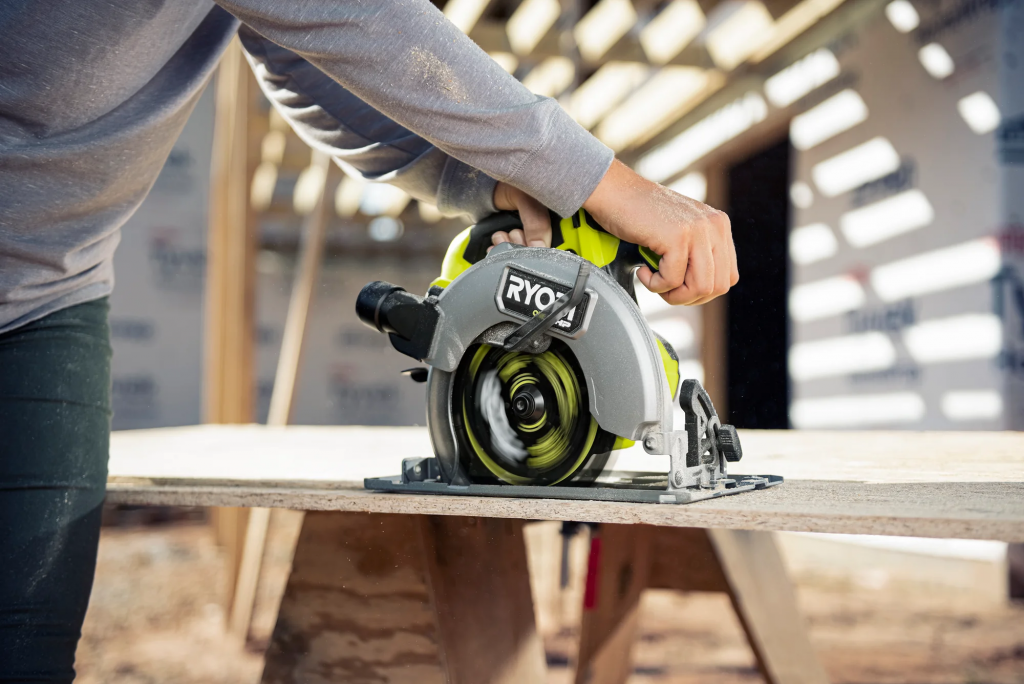
One of the headline upgrades in this second-generation saw is the brushless motor capable of spinning the blade at up to 5,000 RPM, a noticeable jump from the previous model’s 4,300 RPM top speed.
In practical terms, that additional blade speed translates into faster cuts and smoother performance under load.
During testing, the saw was put through a series of cuts on pressure-treated 2×10 lumber, which is a common material for framing, decking, and structural DIY projects. Cross cuts, bevel cuts, and angled cuts were all part of the test process.
The result? The saw moved through wood with a confidence that is impressive for a cordless tool in this category.
Even when pushing the tool harder than typical DIY use would require, the motor maintained its RPM surprisingly well. There was very little sense of strain during standard cuts, and the saw rarely felt like it was fighting the material.
It’s worth noting that circular saw performance often depends heavily on the blade being used. Swapping the stock blade for a premium thin kerf framing blade, such as Milwaukee’s Nitrus Carbide model, noticeably improves cutting efficiency and reduces resistance during thicker cuts.
But even with the standard blade, the Ryobi 18V ONE+ proved more than capable of handling most home workshop tasks without hesitation.
Cutting Capacity That Covers Most DIY Projects
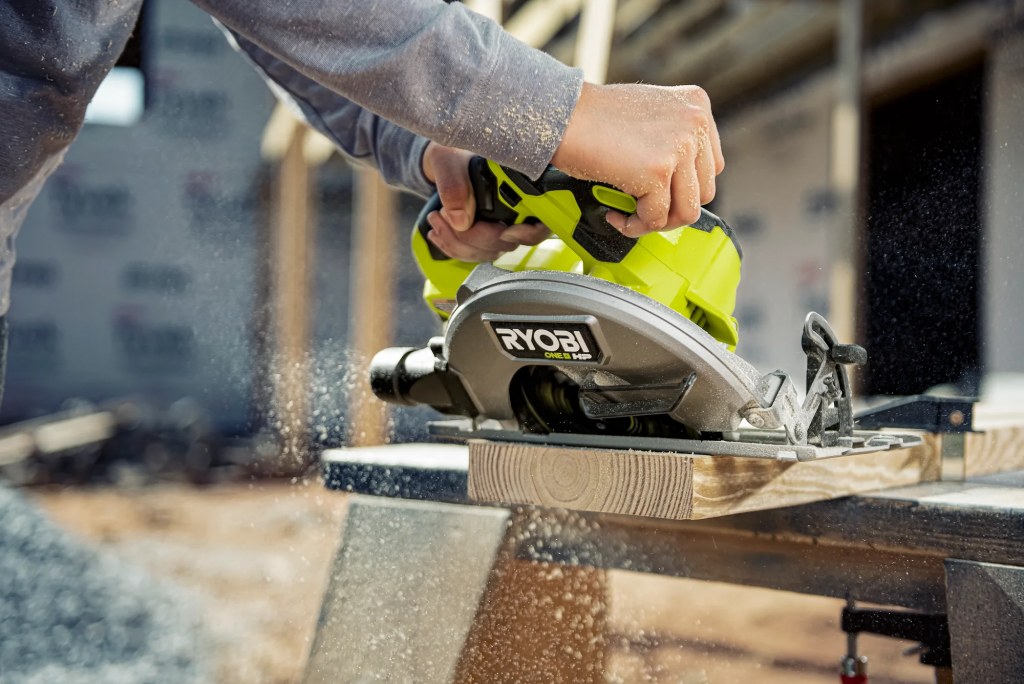
For a circular saw intended primarily for DIY enthusiasts and serious hobbyists, cutting capacity is one of the most important specifications to consider.
The Ryobi PBLCS302 offers:
- Maximum cut depth at 90°: 2-9/16 inches
- Maximum cut depth at 45°: 1-13/16 inches
- Maximum bevel angle: 56 degrees
Those numbers place the saw firmly in the full-size circular saw category, meaning it can cut through standard dimensional lumber in a single pass without requiring multiple passes or awkward repositioning.
The 7-1/4-inch blade size also ensures compatibility with a wide range of blades designed for framing, finishing, demolition work, or plywood cutting.
For DIYers who frequently switch between tasks; building shelves one weekend, installing flooring the next, and repairing framing another; having a saw that can handle different materials without constantly swapping tools is incredibly convenient.
Smarter Depth and Bevel Adjustments
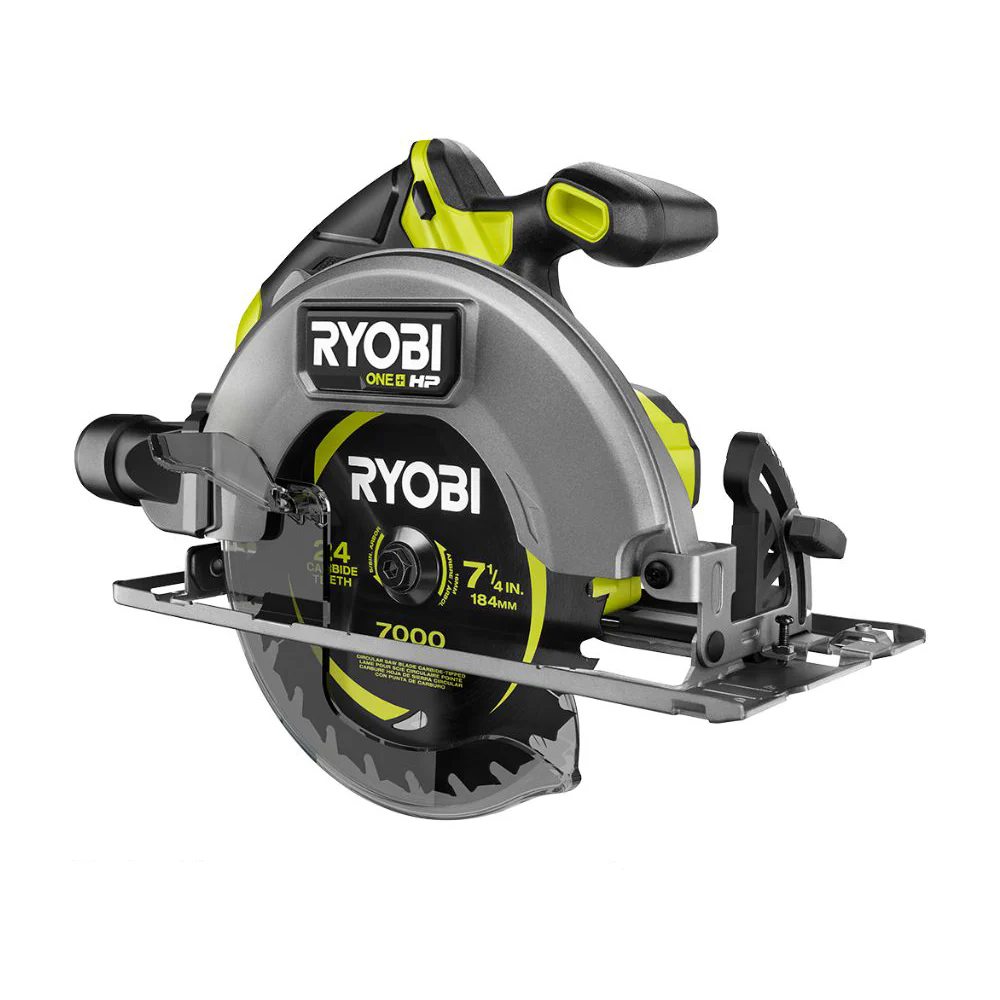
One of the most thoughtful design improvements Ryobi introduced in this model is the way depth and bevel adjustments have been refined.
Adjusting the cut depth requires flipping a lever at the back of the saw and sliding the shoe into position. This is a familiar mechanism for anyone who has used a circular saw before, but Ryobi has made a subtle change that significantly improves usability.
Instead of relying on cast markings directly on the blade guard, the new saw features a dedicated depth scale with high-contrast white-on-black lettering, positioned between the blade guard and the body of the saw.
This might sound like a minor change, but in a workshop environment, especially when working in dim lighting or outdoors, it makes reading the measurements far easier.
The bevel adjustment mechanism follows a similar approach. Flip the lever, tilt the shoe to the desired angle, and lock it back into place. The saw includes preset bevel detents at 15°, 22.5°, and 45°, which are common angles used for framing and trim work.
Again, the high-contrast metal scale replaces the previous plastic markings, which improves both durability and visibility.
Dust Collection That Actually Works
Dust management is rarely the most exciting part of tool design, but it’s one of those small details that can dramatically affect the overall user experience.
Ryobi clearly recognized this when redesigning the dust collection system on the PBLCS302.
Instead of directing sawdust out the rear of the blade guard, as the previous model did, the new saw ejects chips from the side of the upper blade guard. This small change keeps sawdust away from your shoes and reduces the amount of debris falling directly into the cutting line.
More importantly, Ryobi redesigned the vacuum adapter to improve airflow and prevent clogging.
When connected to a shop vacuum, the system pulls dust efficiently through the port while still allowing chips to pass through if no vacuum is attached. The result is surprisingly effective dust extraction that keeps the cutting area clear and improves visibility along the blade path.
For DIY enthusiasts working indoors or in garage workshops, this feature alone can make a huge difference.
Ergonomics Designed for Real Use

Comfort is another area where Ryobi clearly focused its design improvements.
The main handle is wrapped in thick rubber overmolding that provides a secure grip even during longer cutting sessions. The front pommel handle, used when guiding the saw with two hands, is slightly offset compared to earlier models, giving the user’s arms a more natural position while cutting.
That offset design may seem subtle, but it reduces fatigue during extended use and allows better control when making long rip cuts.
One of the most welcome additions is the folding rafter hook, which allows the saw to hang securely on framing lumber or scaffolding when not in use.
For anyone working on ladders, roof framing, or elevated surfaces, this small feature adds a significant convenience factor.
Battery Compatibility and Ecosystem Advantage
One of the biggest strengths of Ryobi’s tool lineup is the ONE+ battery ecosystem, which allows the same 18V battery packs to power hundreds of tools.
The PBLCS302 works with all Ryobi 18V batteries, meaning users who already own other Ryobi tools can simply snap in an existing battery and get to work immediately.
Using a 4.0Ah battery, the 18V ONE+ saw delivers strong runtime for typical DIY tasks such as cutting framing lumber, plywood panels, or construction boards.
For heavier cutting sessions, larger capacity batteries extend runtime significantly without compromising power.
Final Verdict: A DIY Powerhouse That Feels Close to Pro Level
The Ryobi 18V ONE+ HP Brushless 7‑1/4-inch Circular Saw represents a meaningful step forward for Ryobi’s cordless tool lineup.
It’s faster, stronger, and better designed than the previous generation model, while maintaining a price point that keeps it accessible for serious DIYers.
The brushless motor delivers impressive cutting power, the ergonomics make extended use comfortable, and thoughtful upgrades like the improved dust collection and high-visibility adjustment scales elevate the overall experience.
It may not completely replace the most powerful professional saws on the market, but for the vast majority of home projects and workshop builds, it delivers more than enough performance.
For DIY enthusiasts who love well-designed tools that make building easier, faster, and more enjoyable, this Ryobi saw feels like a smart addition to the toolbox.