




The Purpose Economy: 9 Websites and Apps Doing Tech Better Right Now
Why purpose is the next frontier for useful, beautiful tech
There is a familiar arc in technology: novelty, refinement, ubiquity, and then evaluation. After decades of shipping features and scaling engagement, a new phase is settling over the industry. Consumers and creators are asking a quieter, sharper question: what does this product actually do for people, communities, and the planet? The short answer is that usefulness alone is no longer enough. The long answer is what you will find in the projects below: intelligent, design-forward apps and websites that don’t just solve problems; they reframe them so that impact becomes part of the user experience.
This roundup is for the curious professional who wants tools that perform brilliantly, feel considered, and reveal their purpose on first use. Each selection has a clear thesis about why it exists, and a design philosophy that makes that thesis sing. Expect accessibility-first thinking, measurable social or environmental outcomes, and clever friction that nudges better habits instead of hijacking attention. These are not charity demos. They are ambitious tech products that double as public goods.
1. Ecosia: The search engine that pays for trees
Ecosia looks like a search engine because that is what it is, but the product proposition is simple in a way that borders on elegant. For each search, ad revenue funds tree-planting projects around the world. The interface is as close to a drop-in replacement for mainstream search as you can get, with fast results, safe browsing, and a privacy stance that avoids the surveillance trade-offs common to larger rivals.
Why it matters: Climate solutions often require heavy engineering. Ecosia offers something lighter and beautifully accessible: a micro-contribution model. Clicking the search bar becomes a low-friction way to route ad dollars to reforestation. That means impact accumulates every time you look up a restaurant, flight, or coding tutorial.
Real-world insight: The product scales because the behavior it asks for is tiny. That is the genius here. When green choices are invisible or costly, adoption stalls. Ecosia makes the green choice the default without compromising on speed or design. If you care about planting trees and you type into a search box several dozen times a day, Ecosia will matter more than you think.
2. Be My Eyes: A tiny app with outsized accessibility impact
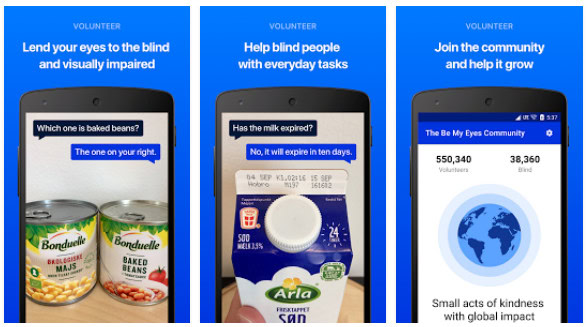
Be My Eyes pairs visually impaired users with sighted volunteers through a live video call to solve small but important problems: checking expiry dates, navigating new spaces, reading labels. The design is spare and humane, with low-latency video and a volunteer network built around empathy rather than gamification.
Why it matters: Accessibility has often been an afterthought. Be My Eyes places it front and center. The product meets people in the particularities of lived experience, where small acts of assistance create independence and dignity. This is technology calibrated for human-scale problems.
Ideal user: Someone who occasionally needs sighted assistance and craves immediate, friendly support. It is also an app for people who want to volunteer in a way that is concretely helpful and low-barrier.
Real-world insight: The app is an example of what I call useful intimacy. It is not trying to replace assistive tech at a hardware level. Instead it leverages existing networks to deliver live, contextual help. The result is practical, inexpensive, and profoundly human.
3. Too Good To Go: Fighting food waste one surprise meal at a time

Too Good To Go connects consumers with restaurants and stores that would otherwise discard unsold food. Users buy imperfectly packaged surprise bags at deep discounts, rescuing meals while discovering interesting local spots. The interface balances delight and utility, turning a guilt-inducing problem into an engaging habit.
Why it matters: Food waste is one of the most tractable climate problems we have. Too Good To Go solves it with a marketplace model that flips waste into value. Restaurants reduce disposal costs and recover revenue while customers unlock affordable dining. It’s an economic alignment that works in dozens of cities.
Ideal user: Urban diners, bargain hunters, and anyone who likes the thrill of discovery. The app is especially useful for hospitality businesses looking for a simple way to cut costs while improving sustainability metrics.
Real-world insight: The product’s success rests on behavioral economics. The surprise aspect lowers decision fatigue and increases trial. Because the app targets places with immediate overstock, the carbon impact is direct and measurable. It is a pragmatic approach to sustainability designed for the messy logistics of real life.
4. Khan Academy:Free learning, designed for mastery

Khan Academy is a familiar name for anyone interested in accessible education. Its platform offers a deep catalog of lessons across K-12 and beyond, with adaptive exercises that identify gaps and suggest practice. Smart instructional design drives the experience. Videos are short, clear, and focused on conceptual scaffolding rather than spectacle.
Why it matters: Education inequality is fundamentally about access to high-quality instruction. Khan Academy ships that at scale. Its model is not flashy; it is disciplined. The product encourages mastery through repetition and feedback, without monetizing attention or gating content behind paywalls.
Ideal user: Students, parents, and adult learners who want structured, free materials to supplement formal schooling. Teachers who need classroom resources also find the platform invaluable for diagnostics and differentiated learning.
Real-world insight: The platform performs best when used as part of a sustained routine. Expecting instant mastery from a single session is a mistake. Khan Academy rewards invested users. When districts or households commit to the rhythm of practice, the gains are substantial and long-lasting.
5. Kiva: Microloans that reshape who gets capital
Kiva is a platform for direct microfinancing. Lenders can back small entrepreneurs and community projects around the world, often in markets underserved by traditional banking. The UI emphasizes stories and outcomes, which turns lending into a relationship rather than a transaction.
Why it matters: Inequality in access to capital underpins much of global economic stagnation. Kiva provides a mechanism for trust-based lending that bypasses some structural barriers. It is not charity; it is an economic accelerator that treats borrowers as entrepreneurs and partners.
Ideal user: Impact investors who want a human-centered approach to portfolio diversification, as well as individuals who prefer tangible outcomes from their giving. Lenders who value storytelling and measurable repayment history will get the most out of the experience.
Real-world insight: Kiva’s power is in aggregation. Individual loans are small, but the network effect of many lenders creates a pipeline for initiatives that would otherwise be invisible. It is also instructive to watch the repayment rates, which often defy stereotypes about risk in emerging markets.
6. Olio: Community sharing for items that would otherwise be thrown away

Olio is a neighbor-to-neighbor sharing app for surplus food and household items. Users can list leftovers, pantry surplus, or items they no longer need, and neighbors can claim them for pickup. The interface feels social and local, emphasizing trust signals like user photos, short profiles, and reviews.
Why it matters: Sustainability is often treated as an aggregate problem, but Olio works at the hyperlocal level where real waste happens. Redistributing surplus reduces landfill pressure and builds stronger communities. The app transforms altruism into a tidy workflow: list, claim, collect.
Ideal user: Urban or suburban residents with flexible schedules, a desire to cut waste, and an interest in community building. It also works for small businesses with regular surplus and a community-minded customer base.
Real-world insight: Olio’s usability depends on local density. In an active neighborhood, the app is transformative. In thinly populated areas, listings can languish. This is a reminder that the best sustainability apps are also social platforms; they need networks as much as code.
7. Good On You: Fashion with transparency and bite
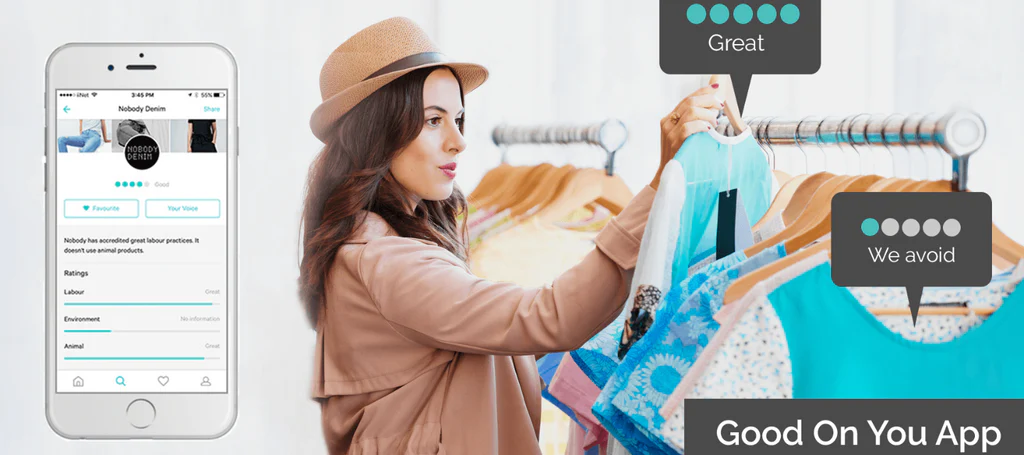
Good On You rates fashion brands on their ethics, including labor practices, environmental impact, and animal welfare. The app and website give shoppers plain-language grades, alternatives, and deeper reporting for those who want to dig in. Design-wise, the product is lean and visual, which helps moral complexity become actionable at the point of purchase.
Why it matters: Fashion is responsible for significant ecological and social externalities. Good On You reframes shopping as civic action, and it does so without shaming. Instead, it offers constructive guidance and celebrates companies doing the hard work of transparency.
Ideal user: Consumers who want to make more conscious purchases without wading through corporate sustainability reports. It is particularly useful for shoppers in the market for shoes, denim, or outerwear who want ethics to factor into their decision.
Real-world insight: The app succeeds because it recognizes that consumers will always balance price, style, and values. Good On You helps you triage those trade-offs quickly. Over time, informed shoppers create market pressure that pushes brands to improve, which is the product’s strategic aim.
8. Habitica: Productivity that gamifies small wins
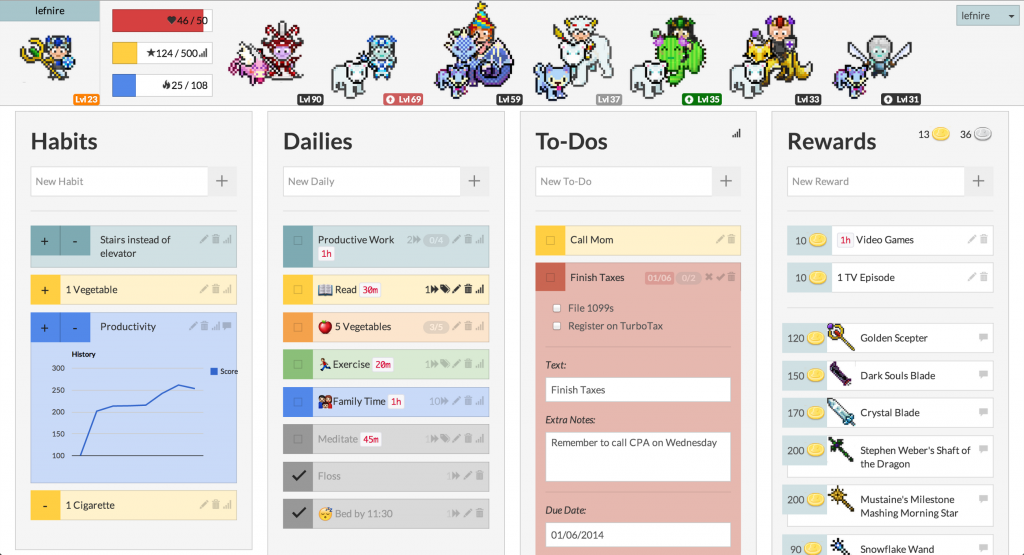
Habitica turns tasks and habits into a role-playing game. Completing chores earns points and unlocks rewards for your avatar, which creates a loop of positive reinforcement. The aesthetic is intentionally playful, borrowing from classic RPG interfaces, but the underlying behavioral science is well-considered and effective for the right audience.
Why it matters: Productivity apps that rely on endless notifications often erode focus. Habitica reimagines motivation as fun rather than coercion. For people who respond to play, it converts mundane tasks into memorable rituals.
Ideal user: People who love gamification and need help turning long-term goals into daily practice. Students, freelancers, and anyone with a checklist that threatens to become joyless will appreciate the affordances.
Real-world insight: The social aspect increases commitment. Joining parties or guilds makes habit formation a cooperative activity, which shifts accountability from a private sin to a public, playful mission. That combination of game mechanics and community is where Habitica truly shines.
9. Charity Navigator: Trust-first giving
Charity Navigator evaluates non-profits on financial health, transparency, and results. The site is data-centric without being cold, and it provides filters to find organizations by cause, size, or impact. Donors can move beyond intuition and see how dollars are allocated.
Why it matters: In a crowded philanthropic landscape, trust matters. Charity Navigator reduces informational asymmetry so donors can align giving with outcomes. That is important for both individual and corporate philanthropy, where reputation and impact are interlinked.
Ideal user: Donors who want evidence-based assurance that their contributions are used effectively. It is also useful for civic-minded professionals who want to recommend charities to colleagues or match workplace giving with strategic goals.
Real-world insight: The tool is most useful when combined with direct engagement. Ratings are a starting point, not the final word. If you find an organization that scores well, reach out, read its reports, and consider sustained support rather than one-off donations. The multiplier effect of informed, repeated giving is where impact compounds.
Reading the pattern: What these apps and sites share
Across these nine entries there are some patterns worth calling out because they point to where purposeful tech will head next. First, simplicity matters. Impact is often a function of sustained small actions, so designs that lower friction and avoid moral grandstanding win. Second, narrative is crucial. Most of these products tell compact stories about outcomes. That is how they convert abstract problems like climate change or educational inequality into concrete actions that users can see, measure, and feel good about. Third, social geometry is a recurring theme. Whether local or global, these platforms curate networks that make individual actions multiply. In tech-speak, they are designed to scale trust, not just attention.
Finally, the governance question is present in the background. Purpose-driven tech raises new expectations about transparency, reporting, and accountability. Users who care about impact also care about proof. The next wave of winners will not only be well-designed and mission-driven; they will also publish clear metrics and invite scrutiny.
How to choose the right purposeful tech for you
Start from your habits. If you search dozens of times a day, try Ecosia. If you want to reduce your household waste footprint, try Too Good To Go or Olio. If you want to build consistent practice in learning or life management, pick Khan Academy or Habitica. If your priority is direct social impact, Kiva and Charity Navigator help you choose where money does the most work. Purposeful tech is not one-size-fits-all. It is a toolkit. The best choice is the one that integrates effortlessly into what you already do, because ease is the great accelerant of long-term behavior change.
Another rule: combine platforms. Use Charity Navigator to vet nonprofits you find through Kiva or local initiatives you discover on Olio. Pair Habitica with a productivity system you already use. The intersectionality of these tools is where cumulative impact becomes visible.
Conclusion: A smarter ecosystem, built one small habit at a time
These nine websites and apps are not a manifesto for salvation. They are examples of something quieter and more powerful: thoughtful product design aimed at solving visible problems through measurable actions. Whether your interest is the climate, accessibility, education, or smarter giving, there is a tool here that will integrate into the way you live and work, and nudge outcomes in a better direction.
Purpose is not an aesthetic. It is a design constraint. The apps that embrace it do less flashy growth and more careful engineering of workflows, trust, and measurable impact. If you want to be part of the next phase of tech, where products make life easier and the world a little fairer, start by swapping one of your usual apps for one above. The change is small in isolation, but when millions of users make that same small swap, the world tilts. In a marketplace obsessed with novelty, these products are modern and useful in the oldest possible way: they make things better.