


Aiper Irrisense 2 review: laser-precise watering, but it wants a permanent home
We tested the smart sprinkler that maps your garden and waters individual plants by name. It’s brilliant with a hose in hand, less brilliant once you clock the price tag.
The Aiper Irrisense 2 is the most precise garden sprinkler we’ve come across. Point it at a rose bush and it’ll dose that rose bush, nothing else. Setup is quick, the app is well thought out, and once it’s mapped, watering a whole garden or a single pot takes seconds. The catch is that $499 buys you one fixed sprinkler, not a full irrigation system, and once it’s staked into the lawn it isn’t moving again without a fight.
Pros
- Targets a specific plant, line or full area with real accuracy
- App mapping takes minutes, not hours
- Skips watering automatically when it’s windy or about to rain
- Handles a full lawn and a single potted plant equally well
Cons
- £499 / $449 is steep for a single sprinkler head
- Permanent placement once the ground screws go in
- Needs mains power and a hose bib in the same spot, which limits where it can live
Quick specs
| Price | £499 (UK) / $449 (US) |
| Dimensions | 268 x 223 x 582mm |
| Coverage | Gardens 113–201m² |
| Max throw | Up to 12m, pressure-dependent |
| Connectivity | Wi-Fi |
| Watering modes | Area, line, point |
| Release | 2026 |
Aiper built its name on robotic pool cleaners, not sprinklers. It’s currently the biggest seller of those worldwide, and the Irrisense 2 is part of a push to turn that same automation into a full “smart yard” line rather than just a pool one. It shows: this feels like a company applying robotics know-how to a category that’s mostly stayed dumb for decades.
Design and build
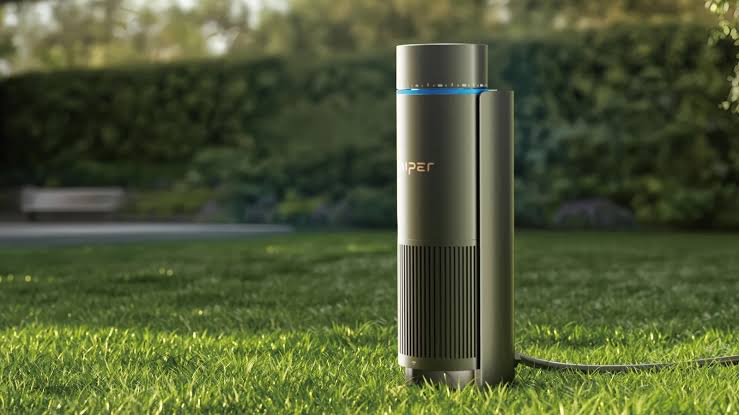
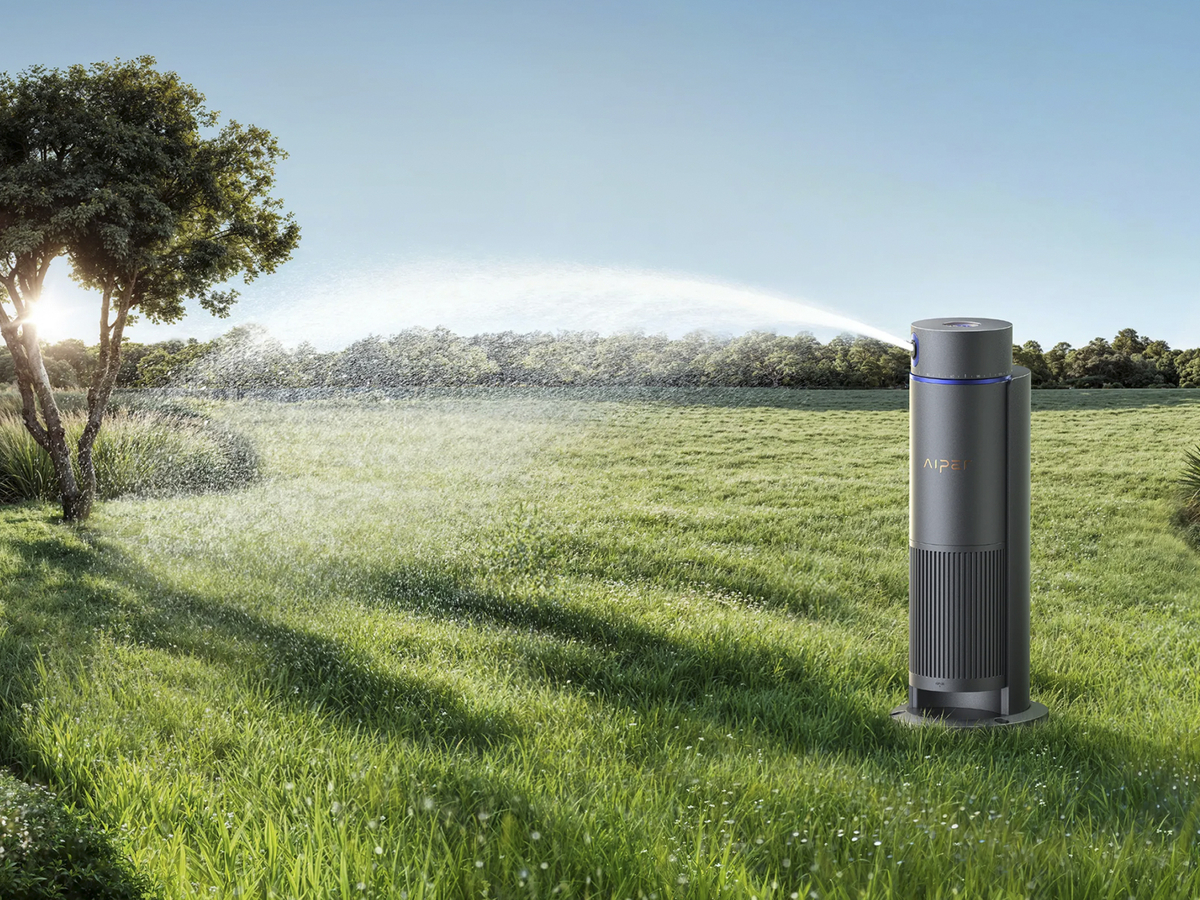
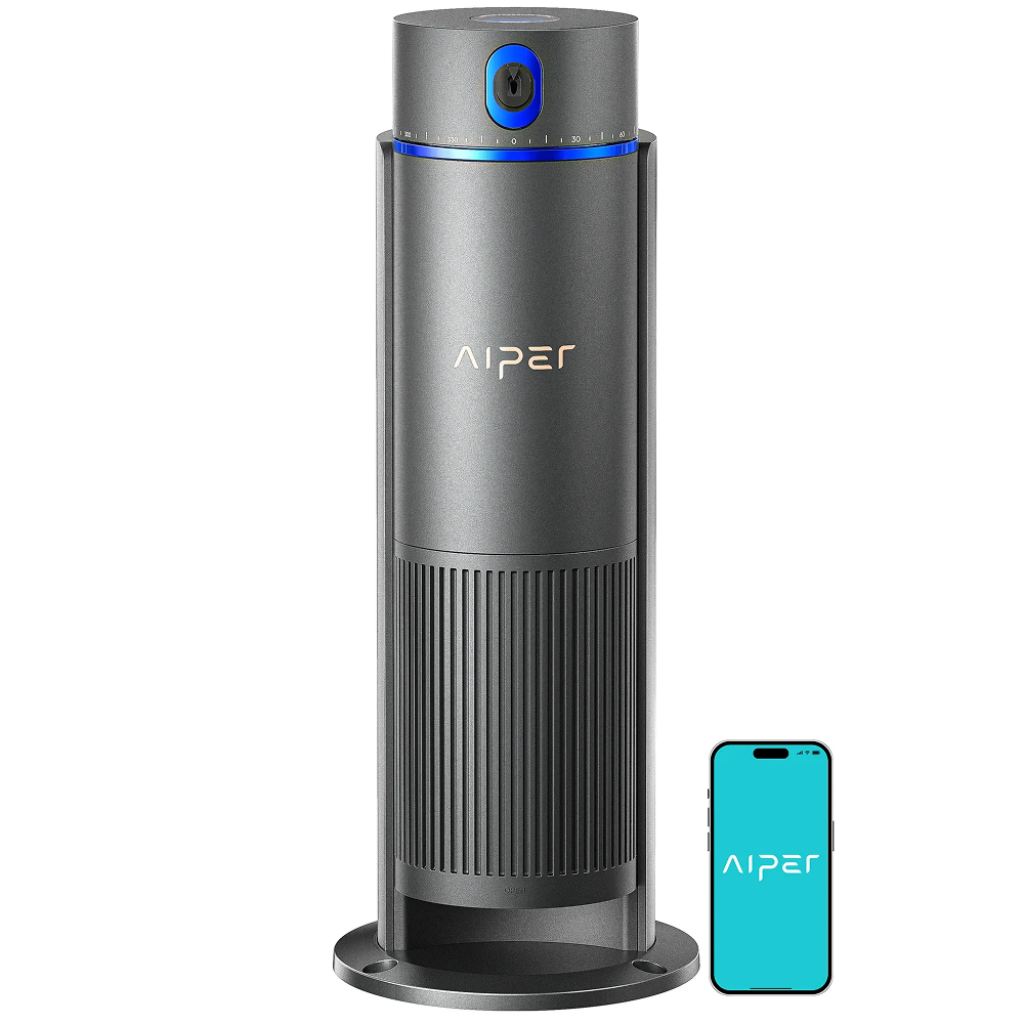
Nothing about the Irrisense 2 looks like a garden sprinkler. It’s a genuinely chunky unit, closer in size and shape to a robot vacuum’s self-empty dock than anything you’d normally hook to a hose, and at 582mm tall it’s not something you can tuck discreetly behind a plant pot.
That size exists for a reason. Inside is the hardware doing the actual work: a rotating head, a pressure-sensing system, and the electronics that turn taps on your phone into exact bursts of water aimed at exact spots. None of that comes cheap on space.
Installation asks more of you than a normal sprinkler does. You need a spot within hose reach that’s also close enough to an outdoor power socket, since there’s no battery option here. The sensible place to put it turns out to be against a fence or wall rather than in the middle of the lawn, which is where Aiper’s own product photos show it sitting. Centre-of-lawn placement means trailing a hose and a power cable across the grass, and nobody wants that.
Once you’ve found a spot, the sprinkler locks onto a stake that stays in the ground permanently, secured with ground screws and a hex key in the box. That’s handy the following spring: unscrew the sprinkler, pack it away for winter, then click it straight back into the same spot with the mapping still intact. But it also means the whole premise depends on picking the right location the first time. Get it wrong and you’re re-doing groundwork, not just picking the unit up and shifting it three feet over.
Performance
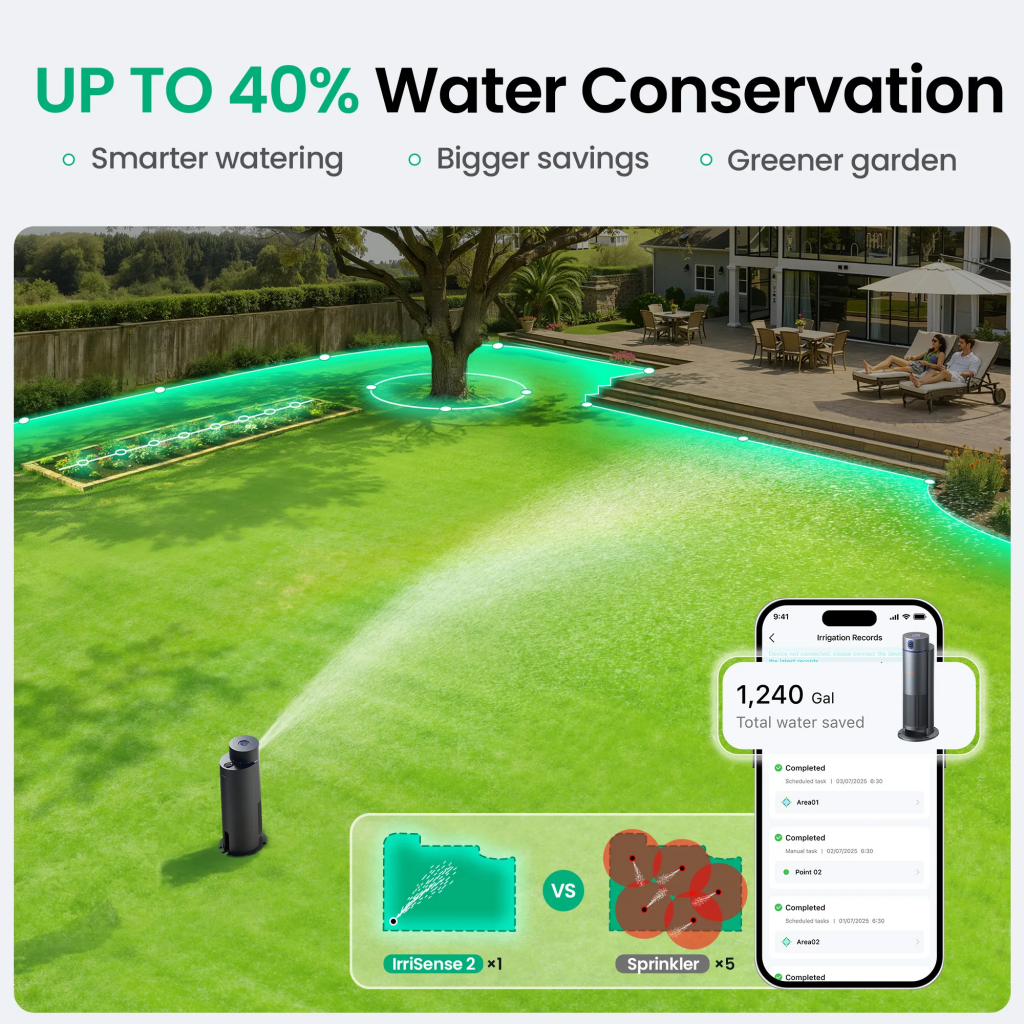
Where the Irrisense 2 earns its price is accuracy. After mapping the garden by walking the boundary points into the app, we set it running and it followed that boundary exactly, right up to a patio edge we half expected to get soaked sitting near. It didn’t.
The system works in three modes. Area mapping waters a whole zone, edging inward pass by pass so pressure (and therefore reach) drops gradually as it works toward the centre. Line mode strings a set of points together, useful for a border. Point mode aims at a single spot, and it’s here that the Irrisense 2 becomes genuinely impressive: set to dose one potted rose several metres from the unit, it rotated, dialled the flow down, and hit only that pot.
Aiper calls the underlying tech EvenRain, meant to spread water evenly along the whole jet rather than dumping most of it at the far end. In practice, more of the water still lands toward the end of the spray than the marketing suggests, and the “even” part comes from the sprinkler making repeated passes at reducing pressure rather than one perfectly balanced jet. It’s a minor gripe given the end result: the lawn and beds ended up soaked evenly either way.
Water pressure is the one thing you can’t fully control for. If someone runs a tap indoors mid-cycle, outdoor pressure drops, and when that tap switches off again there’s a sudden spike that can fling water further than intended. Scheduling around times when the house is unlikely to be using water solves it, but it’s worth knowing before you set a 6am cycle and forget about it.
One small annoyance for anyone outside the US: coverage in the app is set in inches, with no metric toggle. A 0.1-inch setting works out to roughly 2.5mm of rainfall equivalent, so the maths isn’t hard, but it’s an odd omission on a device that costs nearly £500 and ships to UK gardens as standard.
Software and smart features
The app is where the Irrisense 2 actually lives, and it’s a step up from the original Irrisense, whose app was flagged by early reviewers as unstable, with map edits that didn’t reliably stick. This second version feels considerably steadier: area edits held, and fixing a badly placed point was a quick tap rather than a fight with the interface.
Scheduling can be set per area rather than for the whole garden, so a thirsty flower bed can run more often than a lawn that prefers to dry out between waterings. There’s weather awareness built in too: the app checks the forecast and skips a scheduled run if wind or heavy rain is likely, and there’s an onboard rain sensor as a second check for when it’s already raining as a cycle would otherwise start.
Setup itself is quick on paper (Aiper quotes around 15 minutes) though budgeting closer to half an hour is more realistic once finding the right spot, running the hose and getting through the initial mapping walk are all factored in. That’s still far quicker than trenching in a buried irrigation system, which is really the comparison that matters here.
Should you buy it?
Buy the Irrisense 2 if precision matters more to you than price. It’s the best single-sprinkler option we’ve tested for gardens with mixed planting, where a lawn, a border and a few pots all want different amounts of water and a dumb sprinkler on a timer simply can’t tell the difference between them. Once it’s mapped, it runs itself, and the weather awareness means you’re not manually skipping cycles every time it rains.
Skip it if your garden is oddly shaped, heavily obstructed, or too big for one central unit to reach every corner. A single spray point, however clever, still has to physically reach every plant you want watered, and gardens over roughly 200m² or full of trees and outbuildings will expose that limit fast. Skip it too if $499 feels steep for a device you can’t casually move house with, since the whole system is built around staying exactly where you first put it.
For most people with a modest, mixed garden who are tired of dragging a hose around at 7pm every evening, this is the smartest sprinkler on the market right now. Just go in expecting to commit to a fixed installation, not a gadget you can reposition on a whim.
Also consider
Gardena Smart Irrigation Control (from around $210, plus valves and pipework) If your garden already has buried irrigation valves, Gardena’s smart controller plugs into that existing setup and adds app scheduling with HomeKit or Alexa integration for a fraction of the Irrisense 2’s price. You lose the point-and-shoot precision, but you gain proper multi-zone coverage across a much larger plot.
Netro Pixie (around $119) A simple smart hose timer for anyone who wants weather-aware scheduling without the mapping, the rotating head or the price tag. It won’t target individual plants, but it covers most of what people actually want from a smart sprinkler: never forgetting to turn the tap off again.
Rain Bird Landscape & Garden Drip Watering Kit (around $40) The out-of-sight option Aiper itself points buyers toward as an alternative. A drip kit routes water directly to the base of each plant through thin tubing, using a fraction of the water and none of the visible hardware. It’s more fiddly to lay out and has no app, but it’s the cheapest route to genuinely targeted watering.