

Screenless Wearables: The Anti-Display Revolution
Three major brands are about to launch screen-free fitness trackers. The question isn’t whether screenless is better. It’s whether you’re ready for what that actually means.
For most of the history of wearable tech, the display was the point. The original Fitbit Flex in 2013 had five small LED dots that glowed to show your progress toward 10,000 steps. It was not informative. It was motivational. You wanted to see those dots. Then smartwatches arrived and the dots turned into full colour touchscreens showing notifications, maps, heart rate graphs, and app icons, and wearables became small phones strapped to your wrist.
That trajectory is now reversing, and it’s reversing fast.
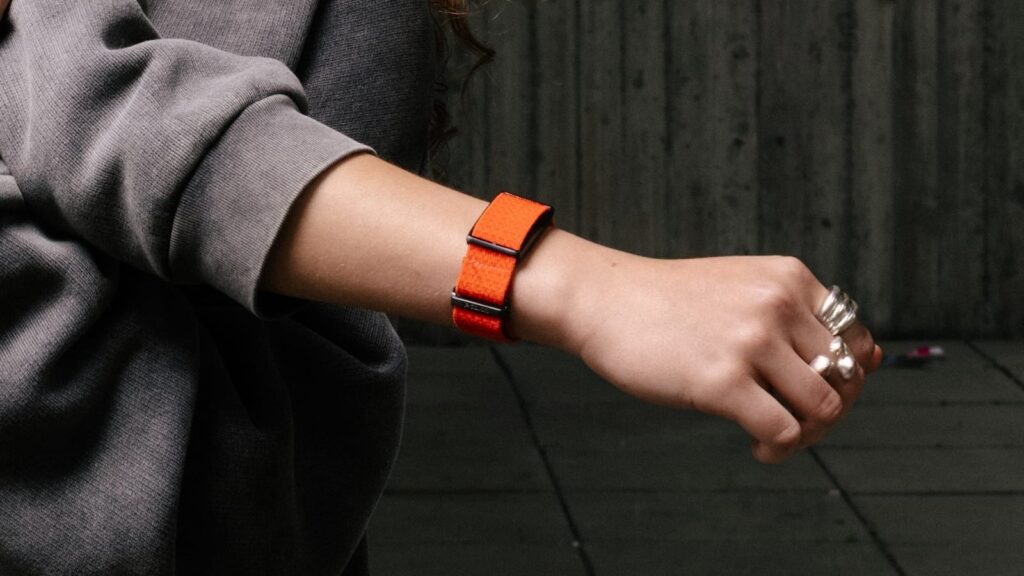
Whoop built a business worth billions on a strap with no display at all. Oura proved that a smart ring with no screen could generate more actionable health data than most smartwatches. And in the next few months, three of the biggest names in wearables will launch screen-free products that they’ve been quietly developing for years: Google with the “Fitbit Air,” Garmin with the leaked “CIRQA,” and Amazfit, which has already shipped the Helio Strap. The screenless category is no longer a niche. It’s becoming the place where the serious tracking conversation is happening.
I’ve spent the last two months testing every major screen-free wearable available right now: the Whoop 5.0, the Oura Ring 4, the Amazfit Helio Strap, and the Hume Band. I’ve also been following the incoming launches closely. Here is what I’ve learned, what the data actually shows, and who this technology is genuinely built for.
Why the screen disappeared
The case for removing the display is not about minimalism for its own sake. It’s built on three specific arguments that the data increasingly supports.
The first is sensor accuracy. Most wrist-worn devices use optical heart rate sensors that shine light through your skin and measure the reflection. The accuracy of this measurement degrades significantly during exercise, particularly during high-intensity intervals where wrist movement creates noise in the signal. Screenless bands designed for 24/7 data collection rather than glance-able notifications tend to be worn tighter, positioned more consistently, and prioritised for sensor quality over everything else. The Whoop 5.0, for example, produces recovery and HRV data that compares well with laboratory measurements. The Apple Watch, for all its sophistication, is less accurate during workouts because it’s balancing sensor function against the demands of being a multipurpose computer on your wrist.
The second argument is battery life. Every display is a drain. The Whoop 5.0 battery lasts around four to five days. The Oura Ring 4 lasts seven days. The Garmin Fenix 8, one of the most capable GPS watches on the market, lasts up to fourteen days in smartwatch mode and longer in expedition mode, but strip away the display and the tracking components and the battery overhead of that screen becomes obvious. The Amazfit Helio Strap, which has no display at all, lasts up to six days with continuous tracking on. When battery life becomes a non-issue, the barrier to wearing a device drops. You stop thinking about charging, which means you stop taking it off, which means you actually collect the sleep data that most smartwatch users miss because they leave the watch on the charger overnight.
The third argument is the most interesting and the least quantifiable. Screens create distraction. The notification buzz. The impulse to check the time. The habit of glancing at your wrist mid-conversation. Screenless wearables are invisible in a way that smartwatches cannot be, and there’s a growing body of feedback from users who find that removing the display from their fitness tracker changes their relationship with the data. You’re not checking your heart rate every ten minutes during a run. You’re not reaching for your wrist when a text arrives. The tracking happens in the background and the insights arrive when you choose to look at them, not whenever your phone decides to ping you.
Whoop 5.0: the category pioneer, still the standard
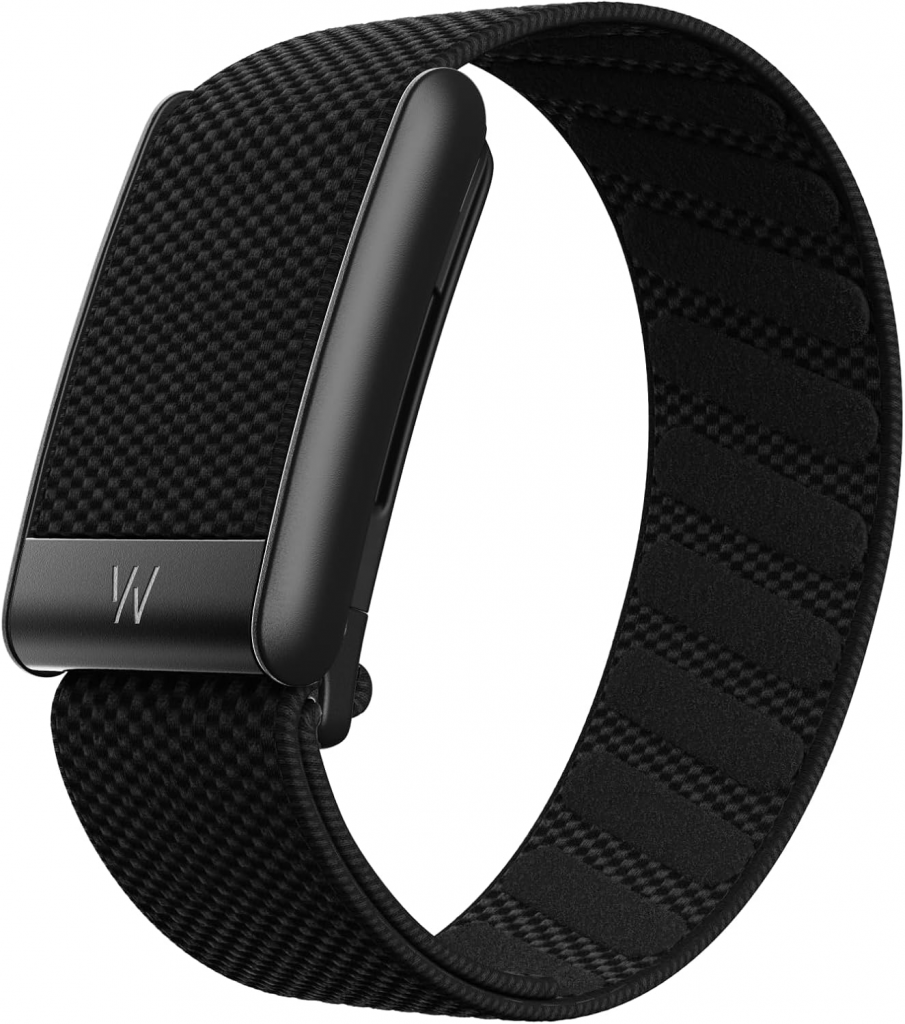
The Whoop 5.0 launched in late 2024 and at the time of writing it remains the most sophisticated screen-free recovery tracker available. The subscription model, which costs £15.99 a month in the UK and $17.99 in the US, is genuinely divisive and I’ll address it directly, but understanding what the device does first helps put the cost in context.
The Whoop’s primary output is three daily scores: Recovery (how ready your body is to handle training stress today), Strain (how hard you pushed yesterday), and Sleep (how well you actually rested). These aren’t arbitrary numbers. They’re derived from heart rate variability, resting heart rate, respiratory rate, skin temperature, and sleep stage data collected continuously throughout the day and night. The HRV data in particular is worth attention: longitudinal HRV tracking, followed consistently over weeks, is one of the most reliable indicators of overtraining, illness onset, and genuine recovery available outside a clinical setting.
In two months of testing, the Whoop correctly flagged two periods where my data showed declining recovery before I felt any subjective symptoms. One turned out to be the early stages of a cold. One corresponded with a period of significant work stress and poor sleep I hadn’t consciously acknowledged. Whether this is the device doing something clever or simply providing a structured mirror for patterns that were already there is an interesting philosophical question. Either way, the information was useful.
The subscription cost is the argument people make against Whoop and it’s a fair one. At £15.99 a month, you’re paying roughly £192 a year for access to your own data. Garmin, as a point of comparison, never paywalls data. If the CIRQA launches at a similar price point to other Garmin devices with no subscription, it will directly challenge Whoop’s model.
For now, the Whoop 5.0 is the most complete screen-free recovery tracker available and the one I’d recommend to anyone serious about training or performance optimisation. It is not the right device for someone who just wants to know how many steps they took.
Oura Ring 4: the most wearable wearable
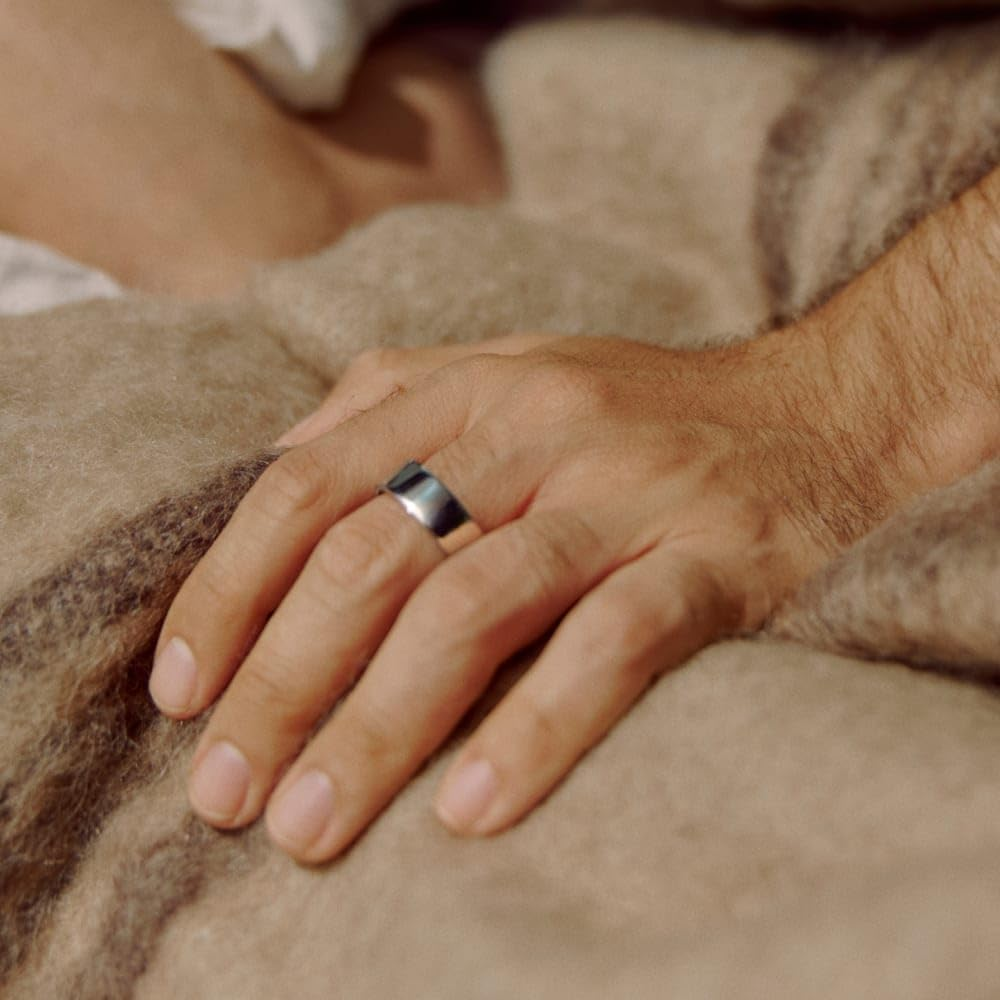
The Oura Ring 4 occupies a different position in this category. Where Whoop is explicitly for performance-focused users, the Oura Ring sells itself on the basis that it looks like jewellery, sits on your finger rather than your wrist, and collects sleep data with exceptional accuracy.
The sleep tracking case for the Oura is genuinely strong. A finger-based sensor sits closer to the radial artery than a wrist sensor, which means more accurate pulse data and, downstream, more accurate sleep stage classification. In my testing, the Oura Ring 4’s sleep data correlated more closely with how I subjectively felt than the data from any of the wrist-based devices I tested alongside it. If you wear an analogue or mechanical watch during the day and have no intention of switching to a smartwatch, the Oura Ring offers a wearable that genuinely disappears, collects data all day and night, and produces a morning readiness score you can act on.
The subscription here is £5.99 a month, significantly less than Whoop and structured differently: you can access basic tracking for free, with the subscription unlocking the more detailed AI-driven insights and women’s health features. The base experience is meaningful without paying, which is not something you can say about Whoop.
The limitation of the ring form factor is workout tracking. During exercise, the Oura captures heart rate data but it’s less accurate than a wrist device during high-intensity movement, and the ring doesn’t offer GPS. If workout tracking during activity is important to you, the Oura is better understood as a sleep and recovery companion to your main device, not a replacement for it.
Amazfit Helio Strap: the most interesting device nobody is talking about
The Helio Strap is Amazfit’s direct response to Whoop: a screenless wristband with a detachable sensor pod, no subscription, and sleep tracking that in my testing beat every Amazfit device I’ve previously used by a significant margin.
At £99 in the UK and $99 in the US, the Helio Strap undercuts Whoop so aggressively that the comparison almost doesn’t hold. You are not getting Whoop’s data depth, coaching interface, or community features. What you are getting is continuous heart rate tracking, HRV data, sleep stage analysis, and a daily readiness score, all without a screen, all without a monthly fee, and all delivered through the Zepp app which has improved considerably in the past year.
The detail that distinguishes the Helio Strap from most wrist trackers is the bicep wear option. The strap detaches from the standard wristband and connects to a bicep accessory, which positions the sensor over the brachial artery. During high-intensity exercise, this placement produces significantly cleaner heart rate data than wrist positioning, for the same reason the Oura ring works better for sleep: proximity to a major artery reduces motion artefact.
I spent three weeks wearing the Helio Strap on my bicep during training sessions and comparing the heart rate data to a chest strap monitor as a reference. The agreement was good. Not perfect, but closer than any wrist-based device I’ve tested at this price point. For athletes who find wrist trackers unreliable during exercise, the Helio Strap’s bicep capability is a genuinely useful differentiator.
The Zepp app remains the device’s weakest element. The data is there, the insights are reasonable, but the interface feels less polished than either Whoop’s or Oura’s and the long-term trend visualisations are less intuitive. For users who want to engage deeply with their data over months, this will frustrate. For users who want a daily readiness score and accurate sleep tracking without a subscription, the Helio Strap is a strong answer.
The incoming arrivals: what we know
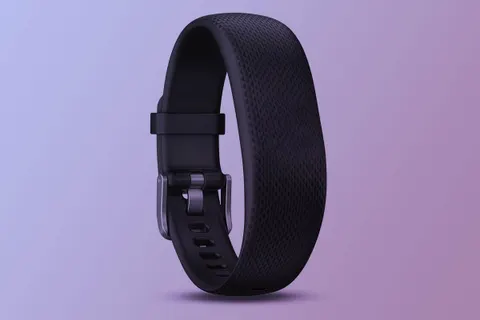
Three devices are expected in 2026 that will fundamentally reshape the screenless tracker conversation.
Garmin CIRQA. Leaked via an accidental listing on Garmin’s own regional websites in January 2026, the CIRQA is described as a “Smart Band.” Based on Garmin’s track record, this will almost certainly arrive without a subscription, feeding data into Garmin Connect where all of the brand’s health metrics already live. This is the device that will force the most direct conversation about Whoop’s subscription model. If the CIRQA delivers comparable HRV and recovery tracking at a one-time cost with no monthly fee, Whoop’s value proposition becomes a much harder sell to mainstream buyers.
Google Fitbit Air. Teased publicly enough that Steph Curry is already involved in the marketing, the Fitbit Air appears to be Google’s attempt to bring screenless tracking to a broader, more accessible audience than Whoop or Oura currently reaches. The Fitbit app is one of the most user-friendly fitness platforms available and the Charge 6, which remains Wareable’s top pick for general users, shows that Google understands how to make health data legible to non-obsessives. Whether the Fitbit Air will require a Fitbit Premium subscription (£7.99 a month in the UK) is the most commercially important question surrounding the device.
Hume Band. Already available to buy, the Hume Band positions itself between Whoop and Oura, with a simpler interface and an emphasis on guiding users toward better habits rather than overwhelming them with data. In testing I found it a reasonable entry point for people who find Whoop’s data volume intimidating, but it lacks the depth that makes Whoop worth £192 a year for performance-focused users.
Who screenless wearables are actually for
After two months of daily use across four devices, I’ve developed a reasonably clear picture of who benefits most from going screenless and who is better served by a smartwatch.
You should consider a screenless tracker if you train seriously and currently find your wrist tracker unreliable during workouts. You should consider one if you wear a mechanical or dress watch and have been reluctant to replace it with a fitness device. You should consider one if you’ve repeatedly found yourself taking off your smartwatch overnight to charge it and thereby missing the sleep data. You should consider one if the notification buzz from your Apple Watch or Galaxy Watch is something you’ve started to resent.
You should stick with a smartwatch if glanceable notifications are genuinely useful to you during the day. If you use your watch for contactless payments, navigation, or music playback without your phone, a screen-free band will leave those functions unaddressed. If you’re a casual exerciser who just wants step counts and a rough sense of daily activity, the data depth of a device like the Whoop 5.0 is significant overkill and the price is hard to justify.
The category is also not, despite its marketing, automatically better for sleep. The Oura Ring’s finger-based sensor gives it a genuine accuracy advantage. The Whoop’s data depth is meaningful. But an Apple Watch Ultra 3 worn overnight, if you can get used to the bulk, collects credible sleep data too. The screenless advantage is real but it’s not infinite.
The subscription question
Every conversation about screenless trackers eventually arrives at the subscription question, because Whoop and Fitbit Air are building business models around recurring revenue in a way that Garmin and Amazfit have declined to.
My view is that the subscription is a bad deal for most people and a reasonable one for a specific subset. If you’re a competitive athlete, a serious amateur racer, or someone managing a health condition where longitudinal data has genuine clinical relevance, the Whoop subscription pays for itself in the quality and depth of analysis you receive. For the general population of people who want to sleep better and train a bit more effectively, paying £192 a year for a wristband is hard to justify when the Amazfit Helio Strap does a good version of the same job for £89 once.
The CIRQA’s arrival will make this argument starker. When Garmin, with its decade of credibility in the fitness tracking market, offers a screenless recovery band on its existing no-subscription model, the case for paying monthly for data you theoretically own becomes much weaker.
The practical verdict
The screenless category is genuinely useful, genuinely differentiated from the smartwatch category, and genuinely growing. It is not a gimmick and the incoming wave of products from Google and Garmin confirms that the major players have concluded the same.
For right now, the Whoop 5.0 remains the best device in the category for performance-focused users who will engage with the data and act on it. The Oura Ring 4 is the best device for sleep tracking and for anyone who wants health data without any visual trace on their wrist. The Amazfit Helio Strap is the most interesting value proposition in the market, particularly for athletes who need accurate exercise heart rate data without a monthly fee.
The moment the Garmin CIRQA arrives with real pricing, the competitive landscape shifts. Until then, the screenless tracker market is operating at a price point and with a subscription model that appeals to enthusiasts more than mainstream buyers. The next six months should change that significantly.
Whether you’re ready for a device that gives you no information until you pick up your phone is a genuine personality question, not a technical one. Screenless wearables ask you to trust the process and check in rather than glance down every few minutes. Some people find that liberating. Others find it frustrating. There is probably no way to know which you are until you try one.