

Mile Markers: The Best Kit for the London Marathon in 2026
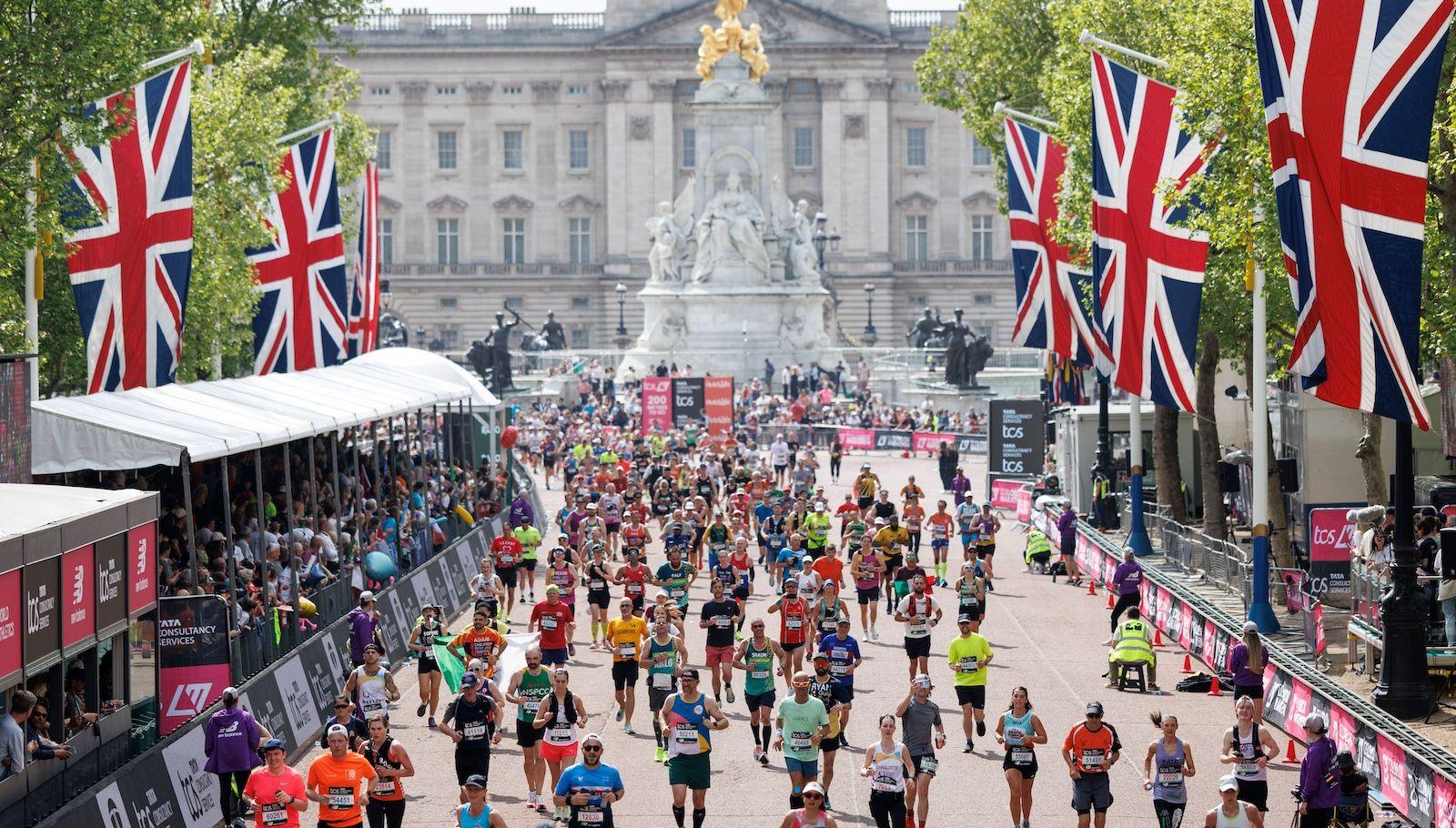
The London Marathon. Twenty-six point two miles of tarmac, tens of thousands of runners, a crowd that never seems to stop shouting your name even when you’re absolutely certain you’re about to die somewhere around mile nineteen. It is, without question, the greatest road race in the world; and it deserves great kit. Whether you’re chasing a PB, running your first, or just determined to finish before the pubs close, what you wear and carry on race day matters more than most people admit until they’re hobbling to the finish with a blister the size of a 50p coin. I’ve pulled together twelve of the best bits of kit for the London Marathon this year. Some of it I’ve run in. All of it, I’d trust.
Nike Alphafly 3: Race Day Super-Shoe
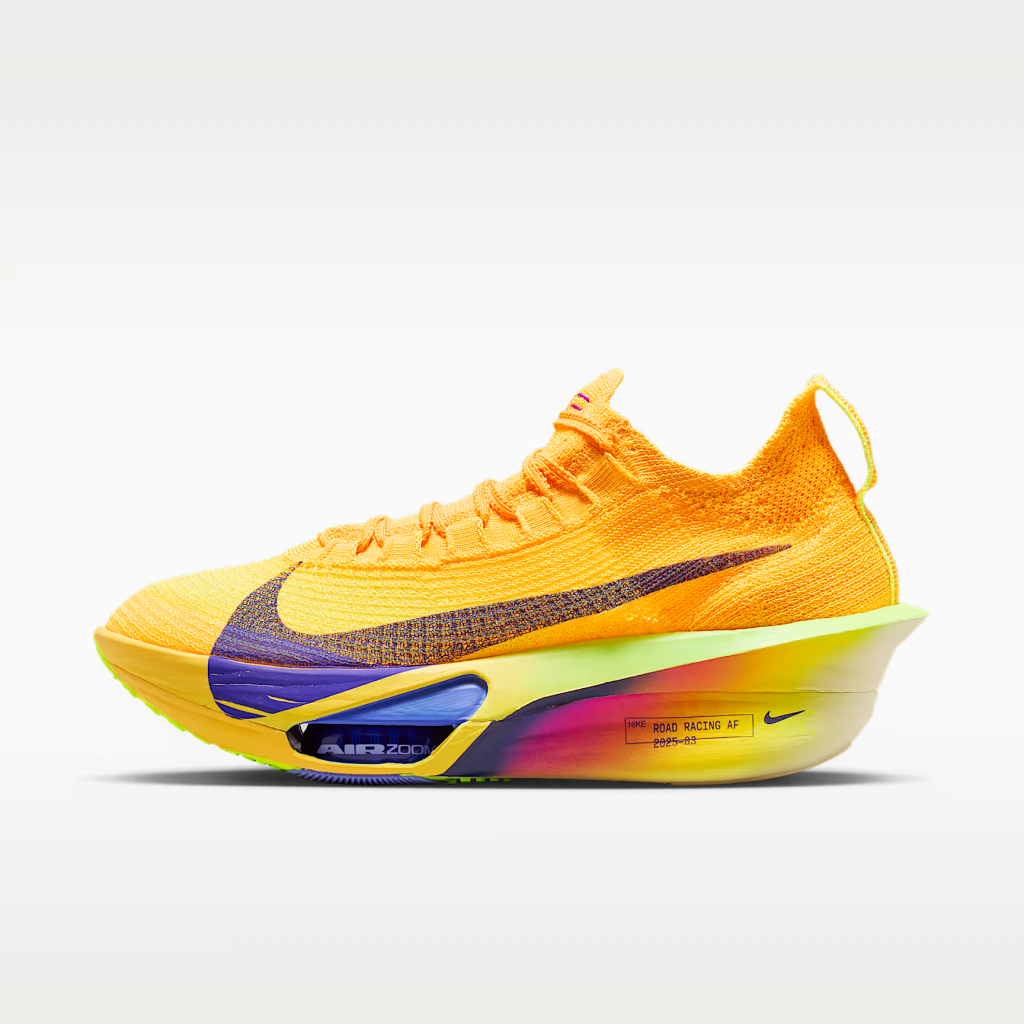
If you’re serious about a time, you need serious shoes, and the Alphafly 3 is the current gold standard of marathon racing footwear. Nike’s flagship racer pairs a dual-layer ZoomX foam midsole with two forefoot Air Zoom pods and a full-length carbon fibre FlyPlate, creating a ride that feels less like running and more like being gently propelled forward by physics. The latest version has dropped weight to 201g (UK9), added a wider carbon plate for improved stability, and switched to the breathable AtomKnit upper that handles heat far better than its predecessor. It’s the shoe that Eliud Kipchoge wore when he decided world records were too slow, and while most of us aren’t going to break any world records, there’s a genuine, measurable difference between running 26 miles in these and running them in any conventional trainer. At £285 it’s an investment, but so is four months of training.
ASICS Metaspeed Sky Tokyo: The Lightweight Alternative
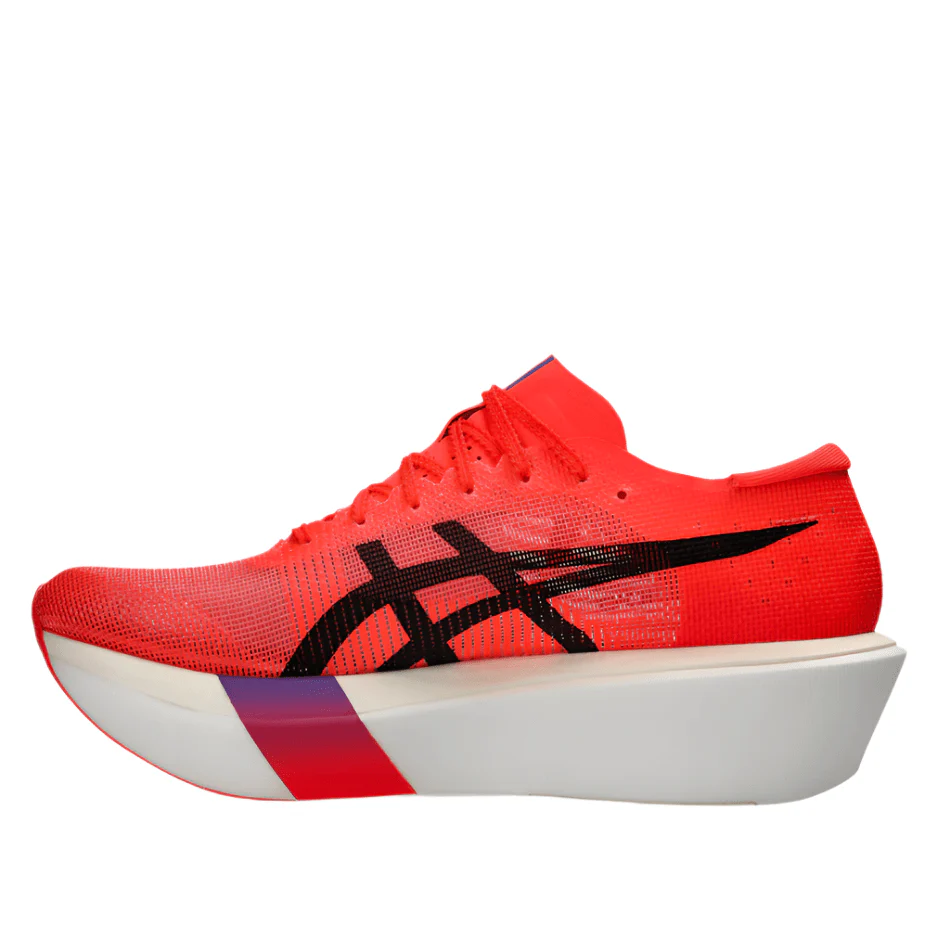
Not everyone wants Nike on their feet at the start line, and the Metaspeed Sky Tokyo gives you every reason not to. At a frankly ridiculous 169g, it’s one of the lightest plated racers on the market, pairing ASICS’s FF Turbo foam on the bottom with FF Blast Turbo on top for a uniquely bouncy, fast-rolling ride that feels efficient at every pace. The Run Testers consensus puts it right at the top of the marathon shoe rankings this year, alongside its sibling the Edge Tokyo, and I’d be hard-pressed to argue. The 5mm drop and rocker geometry work beautifully for midfoot strikers, delivering a smooth transition from landing to toe-off that makes faster paces feel more sustainable than they have any right to. Stack height is generous at 38.9mm without the shoe feeling unwieldy. If you’re a fan of ASICS and you want a race-day shoe that will give the Alphafly a proper fight, this is it.
Garmin Forerunner 970: The Training and Race Watch
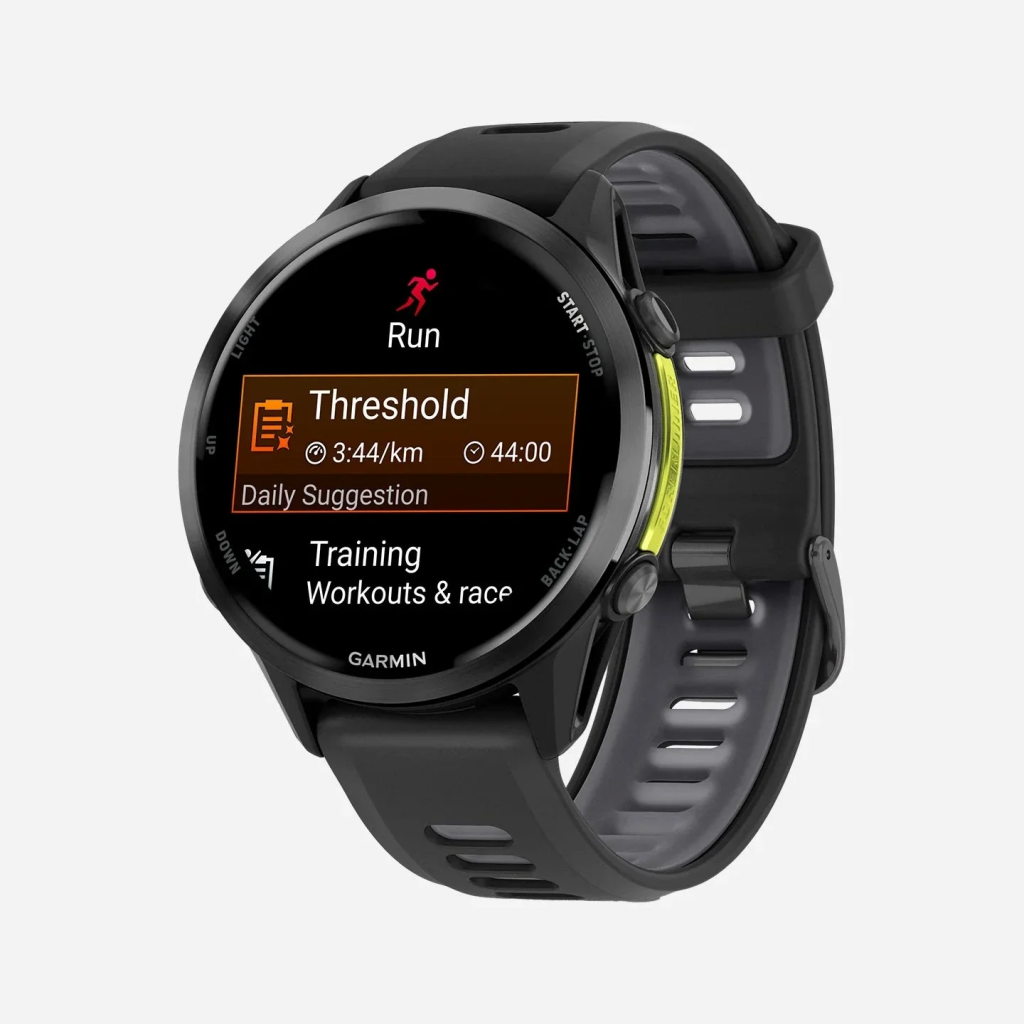
I’ve tried a lot of running watches. I keep coming back to Garmin, and the Forerunner 970 is the best Forerunner they’ve ever made, which makes it arguably the best pure running watch currently available. The sapphire crystal display means it survives contact with walls, doorframes and the occasional pavement, the titanium bezel looks genuinely premium, and the battery life covers marathon training weeks without constant overnight charging anxiety. Training analysis is where it earns its price: daily suggested workouts, HRV status, training readiness scores, race predictor, real-time pacing, it’s essentially a coach on your wrist. Dual-band GPS keeps pace data accurate even under central London’s bridge-heavy, building-dense course, where cheaper watches start guessing. It’s also a surprisingly comfortable all-day wear, thinner than the chunkier Fenix line without sacrificing a single meaningful feature.
Coros Pace 4: The Value Option That Punches Well Above Its Weight
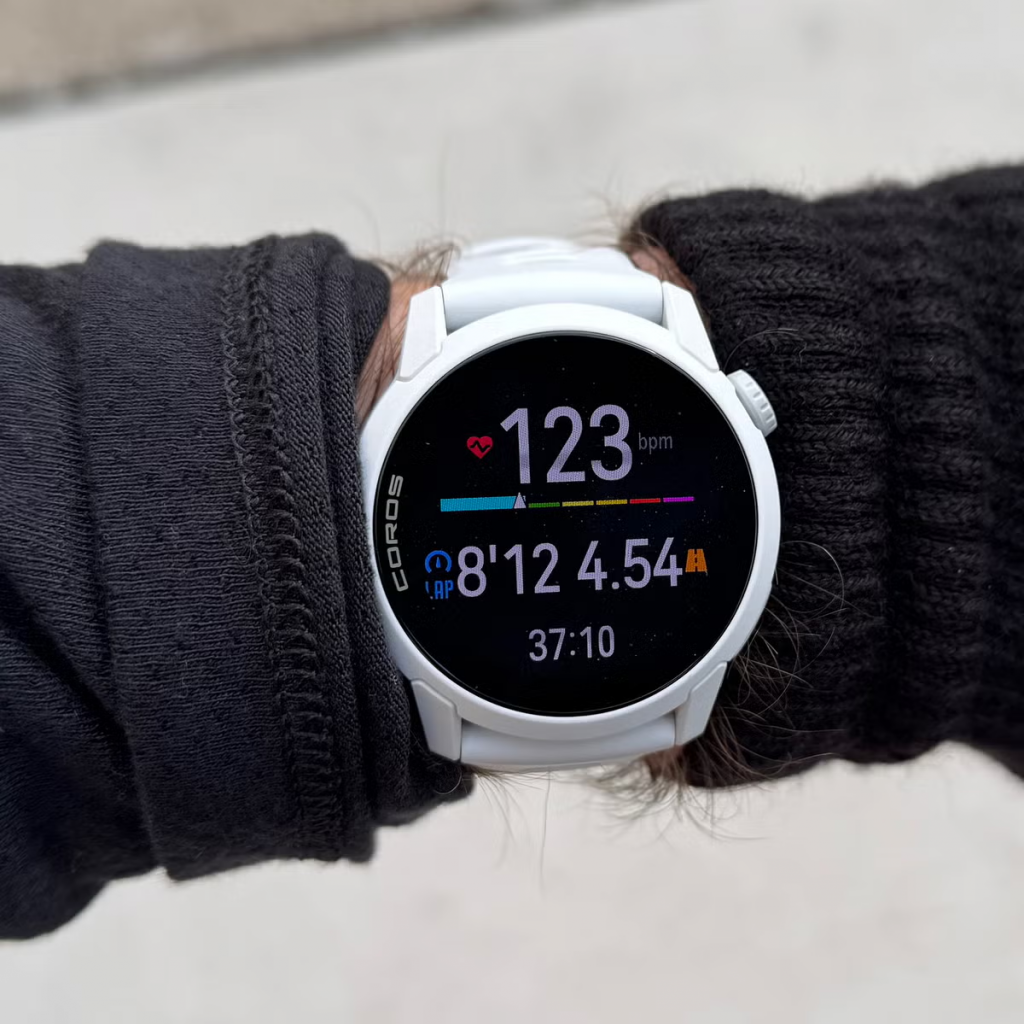
Not every runner needs to spend £600 on a watch, and the Coros Pace 4 makes a compelling case that you don’t have to. At roughly £200, it delivers GPS accuracy that matches watches twice the price, a bright 1.2-inch AMOLED display, and battery life that runs five to six days with daily training: including GPS. Coros has packed all of its training analysis features into this entry-level model, including VO2 max estimation, race predictor, and structured workout support, which means you’re not missing meaningful functionality compared to much pricier options. It’s light enough to forget you’re wearing it, the interface is clean and intuitive, and the GPS held up perfectly in recent head-to-head marathon testing against the Forerunner 970. For anyone entering their first marathon who wants proper data without a remortgage, this is the watch I’d tell a friend to buy.
Rab Phantom Pull-On Jacket : The One to Wear and Forget
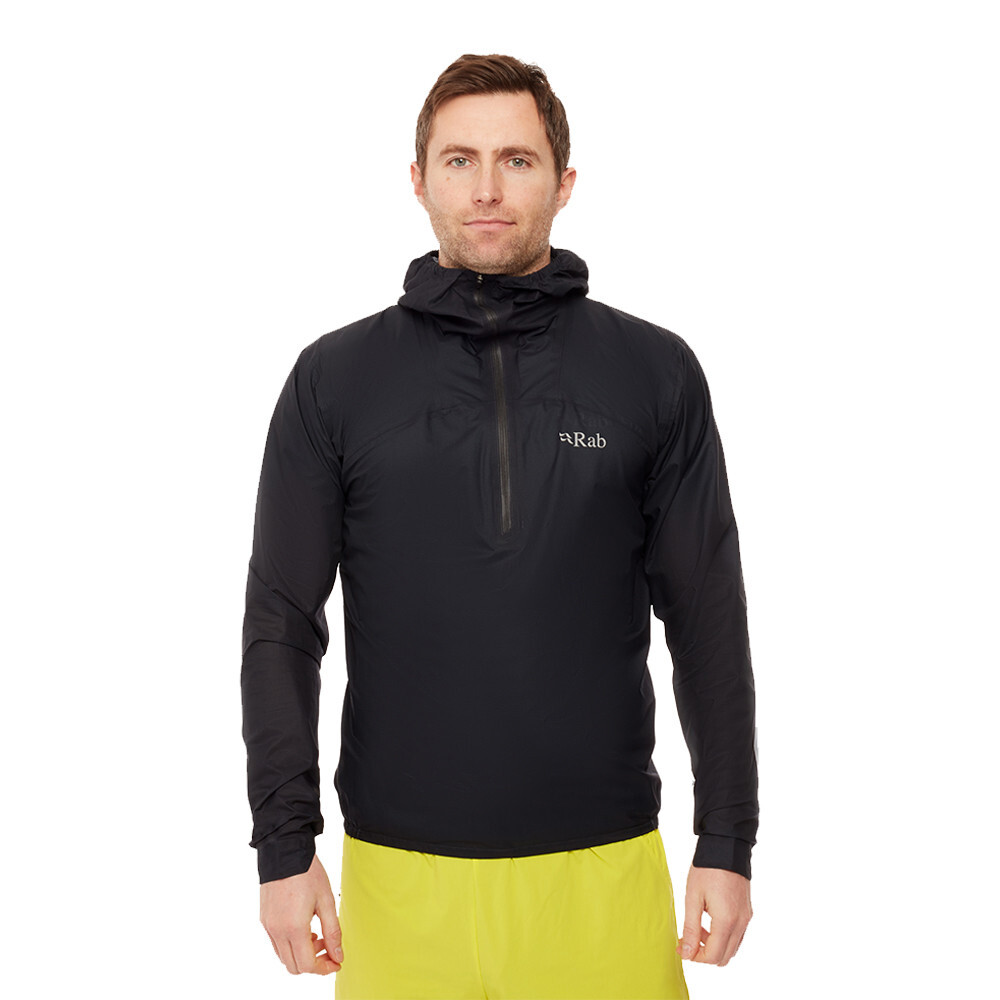
London in April can be anything. Sunny and warm on the start line, driving rain by Canary Wharf, wind whipping off the Thames at mile twenty-two. The Rab Phantom is how you prepare for all of that without carrying anything that slows you down. At 89g in a medium, it packs down to roughly the size of an avocado, stuffs into its own integrated stuff sack, and clips to the outside of a running vest so you can reach it mid-run without breaking stride. It’s built around Pertex Shield 2.5-layer fabric with fully taped seams, which means it meets the mandatory kit requirements for ultra races; so a road marathon in south-east England is barely a challenge. The elasticated cuffs sit neatly over your watch. The hood is close-fitting and stays put at pace. There are no pockets, no bells, no whistles; just a jacket that weighs nothing and keeps you dry when the weather decides to be awkward.
Salomon ADV Skin 12 Set: Hydration Vest for Longer Runners
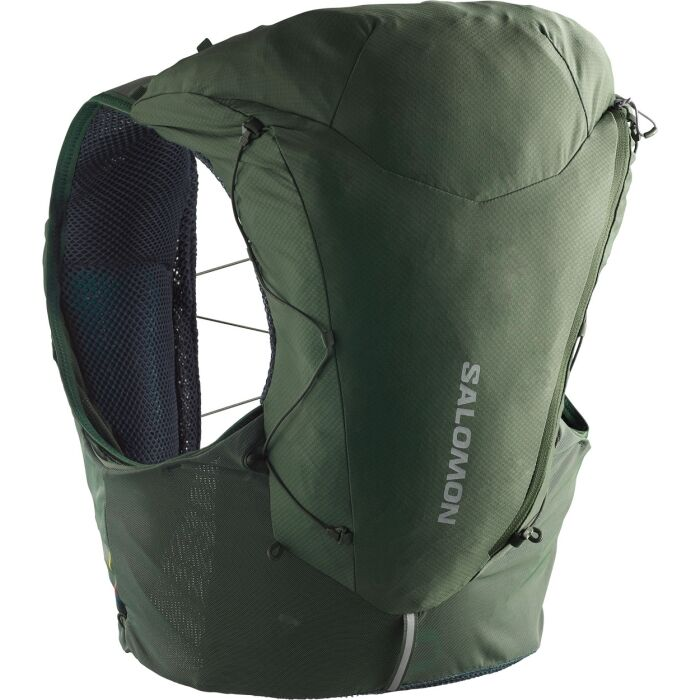
If you’re planning to carry your own nutrition and hydration rather than relying solely on aid stations, sensible for slower runners, essential for anyone who has stomach issues with unfamiliar gels, the Salomon ADV Skin 12 is the vest to have on your back. Sensifit construction wraps snugly around the torso and eliminates bounce in a way that budget vests simply don’t manage, and the eight pockets give you enough organisation to carry gels, a phone, a flat-packed jacket, and two 500ml soft flasks at the front for immediate drinking access. The elastic bottle toggles hold everything securely even on uneven ground, which matters less on the London course and more on training runs when you’re navigating roots and kerbs simultaneously. It’s been the gold standard of the category for several years, and the 2026 version hasn’t changed that. At 110g, you’ll barely notice it’s there, until you need it.
Hoka Clifton 10: Your Long Training Run Companion
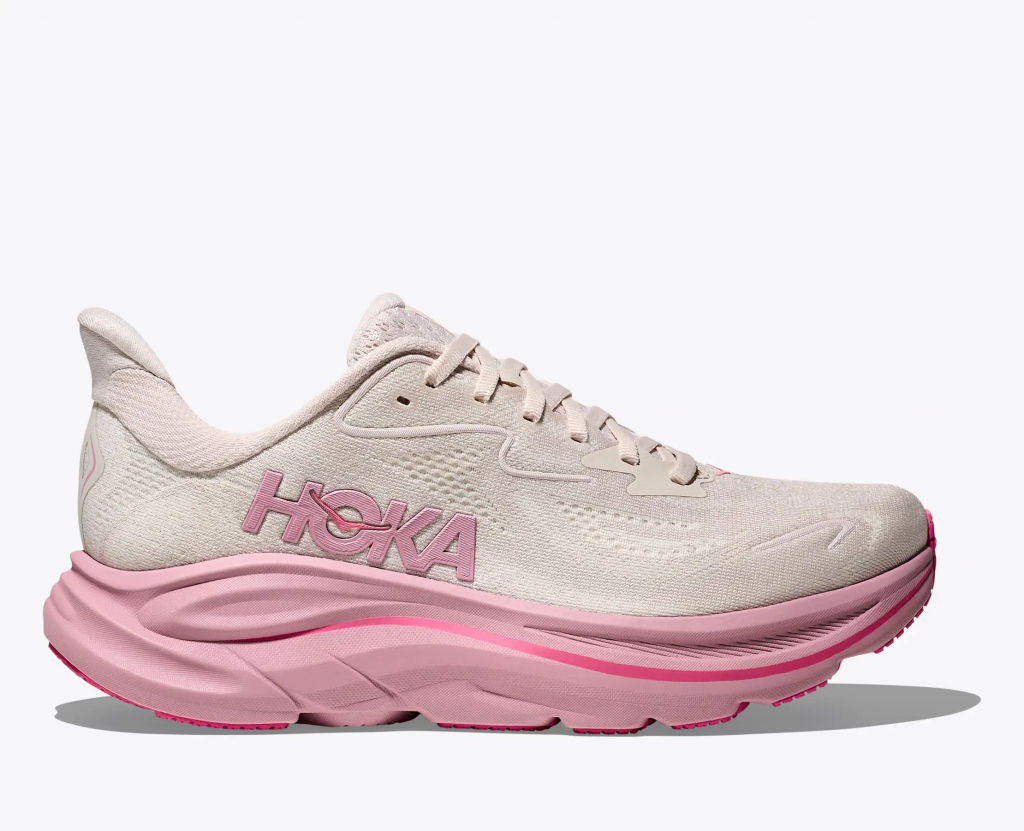
Here’s something I’ve learned from training: you don’t run the London Marathon in one pair of shoes. You run it in two or three, rotating through the training block to protect your legs, then race in the super-shoe on the day. The Clifton 10 is what goes on your feet for the long runs: the Sunday twenty-milers where comfort matters and speed is irrelevant. Hoka’s signature maximalist cushioning and early-stage Meta-Rocker geometry deliver a smooth, rolling gait that genuinely reduces fatigue over high-mileage weeks, and the Clifton 10 has refined the midsole foam with slightly better energy return than its predecessor without sacrificing an ounce of that signature plushness. At 242g it’s not light, but it’s not supposed to be, it’s supposed to feel like running on a soft road, which it does. Your legs will thank you come race day when they haven’t been beaten into submission by months of inadequate cushioning.
Maurten Gel 100 CAF 100: Race-Day Fuel
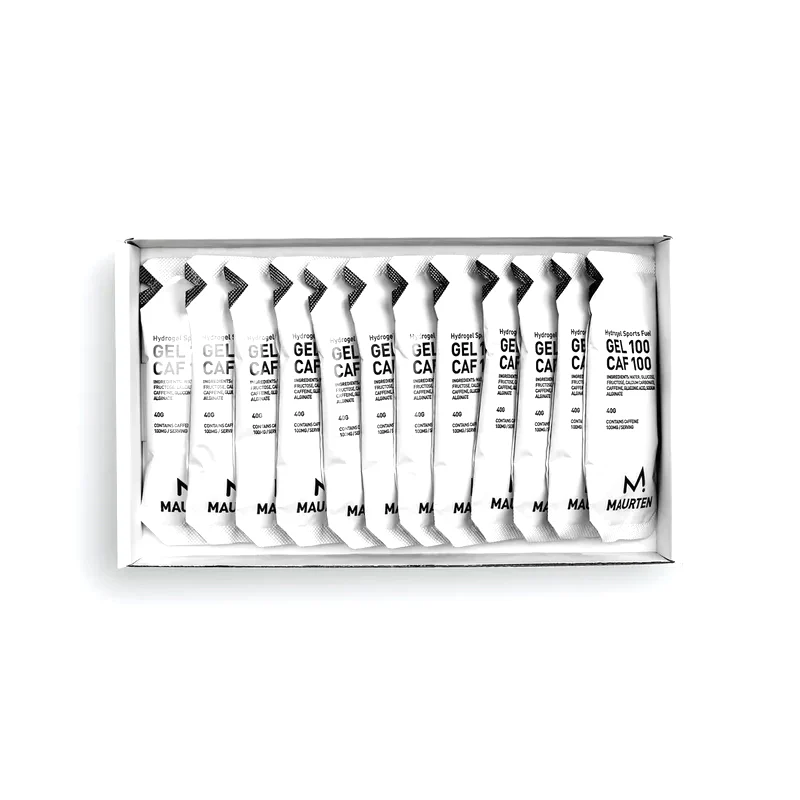
Nutrition on the day is where London marathons are won and lost, and Maurten has become the fuel of choice for elite runners for good reason. The Gel 100 CAF 100 pairs Maurten’s hydrogel delivery system, which uses alginate and pectin to encapsulate carbohydrates and reduce GI distress, with 100mg of caffeine for the kind of mid-race boost that feels almost unfair to everyone around you. The texture is unlike most gels: thicker, almost drink-like, without the chemical sweetness that makes lesser gels nauseating by mile fifteen. The caffeine variant is something I tend to save for mile eighteen onwards, when the legs have gone quiet but the head needs convincing to keep going. It’s not cheap, around £3.50 per gel, but when you’re asking your body to run twenty-six miles on tarmac, this isn’t the place to cut corners on cost.
Tracksmith Allston Short: The Running Short That Actually Fits
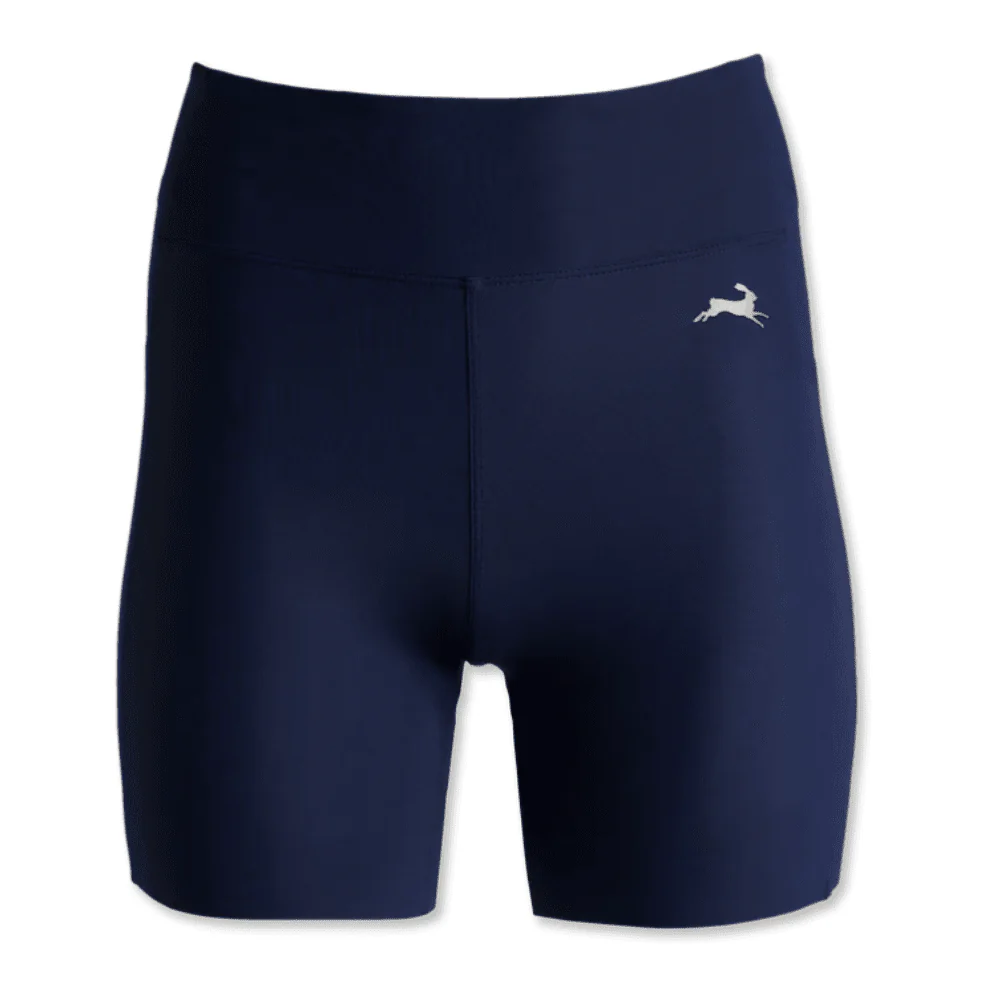
British runners are chronically undersold on shorts. Most race-day shorts are either too long, too short, or made from fabric that chafes by mile five with the enthusiasm of a determined enemy. Tracksmith’s Allston Short is none of those things. Cut to a 4-inch inseam with a built-in liner brief, made from a lightweight stretch nylon that wicks sweat without clinging, and featuring a zip back pocket large enough for a key and three gels without bouncing, it is the best marathon short I’ve worn. Tracksmith is an American brand with serious running credibility: founded by runners, designed around actual running bodies, and the attention to detail in the Allston shows: flatlock seaming, a reflective logo, deep side pockets for soft flasks, and a waistband that doesn’t roll down when you’re sweating. Worth every penny.
Whoop 4.0: Recovery Tracker for the Training Block
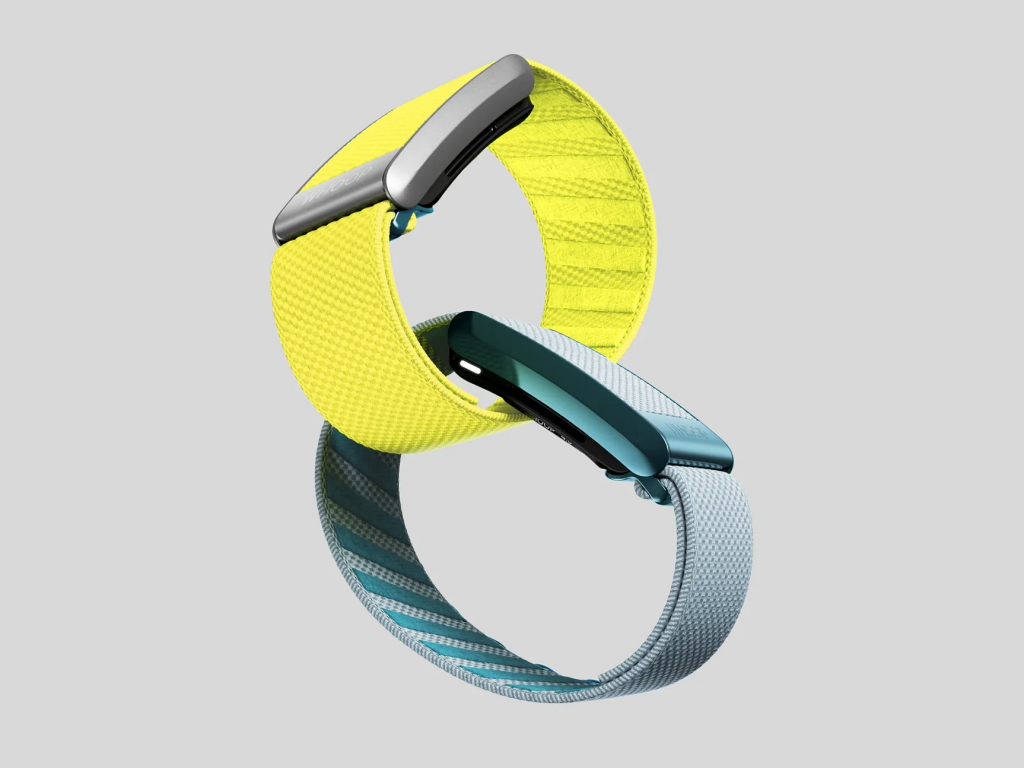
Race day is one day. The twelve to sixteen weeks of training leading up to it are where the London Marathon is actually decided, and the Whoop 4.0 is the device that keeps you honest about the process. Unlike a traditional smartwatch, Whoop is a strap without a screen; it tracks HRV, sleep quality, resting heart rate, respiratory rate and strain continuously, and delivers a daily recovery score each morning that tells you whether your body is ready for a hard session or needs an easy day. After two weeks of data it starts learning your patterns and making genuinely useful recommendations, and the strain coach helps you hit the right training load without consistently overdoing it. As someone who has turned up to tempo runs half-recovered from a poor night’s sleep and paid for it at mile six, having an objective daily read on your body’s state is more useful than any training plan on paper. Membership required after the hardware , but it earns its keep.
AfterShokz Shokz OpenRun Pro 2: Headphones That Let You Hear the Crowd
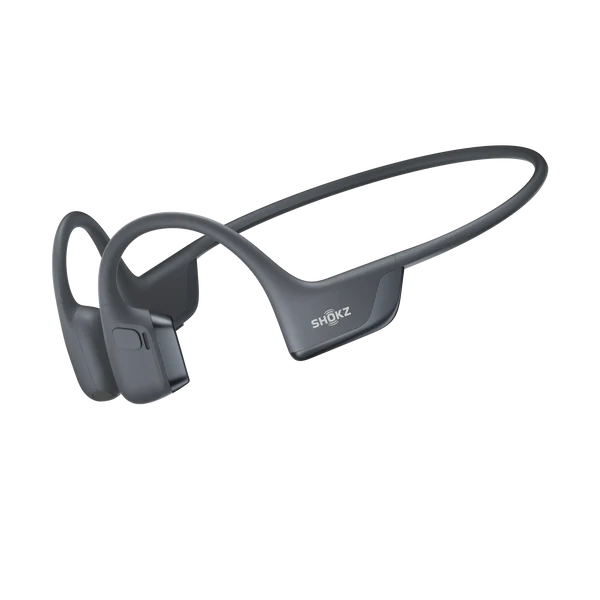
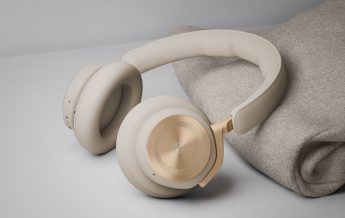
Headphones at the London Marathon are both essential (for miles fourteen through nineteen when the crowd goes quiet and your playlist is all that stands between you and stopping) and potentially catastrophic (for missing a marshal’s instruction, a cyclist, or the magnificent sound of Tower Bridge). Bone conduction solves this. The Shokz OpenRun Pro 2 sit against your cheekbones rather than in your ears, transmitting sound through vibration while leaving your ear canals completely open to the world around you. The sound quality is genuinely impressive for how they work: better bass response than the previous generation, and they’re IP55 rated so April’s inevitable drizzle won’t take them out. Battery lasts ten hours on a single charge, the fit is secure enough to survive 26.2 miles of head movement, and at around £150 they’re priced sensibly for a piece of kit that significantly improves both enjoyment and safety on the road.
Compressport Full Socks V4: The Unglamorous Essential
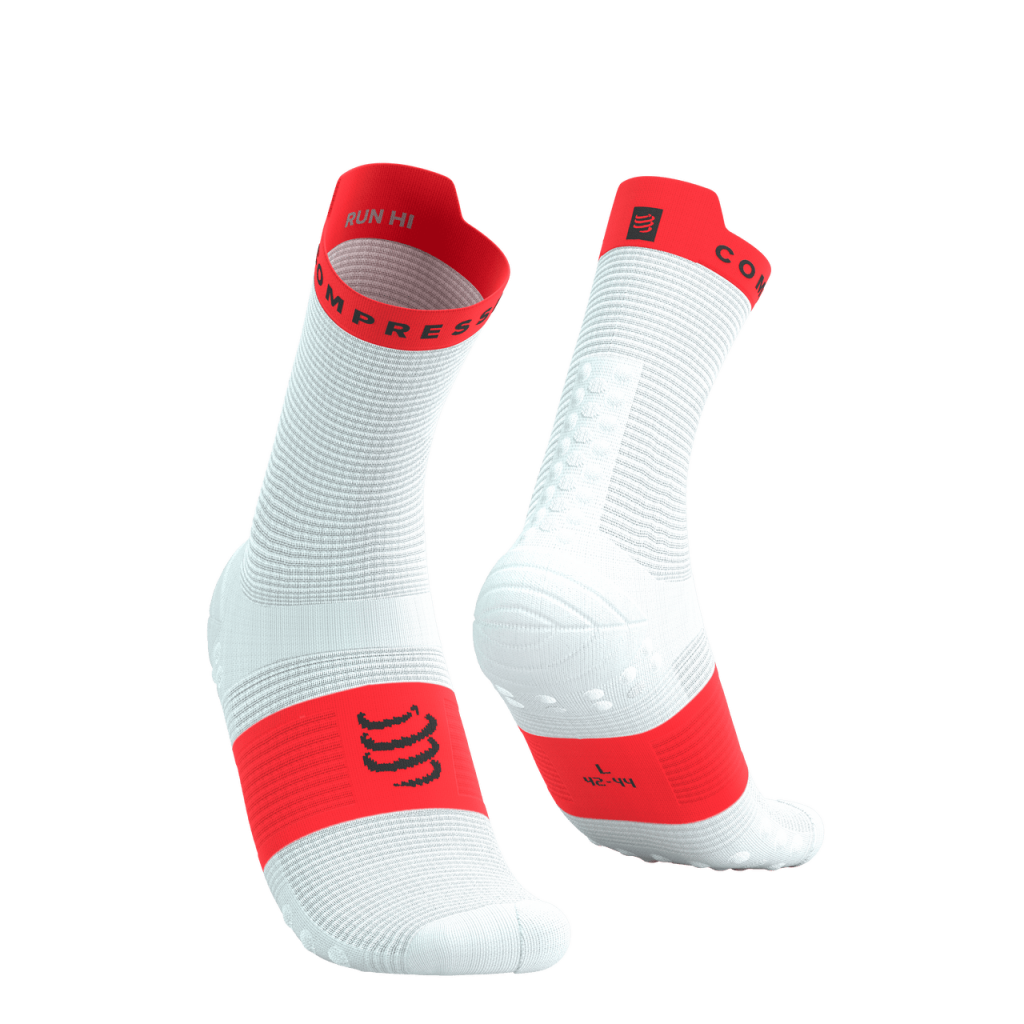
Nobody talks about socks. Nobody should have to talk about socks. And yet, ask any experienced marathoner about their worst race-day regret and there is a non-trivial chance the answer involves blisters that appeared somewhere around mile twenty and made the remaining six miles a very specific kind of suffering that no gel or motivational crowd noise can fix. Compressport’s Full Socks V4 are proper performance compression socks, not the half-hearted kind: they cover the calf and the foot in graduated compression that genuinely reduces lower-leg fatigue and swelling over long distances. The 3D Dots silicone grip system prevents slipping inside the shoe, the seamless toe construction eliminates the single most common source of long-run blisters, and the CoolMax fibre wicks moisture throughout. They look ridiculous in photographs. They will save your race. Buy two pairs, wear them in during training, thank me later.
The London Marathon doesn’t ask much of you. Just 26.2 miles, several months of dedicated training, the occasional 5am alarm, and enough mental fortitude to keep moving when every reasonable part of your brain is suggesting you stop. The kit can’t do the running for you: but the right shoes genuinely make you faster, the right watch genuinely keeps your training honest, and the right jacket genuinely means you spend mile eighteen thinking about the finish line rather than the rain. Equip yourself well, train consistently, eat something at mile nine before you think you need to, and give the crowd at the Cutty Sark a wave. They deserve it. So do you.