



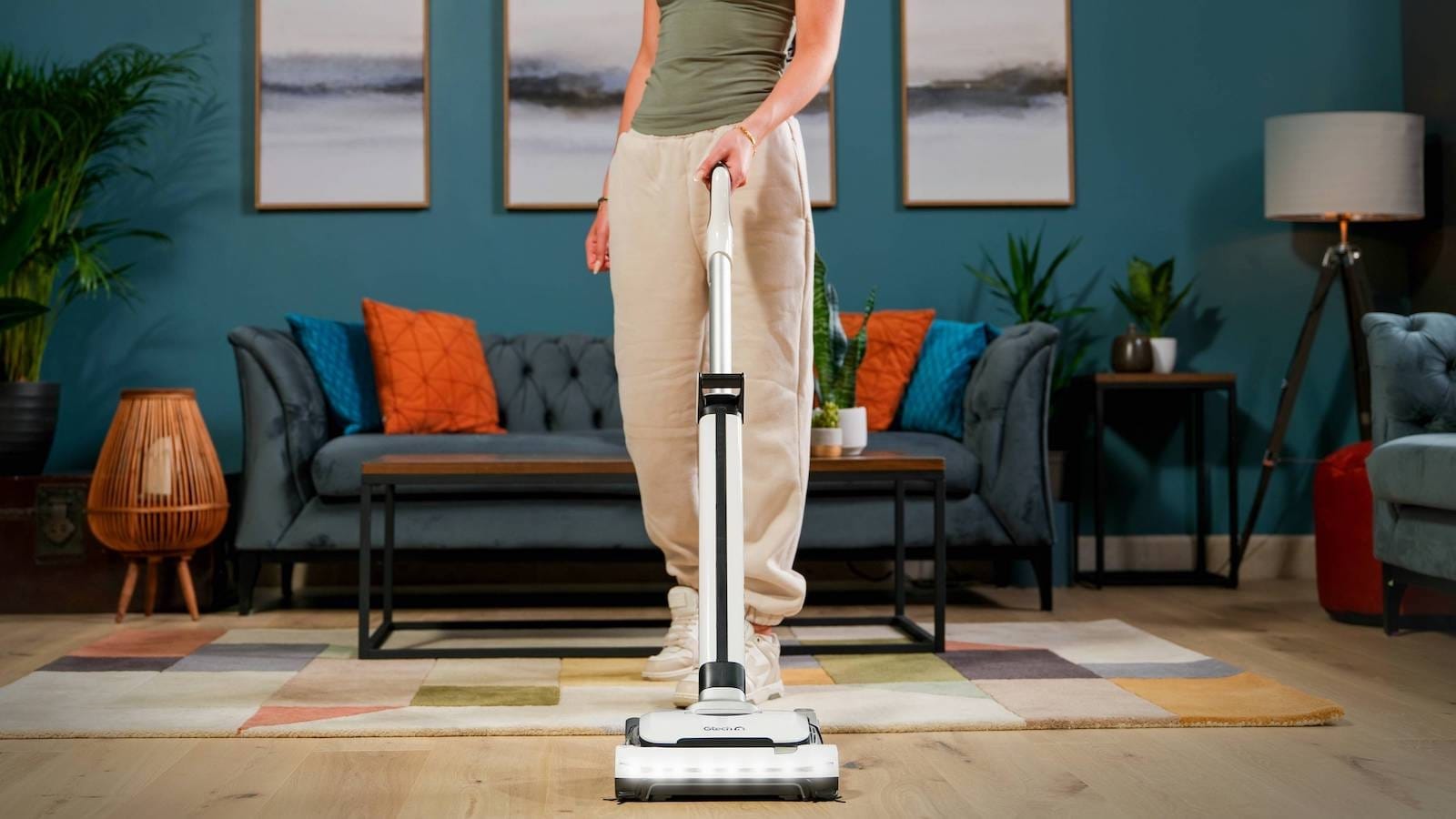
Gtech AirRam 3 review: the vacuum brand you’ve probably never heard of is quietly beating Dyson and Shark at their own game
The Gtech AirRam 3 is the kind of product that makes you question why you ever paid more for something noisier. It does one thing: clean floors. No handheld mode, no attachments, no switchable settings. Just relentless, self-propelling suction that handled every test thrown at it, including a notoriously difficult woven carpet that defeated every other vacuum tested in the same period. At £399, it sits at the premium end for a vacuum with no accessories, and the foot-operated controls and staircase limitations are real caveats. But for floor cleaning power alone, nothing tested comes close.
Quick Specs:
Dimensions: 112 x 29.7 x 25.6 cm
Weight: 3.2 kg
Power: 22V lithium-ion
Dust bin capacity: 0.8L
Charge time: Under 3 hours
Run time: Up to 40 minutes
Noise level: 101 dB on hard floors
Price: £399 from gtech.co.uk; also available from Amazon, Argos and Lakeland
The brand you walked past
Unless you have done a fairly deep vacuum rabbit hole, you probably haven’t heard of Gtech. No prime-time TV ads, no glossy brand campaigns, no Dyson-style design mythology. Just a British company, founded in 2001, that has spent over two decades quietly building one of the more distinctive vacuums on the market.
The AirRam concept goes back a long way. Based on the push-and-pull carpet sweeper, the kind your grandmother had, the AirRam takes that upright design philosophy and adds serious suction power and, in this third generation, a set of features that make it genuinely competitive with vacuums costing similar money from far better-known names.
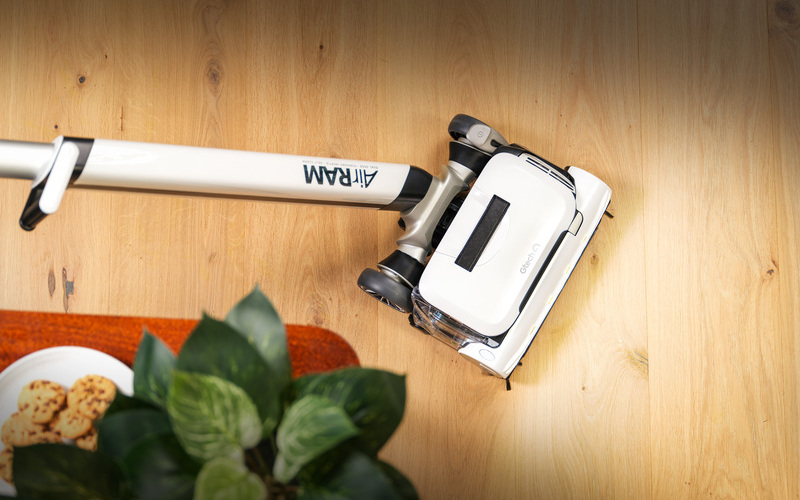
What makes the AirRam unusual is where it puts the weight. Almost every other cordless vacuum on the market is a stick vacuum: motor in the handle, suction head at the bottom, everything balanced around your wrist and forearm. The AirRam does the opposite. The motor, the battery, the dust bin, all of it lives in the floor head. The handle is just a handle. This low centre of gravity makes it noticeably easier to use for extended periods, which is one of those things that sounds like a minor design detail until you’ve cleaned a five-storey house with it and your arms still feel fine.
It also stands up on its own. No leaning it against the wall, no hunting for somewhere to prop it. It stands on its charging base, charges there, and is ready to grab the moment you need it. This sounds small. In practice it changes how often you use the vacuum.
Design & Build
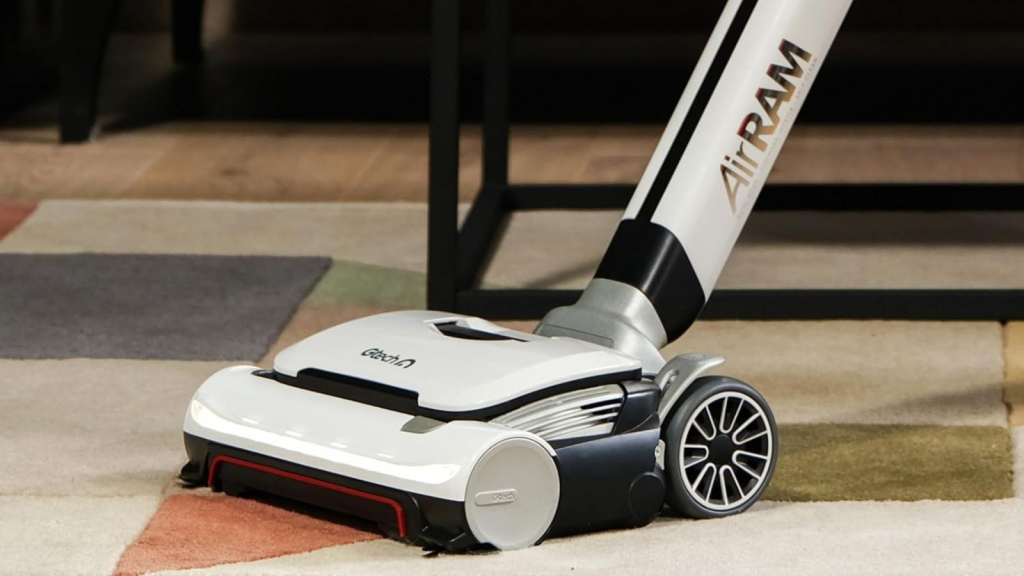
The AirRam 3 is a proper piece of kit. The floor head is strengthened with premium aluminium parts, the handles are leather-wrapped, and the whole thing has an 8-level telescopic handle that adjusts cleanly to any height. It is not trying to look futuristic. It looks purposeful and well-made, in the way that good tools do.
The floor head is wide, which is part of what makes it so efficient on open floor areas. A full LED strip runs across the front, illuminating the path ahead and picking up dust that would otherwise hide in shadows under furniture. Two rotating side brushes sweep debris along skirting boards and into the main suction path, handling the edges that most vacuums miss on a straight pass.
The easy-empty bin sits in the floor head rather than up at handle level, keeping weight low and your arms fresh on long cleans. One slide of the ejector arm and it empties cleanly. No bag to buy or replace. The filter is self-cleaning: Gtech’s vibrating filter technology reduces dirt build-up throughout the product’s life, which means no periodic washing and drying cycle to forget about.
One design quirk worth knowing upfront: the power button is on the floor head rather than on the handle. You tap it with your foot. It becomes second nature quickly, but it’s not a natural gesture the first few times, and it is an awkward ask for anyone who struggles with balance or mobility. There’s no comfortable workaround.
How It Actually Works
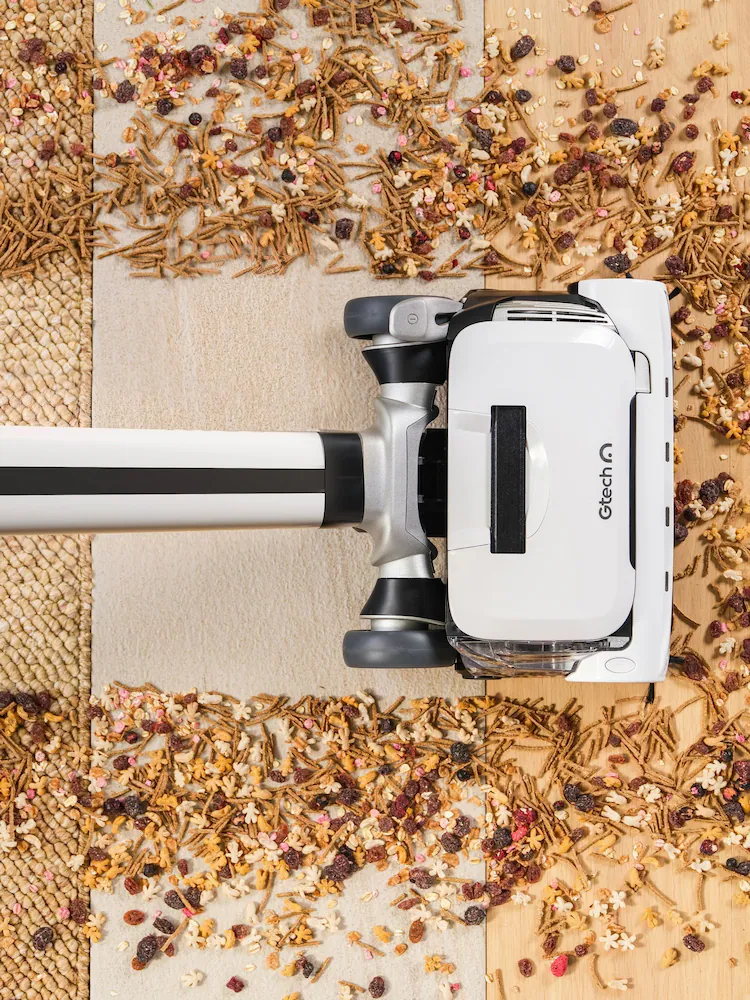
Gtech’s patented AirLOC system is the engineering that makes the suction performance possible. The mechanism works on a push-pull principle: the internal flap opens on the forward stroke to take in larger debris: cereal, pet hair, cotton wool buds, things that would block other vacuums; then closes on the pull-back to generate the seal needed to draw in fine dust. Most vacuums do one or the other reasonably well. The AirRam handles both in a single pass.
Forward Inertia Propulsion is the other feature that changes the experience of using it. As soon as the vacuum turns on, it pulls forward. Not gently. Confidently. The effect is that you’re guiding the machine rather than pushing it, and on a long clean across multiple rooms this makes a material difference to fatigue. With most stick vacuums, the last floor of a big clean is noticeably harder work than the first. With the AirRam, that fatigue simply doesn’t build.
There are no power modes to select. The AirRam 3 reads the surface it’s on and adjusts automatically between carpet and hard floor without any input from you. For anyone who has stood in a doorway fiddling with a vacuum setting, this is a genuine relief.
Performance: The Tests
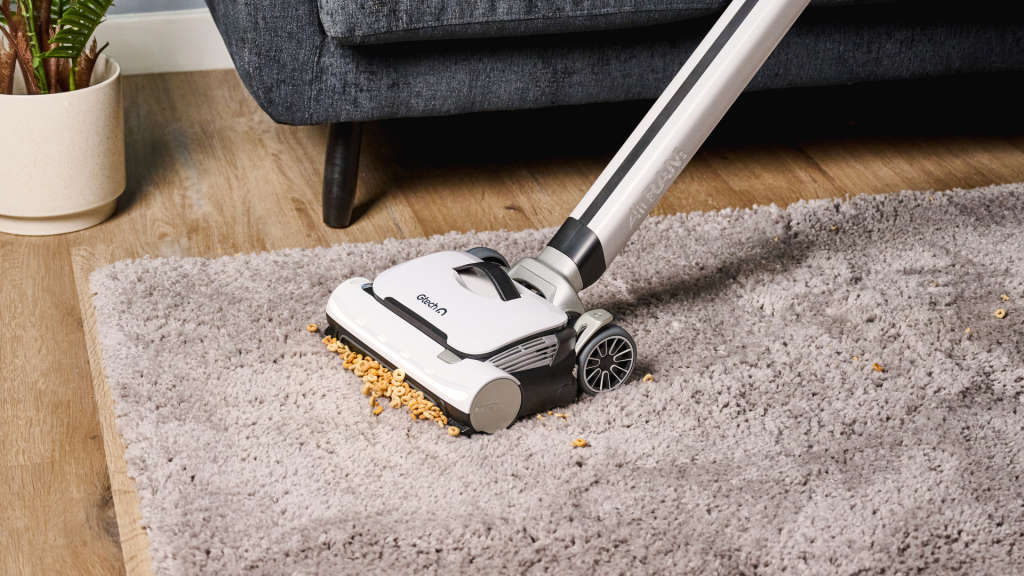
Three tests were run across hard floors, carpets and a particularly uncooperative woven rug that had defeated every other vacuum tested before it.
On hard floors with flour and sugar, the AirRam 3 cleared the bulk confidently but needed a couple of passes to get every last speck. The noise on hard floors clocked 101 dB, which is meaningfully louder than most vacuums in this category. On carpet, the noise dropped and became much less intrusive.
On carpet, the performance was exceptional. The woven rug, the one that over twenty other vacuums had failed to clean properly, was cleared entirely on the first run. The dust bin filled up with what it extracted, which is as accurate a measure as any of what had been sitting undetected in that carpet. This is the AirRam’s natural environment and it shows.
For the hair test, a week of deliberate accumulation including a dog, brushed extensions and loose strands across five floors, the vacuum performed well on every flat surface. The soft bristled helical brush bar with anti-hair-wrap technology guided hair into the bin rather than tangling around the brush bar. No clumps requiring manual removal, just a clean floor head throughout a long session.
The one area that didn’t perform was narrow stairs. The wide floor head, the very feature that makes it so efficient in open rooms, is too large to fit properly on a standard staircase. Edges and cracks get missed. Anyone who vacuums stairs regularly will need to supplement this with a handheld model. Gtech sells one in a bundle for exactly this reason.
How It Compares
The Dyson V11 and the Shark PowerDetect both sit at similar or higher price points and both offer something the AirRam 3 doesn’t: versatility. The Dyson V11 converts to a handheld for stairs, upholstery and car interiors. The Shark PowerDetect does the same and adds multiple power modes.
On flat floor suction, particularly on carpet and difficult weave surfaces, the AirRam 3 outperformed both in testing. But floor cleaning is all it does. No crevice tool, no handheld mode, no above-floor capability of any kind. If your home is predominantly one or two levels, or you already own a handheld for the rest, the decision is straightforward. If you need one vacuum to do everything, the Dyson or Shark will serve you better, even if they don’t match the AirRam on raw carpet performance.
Who It’s For (and Who It Isn’t)
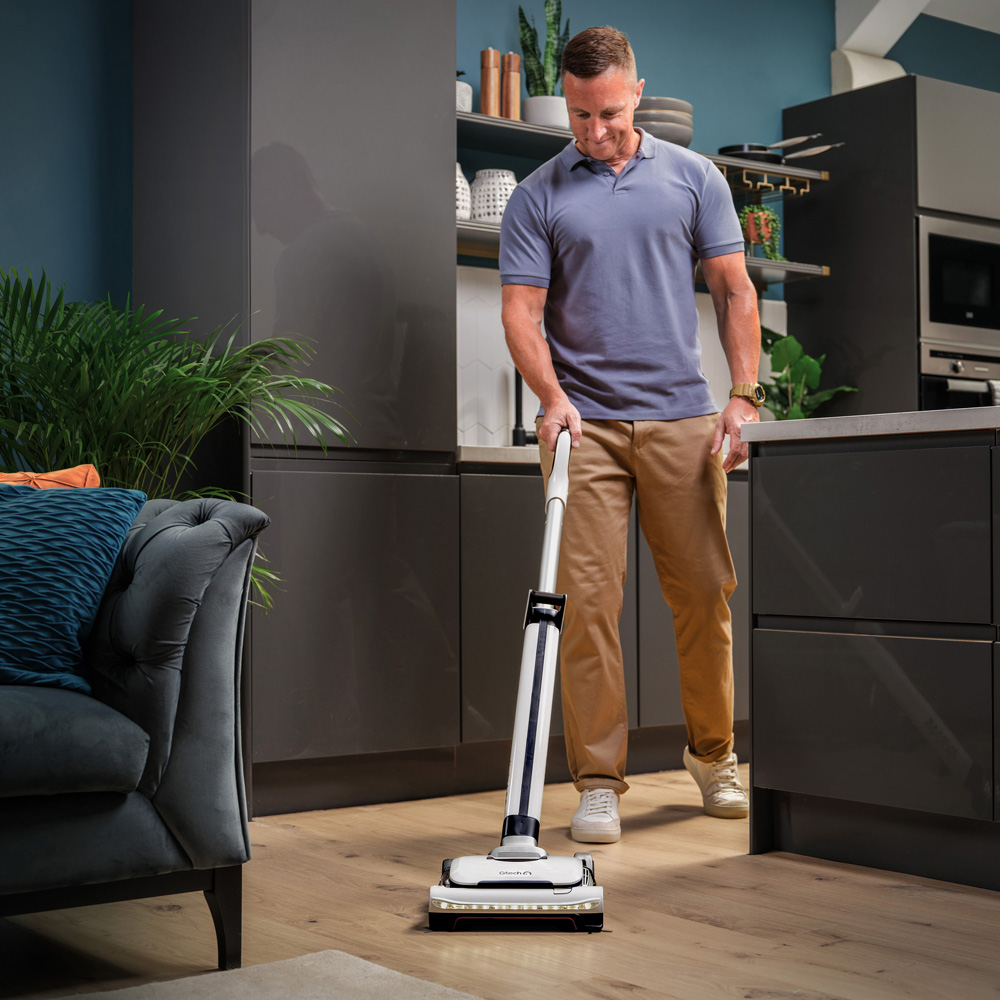
The AirRam 3 is for anyone who prioritises floor cleaning power above everything else and is prepared to supplement it with something else for stairs and above-floor tasks. It’s particularly strong for homes with carpet, difficult rugs, pets or long hair, and for anyone who has struggled with the physical effort of using a heavy stick vacuum for extended periods. The self-propulsion and low centre of gravity make sustained cleaning noticeably less tiring.
It is not for anyone in a multi-storey home with no other vacuum, anyone who needs stairs and upholstery covered by the same machine, or anyone who finds foot-operated controls difficult to manage.
Verdict
The Gtech AirRam 3 is the vacuum equivalent of a specialist tool: extraordinary at what it’s designed for, and clear-eyed about what it isn’t. The floor cleaning performance is the best tested across carpet and hard floors. The self-propulsion makes long cleans easier. The self-cleaning filter means almost no maintenance. The standing charge base means it’s always ready.
The noise on hard floors is the biggest daily compromise, and the staircase limitation is a genuine one for anyone in a multi-storey home. Both are knowable before you buy, and neither diminishes what it does on a flat floor.
If you’ve been underwhelmed by the vacuums you’ve tried and are willing to look outside the Dyson and Shark conversation, the AirRam 3 deserves serious attention. It’s not the most versatile vacuum at this price. Floor for floor, it is the most powerful one.
Buy the Gtech AirRam 3 at gtech.co.uk for £399