



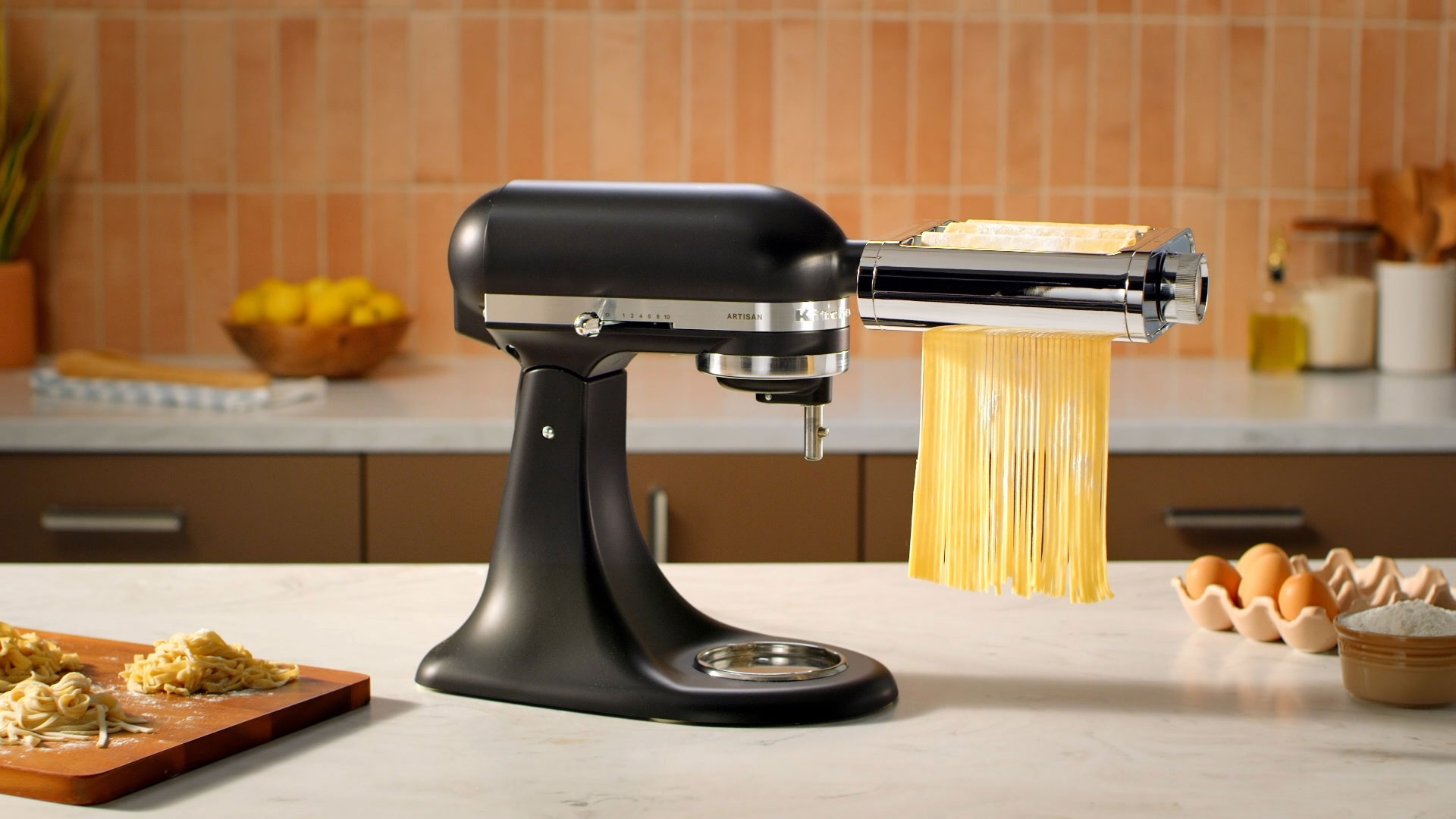
Your KitchenAid has been holding out on you and fresh pasta is the proof
Two ingredients, thirty minutes, and you’ll never look at a packet of dried spaghetti the same way again
If your KitchenAid has been doing little more than birthday cakes and the occasional loaf, the 3-in-1 Metal Pasta Attachment is the reason to actually use it. Rolling and cutting fresh pasta from scratch sounds like the kind of thing you do once for a dinner party and then quietly never again, but this attachment makes it genuinely weeknight-friendly. One unit handles everything: sheet rolling, spaghetti cutting, fettuccine cutting, no swapping, no clamping to the counter, no hand-cranking. The result is fresh pasta in the time it takes to boil the water. It’s not the cheapest kitchen accessory, but for anyone who already owns a KitchenAid, it’s one of the most satisfying purchases you can make for it.
Quick Specs
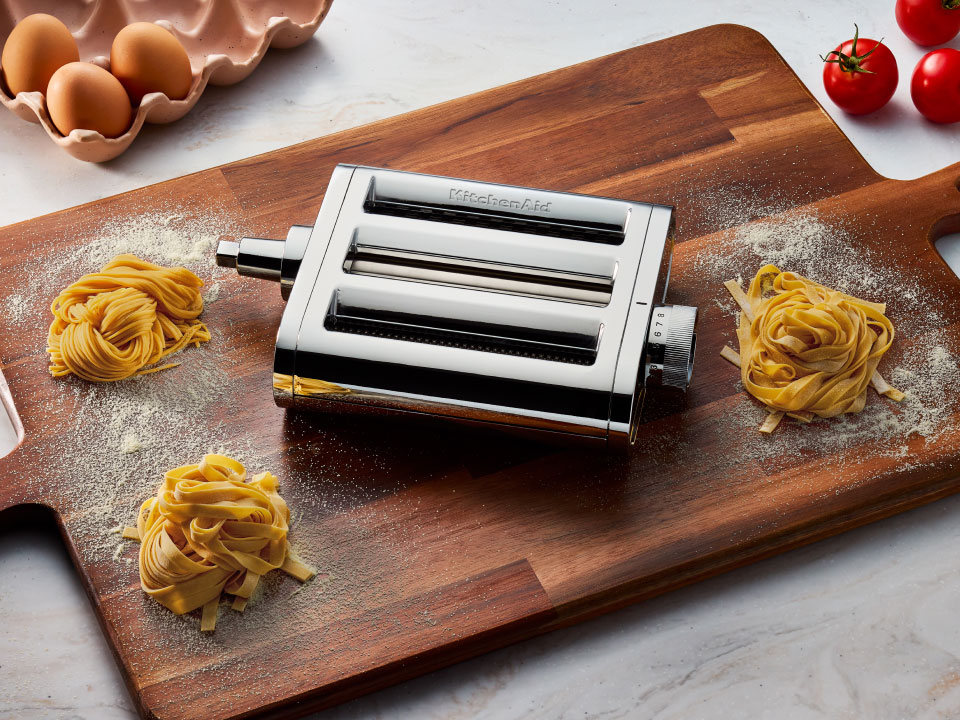
Model: KitchenAid 5KSM3MPA
Material: Stainless steel
Pasta shapes: Sheets, spaghetti, fettuccine
Sheet width: 5.5 inches
Thickness settings: 8
Compatibility: All KitchenAid household stand mixers
Cleaning: Brush only, no dishwasher
Price: £199.00
The mixer you forgot you owned
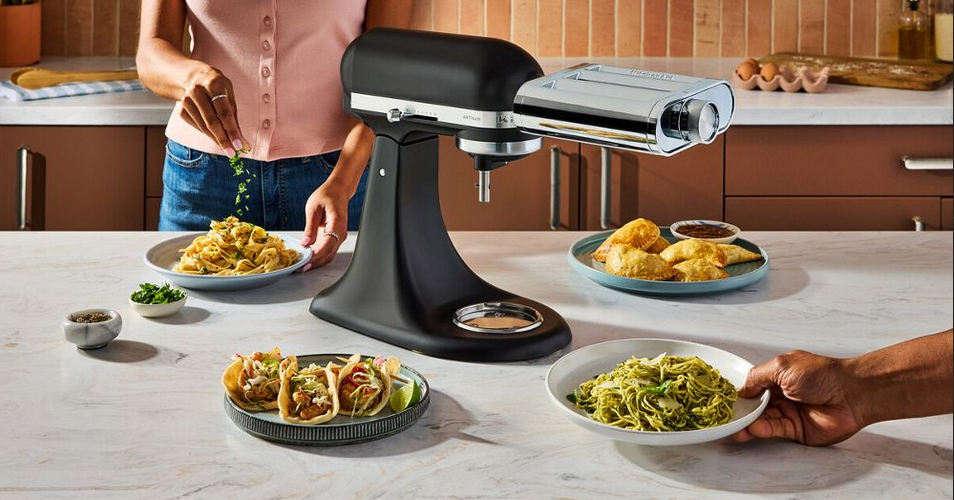
Let’s be honest. The KitchenAid stand mixer is one of the most lusted-after, most gifted, most Instagrammed kitchen appliances ever made. It’s also, for a significant number of people, one of the most underused. You spent upwards of £500 on it, it looks beautiful on the worktop, and it makes excellent meringues. Beyond that, it mostly watches while you cook.
This is entirely understandable, because the mixer on its own is a mixer. It’s the attachment ecosystem that turns it into something else entirely. The multipurpose hub hidden behind the KitchenAid’s iconic silver badge connects to over a dozen different attachments: spiralizers, meat grinders, ice cream makers, grain mills, food processors; each one powered entirely by the mixer’s motor. You already own the engine. The attachments are just telling it what to build.
The 3-in-1 Metal Pasta Attachment is the one that tends to change people’s relationship with their mixer for good. Not because pasta is the most impressive thing you can make with it, but because it’s the one that gets used regularly. Ice cream makers are seasonal. Meat grinders are niche. Fresh pasta, once you’ve done it, becomes a habit. And once it becomes a habit, you start to understand what that expensive piece of kit on your worktop was actually built for.
Fresh pasta has a reputation problem
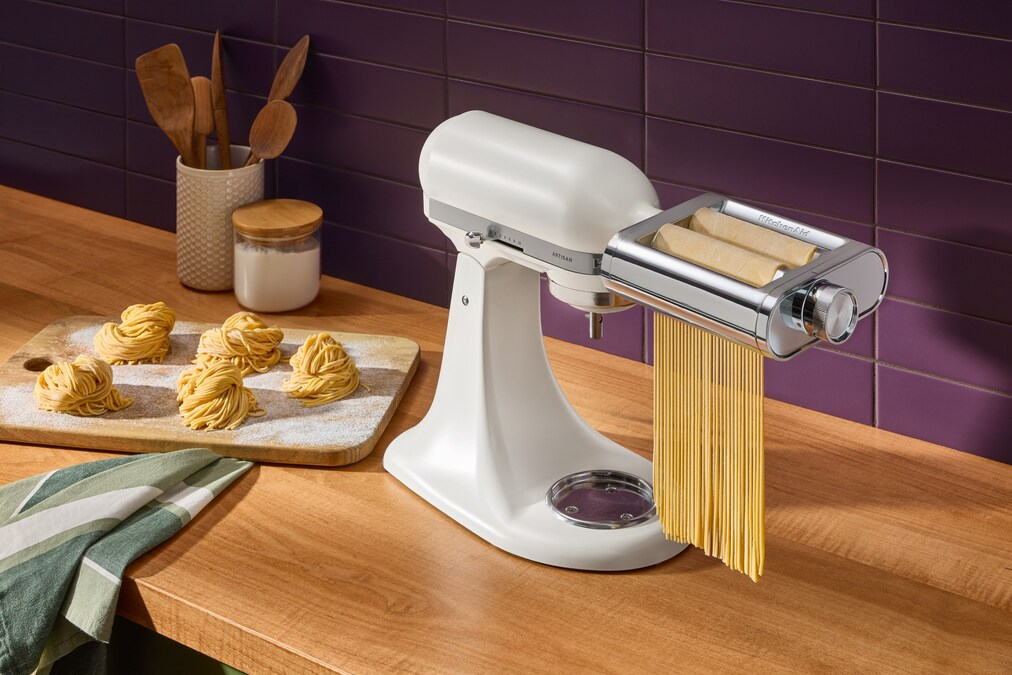
Ask most people why they’ve never made it at home and the answers are variations on the same theme. Too fiddly. Too much setup. You need to clamp a machine to the counter. You end up covered in flour, the dough tears, the whole thing takes two hours. Meanwhile there’s a perfectly good packet of spaghetti in the cupboard.
That reputation is not entirely undeserved. Traditional hand-cranked pasta machines do require a certain amount of patience and both hands at once, which is a problem when one of them is supposed to be feeding the dough and the other catching the sheet coming out the bottom. The results are worth it, but the friction is real enough that most people try it once, file it under impressive but impractical, and move on.
The KitchenAid attachment doesn’t ask you to be patient. It asks you to mix two ingredients, rest the dough for thirty minutes, and then stand in front of your mixer while it does the rest. The barrier to fresh pasta at home has never been skill. For anyone who already owns a KitchenAid, it hasn’t even been kit. It’s been friction. This removes it.
Design & Build
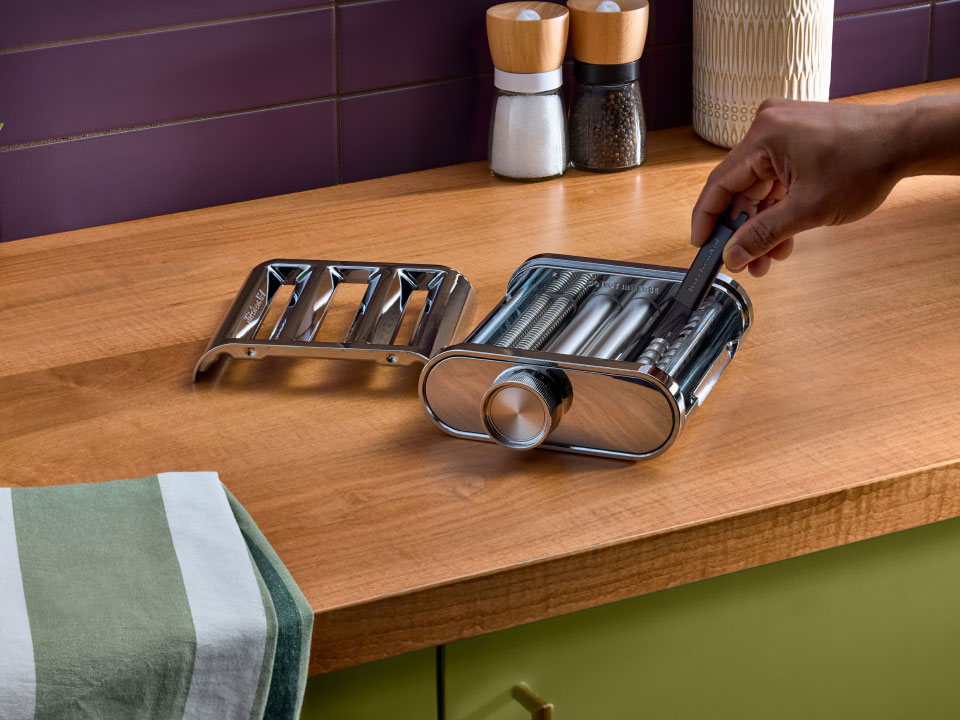
The attachment is stainless steel throughout and feels it. Solid, weighty in the hand, with the kind of finish that matches the mixer it’s going onto. It screws onto the multipurpose hub in seconds and once it’s on, it doesn’t move.
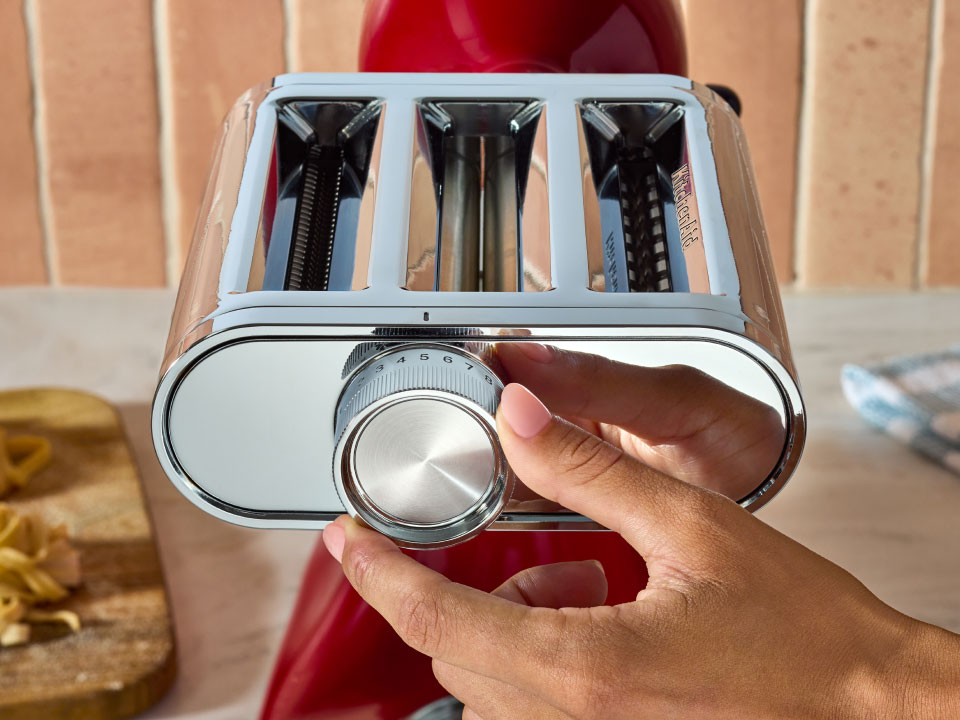
The numbered thickness dial runs from 1 to 8. One is the widest gap, eight is the thinnest. You work up through the settings gradually with each pass, the dough becoming a little more refined and silky each time, until it’s at exactly the sheet weight you need. Lasagne sheets need fewer passes than angel hair. The included guide tells you which setting to aim for per pasta type, which removes all the guesswork.
The two cutters, spaghetti on one side and fettuccine on the other, are built into the same unit as the roller. No loading, no switching. The sheet goes in, the noodles come out, and there’s something almost absurdly satisfying about watching them pile up.
One practical note: this attachment does not go in the dishwasher. Not in water at all. You let it air-dry for an hour after use, then clean off any dried dough with the stiff-bristled brush included. If anything’s stuck, a gentle tap on a folded tea towel shifts it. The cleanup takes about three minutes.
How It Actually Works
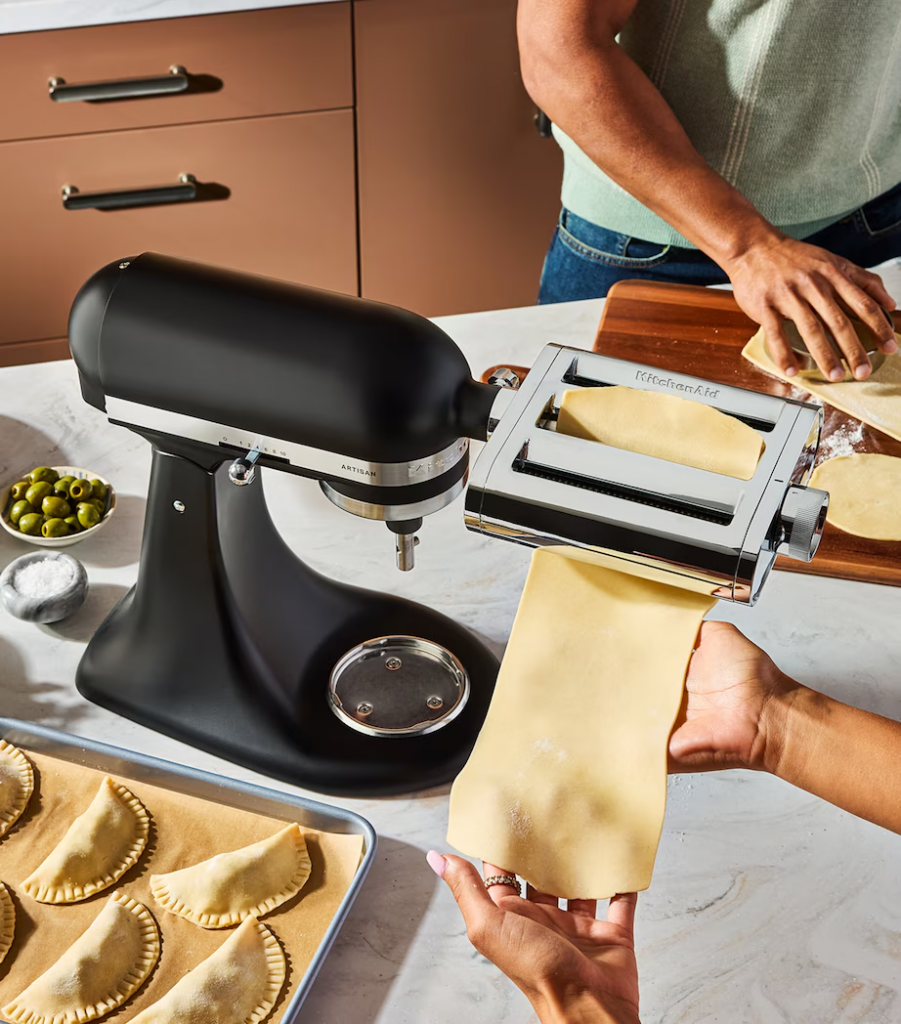
Making fresh pasta has two stages: making the dough, and processing it. The attachment handles the second stage with no drama whatsoever. The first stage is where the reputation falls apart for most people, but there is genuinely nothing to it. Two ingredients, eggs and pasta flour, not plain flour which has too low a protein content, mixed until smooth, rested briefly, then flattened and lightly dusted.
Here’s where the KitchenAid earns its keep twice over. You can mix the dough in the bowl using the dough hook before you even touch the attachment. The mixer kneads it properly in a few minutes, saving you the ten-minute hand-kneading job. Then you swap to the pasta attachment, screw it on, and the same motor that just made your dough now rolls and cuts it.
Set the mixer to its lowest speed, feed the dough in from the top of the roller, and watch a smooth sheet come out from the bottom. One pass at setting 1. Fold, dust lightly with flour, feed through again. Work up through the settings, and within a few minutes you have a sheet of fresh pasta that is noticeably, meaningfully better than anything from a packet. The motor does all the work. Both hands are free to guide the dough and catch the sheet. No cranking. No wobbling. No counter clamping.
Once you have your sheet, guide it into whichever cutter you want. Spaghetti takes about 30 seconds per sheet. The resulting strands cook in two to three minutes, with a texture and bite that’s genuinely different to dried pasta. Softer, more toothsome, richer from the eggs. It doesn’t taste like a fancier version of the same thing. It tastes like a different thing entirely.
What You Can Actually Make
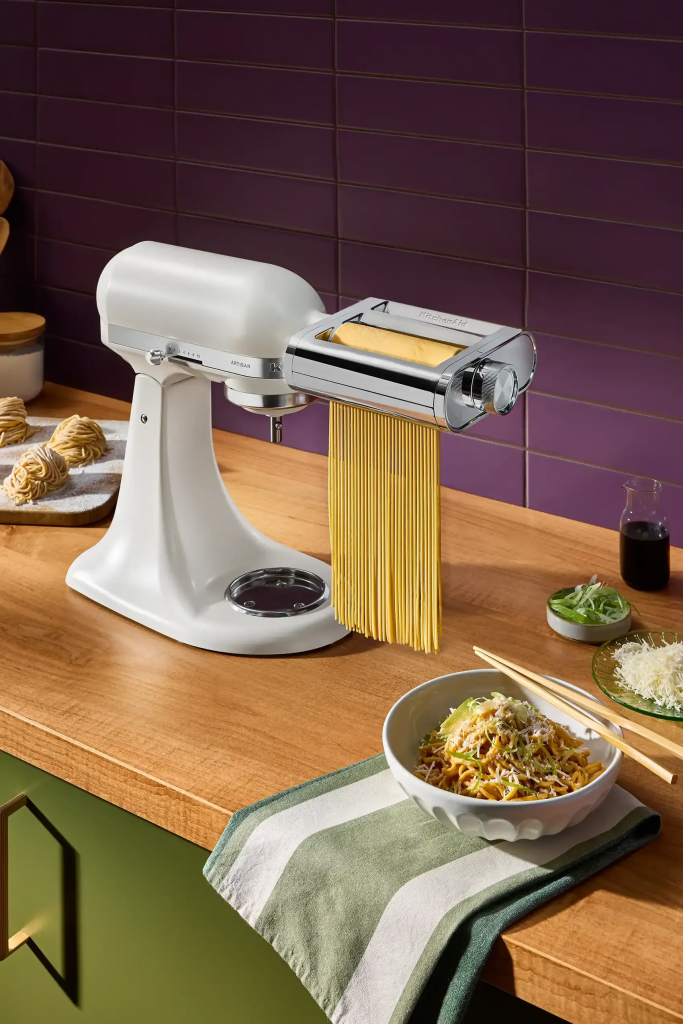
Plain egg pasta is the starting point, but it’s not where the fun stops. Once you’re comfortable with the basic process, the interesting part is flavouring. Blended spinach or kale mixed into the dough gives you green pasta. Sundried tomatoes or tomato paste give you something orange-red. Beetroot produces a remarkable deep purple. None of these require any technique beyond mixing the ingredient into the dough before you rest it, and the results at the table look like you put in far more effort than you did.
The roller is also useful well beyond pasta. Dumpling wrappers, gyoza skins, tortillas, pastry, pizza bases: anything that needs a flat, uniform sheet of dough at a precise thickness benefits from running it through here rather than tackling it with a rolling pin. The 8 thickness settings give you real control, which matters more than you’d think for things like dumplings where wrapper thickness is the difference between delicate and stodgy.
What tends to happen after the first few sessions is that you start reaching for the attachment on a fairly regular basis. Not every night, but often enough that it stops being a novelty and starts being part of how you cook. And that’s when you realise what the KitchenAid was actually for.
The 3-in-1 vs. the Old Approach
KitchenAid has sold pasta attachments for years. The previous version came as three separate pieces, a roller, a spaghetti cutter and a fettuccine cutter, each requiring individual attachment and removal as you moved through the process. Screw on the roller. Roll the dough. Unscrew the roller. Screw on the cutter. Feed through. Unscrew. Put everything away.
Functional, but the kind of faff that adds just enough friction to make fresh pasta feel like a production. The 3-in-1 puts all three functions into a single unit. You screw it on once and don’t touch it again until you’re done. For anyone who found the old set slightly tedious, it’s a direct and meaningful improvement. For anyone new to pasta making at home, it’s simply the version to get.
The only thing it doesn’t handle is stuffed pasta or extruded shapes. If you want rigatoni or fusilli, that requires a different attachment. For sheets and long cuts, this covers everything you’re likely to want on a weeknight.
Who It’s For (and Who It Isn’t)
The 3-in-1 is the right purchase if you own a KitchenAid and have been vaguely thinking about fresh pasta but never quite committed. It makes the process easy enough that you’ll actually do it, not just plan to. It’s also worth it if you cook for a group regularly, experiment with flavoured doughs, or make dumplings and anything else that benefits from a uniformly rolled sheet.
It is not worth it if you don’t own a KitchenAid. The attachment is built specifically for the mixer’s hub and won’t work with anything else. And if fresh pasta genuinely isn’t something you care about making, this won’t change your mind.
Verdict
The KitchenAid 3-in-1 Metal Pasta Attachment does something most kitchen accessories fail to do: it changes a habit. Fresh pasta at home stops being a special occasion project and becomes a realistic option on a Tuesday evening. The process is easy, the results are genuinely better than shop-bought, and the cleanup is minimal.
If your KitchenAid has been living on the worktop looking decorative, this is the attachment that puts it to work. It’s well built, intuitive to use, and once you’ve made fresh pasta with it a few times, the packet of dried spaghetti in the cupboard starts to feel like a backup plan rather than the default.
It’s the purchase that finally justifies the mixer.
Buy the KitchenAid 3-in-1 Metal Pasta Attachment at kitchenaid.co.uk
Also Consider
KitchenAid Gourmet Pasta Press (5KSMPEXTA): For extruded shapes rather than rolled ones. Rigatoni, fusilli, bucatini, macaroni. A completely different mechanism and a good companion to the 3-in-1 if you want the full range.
KitchenAid 3-Piece Pasta Roller and Cutter Set (5KSMPRA): The older three-piece version that requires swapping attachments between steps. Still works, but the 3-in-1 replaces it cleanly. Only worth considering if you find it significantly cheaper.