


The one thing that could make the Garmin Fenix 9 unmissable
Garmin’s been quieter than usual in 2026. Here’s why that might actually be good news.
Garmin had an almost comically busy 2025. As someone who spends a significant chunk of their working life strapping GPS watches to their wrist and running up hills, I can tell you it was a lot. New model after new model, each arriving before I’d finished writing up the last one. This year, though? Relative silence.
That’s not necessarily a bad thing. A brand that launches constantly runs the risk of releasing things before they’re ready, which is arguably what happened with the Fenix 8 Pro. Garmin’s first MicroLED smartwatch was technically impressive but landed more with a thud than a bang. The display technology was undeniably interesting. The price? Less so. And beyond the screen itself, there wasn’t enough new here to justify upgrading from a Fenix 7, especially for anyone who’d already invested in the MIP solar variants. Garmin fans are a loyal bunch, but they’re not fools.
So 2026 has mostly been rumours. The Cirqua, a screenless fitness band that would put Garmin squarely in Whoop territory, has been circling for months. A screen-free wearable is exactly what a certain kind of athlete wants right now: something you barely notice, tracking everything quietly in the background without constantly tempting you to check notifications. Makes sense. But it’s the other rumour that really has my attention.
The Fenix 9 is coming. And if the right feature shows up on it, I’m buying one immediately.
The battery problem nobody talks about enough
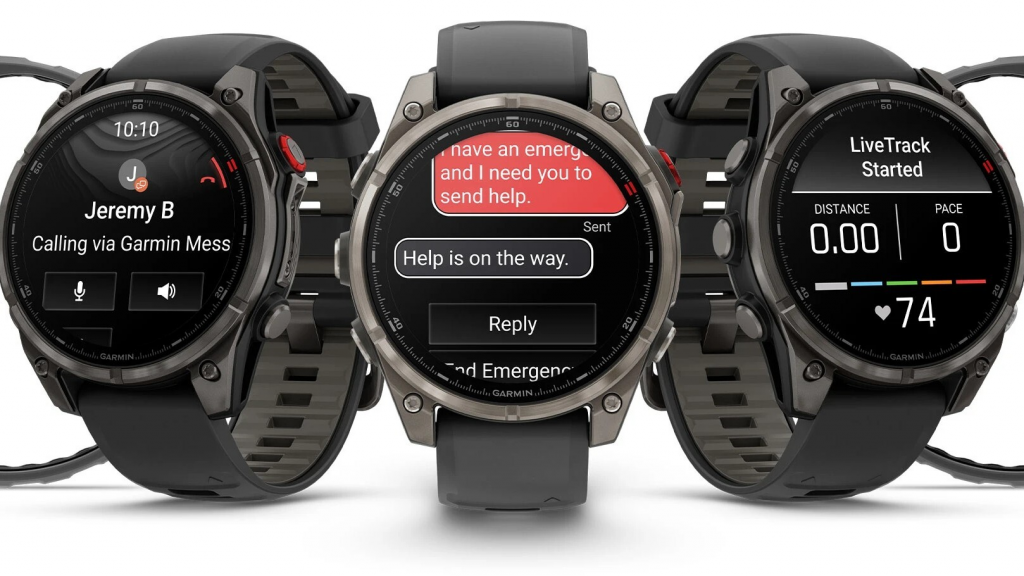
Let me explain something about how Garmin’s display choices affect real-world use, because it matters more than most buying guides let on.
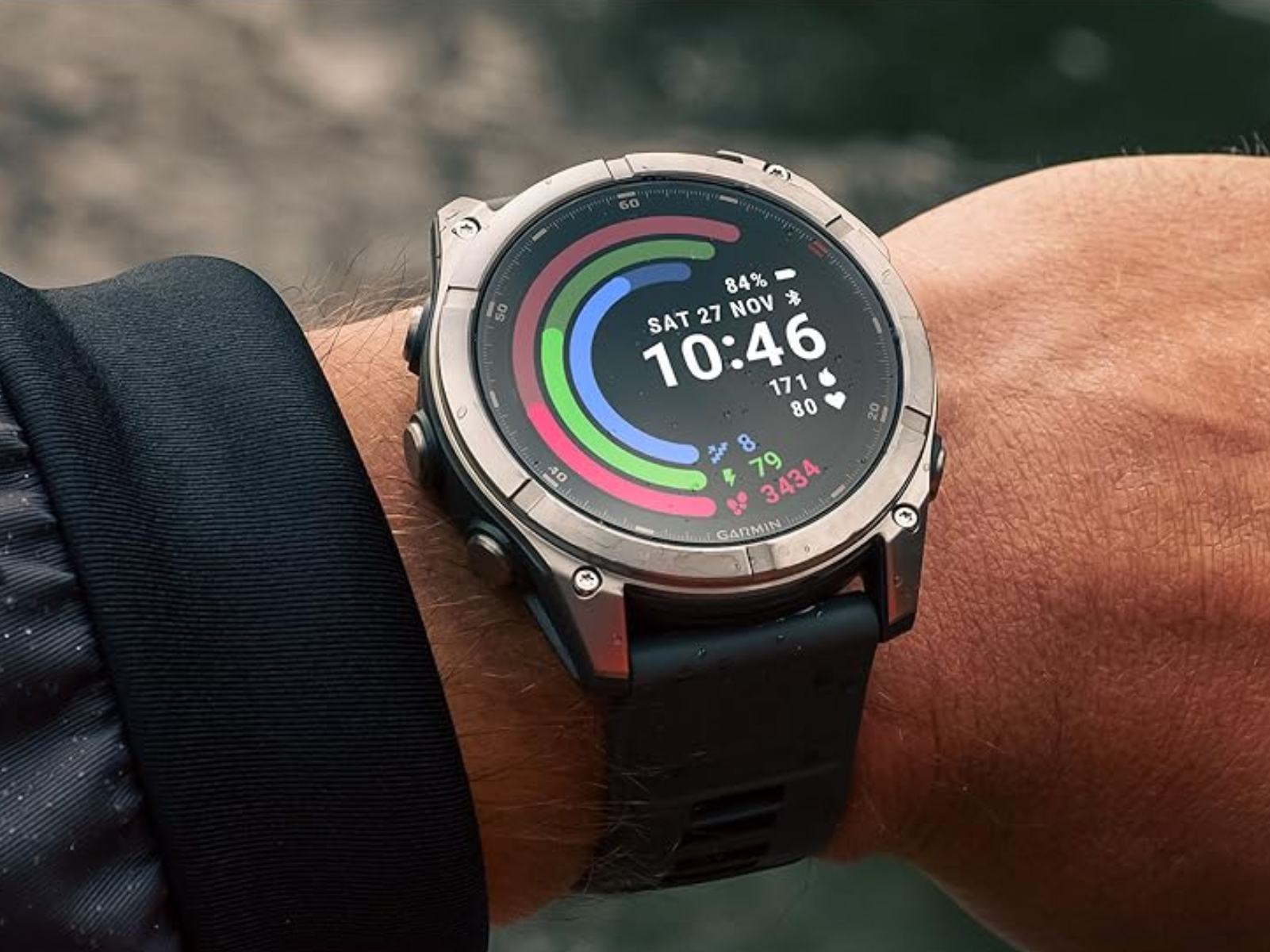
Garmin‘s MIP (Memory-in-Pixel) displays are the unglamorous workhorses of the adventure watch world. They’re transflective, low-power, and in bright sunlight they’re actually easier to read than AMOLED. More importantly, they sip battery. Combine a MIP display with Garmin’s Power Glass solar charging layer, and you get a watch that, in favourable conditions, can run almost indefinitely. On the Fenix 7X Solar, Garmin claimed up to 37 days in smartwatch mode, and in good outdoor conditions that figure is broadly achievable.
Then AMOLED arrived. It looks incredible. Deep blacks, vivid colours, the kind of display that makes you genuinely want to glance at your wrist. But it costs you. Even the Fenix 8 AMOLED, which has a respectable battery, can’t match its MIP siblings for longevity. Weeks become days. And there’s no solar option, because AMOLED panels simply burn through energy faster than any current Power Glass setup can replenish.
Power Glass, for anyone who hasn’t used a solar Garmin, is Garmin’s proprietary approach to harvesting sunlight through the watch face. It’s a transparent layer bonded to the display that converts sunlight into a trickle of extra charge, adding hours or days depending on how much time you spend outdoors. It’s not magic. In low-light northern winters it makes a minimal difference. But for trail runners, hikers, cyclists and anyone spending serious time outside, it’s a genuine, meaningful upgrade over a standard watch battery.
The problem is that Power Glass hasn’t seen a meaningful generational leap in a while. The technology that ships on today’s Fenix 8 Solar is iteratively better than what was on the Fenix 6 Pro Solar, but not radically so. Meanwhile, AMOLED technology has improved significantly. Which raises an obvious question: how close are we to a point where a next-generation Power Glass could actually keep pace with an AMOLED display?
Why the Fenix 9 feels different
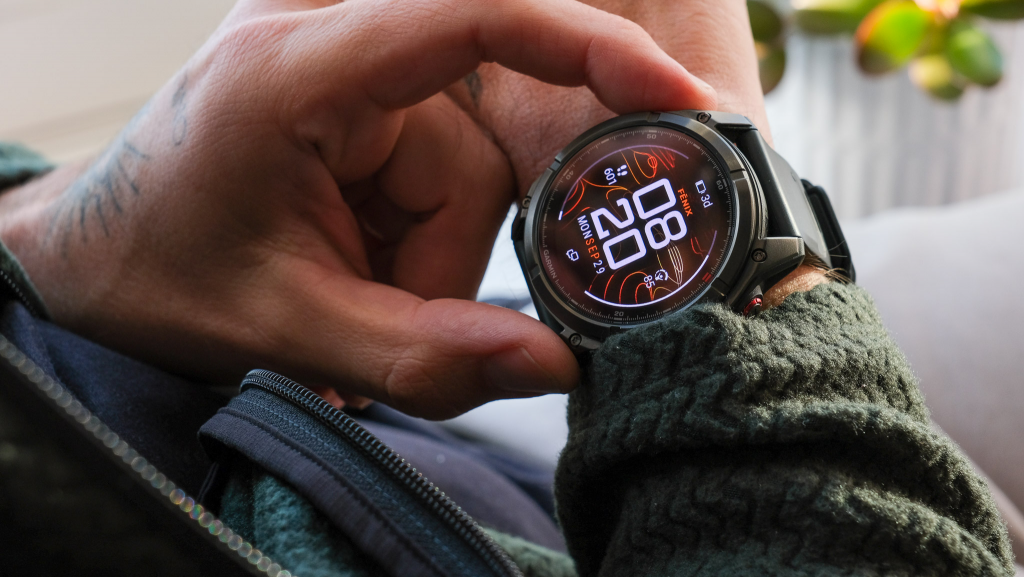
The Fenix 8 Pro MicroLED was Garmin planting a flag. The message was clear: we can do this. But a first-generation MicroLED watch was never going to be the finished article. MicroLED is expensive to manufacture, still maturing as a technology, and the Fenix 8 Pro’s battery life reflected those early-adoption realities. It was the worst runtime of any recent Fenix, which is the exact opposite of what the Fenix series stands for.
The Fenix 9 is expected to push MicroLED further, and from what’s been rumoured, in a more refined form. That means a thinner overall package, better power efficiency from the display itself, and theoretically more headroom to combine that screen technology with other features that have previously been impossible to stack together.
It’s also overdue a processor upgrade. Garmin has been running variations of the same core chipset architecture across its lineup for longer than anyone expected, and the performance shows its age in specific areas. Mapping can feel sluggish when loading complex routes. Some of the newer AI-assisted coaching and health features have noticeable processing overhead. A new platform would change all of that, bringing faster map rendering, smoother navigation and, crucially, more efficient handling of the always-on health sensors that the Fenix now runs continuously.
On the health and fitness side, expect evolution rather than revolution. A next-generation heart rate sensor is almost certain. Garmin has been steadily improving its optical sensor accuracy across the line, and the Fenix 9 will likely continue that work. More personalised training recommendations, deeper recovery insight and tighter integration with Garmin Connect’s coaching ecosystem are all expected. None of that sounds headline-grabbing, but for the endurance athletes this watch is built for, marginal gains in tracking accuracy and training guidance actually matter.
Improved multi-band GPS performance is also on the cards. Fenix 8’s satellite acquisition is already very good, but more accurate positioning in dense terrain, and smarter use of multiple satellite constellations, would make it better still for technical mountain use. There are whispers of small design refinements too, potentially a slightly thinner case and possibly new input options beyond the current button layout.
The feature that could change everything
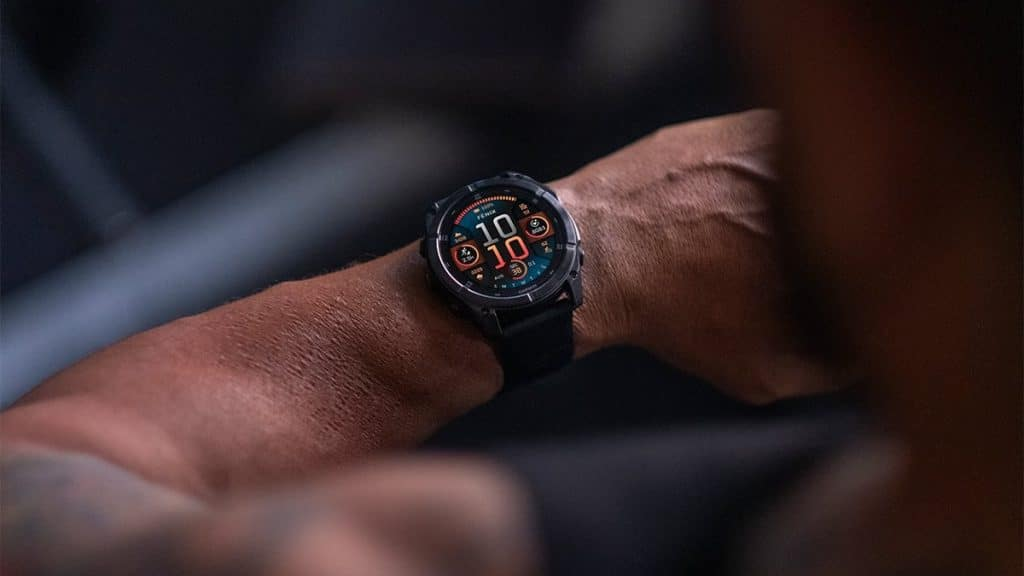
All of that is fine. Good, even. But none of it is the reason I’d upgrade immediately, and this is the part I keep coming back to.
What I actually want is a Fenix 9 with AMOLED and Power Glass. Together. On the same watch.
It sounds simple, but it’s been an unsolved problem for Garmin for years now. The two technologies have been living in separate product lines, because the energy demands of an AMOLED display have consistently outpaced what Power Glass could contribute. You buy the Fenix AMOLED for the display. You buy the Fenix Solar for the battery life. You can’t have both.
A new generation of Power Glass, one that harvests meaningfully more energy from a given surface area, combined with a more power-efficient AMOLED or MicroLED panel, could finally close that gap. Not necessarily to the point where an AMOLED Fenix 9 Solar could match a MIP Fenix 7X Solar for raw runtime, but potentially to the point where outdoor use adds enough charge back to make a material difference. Even extending a three-day adventure watch to four days, or maintaining smartwatch battery through a week of normal use when you’re commuting in daylight, would be a genuine, meaningful step.
Garmin operates with a long game mentality that not many tech companies bother with. Take the built-in LED torch, now standard across much of the lineup. That feature was on Garmin watches for years before the rest of the industry caught on. Power Glass itself arrived well before any competitor attempted anything similar. The company tends to introduce something ambitious, iterate quietly for a generation or two, and then suddenly the technology is mature enough to do something genuinely new with it.
We may be at that point with Power Glass. It’s been a while since a major revision, and the rumoured specs around the Fenix 9’s display efficiency suggest there’s something more interesting coming than a simple refresh.
Should you wait?
If you’re on a Fenix 7 Solar, yes. Absolutely wait. The Fenix 8 wasn’t a compelling enough reason to upgrade, particularly if your primary concern is battery life on long efforts. But the Fenix 9, if the rumours bear out, could represent a more significant step.
If you’re on a Fenix 6 or older, you’re probably already itching to upgrade. The software improvements alone across the last two generations are worth it, but again, patience here is rewarded.
The Fenix 9 is expected to arrive in the second half of 2026, most likely late summer. That lines up with Garmin‘s typical launch cadence for major Fenix releases, and the company’s own hints about an active year for outdoor products suggest something significant is coming.
Whether Power Glass makes it onto an AMOLED Fenix 9 or not, I’ll be watching closely. But if it does, and if Garmin has finally cracked the solar conundrum that’s defined this category for the last four years, that’s not just an upgrade. That’s the watch this series has been building toward.