
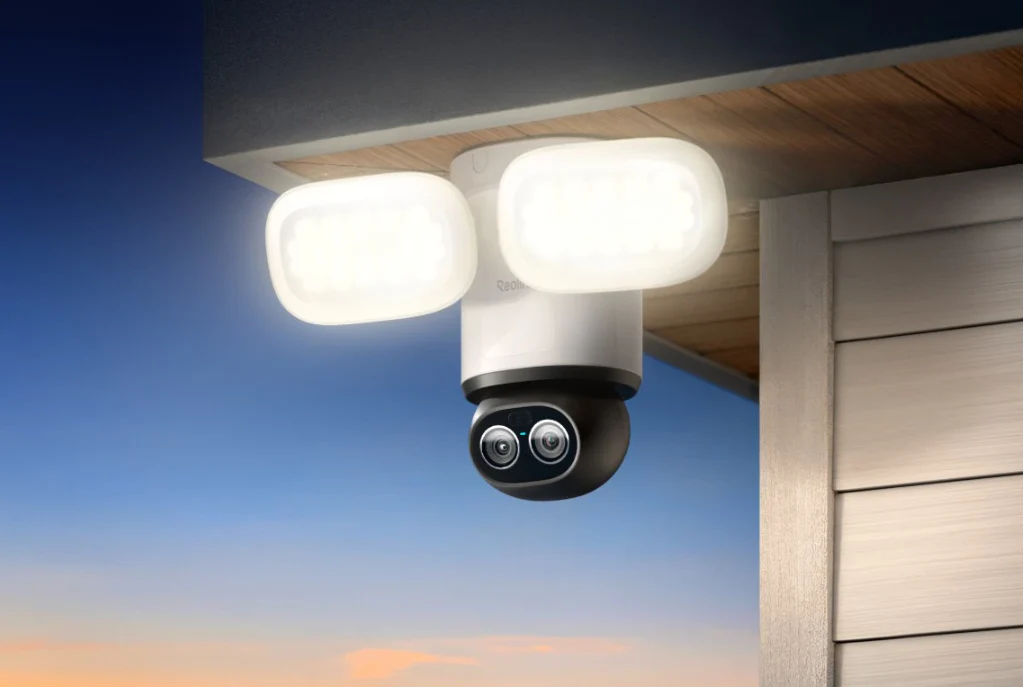
Reolink TrackFlex Floodlight WiFi Review: The Security Camera That Actually Follows the Action
The humble outdoor security camera has had a long and undistinguished life. It sits there, bolted to your wall, staring blankly at the same patch of driveway, day after day, faithfully recording clouds, leaves, and the occasional fox. It doesn’t move. It doesn’t think. And when something actually happens at the edge of its vision? Tough luck. Reolink thinks it’s time to retire that era of passive surveillance for good.
Enter the TrackFlex Floodlight WiFi : a device that isn’t so much a security camera with a floodlight bolted on as it is a full-blown outdoor sentinel. It pans, it tilts, it tracks, it blazes with 3,000 lumens of light, and it can search its own footage using AI. At around £219, it’s an ambitious piece of kit. The question is whether it lives up to the ambition.
Design and Build: Purposeful, Not Pretty
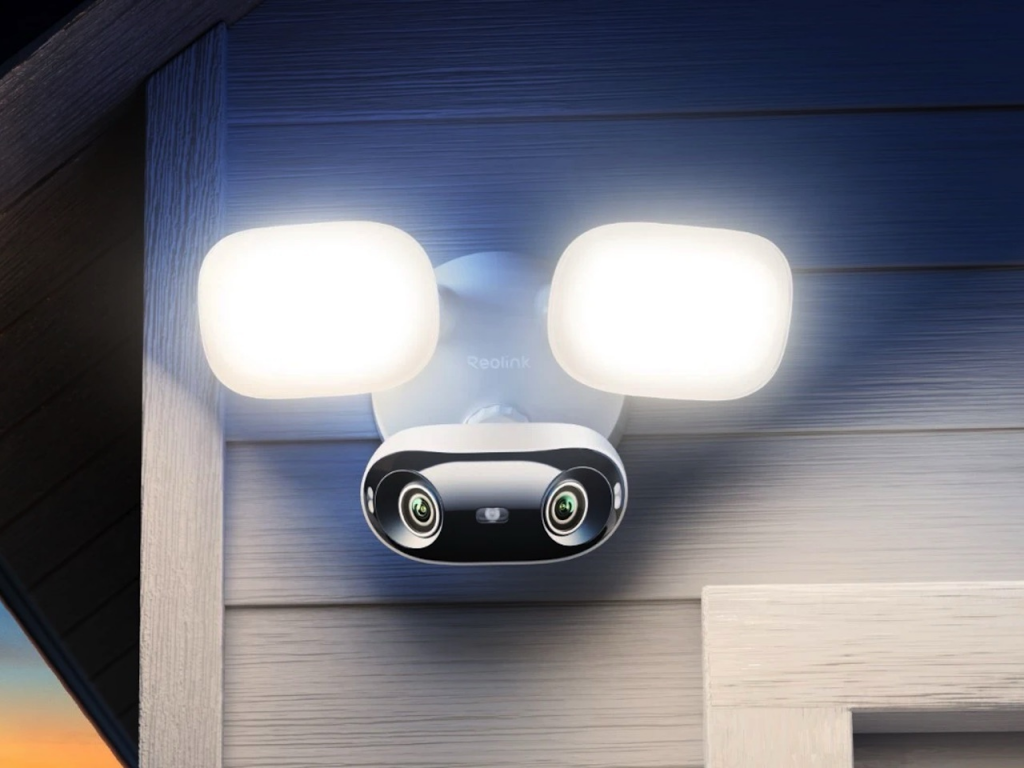
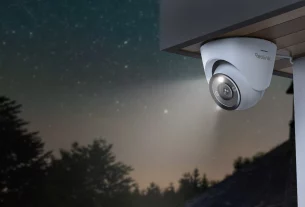
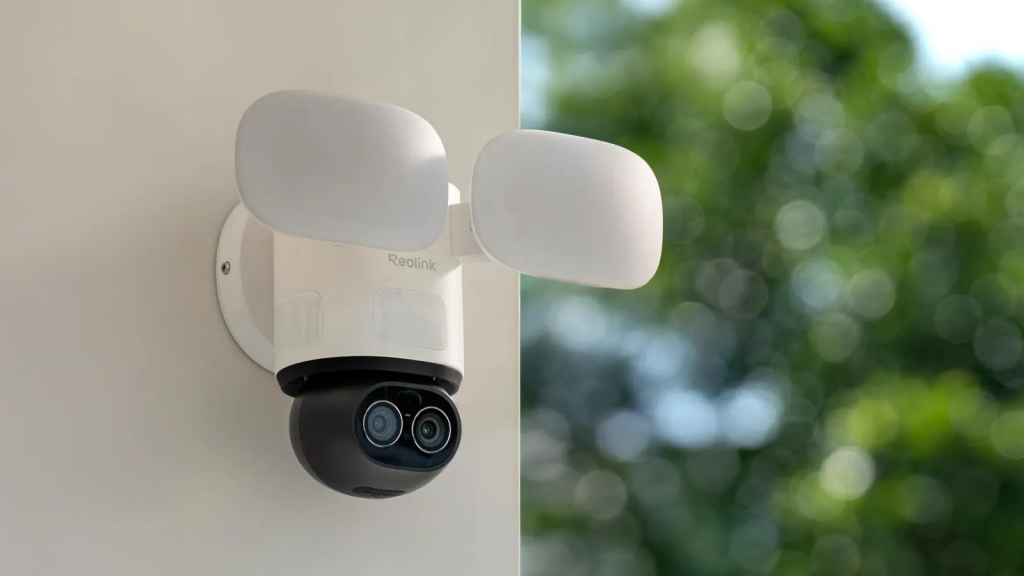
Security cameras are not designed to win beauty awards, and the TrackFlex is no exception. It’s a chunky white unit, built predominantly from plastic, and it looks exactly like what it is: a hardworking piece of outdoor hardware. The camera assembly sits on a motorised swivel pod, allowing it to rotate and tilt in nearly any direction. There’s a utilitarian confidence to it. It doesn’t pretend to be a designer lamp or a sleek tech accessory: it wants to be weatherproof, visible, and effective.
Rated IP66 for weatherproofing, it can withstand temperatures ranging from -10°C to 55°C, which means it’ll handle a British winter without complaint, and equally won’t melt on the rare occasion the sun decides to show up. The mounting hardware is included, installation is fairly straightforward, and step-by-step guidance in the Reolink app walks you through attaching the mounting plate, feeding the wires, and connecting the camera to the mains. It replaces a standard junction box fitting, making it a clean swap for anyone who already has an outdoor light wired up.
One practical note: this is a hardwired camera. There are no solar panels or batteries here; you’ll need to run power to it, or replace an existing wall sconce or lantern fitting. That’s a deliberate design choice: the TrackFlex needs reliable power to do everything it promises, and a solar panel simply wouldn’t cut it.
The Dual-Lens System: Context and Detail, Simultaneously
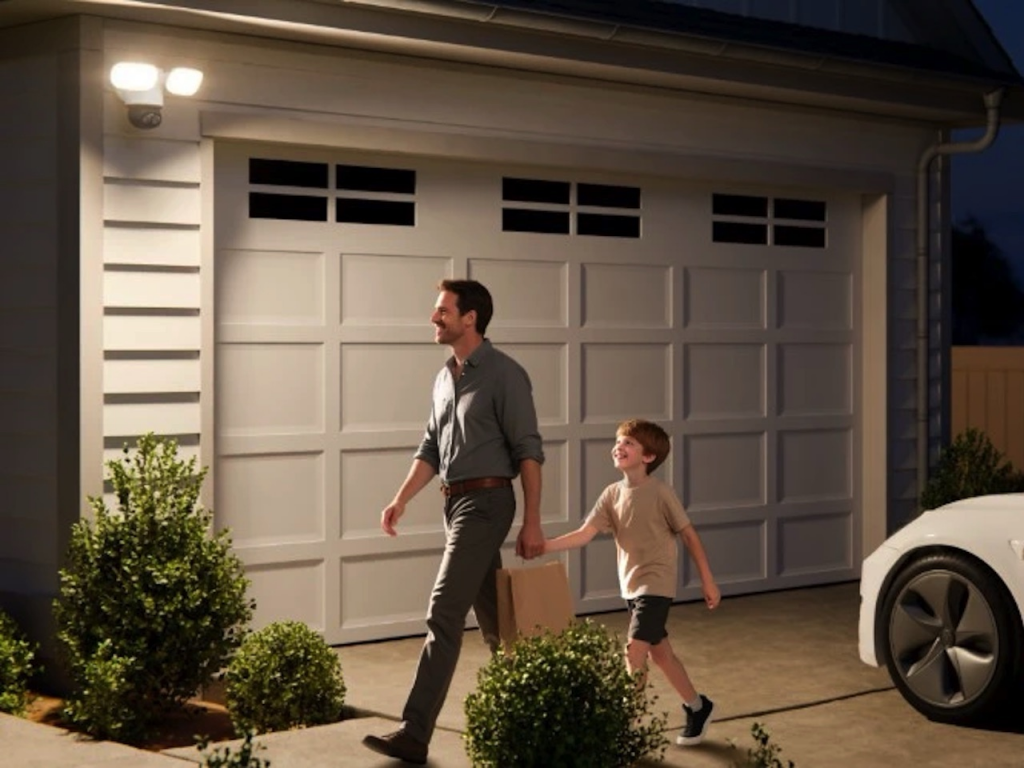
This is where things get genuinely clever. Most PTZ (pan-tilt-zoom) cameras make you choose: you either see the wide shot or the zoomed-in detail. The TrackFlex refuses to play by those rules.
Two lenses work together on one screen: a wide-angle 4K lens captures the full yard or driveway, while a secondary 6x hybrid zoom lens follows movement automatically, with both views appearing simultaneously in the Reolink app. This dual-view approach solves one of the most maddening problems with single-lens PTZ cameras: the moment you zoom in for detail, you lose your wider situational awareness. With the TrackFlex, you have both.
The primary lens captures 4K 8MP footage with a 104-degree horizontal field of view, while the secondary 4MP 2K telephoto lens handles the zoom capability. In practice, this means you can watch someone walk up your driveway in the wide view while the camera simultaneously zooms in on their face , or their number plate, without you having to do anything at all.
The motorised base provides up to 355° of pan and 50° of tilt, covering wide areas with virtually no blind spots. The only true blind spot is the 90-degree wedge directly behind the camera head; worth bearing in mind when choosing your mounting position.
AI Tracking: Eyes That Follow
The mechanical movement is only half the story. What makes the TrackFlex genuinely impressive in day-to-day use is the AI engine driving those motors.
Equipped with three built-in PIR sensors, the camera can detect movement even in areas outside its current field of view, and will automatically pan and tilt to follow the target; whether that’s a person, a vehicle, or an animal. This out-of-zone detection is a significant differentiator: the camera isn’t waiting for something to wander into frame. It’s actively aware of a 270-degree detection arc, and will swing around to cover it the moment something triggers a sensor.
Position it well, and you’ve got effectively seamless coverage of almost any outdoor space. The tracking itself is responsive: PIR sensors react quickly and the camera points at movement with impressive speed. Once it locks onto a subject, the AI zoom kicks in to keep them readable in frame. It’s the kind of feature that sounds like a gimmick until you see it work, and then you wonder how you ever managed without it.
Lighting: 3,000 Lumens of Deterrence
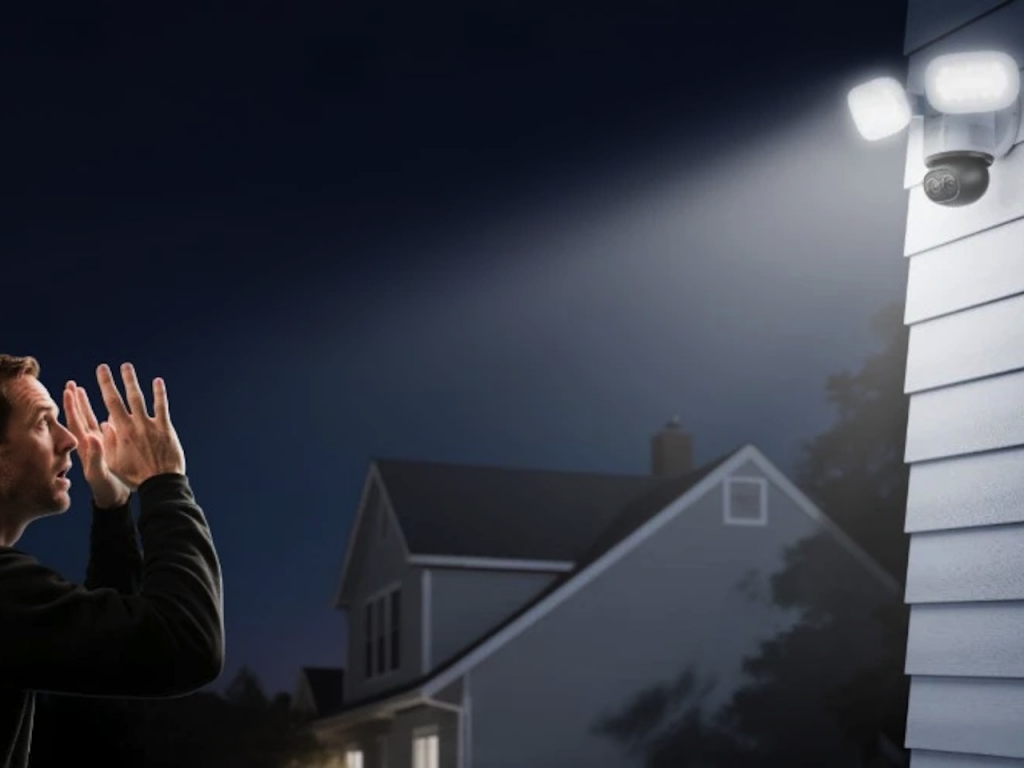
Security cameras deter crime more effectively when criminals can see them clearly; but even better when they’re suddenly drenched in blinding white light. The TrackFlex‘s floodlight system is no afterthought.
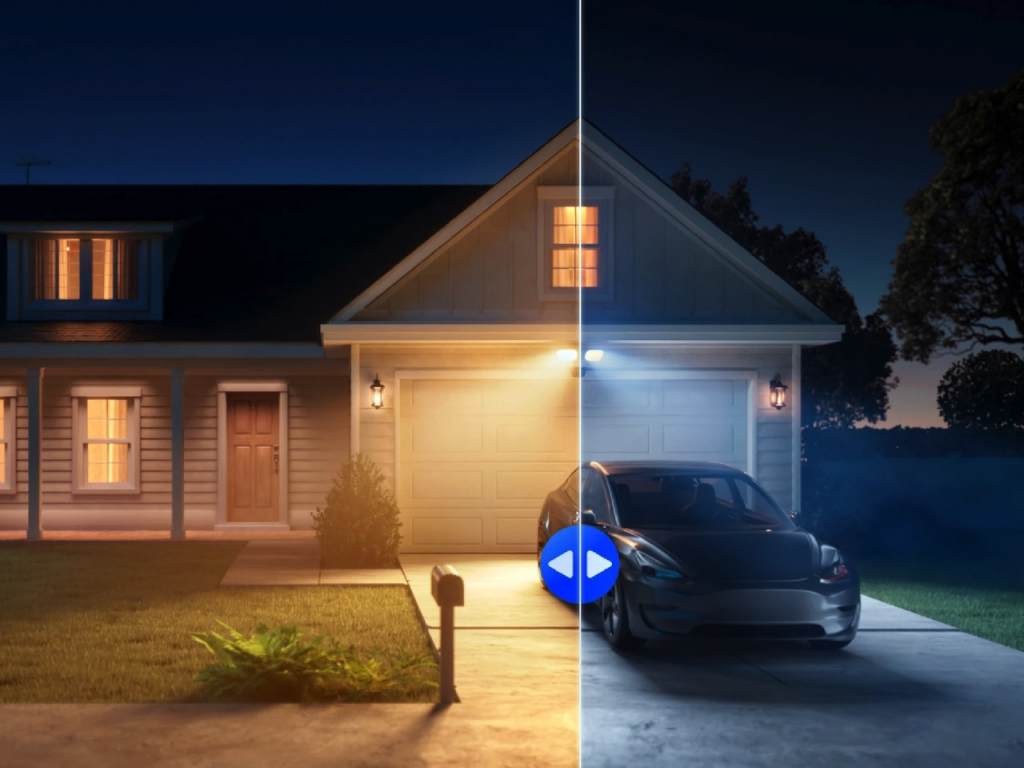
The floodlight delivers 3,000 lumens of illumination, with adjustable brightness and colour temperature ranging from warm amber to cool white. This level of customisation is rare and genuinely useful: a warm tone for a welcoming front porch ambience, a cooler, harsher beam when you want maximum deterrence or need the crispest possible footage.
When suspicious activity is detected, the camera instantly activates its floodlights while triggering either a 110dB siren or a pre-recorded voice message. That pre-recorded message: “You are being recorded”, plays for five seconds. It sounds almost quaint written down, but the combination of sudden light, ear-splitting alarm, and a disembodied voice is, reportedly, extremely effective at persuading uninvited visitors to reconsider their plans.
The floodlights also serve a more mundane but no less valuable purpose: they make the camera’s night vision dramatically better. Nighttime footage under full floodlight illumination is vivid, colourful, and full of the kind of detail that matters; clothing colours, facial features, vehicle makes.
AI Video Search: The Feature That Changes Everything
Perhaps the most forward-looking addition to the TrackFlex is what Reolink calls ReoNeura; its local AI video search engine. And this, frankly, is the feature that makes you reassess how security footage should work.
The AI search feature allows users to type descriptions like “white van driving by” or “girl in red dress playing with ball” and retrieve specific clips matching those criteria from local storage, without any cloud subscription required. Anyone who has ever scrolled through twelve hours of overnight footage looking for the moment a parcel was delivered will immediately grasp why this matters. Instead of scrubbing through timestamps, you describe what you’re looking for, and the camera finds it.
Reolink has indicated this will become a major feature across its product line throughout 2026, with a forthcoming AI box that integrates with multiple cameras to enable cross-camera search. That’s a compelling roadmap, and the TrackFlex is one of the first cameras to ship with it.
One caveat worth noting: the AI tagging can be hit-and-miss, working better in some conditions than others. It’s impressive technology, but it isn’t infallible. Expect it to be genuinely useful rather than perfectly reliable.
Connectivity: Wi-Fi 6 and the Subscription Question
The TrackFlex supports dual-band Wi-Fi 6, operating on both 2.4GHz and 5GHz bands for faster and more stable transmission, enabling 4K live viewing without buffering. In testing, this makes a noticeable difference compared to older cameras on Wi-Fi 5: live streams load quickly, there’s minimal lag when panning remotely, and the connection holds steady even at range.
Initial setup is handled via Bluetooth 5.0, making network configuration quick and cable-free. The Reolink app is available across Android, iOS, Windows, and macOS, and supports simultaneous multi-user access so that household members or colleagues can all monitor the feed at once.
Then there’s the elephant in the room: subscriptions. Or rather, the deliberate absence of them. Local video recording and storage requires no subscription; the full feature set is available from day one, simply by inserting a microSD card. The camera supports cards up to 512GB, and can also connect to a Reolink NVR or Home Hub for expanded storage. Footage can alternatively be saved to FTP or NAS storage, giving power users maximum flexibility.
Some competing cameras charge up to £200 a year for subscription access to their full feature suites. The TrackFlex charges nothing. Zero. All of the AI search, all of the smart detection, all of the local recording: unlocked at the point of purchase, forever. In a market increasingly addicted to recurring revenue, this is a genuine and principled differentiator.
Caveats: Where the TrackFlex Falls Short
No review would be complete without honesty about the limitations, and the TrackFlex has a few worth flagging.
Mounting height matters enormously. The camera really needs proper height clearance to justify its tracking features: if mounted at shed-door height, users would likely be better served by the Elite Floodlight WiFi with its dual wide-angle fixed lenses. The tracking and zoom functionality only truly shines when the camera has enough elevation to survey a meaningful area. Mount it low, and you’re paying for features you can’t fully exploit.
The TrackFlex is also not a ColorX camera, meaning its sensors and floodlights would interfere with that technology. For those familiar with Reolink’s colour night vision system, that’s a missed opportunity; though the floodlight illumination largely compensates in practice.
There’s also limited compatibility with Reolink’s own Home Hub ecosystem: pairing via the hub causes some advanced features, including AI search, to become unavailable. The fix is simple (connect directly to your Wi-Fi rather than the hub), but it’s a quirk that shouldn’t exist in a product at this price point.
Verdict: The Smartest Floodlight Camera You Can Buy Without a Subscription
The Reolink TrackFlex Floodlight WiFi is not a perfect product. It’s mostly plastic, it has a blind spot behind its head, and its AI search, while genuinely useful, occasionally misses. But taken as a whole, it represents something rare in consumer tech: a device that actually delivers on its headline promises, and does so without holding features hostage behind a paywall.
The design is simple yet intuitive, the video quality is seriously impressive, and the two-way audio is clear enough for real conversations. The AI tracking works, the floodlights are properly bright, and the dual-lens simultaneous view is the kind of feature that, once you’ve used it, makes every single-lens camera feel like a step backwards.
At around £200, it asks you to commit. But unlike a Ring or a Nest, it only asks once. No monthly fees. No feature tiers. No subscription anxiety. Just a camera that watches your property, follows the action, lights up the night, and lets you search your footage like a search engine.
For a floodlight security camera in 2026, that’s a very compelling pitch.
Best for: Homeowners with large driveways, multiple approach points, or properties that need both wide coverage and zoomable detail. Less suited to low-mounting positions or anyone already invested in the Reolink Home Hub ecosystem.
Reolink TrackFlex Floodlight WiFi | RRP: approx. £219 | reolink.com