



Brooks Has Finally Joined the Trail Super-Shoe Wars; and It Brought a Carbon Plate, PEBA Foam and Kevlar to the Fight
For years, Brooks has been the sensible friend at the trail running party. Reliable. Dependable. The brand that shows up with solid shoes, does the job without drama, and quietly judges everyone else’s questionable life choices. While Nike, Hoka, Adidas and a rotating cast of challengers were busy rewriting the rules of off-road racing with carbon plates, exotic foams and enough marketing hyperbole to fuel a small rocket, Brooks kept doing what Brooks does best: making excellent, thoroughly grown-up trail shoes for people who wanted to finish runs rather than win arguments about stack height on Reddit. That era, it seems, is officially and emphatically over.
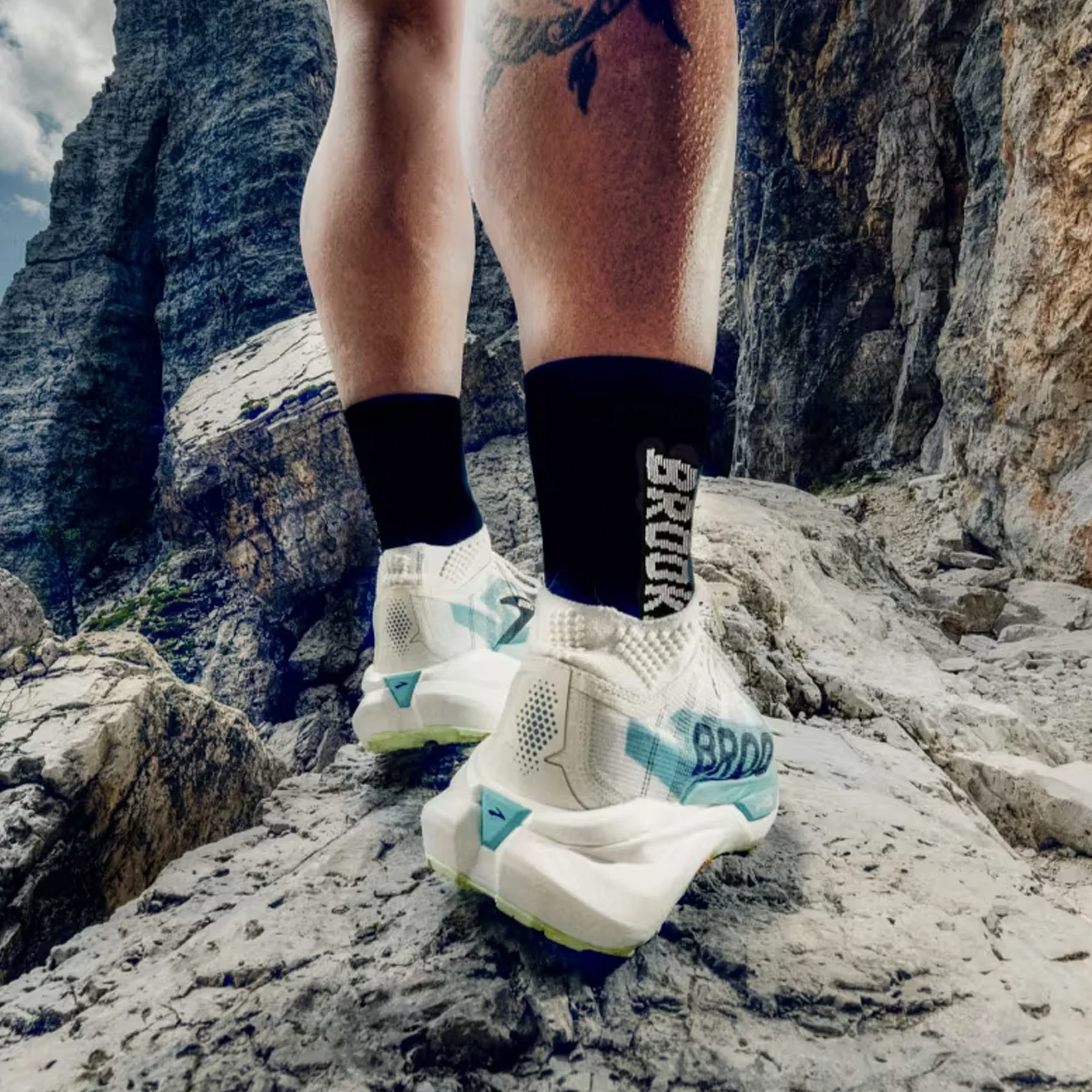
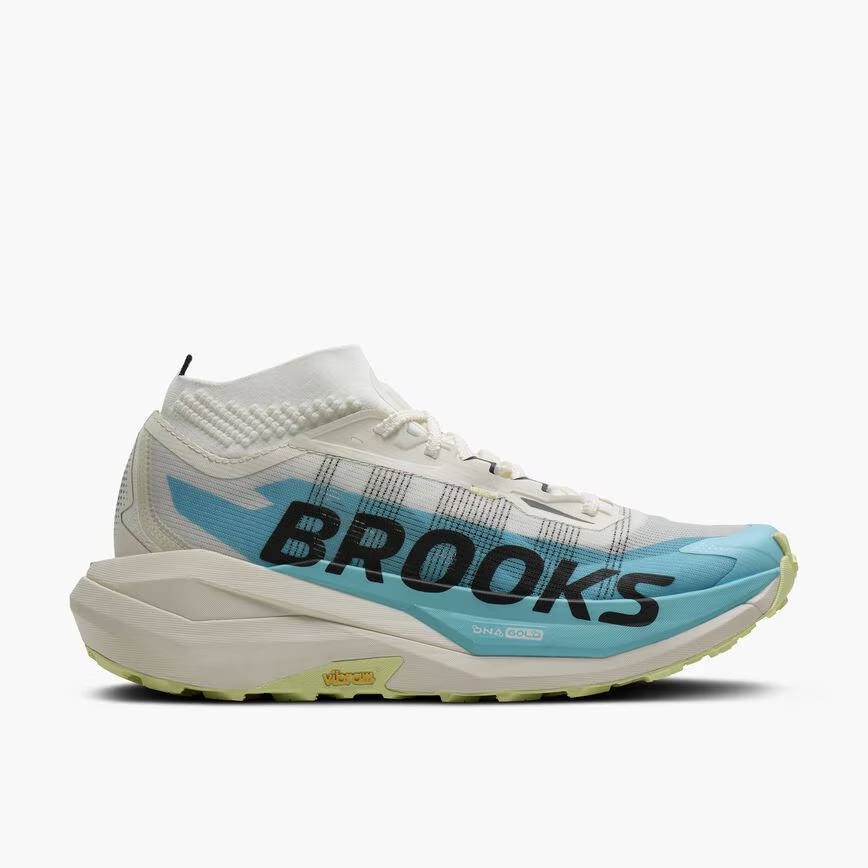
Meet the Cascadia Elite. Carbon-infused plate. PEBA foam midsole. Vibram Megagrip outsole. Kevlar upper. It is, without question, the most aggressive, most uncompromising, most unapologetically fast trail shoe Brooks has ever strapped to a human foot. And if you’ve spent the last few years assuming Brooks was happy to sit out the super-shoe revolution while the cool kids had all the fun; well. Brooks has thoughts about that assumption.
The Plated Trail Shoe Arms Race: A Brief History of Everyone Losing Their Minds
To understand why the Cascadia Elite matters, you first need to understand the category it’s crashing into; and how spectacularly unhinged it has become.
It started on the roads. Nike’s Vaporfly arrived in 2017 like a caffeine-fuelled wrecking ball, and the running industry spent the next several years in a collective panic, frantically reverse-engineering carbon plates and supercritical foams while pretending they’d been working on it all along. Road runners got faster. Records fell. Shoe companies printed money. Everyone was very excited and slightly exhausted.
Then the technology migrated to the trails, and things got genuinely chaotic. Suddenly you had Hoka arriving with the Tecton X: carbon plate, chunky foam stack, designed for people who race up and down actual mountains at speeds that make sensible people nauseous. Nike followed with the Ultrafly. Adidas launched the Terrex Agravic Speed Ultra. NNormal ; founded by the unnervingly talented Kilian Jornet; entered with the Kjerag. Arc’teryx showed up with the Sylan 2. Kiprun, not content to sit quietly, aimed its new carbon racer directly at Adidas and Nike with the cheerful aggression of someone who has absolutely nothing to lose.
The message from the market couldn’t have been louder: elite trail runners want the same energy-return advantages road racers have enjoyed for nearly a decade, adapted for rocks, roots, altitude and the kind of terrain that makes your ankles write strongly-worded letters of complaint the morning after. And through all of this, Brooks, one of the most respected names in running, the brand with decades of performance credibility: had been, bewilderingly, absent. The Cascadia is a magnificent shoe. But magnificent in the way a reliable family estate car is magnificent: deeply competent, universally respected, and not something you’d take to a track day.
What Brooks Actually Built: The Details That Matter
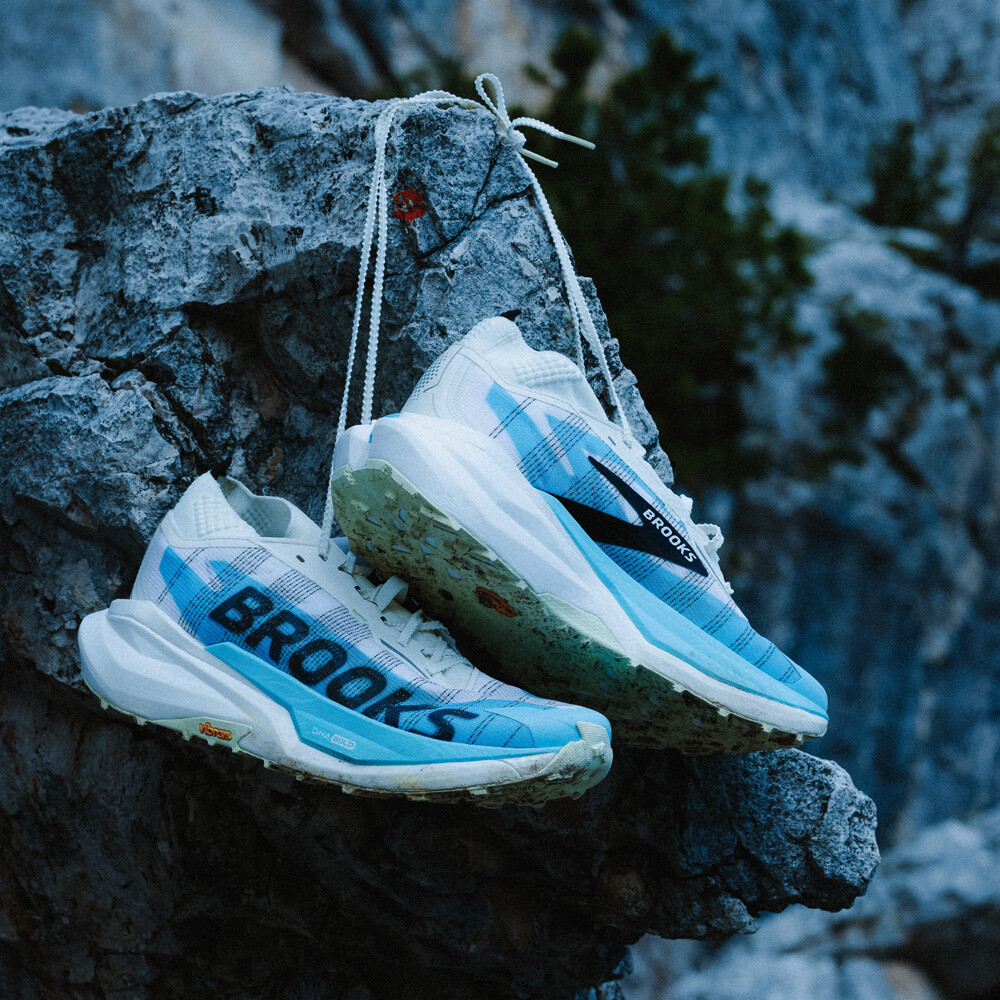
The midsole is where the Cascadia Elite makes its opening statement, and it does so with considerable confidence. DNA Gold cushioning: Brooks’ branding for a foam made from 100% PEBA, sits at the heart of the shoe, and if you need a refresher on why PEBA is the material every performance shoe brand is currently falling over itself to use, here it is: PEBA is lighter than traditional EVA foam, more resilient under load, and dramatically better at returning energy to the runner on each stride. It’s the ingredient that made the Vaporfly transformative rather than merely good. It’s the reason super-shoes feel less like footwear and more like mild performance-enhancing assistance that happens to be entirely legal.
Over the course of a mountain race: which could mean anything from a fast two-hour blast to a sufferfest that lasts most of the weekend, that energy return compounds in ways that genuinely affect outcomes. Your legs stay fresher. Your pace erodes more slowly. Your suffering, while still non-negotiable, is marginally reduced. For the recreational runner these benefits are noticeable. For athletes competing at the front of elite mountain races, they can be decisive.
Embedded within that foam is the carbon-infused Pebax SpeedVault+ plate, and to Brooks’ credit this isn’t a case of simply bolting in a road-shoe plate and hoping nobody notices the difference. Trail running asks entirely different questions of a shoe than road running does; and a plate tuned purely for the flat, predictable tarmac of a marathon course can feel like a liability the moment the ground gets technical. Brooks says the SpeedVault+ is engineered to maintain momentum across climbs, flats, and descents; three surfaces that have almost nothing in common biomechanically and have defeated lesser plates before. On climbs you need toe propulsion. On flat sections you want that familiar carbon snap through the gait cycle. On descents, where races are won, lost, and ankles occasionally sacrificed; you need control at least as much as speed.
It’s an ambitious brief for a single piece of carbon-infused Pebax. Whether the SpeedVault+ delivers across all three demands in the real world is something only serious mountain miles will confirm. But the intention is clearly more sophisticated than the cynical “shove a plate in, charge £275, ship it” approach that has characterised some entries into this category.
Grip, Upper, and the Completely Reasonable Decision to Use Kevlar
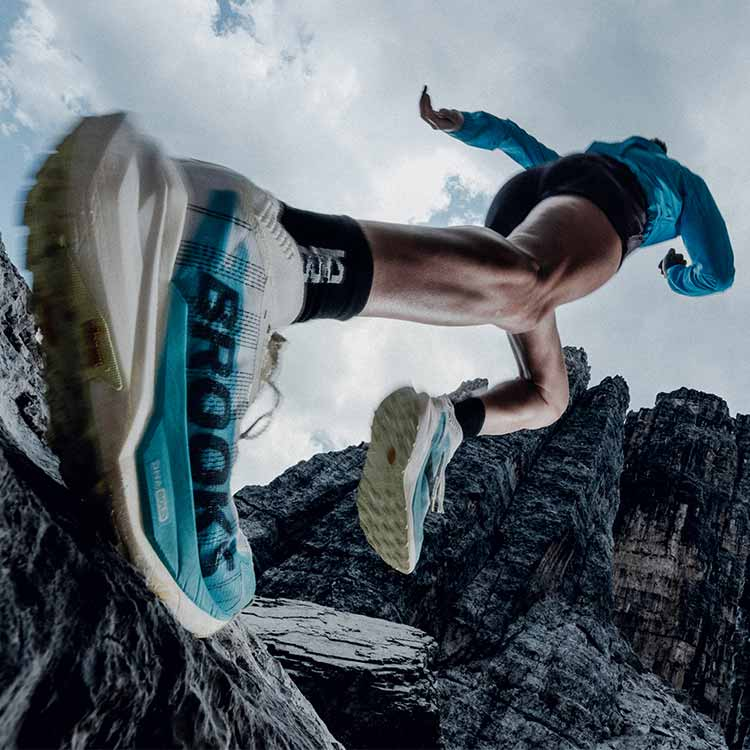
Here’s the thing about plated trail shoes that nobody who designs them is allowed to forget, even for a moment: none of the foam wizardry and plate engineering matters if the shoe loses grip on a wet rock and introduces your face to a Scottish hillside at speed. Traction is where trail super-shoe ambitions most frequently collide with reality. It’s also, historically, where road-inspired performance concepts go to have a quiet existential crisis.
Brooks has not messed around. The outsole uses Vibram Megagrip Elite: the premium tier of Vibram’s trail-specific compound range, developed for high-output racing on whatever the mountain decides to throw at you. Vibram Megagrip has been a trusted choice among serious mountain athletes for years, appearing on everything from alpine approach shoes to the finest trail racers on the market. The Elite variant sharpens that proven formula for race-pace demands. It will not perform miracles on sheet ice. Nothing will. But on the wet rock, damp roots and greasy singletrack that British trail runners know intimately and internationally, it gives you a fighting chance of staying vertical when lesser outsoles have given up and started negotiating with gravity.
Then there’s the upper, which is where Brooks has made arguably its boldest material choice. The MATRYX woven construction incorporates Kevlar fibres throughout the structure. On a running shoe, Kevlar isn’t there to stop anything more threatening than trail debris and prolonged abrasion, but it does both of those things exceptionally well. A Kevlar-reinforced upper that’s been scraped across rocks and thrashed through bracken for fifty miles should hold its structural integrity significantly better than a conventional mesh upper that quietly disintegrates and pretends it’s fine.
The upper is also water-resistant: less “you can run through streams” and more “British autumn doesn’t immediately destroy your socks.” The distinction matters.
Let’s Talk About the Price Tag
At £225 ($275 in the US, €250 in Europe) the Cascadia Elite is not here to be everybody’s friend. This is unambiguously premium territory, sitting alongside the Hoka Tecton X 3, the Adidas Terrex Agravic Speed Ultra, and the other established names in plated trail racing. Brooks isn’t positioning this as a cautious first step into the category. It’s positioning it as a direct challenger to the best off-road race shoes currently available, and pricing it with the kind of confidence that tends to either age very well or very badly depending on how the shoe actually performs on a mountain.
The specification sheet is impeccable. PEBA foam, a thoughtfully engineered plate, Vibram Megagrip Elite, and a Kevlar-reinforced upper; these aren’t budget compromises or marketing padding. They’re the materials you’d spec if you genuinely wanted to build a world-class trail racer rather than simply participate in a trend. What remains unanswered, and what will ultimately determine whether the Cascadia Elite earns its asking price, is how all of those ingredients behave together across fifty miles of brutal mountain terrain, at race pace, in October, in Wales.
The Ghost Trail: For Everyone Who Just Wants a Nice Run
Launching alongside the Cascadia Elite, the Ghost Trail deserves a brief moment in the spotlight despite occupying a very different part of the market. Built around nitrogen-infused DNA LOFT v3 foam and a TrailTack Green outsole with 3mm lugs, it’s designed for gravel paths, park runs and light trails — the kind of off-road running that most people actually do most of the time, rather than the kind that appears in dramatic race photography and requires several weeks of recovery.
It has a breathable mesh upper with a 3D-printed toe cap and mudguard, costs £135, and is available right now. It is, in the best possible sense, the sensible option. The Cascadia Elite exists to race mountains. The Ghost Trail exists because most of us are not, in fact, racing mountains, and still deserve a decent shoe.
Brooks, it turns out, remembered both types of runner. Points for that.
Verdict: Welcome to the Party, Brooks. You’ve Been Missed.
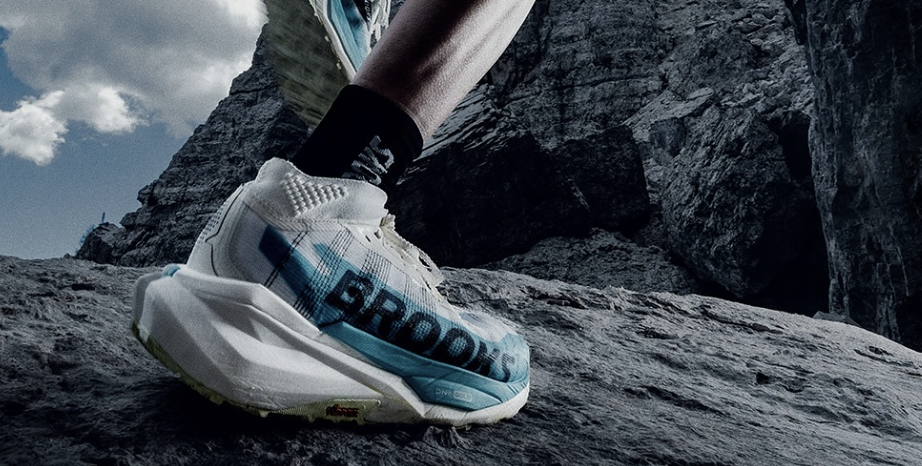
The plated trail category is brutally competitive. The brands that currently own it have years of development data, race-tested credibility, and deeply loyal athletes wearing their logos across finish lines from Chamonix to Cortina. Brooks arrives as a genuine newcomer to this specific fight, and that matters, credibility built on road shoes and traditional trail runners only travels so far.
But the Cascadia Elite arrives with the right ingredients, the right intent, and the right brand behind it. Brooks doesn’t do things carelessly. It doesn’t launch products for the sake of a press release. The fact that it spent this long watching the plated trail category develop before entering it could be read as hesitancy; or it could be read as a brand taking careful notes before deciding exactly how it wants to compete.
The Cascadia Elite looks very much like the result of taking very careful notes indeed.
Brooks Cascadia Elite | £225 / $275 / €250 | Available now at Brooks UK, Brooks US and Brooks EU