


OnePlus Watch Lite Review: The Discreet Athlete’s Smartwatch That Looks Like It Costs Double
There’s a specific kind of wearable frustration that only active people understand.
You want proper health and performance tracking. You want GPS that doesn’t draw modern art on your run route. You want a screen you can actually read mid-sprint, in full daylight, while your heart is trying to exit your chest. You want a battery that doesn’t crumble the moment you do two workouts and sleep with it on.
But you don’t want a chunky “sports computer” strapped to your wrist.
You also don’t want a flashy smartwatch that’s basically a tiny phone demanding attention every five minutes, glowing and buzzing like it’s trying to join the workout.
The OnePlus Watch Lite lands right in that sweet spot. It’s for people who care about performance, recovery and metrics, but want something stylish and low-key. Something that blends into a workday, a gym session, a long run, and dinner after, without screaming “I track my VO₂ max in spreadsheets.”
It’s not trying to be a Wear OS mini-iPhone. It’s trying to be a clean, fast, good-looking fitness watch with enough smart features to keep you connected, and enough battery to keep you sane.
And honestly, it nails the assignment more often than it misses.
Design and build: slim, clean, and surprisingly premium
If you’re the kind of person who has ever tried on a fitness watch and immediately thought, “I look like I’m about to lead a hiking expedition,” you’re going to appreciate what OnePlus did here.
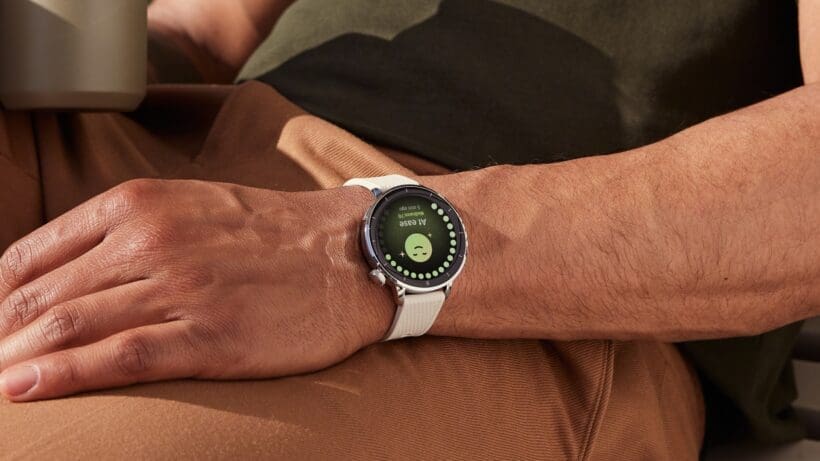
The Watch Lite is just 8.9mm thick, which is the kind of spec that sounds boring until you actually wear it. That slimness changes everything. It slides under cuffs. It doesn’t catch on sleeves. It doesn’t feel like a heavy puck on your wrist during push-ups. It’s the rare sports-friendly wearable that doesn’t punish you for having normal clothing.
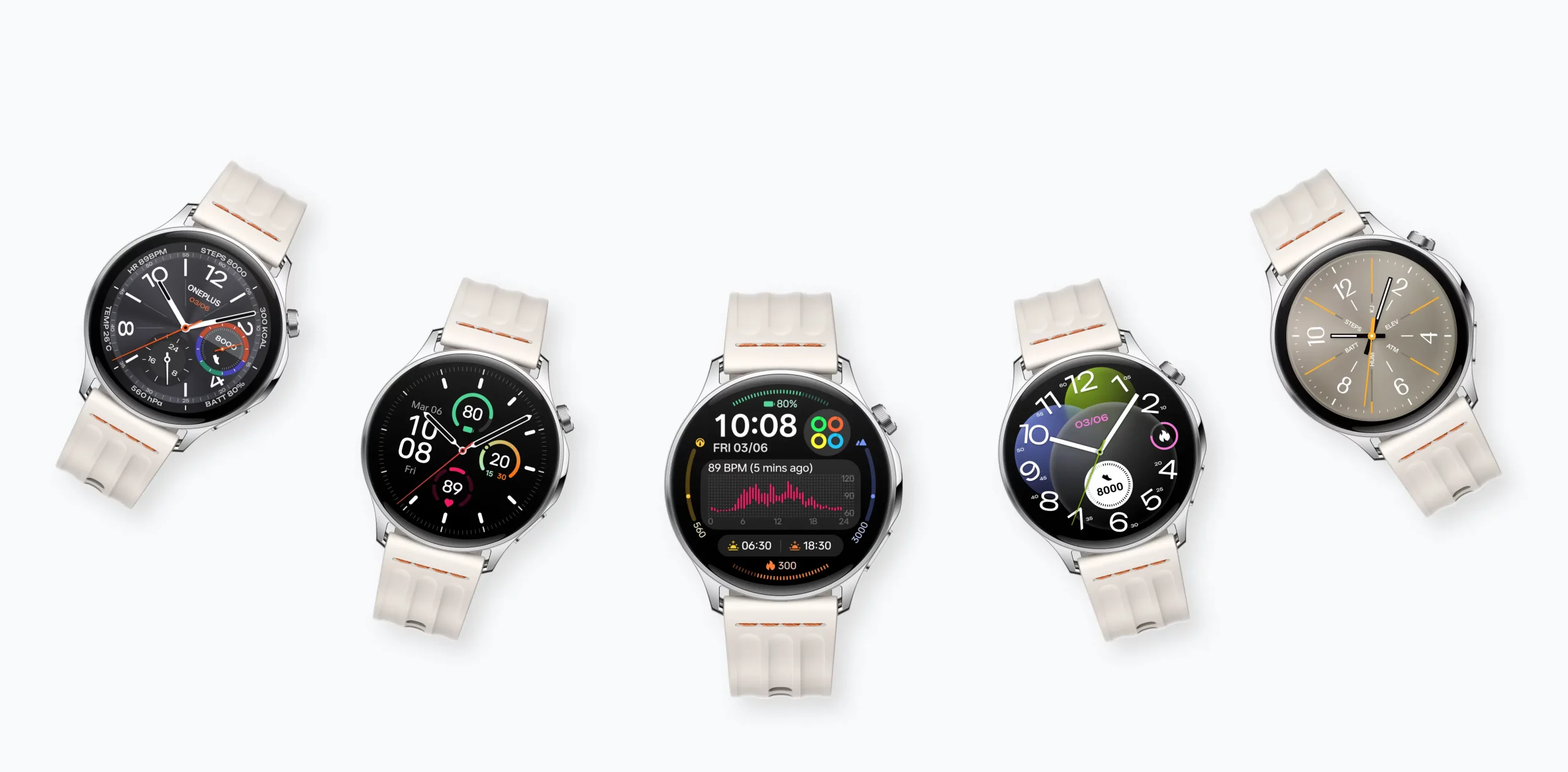
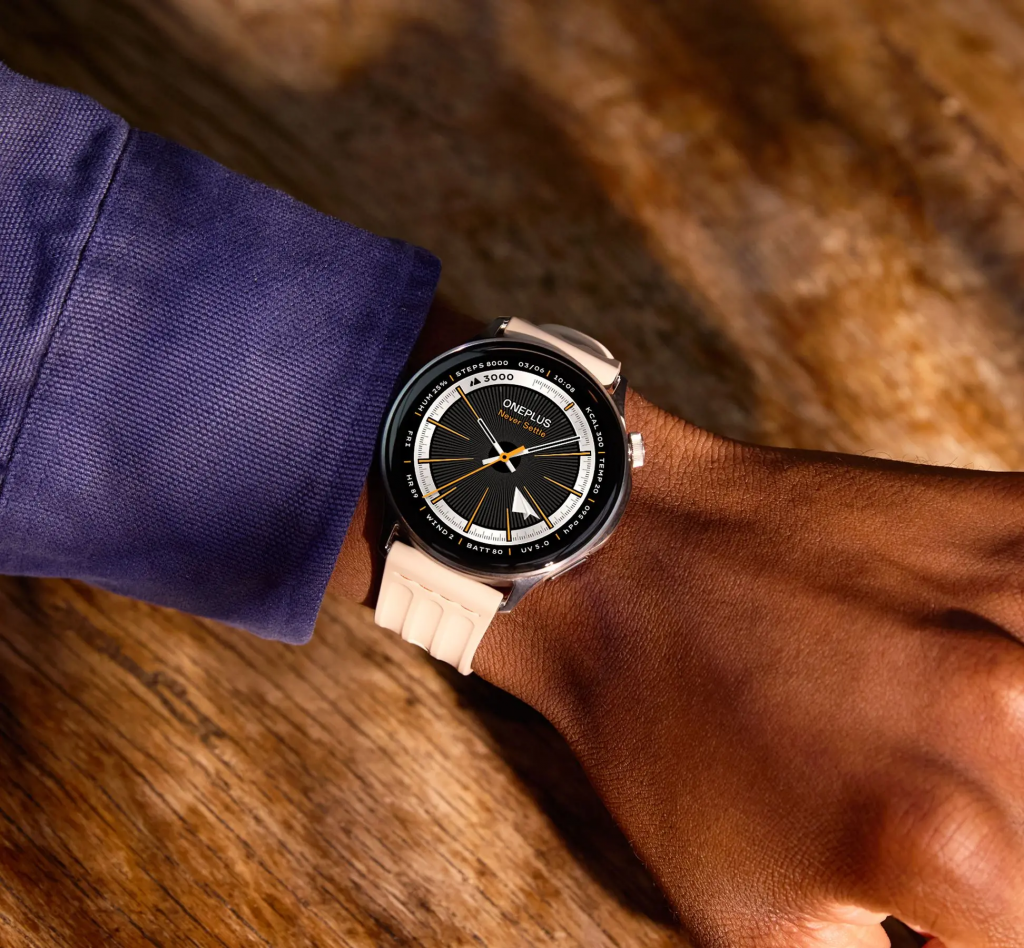
The Silver Steel version in particular plays a clever trick: it looks expensive. The chassis has that polished shine that reads “proper watch,” and the lighter strap with subtle detailing makes it feel like something you’d wear by choice, not just for data. It’s stylish, but not loud. It’s discreet, but not dull. It gives “I’m put together” energy without drifting into flashy territory.
Durability is also handled properly, not as an afterthought. You get IP68 plus 5ATM, which means sweat, rain, showers and swims are all fair game. And that matters for active people because the best watch is the one you never have to think about removing. If you’re training consistently, you need continuity. The moment a watch becomes precious, it becomes pointless.
OnePlus also keeps the physical controls simple. You’ve got a rotating crown that works exactly the way it should. Press to jump home, scroll to navigate, rotate when your hands are wet or sweaty and touch isn’t ideal. It’s the kind of control system you only appreciate once you’ve tried to swipe through a workout screen with damp fingers mid-session and nearly thrown your watch into a hedge.
This design is very much “quiet confidence.” It doesn’t try to look like a rugged survival tool. It looks like a watch. A very good-looking watch that happens to track your body like a lab assistant.
The display: 3000 nits is not a gimmick, it’s a superpower
For sports and outdoor people, screen quality is not a luxury. It’s usability. The difference between “quick glance and go” and “stop running, squint, panic, lose rhythm.”
The OnePlus Watch Lite’s AMOLED display is one of the biggest reasons it’s so compelling. At 1.45/1.46 inches, it’s large enough to show real information without feeling like a dinner plate, and the AMOLED punch makes metrics pop properly.
But the headline is brightness.
Up to 3000 nits peak brightness at this price is borderline rude. It’s the kind of spec usually reserved for much more expensive smartwatches. In real-world use, it means you can see your pace, heart rate and timers outdoors without fighting the sun. That’s especially important for runners, cyclists, hikers, anyone doing intervals, or anyone training early morning and late afternoon when light angles are annoying.
It’s also a massive win for people who like data-dense watch faces. If you’re the type who wants time, steps, calories, readiness-ish indicators and weather all visible at once, you can do that here without the screen looking cramped or washed out.
You also get a mic and speaker for calls, which is surprisingly useful in daily life. It’s not going to replace earbuds for privacy or crispness, but for quick “I’m running five minutes late” calls while your hands are full, it’s a genuinely helpful feature.
One weird limitation is that you can’t play music directly from the watch speaker, even though you do get music controls. Realistically, that’s not a deal-breaker for most serious fitness people, because anyone who cares about training with music is using headphones. Still, it’s worth knowing so you don’t assume this is a tiny wrist boombox.
Software: it’s not Wear OS, and that’s the point
If your definition of smartwatch joy is downloading apps, paying for coffee with your wrist, and controlling your entire digital life from your watch, the Watch Lite is not your thing.
It doesn’t run Wear OS. There’s no Play Store. There are no third-party apps. There’s no proper “smartwatch ecosystem” vibe.
And that’s exactly why it works for the audience it’s best for.
The OnePlus Watch Lite is a performance-first wearable dressed like a premium watch. The software is clean, smooth, fast, and easy to live with because it’s not carrying the weight of a thousand integrations.
You get the essentials. Notifications are there, and they’re glanceable. You can control music playback on your phone. You can use it for calls. You can set alarms, timers, check weather, view calendar, and use a camera shutter feature. It’s the smart layer you actually use, without the bloat you don’t.
The watch face library is also a real strength. This matters more than brands admit. If you’re wearing something daily, it has to match your style and your mood. The Watch Lite gives you enough variety to keep it feeling fresh, without drowning you in gimmicky faces that look like children’s tablet themes.
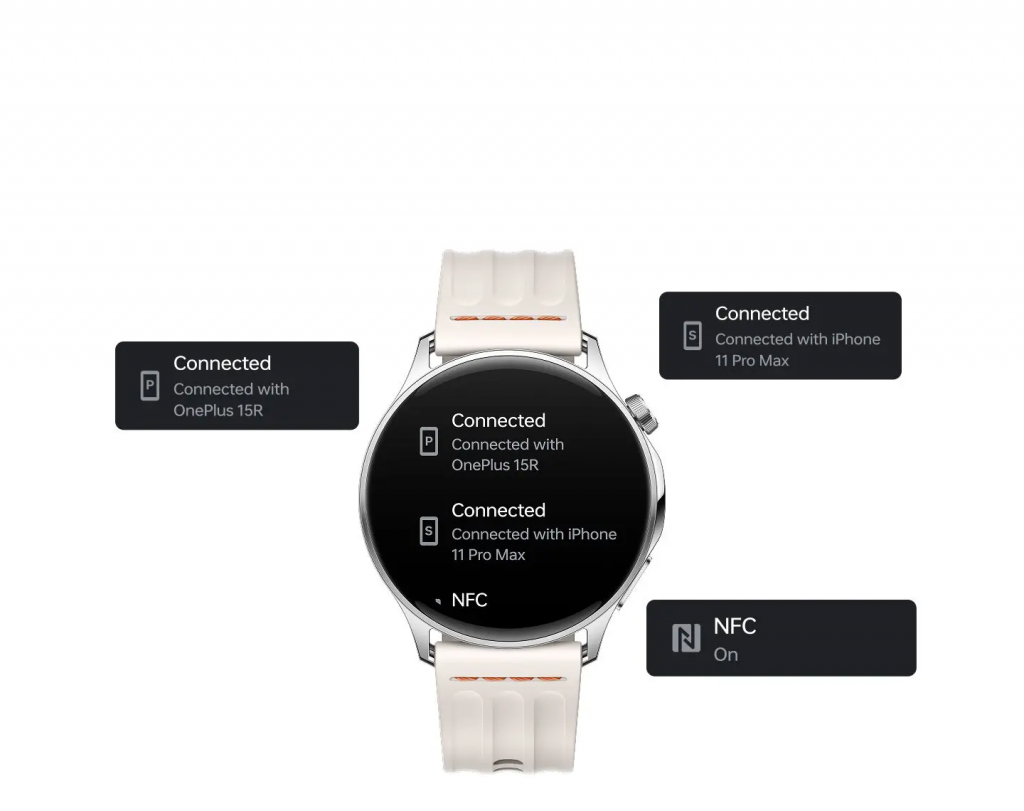
There’s NFC onboard, but it’s limited and not used for payments. It’s aimed at things like smart locks. This is the biggest “come on, OnePlus” moment. The hardware is there, the use case is obvious, and contactless payments would have made this feel unstoppable for busy sporty people who want to leave the phone behind on a quick run to the shop.
That said, if you’re buying this primarily as a fitness watch, you won’t think about it often. It’s the kind of missing feature that matters in theory more than it does day-to-day, especially if you always carry your phone anyway.
There’s also talk of dual-phone connectivity. For most people, that’s niche. But it does signal something important: OnePlus is thinking about flexibility and frictionless living, not just typical smartwatch checklists. If they bring that feature fully to life, it’s a nice bonus, not a core reason to buy.
Fitness and health tracking: the reason this watch exists
This is where the OnePlus Watch Lite goes from “pretty” to “seriously impressive.”
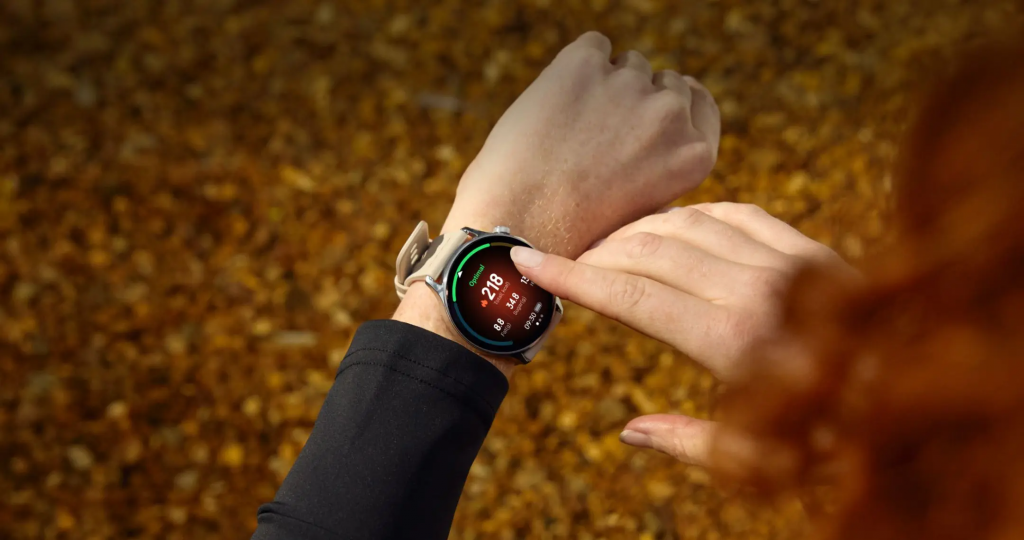
It has dual-band GPS, which already tells you OnePlus isn’t treating this like a casual step counter. Dual-band GPS is what you want if you run in cities, under tree cover, around tall buildings, or anywhere a basic GPS watch tends to drift and wobble.
In use, it locks quickly and holds the signal reliably. That matters for pace accuracy, route mapping, and post-workout analysis. If you’re training seriously, bad GPS is not just annoying, it’s misleading. It can make you think your performance is better or worse than it is, and it can ruin interval sessions if your pace readings jump around.
Heart rate tracking is also a standout. In the review data you shared, the Watch Lite tracked within 1 BPM of a chest strap for average and peak rates across treadmill workouts. That’s excellent. Chest straps are still the gold standard for heart rate. If a wrist-based sensor can stay that close, it means your zone training, calorie estimates, and recovery insights become far more trustworthy.
This is especially important for people who train with intention. If you do tempo runs, HIIT, rowing, circuit training, or any mixed-intensity work, heart rate accuracy is the difference between “cool numbers” and useful training feedback.
Workout mode coverage is strong. You get plenty of sports modes, plus reliable staples like strength training and running. There’s no heavy coaching layer baked in, so it’s not going to hold your hand like some beginner-first wearables. But for active people who already know what they’re doing and just want clean tracking and good visuals, that’s actually a positive.
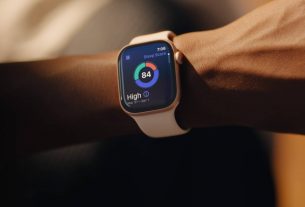
The watch also leans into holistic wellness with features like the 60-second wellbeing overview. It pulls together skin temperature, SpO₂, resting heart rate and more into a quick snapshot. This is not a medical tool, and it shouldn’t be treated like one. But as a trend tracker, it’s genuinely useful. If you’re training hard, travelling, sleeping badly, or fighting off a cold, these readings can help you spot patterns earlier.
Temperature sensing also opens up cycle tracking support, which is a meaningful inclusion for women athletes who want more context around training readiness and recovery.
Sleep tracking exists and it’s solid for the basics, but it doesn’t go as deep as the most advanced platforms. If you want intense sleep coaching, behavioural insights and coaching narratives, brands like Fitbit and Garmin still lead. Here, OnePlus gives you the core sleep data, but doesn’t always translate it into actionable advice.
In practice, for most sporty people, sleep tracking is used as a general awareness tool rather than a full lifestyle program. You want to know if you slept badly, how long you slept, and whether your body is trending towards recovery or fatigue. The Watch Lite delivers that. If OnePlus expands the coaching layer in future updates, great. If not, it’s still doing the job most people actually need.
The OHealth app is also worth praising. It’s clean and easy to interpret. You don’t have to dig through ten layers of menus to find your run metrics or wellness snapshot. Everything important is surfaced clearly, which makes it more likely you’ll actually use the data rather than ignore it after week two.
Outdoor sports use: where this watch feels made for you
If you’re into outdoor sports, this watch fits your lifestyle quietly.
The brightness means you can check metrics in sunlight without stopping. The slim build means it doesn’t snag on jackets, gloves, hydration vest straps or sleeves. The waterproofing means you can swim, sweat, and rinse it without stress. The GPS is stable enough to trust when you’re out on trails or city routes.
It also looks good enough to wear when you’re not training. That’s a bigger deal than people admit. A lot of fitness watches look like gym gear. The Watch Lite looks like an actual watch, which means you don’t feel like you have to “switch modes” between sporty life and normal life.
This is why it’s such a strong option for people who are active but don’t want bulky tech.
Battery life: the freedom feature
Battery life is one of the most underrated performance features because it changes behaviour.
When you have to charge a watch daily, you stop trusting it. You forget. You take it off. You miss workouts. You skip sleep tracking because it’s at 20 percent and you don’t want to wake up to a dead watch.
The Watch Lite avoids that entire problem.
In realistic use, with workouts, notifications and normal life, it can run for days. In lighter use, it can stretch close to the claimed 10-day territory. That’s huge for outdoor people, travellers, busy professionals, or anyone who doesn’t want another device begging for a charger.
Charging is also quick enough to be painless. From empty to full in just over an hour, and a fast top-up gives you meaningful runtime. That’s the kind of charging behaviour that supports consistency, which is what fitness tracking is all about.
The small compromises, and why they don’t ruin the magic
Let’s be honest about the trade-offs.
No Wear OS means no apps. No payments is annoying. The smart features are basic. Sleep coaching could be deeper. NFC feels underused.
But here’s the thing: none of those compromises affect the core value proposition.
This watch is built for people who want reliable tracking, a great screen, strong GPS, excellent heart rate performance, and battery life that doesn’t interrupt training habits. It is stylish and discreet, not bulky or flashy. And it does all of that without inflating price.
If you’re the kind of person who wants a watch that feels like a training partner, not a distraction device, the Watch Lite’s “limitations” become a feature. Less noise, more clarity.
Should you buy it?
If you want a discreet, stylish fitness watch that tracks seriously, the OnePlus Watch Lite is a very easy recommendation.
Buy it if you train outdoors, care about GPS accuracy, and want a display that performs like a flagship. Buy it if you want heart rate data you can actually trust, without strapping a chest monitor on for every session. Buy it if you want a watch that looks good in the gym, at work, and out for dinner.
Skip it if you want a full smartwatch ecosystem with app downloads, payments, and deep integrations. If that’s your world, the Apple Watch SE line or a Wear OS option will suit you better, even if you sacrifice battery.
For everyone else, the Watch Lite is a quiet power move. It’s not trying to impress you with gimmicks. It’s trying to be the wearable you keep on, keep using, and keep trusting.