


AMD’s Ryzen 9 9850X3D Lands Next Week, and the Price May Make Gamers Reconsider Their Upgrades
AMD is about to drop a new contender in the gaming CPU arena, and if early reports hold up the launch could be one of those rare moments when value and performance align. TechRadar says the Ryzen 9 9850X3D arrives next week, and the asking price is shaping up to be unusually competitive for a flagship with 3D V-Cache.
What the news is and the context behind it
According to TechRadar, AMD will release the Ryzen 9 9850X3D next week. The important signal here is not merely a new model number. It is that AMD continues to double down on 3D V-Cache variants as a core part of its strategy to defend gaming performance against Intel and to keep pressure on pricing across the ecosystem.
Three years ago a 3D-stacked cache felt experimental. Now it is central to the narrative about where CPU design can deliver real, perceivable improvements for everyday gamers. The 9850X3D arrives into a landscape where GPU performance is often the limiting factor, yet certain competitive and CPU-bound titles still benefit enormously from cache architecture and single-thread latency improvements. AMD is selling a specific kind of advantage: more frames where it actually matters.
This new launch is worth watching because it could nudge customers who were waiting for generational leaps into making earlier upgrades, or make mid-cycle refreshes more attractive for enthusiasts who care about raw gaming smoothness. It also complicates Intel’s position, since the best consumer CPU choices are now as much about cache topology as they are about core counts and boost clocks.
The product at the heart of it
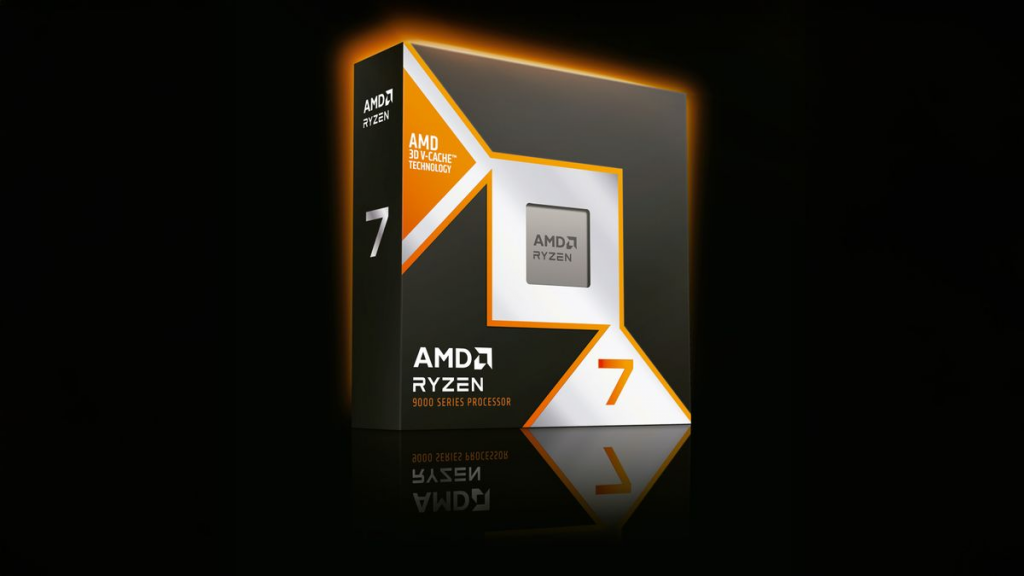
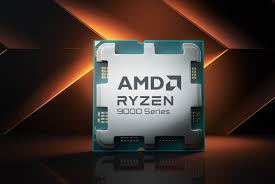
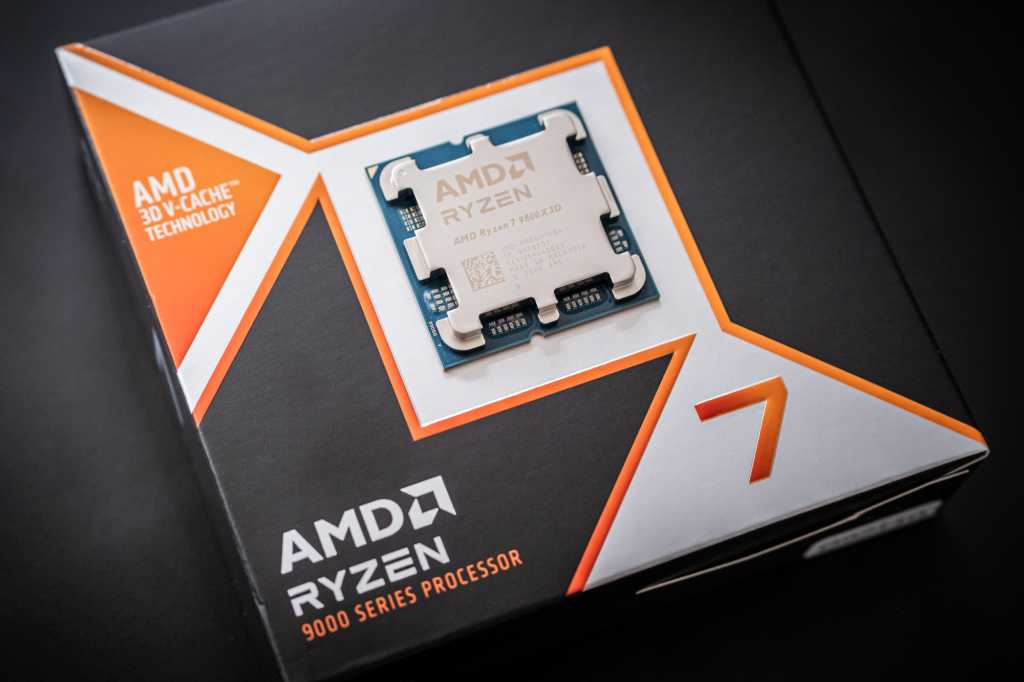
The Ryzen 9 9850X3D is the latest in AMD’s line of X3D chips, where the saleable difference is an additional layer of 3D-stacked cache married to high-performance Zen cores. TechRadar’s early coverage frames this CPU as specifically tuned for gaming, a part that slots into AMD’s family aimed at enthusiasts and content creators who also game.
AMD’s messaging around previous X3D parts has been consistent: add a huge bank of low-latency cache directly atop CPU cores and you get significant frame-rate gains in titles that are sensitive to cache and memory latency. That is what made the 3D V-Cache variants special the first time around. The 9850X3D looks like a continuation of that thesis, updated for current platforms and price expectations.
Technical details and innovation explained in plain English
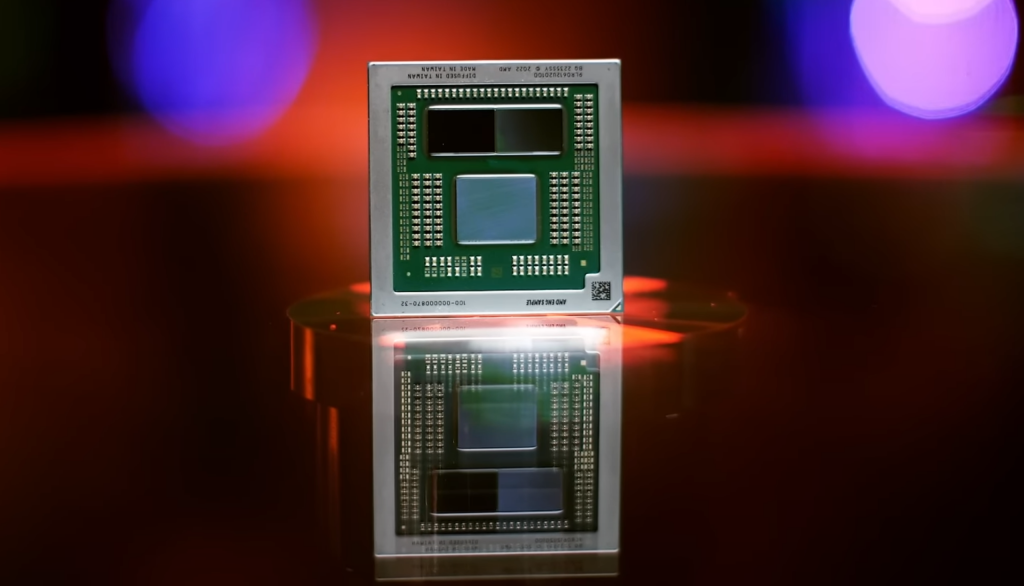
At its most human level, 3D V-Cache adds extra on-chip memory that sits physically closer to the CPU cores. Think of it as giving the processor a bigger, faster bookshelf so it does not have to run to the slow storage closet as often. For many games the result is better frame rates and more consistent frame pacing, especially in CPU-limited scenarios like high refresh-rate 1080p gaming or esports titles.
What matters beyond the simple analogy is how AMD integrates this stacked cache without sacrificing thermal headroom or core frequency. Earlier X3D parts were praised for the balance they struck between cache and clocks. The hard engineering problem is keeping the rest of the silicon cool and responsive while you place more layers of cache on top of it. Where 3D V-Cache helped before, it could help again by boosting performance in real-world gaming where it translates directly into higher minimum and average frames per second.
Compatibility is another practical advantage. If AMD follows its usual pattern, the 9850X3D should work on a wide range of current AM5 motherboards, often with just a BIOS update. That means gamers on relatively recent platforms might upgrade without changing their sockets or memory, preserving the investment in DDR5 and other platform features. That degree of backwards-compatibility is a quiet but important part of why these launches create buzz among PC builders.
Market impact and cultural relevance
Price is the real headline. TechRadar’s coverage singles out the 9850X3D as arriving at a price point that makes it a tempting proposition for gamers who have been weighing GPU upgrades against CPU-led improvements. If AMD can undercut equivalent Intel parts while delivering cache-focused wins in gaming, it changes the calculus for many buyers. Gamers and builders had become used to the idea that flagship chips carry flagship prices. A more aggressive launch price is an assertion that performance leadership does not need to be a luxury.
Beyond pure numbers there is a cultural signal. The 3D cache story is also an engineering story. It tells us that hardware makers find more performance in cleverer layouts rather than raw brute-force core counts. This is a maturation in CPU strategy that feels akin to the evolution we saw in GPU architectures where efficiency and smart memory systems became as important as raw shader counts. For consumers, it means the winning moves in the next couple of upgrade cycles might be about nuanced choices rather than simply chasing the biggest core tallies.
What industry insiders and AMD say
Official commentary from AMD tends to center on real-world performance and the targeted benefits for gamers. In prior launches the company highlighted consistent gains in competitive titles and smoother gameplay at high refresh rates. Expect that narrative again. AMD will likely point to the 3D V-Cache as a targeted, specialized solution for gaming workloads that still plays nicely with content-creation tasks due to its high core performance.
Insiders speaking to the press and to OEM partners often emphasize that pricing and platform support are as important as peak performance numbers. Retailers and system builders track component pricing very closely, and a well-priced 9850X3D could quickly appear in prebuilt gaming rigs and curated upgrade bundles. That in turn increases consumer exposure and reduces the friction of trying out the new chip without building from scratch.
What it could mean for consumers
The simple consumer question is whether to upgrade now or wait. For gamers running older CPUs where the system is CPU-bound in many titles, the 9850X3D could be a transformative upgrade that gives substantially better frame rates without needing the very latest GPU. For those on recent high-end AMD or Intel platforms, the question is subtler. If you already have a current-generation Ryzen 9 or a comparable Intel chip, the uplift may be compelling only for those chasing every last frame or building esports-focused rigs.
Price again matters because it changes the opportunity cost. If the 9850X3D lands at or near the price point TechRadar suggests, it becomes feasible to pair it with a midrange GPU and still get exceptional gaming value, or to slot it into existing motherboards to breathe new life into a system. If the price is higher, the decision reverts to the established rule: the best upgrade is the one that fixes your current bottleneck, be it GPU, CPU, memory, or storage.
How it stacks up against past X3D chips and Intel alternatives
Past X3D chips delivered wins in gaming with fewer overt trade-offs than many expected. They were not magic bullets for every workload, but in titles that stressed cache they often beat higher-clocking chips without 3D V-Cache. The 9850X3D, assuming it follows the same playbook, is an evolution rather than a revolution. It offers a refined blend of cache and core performance tuned for the state of modern games.
On the other side of the aisle, Intel has been competing with high clock speeds, strong single-thread performance, and aggressive platform bundling. The competitive dynamic now looks a bit like a chess match: AMD counters with cache innovation while Intel pushes raw frequency and instruction-level improvements. For the consumer the result is choice. If your workload is heavily dependent on cache locality, AMD’s X3D approach will likely be more attractive. If you need absolute highest single-thread throughput for a broad set of creative tools, Intel might still be the better pick in some scenarios.
What comes next and what to watch for
First, watch for independent benchmarks. Early reviews and TechRadar’s reporting set the stage, but the real-world picture is shaped by third-party testing across a variety of titles and resolutions. Pay attention to minimum frame rates and 1 percent lows, as these metrics capture the consistency that 3D V-Cache tends to improve. Also look at thermals and power draw because the engineering trade-offs between cache and cooling determine whether you need a beefier cooler or a revised BIOS to get the best experience.
Second, watch the bundling behavior of OEMs and retailers. A competitively priced 9850X3D will likely appear in systems marketed for high-refresh esports performance. That will make it easier to buy into the platform without the hassle of custom builds. Third, consider motherboard BIOS updates and compatibility lists. If you already own an AM5 board, a simple BIOS update could be enough, but check vendor guidance to avoid surprises.
Conclusion: Is it worth paying attention to the Ryzen 9 9850X3D?
|Yes. Even before the benchmarks land, the story itself is meaningful. AMD is betting that targeted hardware innovations like 3D V-Cache still have the power to change user experience more than mere increases in core counts. The 9850X3D could be the most pragmatic option for gamers who want tangible, repeatable gains in titles they play most, without paying the kind of premium we used to expect from flagship silicon.
That said, the usual caveats apply. If your setup is bottlenecked by GPU performance or if your workloads skew heavily toward multi-threaded content creation, the 9850X3D is not a universal upgrade. It is a very smart, surgical upgrade for a very specific audience: gamers who prize frame consistency and high refresh-rate performance where CPU impact is nontrivial.
In the weeks after launch the real answers will come from broad testing across games and system configurations. Until then, the combination of AMD’s engineering focus on cache innovation and TechRadar’s suggestion of a persuasive price point is enough to make the 9850X3D one of the most interesting CPU launches in recent memory. It is a reminder that innovation in silicon design remains as relevant as disruptive architecture announcements. For gamers who love the feeling of squeezing more performance from familiar hardware, this is one to watch closely and, for many, to welcome into the upgrade shortlist.
Look for the Ryzen 9 9850X3D next week. If price and performance land where early reports say they will, it might quietly become the best value upgrade of the season.