


Epson EF-72 Review: A Projector for People Who Love Cinema, Not Specs Sheets
There’s a particular kind of home cinema fan who isn’t chasing the brightest numbers, the loudest specs, or the most aggressive contrast graphs. They’re chasing feeling. Atmosphere. Warmth. That sense of settling into a film and forgetting the tech entirely.
The Epson EF-72 is very clearly built for that person.
This is not a projector trying to win a spec war. It’s not a black-box monster designed to live permanently bolted to a ceiling in a pitch-black room. Instead, the EF-72 belongs to a new generation of “lifestyle cinema” projectors that aim to live with you, not dominate your space. It wants to sit proudly in your living room, look beautiful even when it’s off, and deliver a cinematic image that feels inviting rather than clinical.
After spending serious time with the EF-72, it becomes clear that Epson made deliberate choices here. Some of them will delight cinephiles who prioritise tone, balance, and comfort. Some will frustrate those chasing raw punch. But there is no doubt this is a thoughtfully engineered projector with a strong identity.
And for the right audience, that matters more than peak brightness figures ever could.
Designed to Be Seen, Not Hidden
Let’s address the elephant in the room first. The Epson EF-72 is one of the best-looking projectors you can buy at this price.
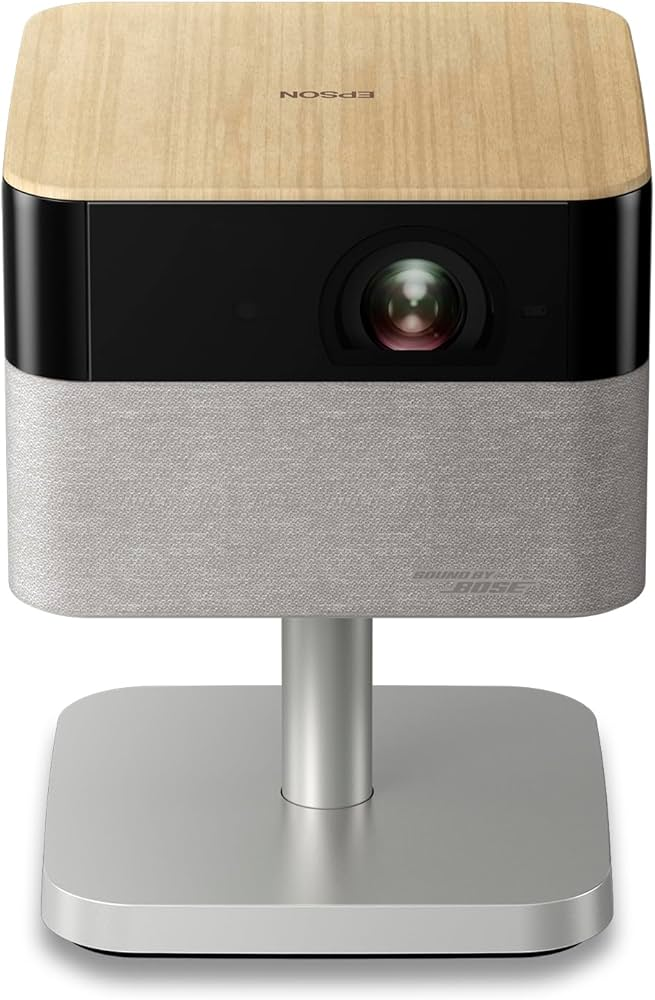
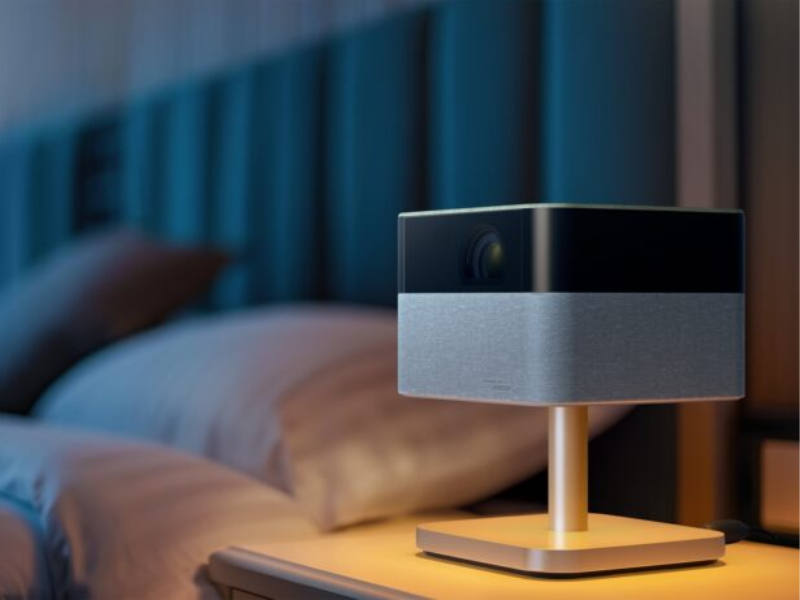
Most projectors still resemble anonymous plastic boxes, clearly designed to be hidden away. The EF-72 does the opposite. It embraces its presence. The exposed body, fabric-wrapped sides, and oak-toned wooden top give it a genuinely premium, almost Scandinavian aesthetic. It looks closer to a high-end speaker or a piece of modern furniture than traditional AV gear.
This matters more than it might seem. If you’re someone who wants a cinematic experience in a real living space, not a dedicated bat cave, design is part of the ownership experience. The EF-72 doesn’t need to be apologised for or tucked away. It earns its place.
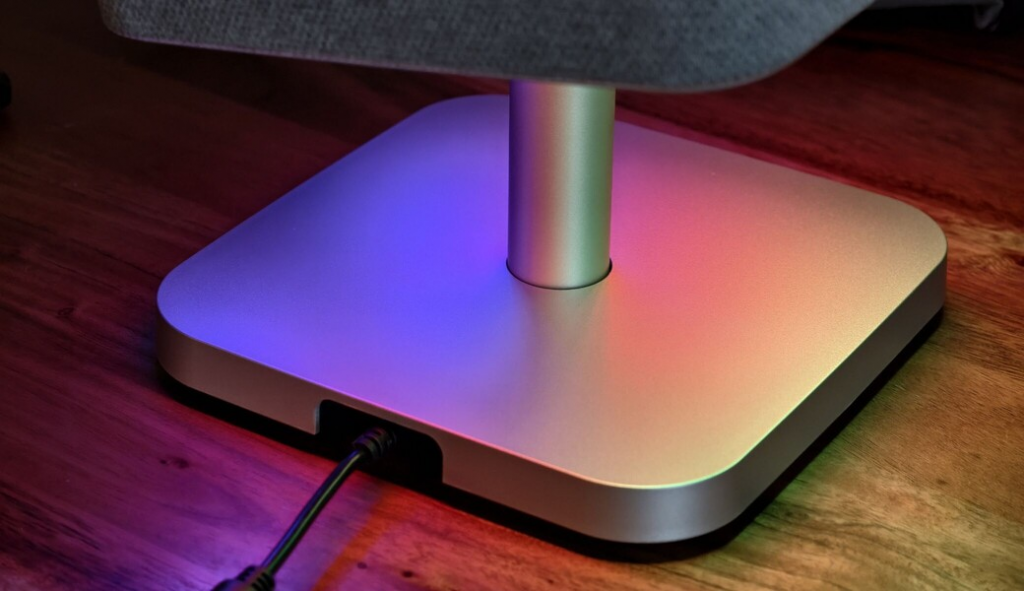
The integrated stand is solid and well-engineered, allowing the projector to tilt upward as much as 90 degrees or downward by 15 degrees. That flexibility opens up creative use cases. Ceiling projection. Temporary setups. Angled walls. It feels like Epson genuinely considered how people actually live with projectors now.
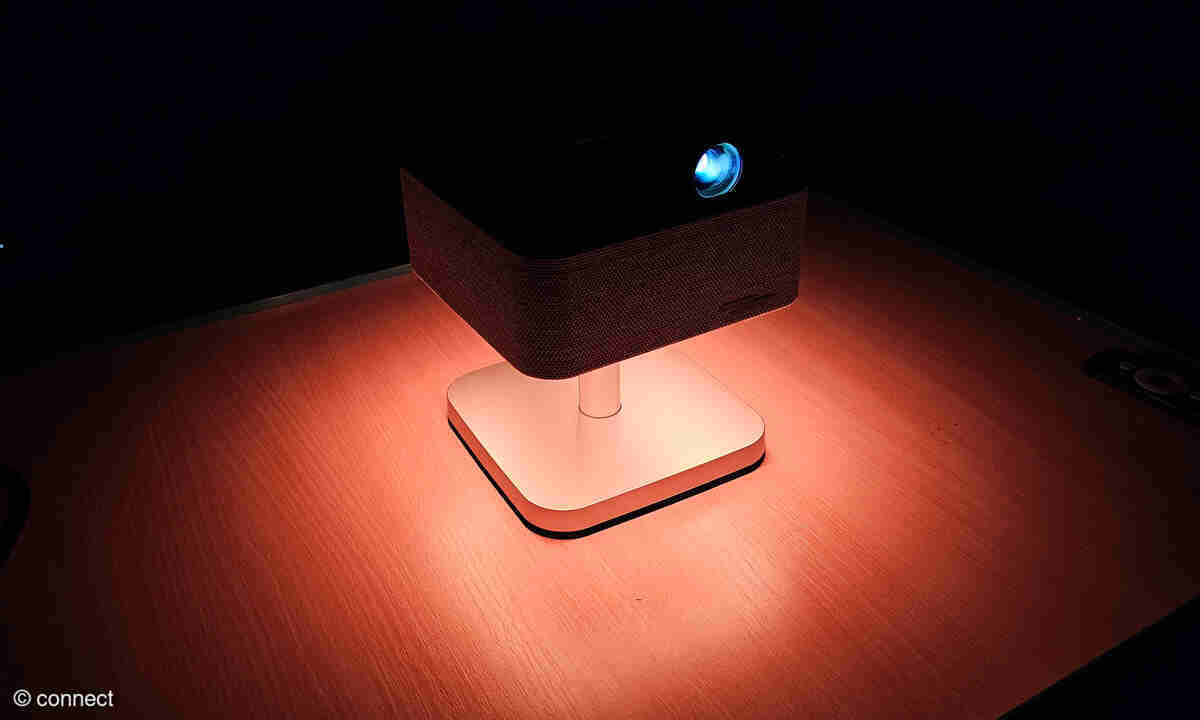
The ambient LED light built into the base is a small touch, but it adds to the premium feel. You can adjust it with a simple touch on the top surface, dim it, or turn it off entirely. It doesn’t improve picture quality, but it reinforces the idea that this device belongs in a modern living environment.
At around 4kg, it’s solid but manageable. It’s not portable in the battery-powered sense, but it’s absolutely something you can move between rooms without stress.
Setup That Doesn’t Kill the Mood
One of the most underrated aspects of any projector is how quickly you can go from “I want to watch something” to “the movie has started.” The EF-72 does well here.
The 1.20:1 throw ratio is fairly standard, and while there are ultra-short-throw options that need less space, the EF-72 strikes a good balance between flexibility and image size. Filling a 100-inch screen requires just under three metres of distance, which is realistic for many living rooms.
Auto keystone correction, corner adjustment, zoom shift, and wall colour correction all help make setup painless. Purists will still want a proper projector screen, and rightly so, but it’s refreshing how forgiving the EF-72 is if you’re projecting onto a wall or dealing with less-than-perfect geometry.
This is a projector that respects your time. It doesn’t demand an engineering degree to get a clean image.
A Picture That Feels Like Film
Let’s talk about what really matters to cinema lovers. The image.
The Epson EF-72 uses RGB LED technology with pixel-shifted 4K resolution. It’s not native 4K, but at this price, that’s expected. More importantly, it doesn’t look like a compromise when watching real content.
Out of the box, the Standard mode is a little too vivid, pushing colours into an artificially bright space that feels more “showroom” than “cinema.” But switch to Cinema or Natural, and the projector transforms.
This is where the EF-72 shines.
The image becomes warm, cohesive, and filmic. Skin tones look human. Highlights glow without screaming. There’s a softness to the presentation that feels intentional, not vague. Watching Dune: Part Two, the desert scenes carry a sun-soaked warmth that feels emotionally correct. Zendaya’s Chani doesn’t look digitally sharpened or oversaturated. She looks like she exists inside the environment.
Motion handling is another strong point. Epson has clearly tuned its processing to avoid the soap-opera effect while still smoothing out judder. Fast camera moves in Kingdom of the Planet of the Apes remain fluid without becoming artificial. There’s also room to tweak motion interpolation if you want more or less smoothing, which cinephiles will appreciate.
Colours are a highlight. Torches burn with intensity against dark backgrounds. Greens feel earthy rather than neon. Reds don’t bleed. It’s a palette that prioritises realism over wow-factor.
This is a projector you can watch for hours without fatigue. And that’s not something all high-brightness rivals can claim.
Where the EF-72 Plays It Safe
Now for the honest part.
The EF-72 does not deliver the deepest blacks or the brightest highlights in its class. It feels like Epson intentionally chose balance over extremes.
In dark scenes, shadow detail can be a little compressed. Watching No Time To Die, Bond’s dark suit blends more than it should into the shadows. Fine texture in low-contrast areas sometimes gets lost. Rivals like the Hisense M2 Pro make these details pop more clearly.
Similarly, while Epson claims up to 1000 lumens, the EF-72 doesn’t feel aggressively bright. In rooms with a lot of ambient light, it holds up decently, but it doesn’t punch through daylight the way some competitors can.
For some viewers, this will be a dealbreaker. If your idea of cinema is razor-sharp contrast and HDR fireworks, you may feel underwhelmed.
But here’s the counterpoint. The EF-72’s image is incredibly easy to live with. It doesn’t fluctuate wildly. It doesn’t fatigue the eyes. It doesn’t feel harsh. It feels consistent and intentional.
And for many movie lovers, that matters more than absolute black depth.
HDR Without the Drama
The EF-72 supports HDR10 and HLG, but not Dolby Vision. That’s not surprising at this price, but it’s worth noting.
HDR content looks good here, but again, Epson leans toward restraint. Highlights are controlled. Whites don’t blow out. Colours remain stable. There’s less “HDR wow,” but also less HDR mess.
It’s a projector that treats HDR as a refinement, not a marketing trick. And while that may not impress spec chasers, it aligns perfectly with the EF-72’s cinematic philosophy.
Smart Features That Mostly Get It Right
Powered by Google TV, the EF-72 offers a familiar and friendly interface. Netflix, Disney Plus, Amazon Prime Video, Apple TV Plus, YouTube, and more are all present.
The big omission, at least during testing, is BBC iPlayer in the UK. Epson says it’s working on it, but history suggests caution. Fortunately, workarounds exist through external streamers, and most serious home cinema setups will include one anyway.
Apple TV purchases must be made on another device, but your library remains accessible. It’s a small inconvenience rather than a dealbreaker.
Navigation is smooth, apps load quickly, and the experience feels modern and polished. For many users, this will remove the need for an external streaming stick entirely.
Sound That’s Fine, But Not the Star
Epson partnered with Bose for the EF-72’s audio, which raises expectations. In practice, the built-in 10W system is competent but clearly not the main event.
Dialogue is clear and well-balanced. Voices sound natural and intelligible, which is crucial for films and series. There’s a touch of warmth that suits conversation-heavy scenes.
But dynamic range is limited. Action scenes lack weight. Bass is present but restrained. Sound feels anchored to the projector rather than filling the room.
Blade Runner 2049’s infamous low-frequency moments are handled cleanly, without distortion, but they lack tension and scale. The emotional impact just isn’t there.
As a Bluetooth speaker, the EF-72 is serviceable but unremarkable. Music plays cleanly until arrangements become dense, at which point detail gets lost.
The takeaway is simple. The EF-72 deserves a soundbar or external audio system. Pair it with even a modest soundbar, and the cinematic experience improves dramatically.
The Cinema-First Verdict
The Epson EF-72 is not trying to be the brightest projector, the loudest projector, or the most technically aggressive projector in its class.
It is trying to be the most liveable cinematic projector.
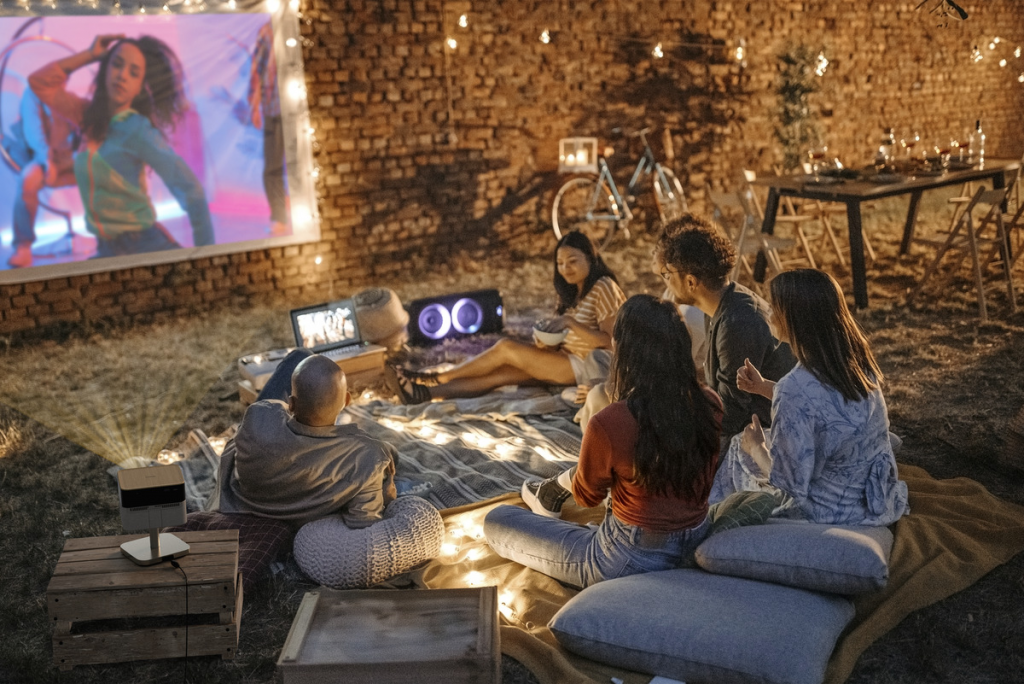
Its strengths are warmth, balance, natural colour, and design that respects your living space. It’s the kind of projector you look forward to using. The kind you leave out instead of packing away. The kind that makes movie night feel inviting rather than intimidating.
Yes, rivals go brighter. Yes, some offer deeper blacks. Yes, the audio is underpowered. But few deliver such a cohesive, refined, and comfortable cinematic experience in a form factor that feels genuinely premium.
If you’re a movie lover who values atmosphere over specs, consistency over flash, and design as much as performance, the Epson EF-72 makes a very strong case for itself.
This is a projector for people who love films, not benchmarks.
And in that sense, Epson has succeeded beautifully.